
Earthing and bonding clamps
An earth clamp, also sold as an earthing clamp, is a part that joins two sections of an earthing system under bolt pressure or by compression: it connects a conductor, meaning a copper wire or tape, to an earth rod, a reinforcing bar, a plate or a metal structure, or connects two conductors to each other. Short-circuit current and lightning current reach the earth through these small joints. That is why every connection in an earthing system must be mechanically firm, electrically continuous and compatible with the material of the conductor and the electrode.
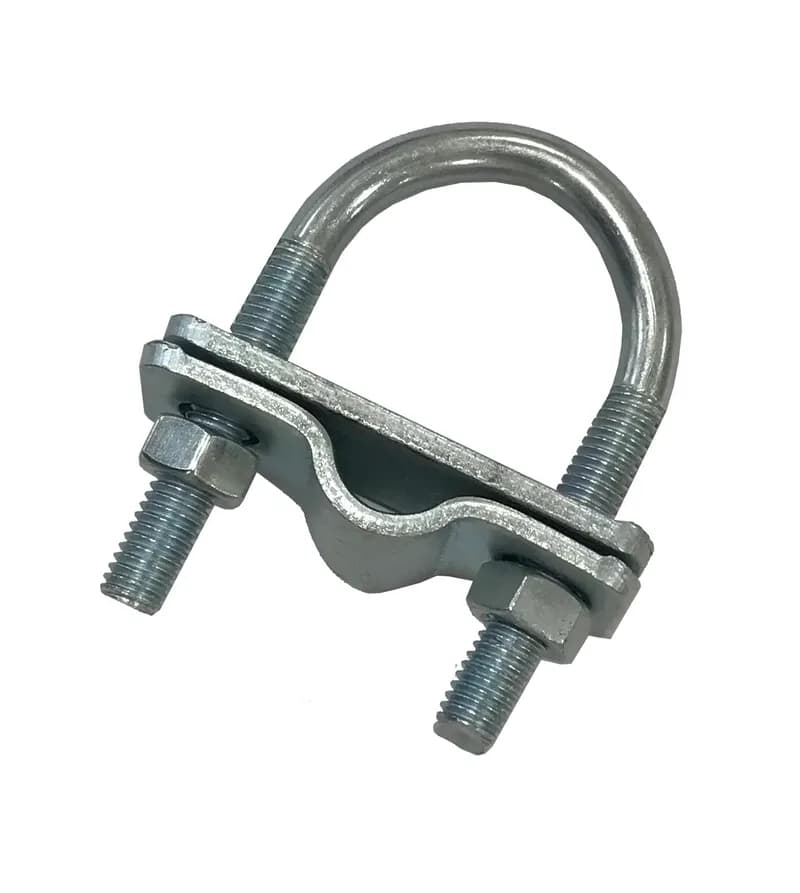
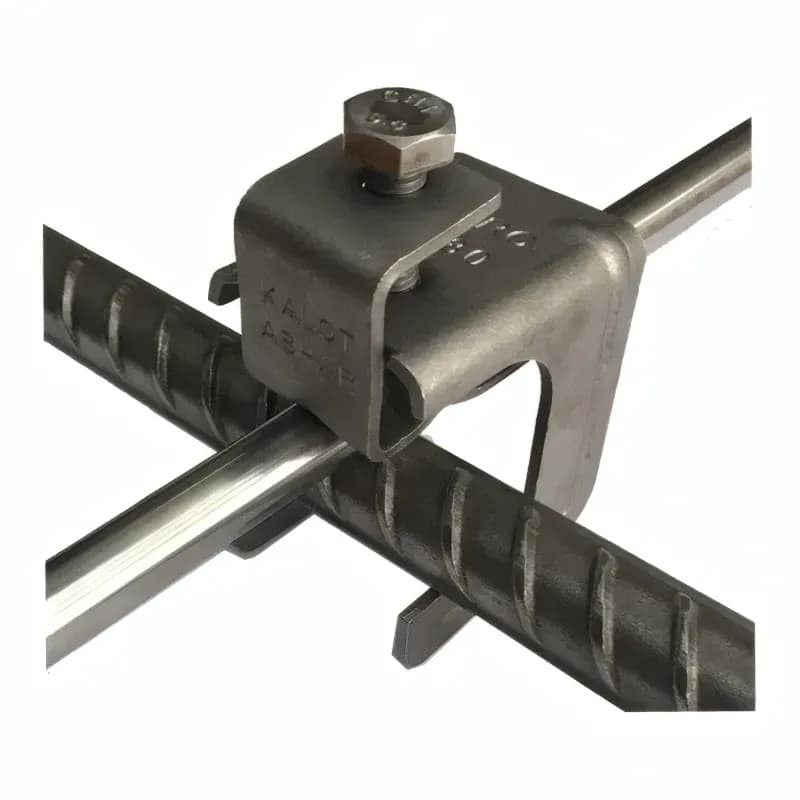
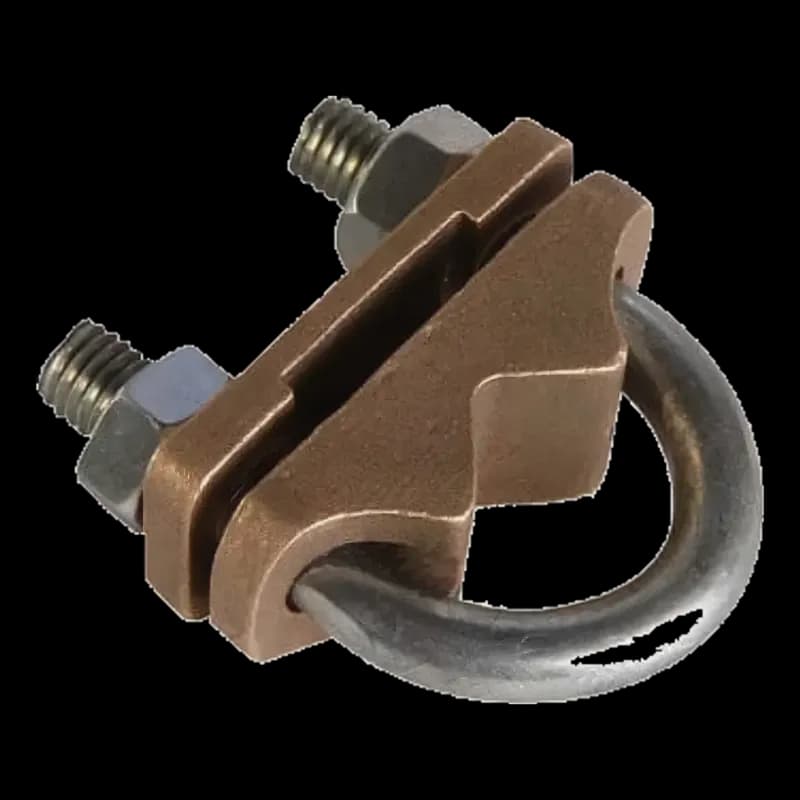
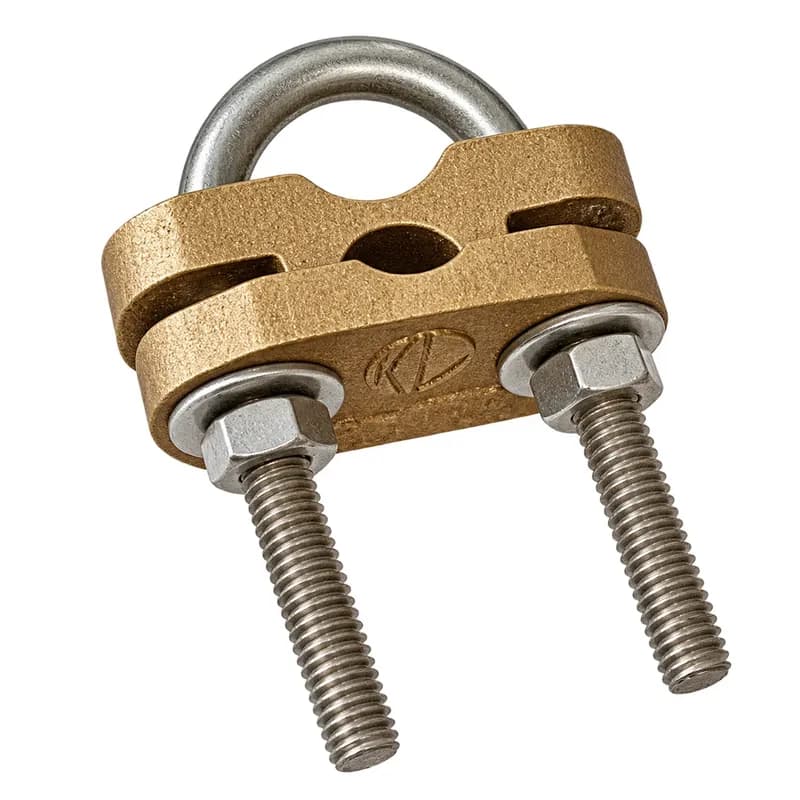
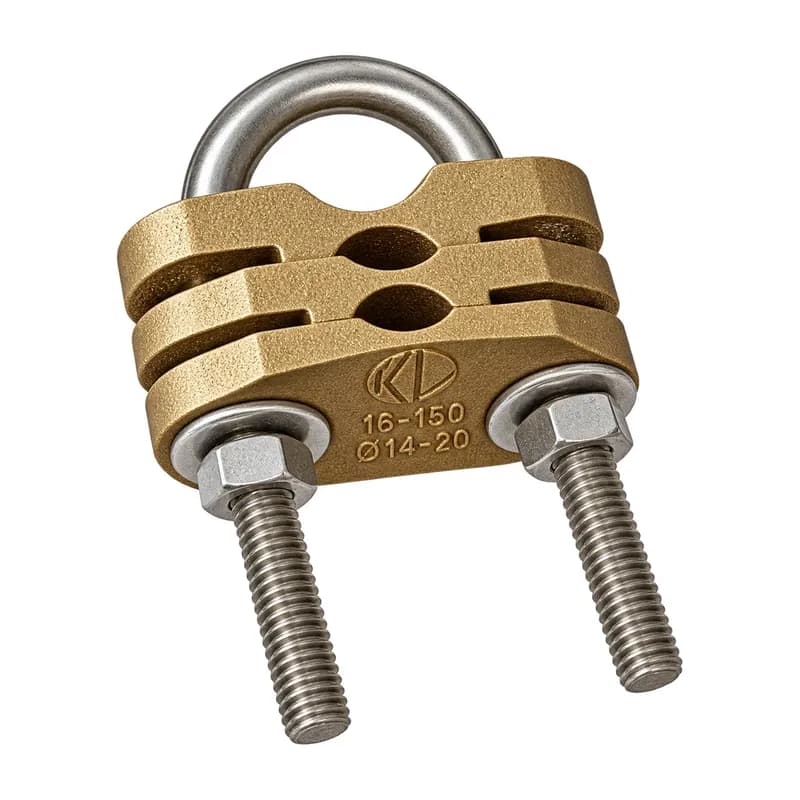
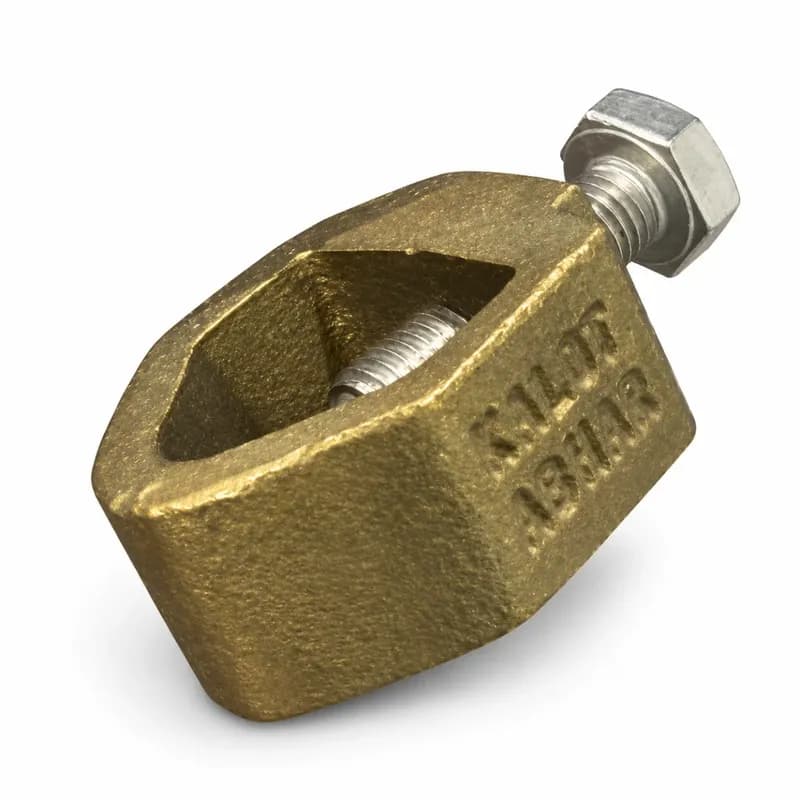
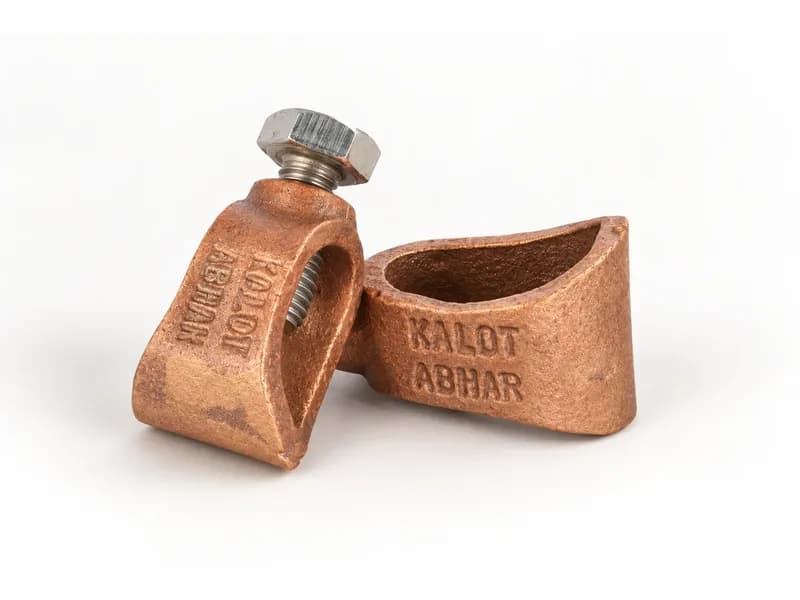
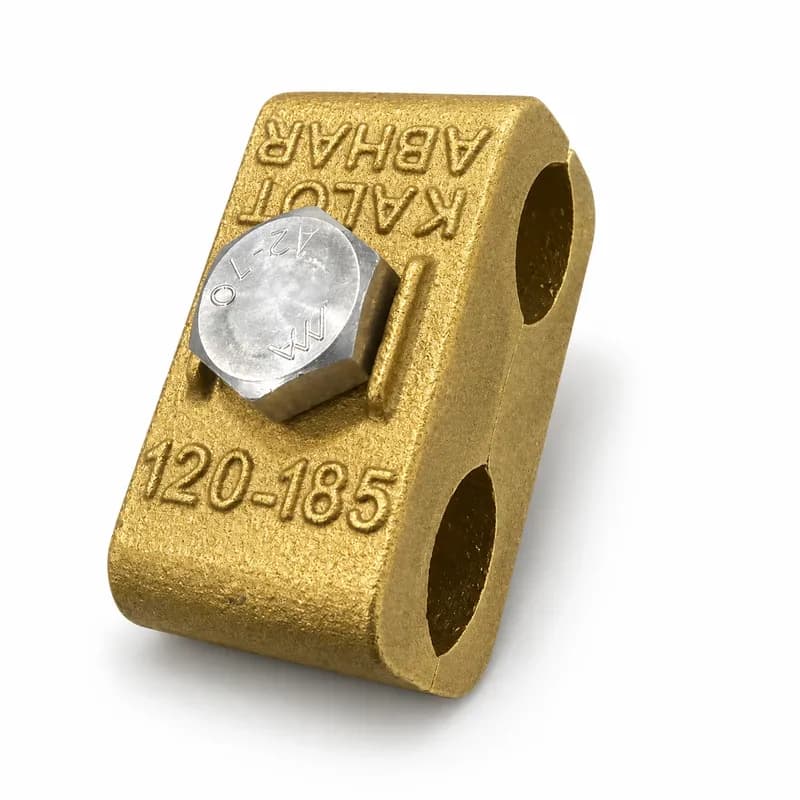
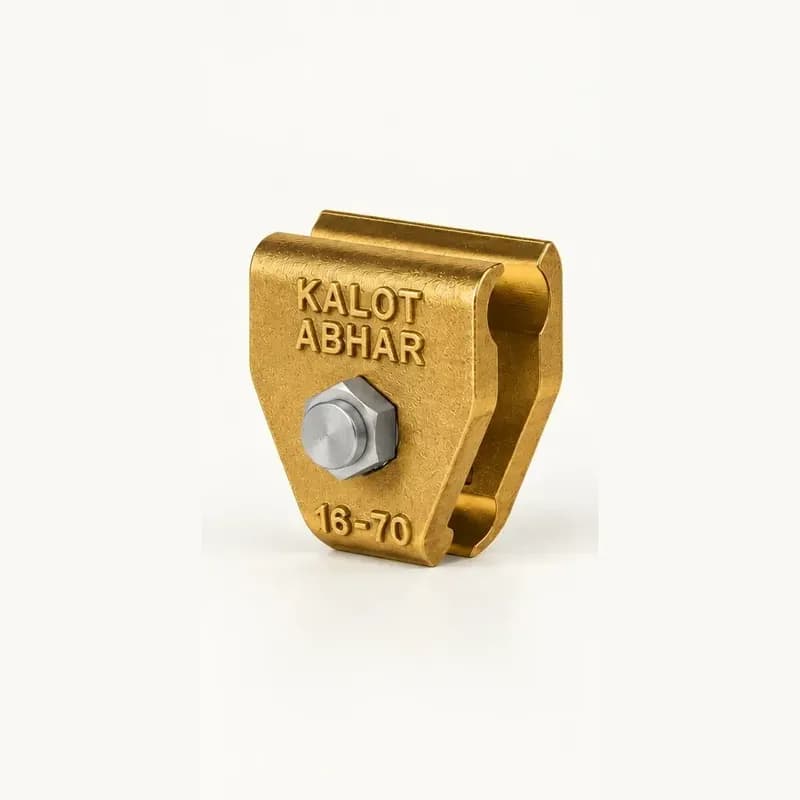
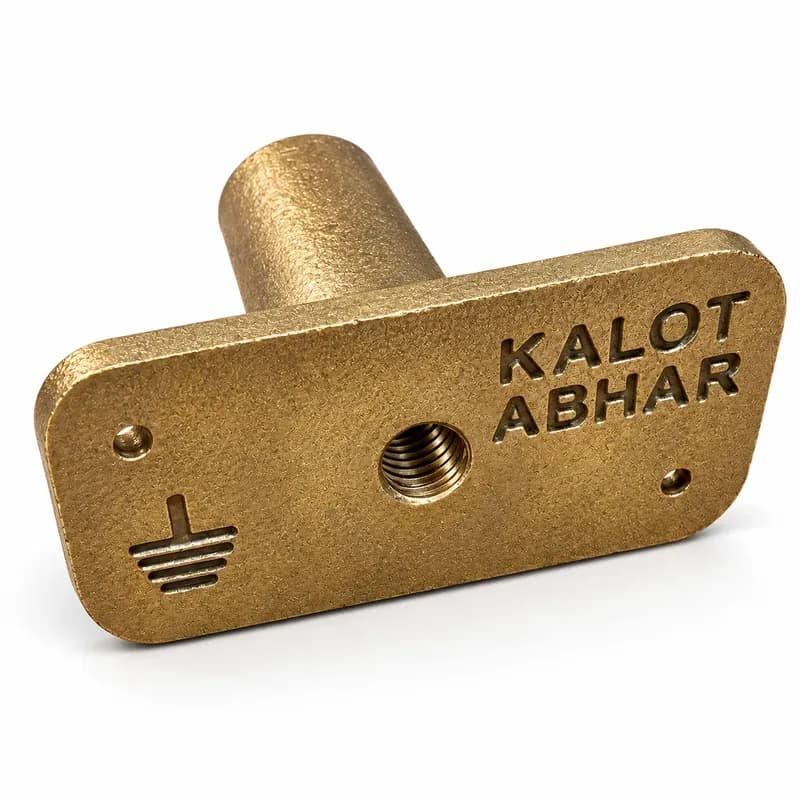
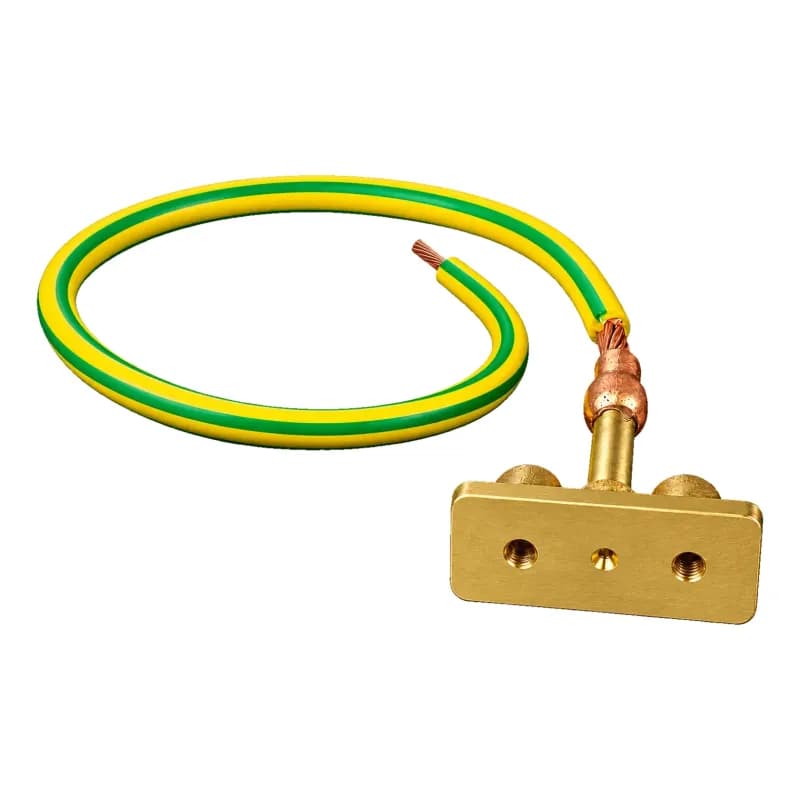
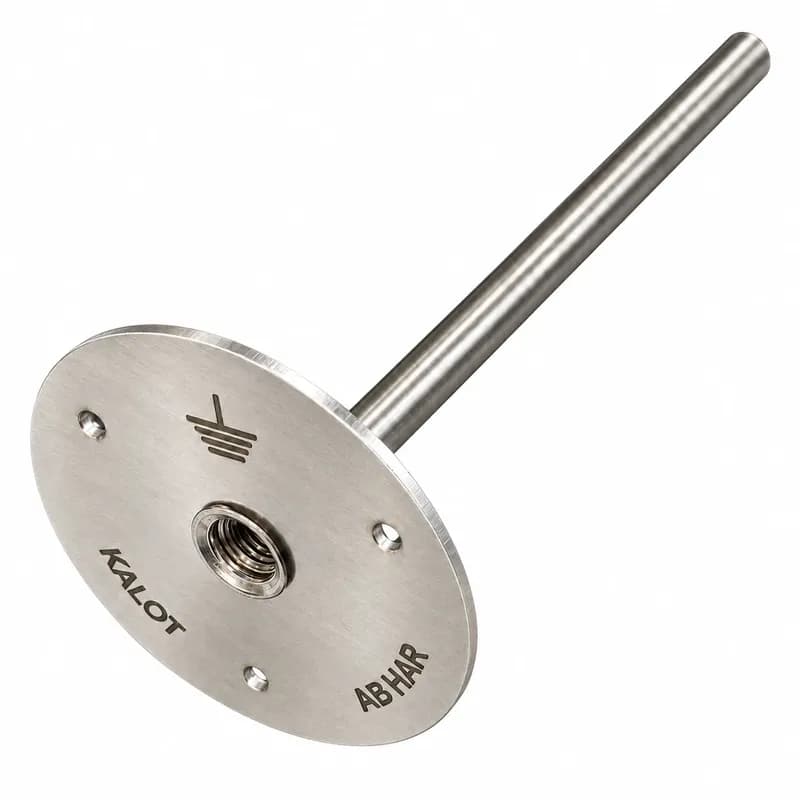
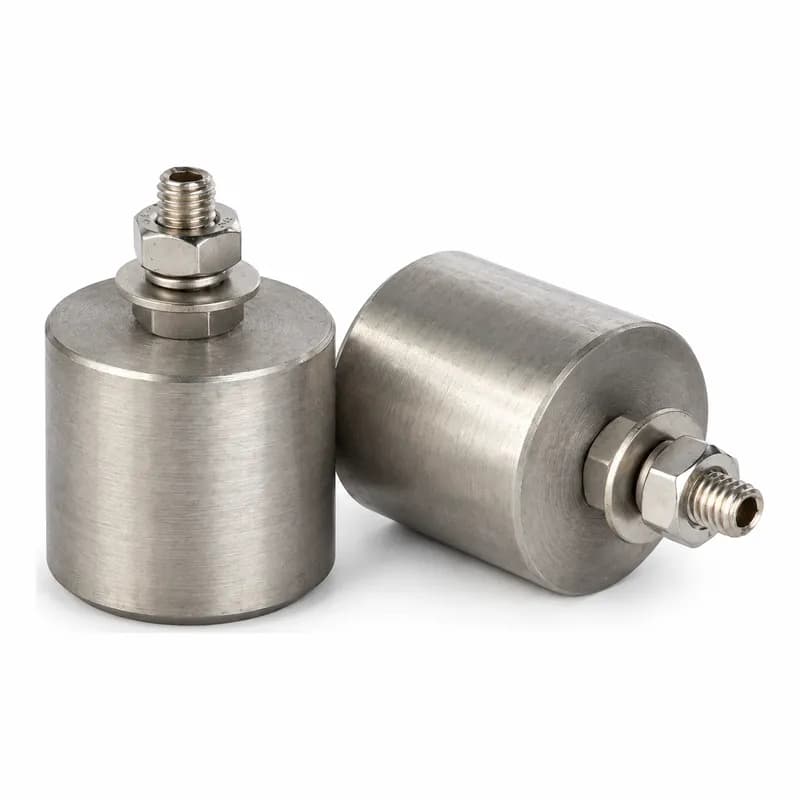
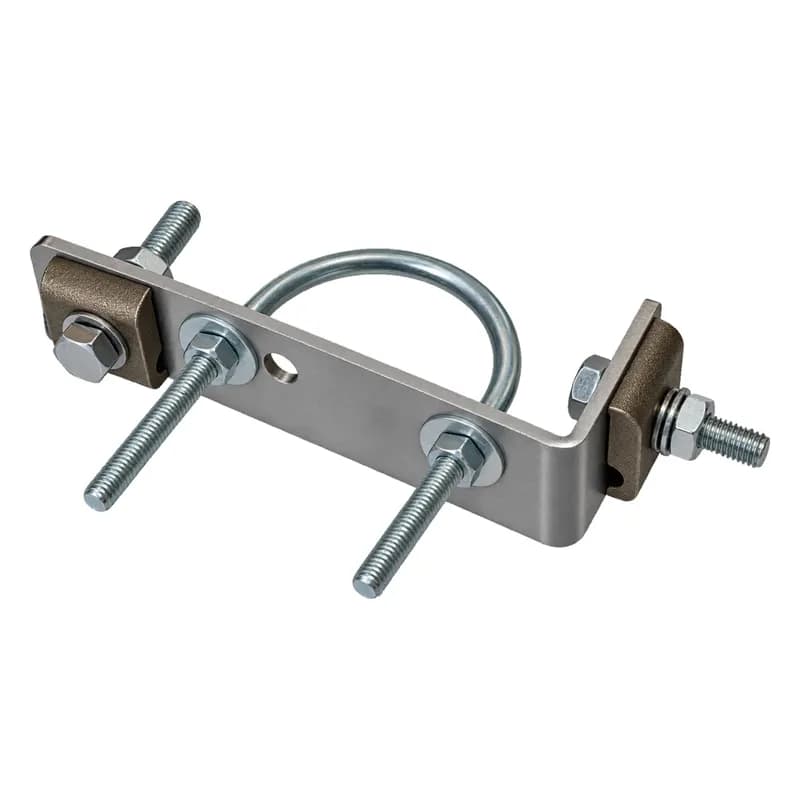
U clamp for connecting conductor to earth rod and reinforcing bar
KALOT Group earthing clamps, part of our earthing and bonding equipment family, are made to connect conductors and tapes to earth rods, reinforcing bars and metal structures, and to join conductor to conductor. On this page we have sorted them by connection type, so you can find the right clamp for each conductor at every point of the earthing system.
Types of earth clamp by connection
Reputable manufacturers group earth clamps by what they connect to what: conductor to earth rod, conductor to reinforcing bar, conductor to metal structure, and conductor to conductor. We follow the same order.
Earth rod clamps: connecting conductors and tapes to earth rods
An earth rod clamp fixes the conductor to the top of the earth rod and usually sits inside an inspection pit, so it stays accessible for inspection and measurement. The G-type clamp presses a 16 to 120 mm² copper conductor onto the top of the earth rod with a single bolt, and the clamp for connecting tape to earth rod (A-type clamp) does the same job for copper tape, with no need to drill the tape.
Choose an earth rod clamp by the actual diameter of the earth rod: the nominal diameter of a copper-bonded earth rod is quoted in inches (1/2, 5/8 and 3/4 inch), but its actual diameter is 12.7, 14.2 and 17.2 mm.
U clamps (U-bolt clamps) for earth rods and reinforcing bars
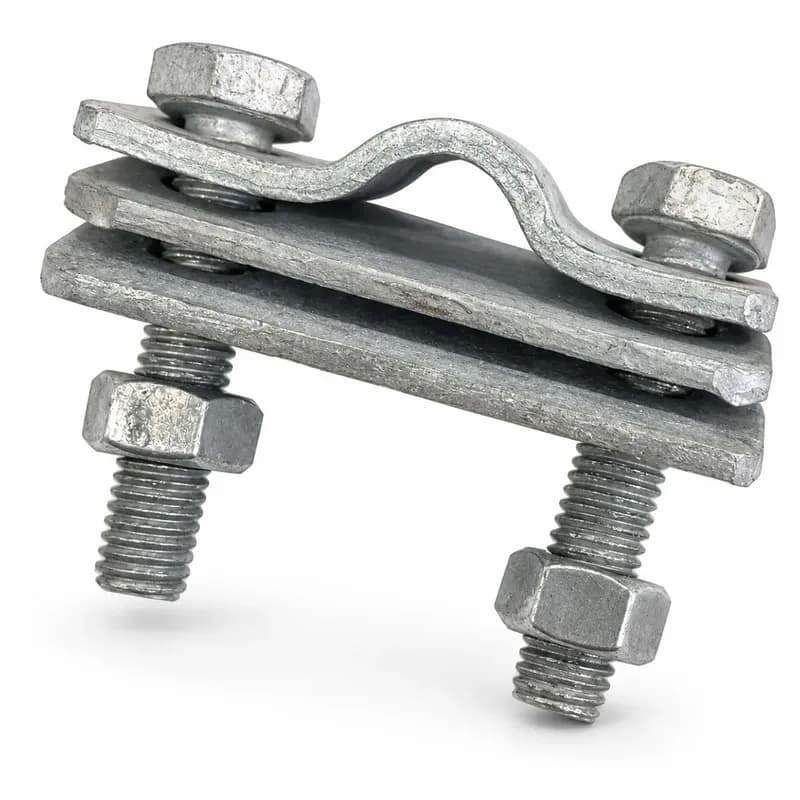
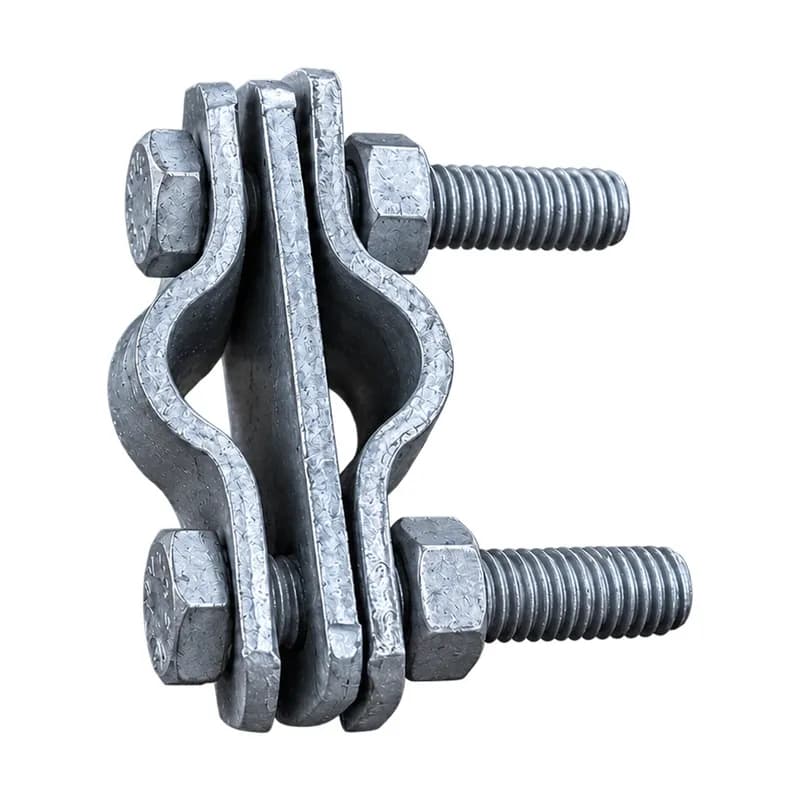
In a U clamp, the U-bolt loops around the earth rod or reinforcing bar and the conductor is pressed against it under the clamp plate. Because this clamp needs no thread or flat top, it also fits ribbed reinforcing bars, unthreaded earth rods and larger diameters. The U clamp for connecting conductor to earth rod and reinforcing bar fixes a 6 to 300 mm² conductor to an earth rod or reinforcing bar of 9.5 to 20 mm, and the U clamp for connecting vertical tape to earth rod holds a 25 mm tape, without drilling, in line with an earth rod or reinforcing bar up to 50 mm in diameter. The three-piece U clamp for connecting two conductors to earth rod and reinforcing bar fixes two copper conductors to that same earth rod or reinforcing bar with one clamp, each conductor on its own level between three brass plates.
To connect a conductor to reinforcing bars in foundation earthing, the joint is made with a clamp or by welding; tying with binding wire is not suitable for carrying lightning current. Because this joint can no longer be seen once the concrete is poured, common practice is to fix the conductor with two clamps onto two reinforcing bars.
Earth conductor clamps for plates and metal structures
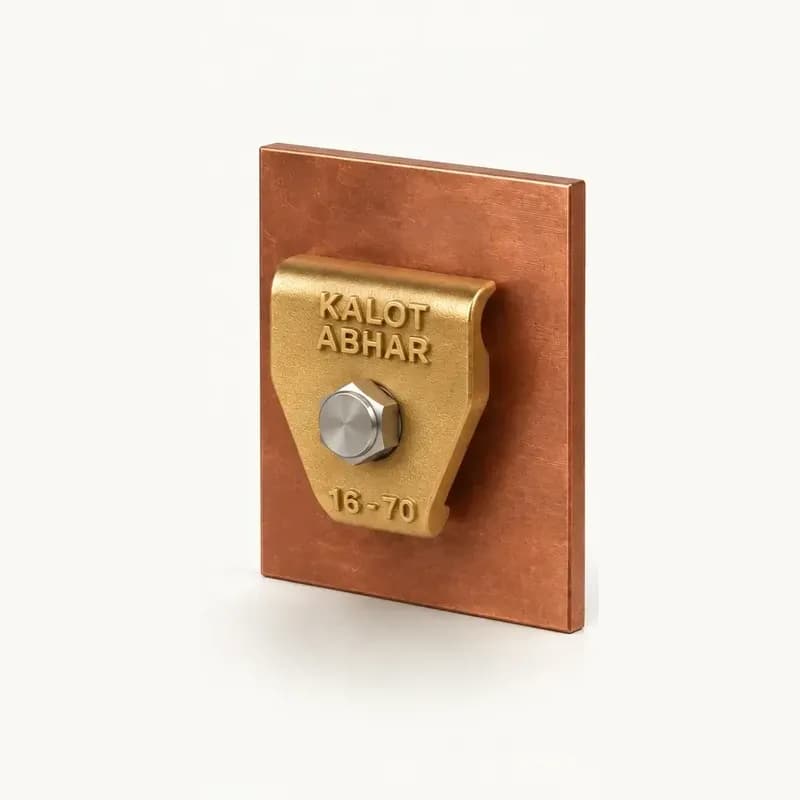
To connect an earth conductor to a column, beam, plate or the steel frame of a building, the clamp is fixed with one bolt into a hole made in the structure and presses the conductor against the metal surface. The two-piece clamp (TECD) spreads the pressure between two plates, the one-piece clamp (TECS) holds a conductor of up to 185 mm² under a single plate, and the single-bolt parallel clamp (PTEC) connects two conductors to each other and to the structure at the same time. Before fixing, clean any paint and rust from the contact surface of the structure.
Conductor-to-conductor and branch clamps for earthing networks
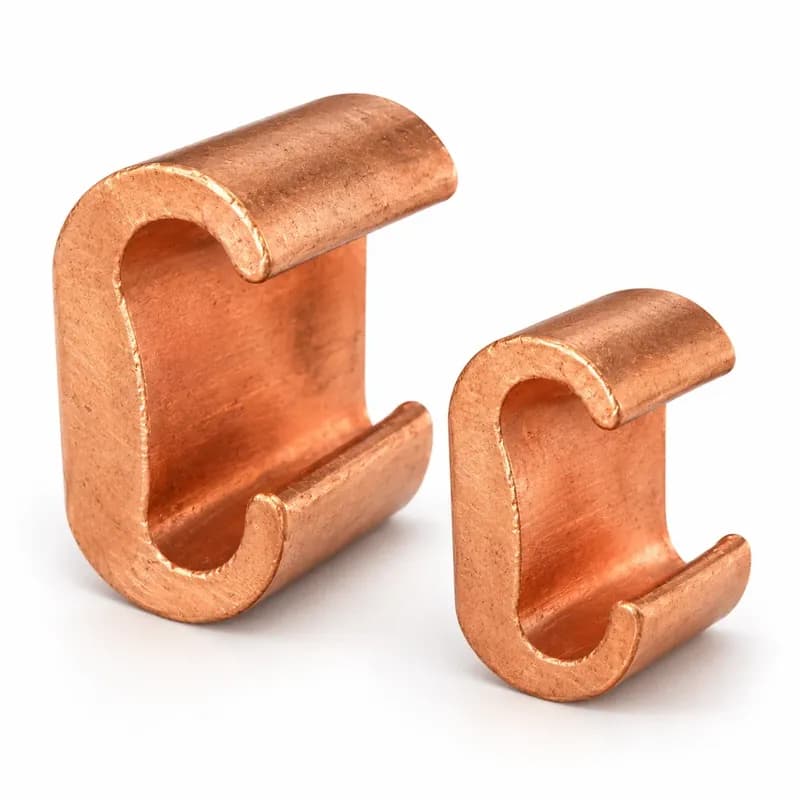
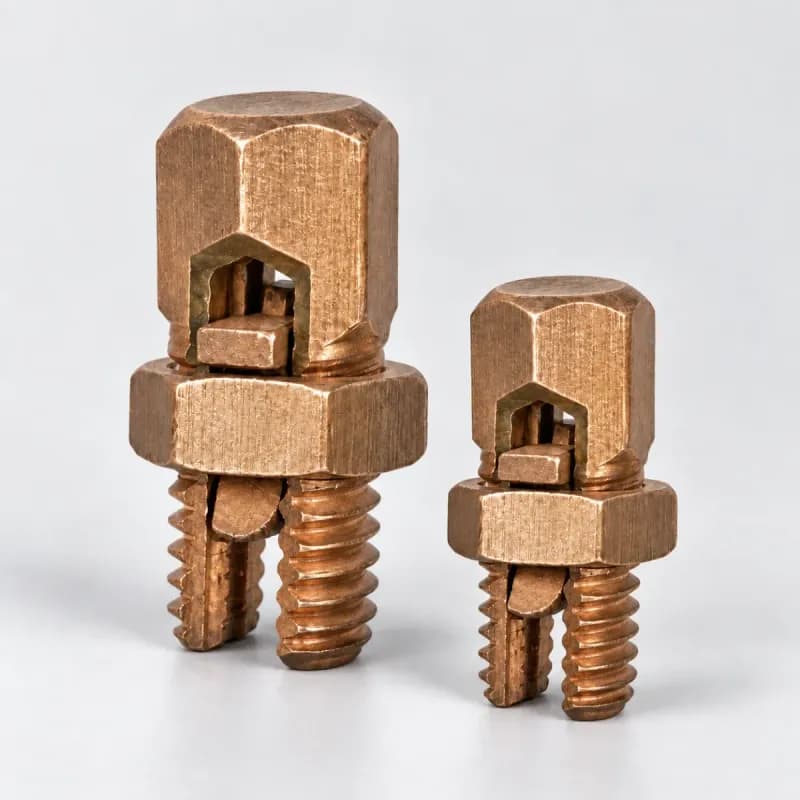
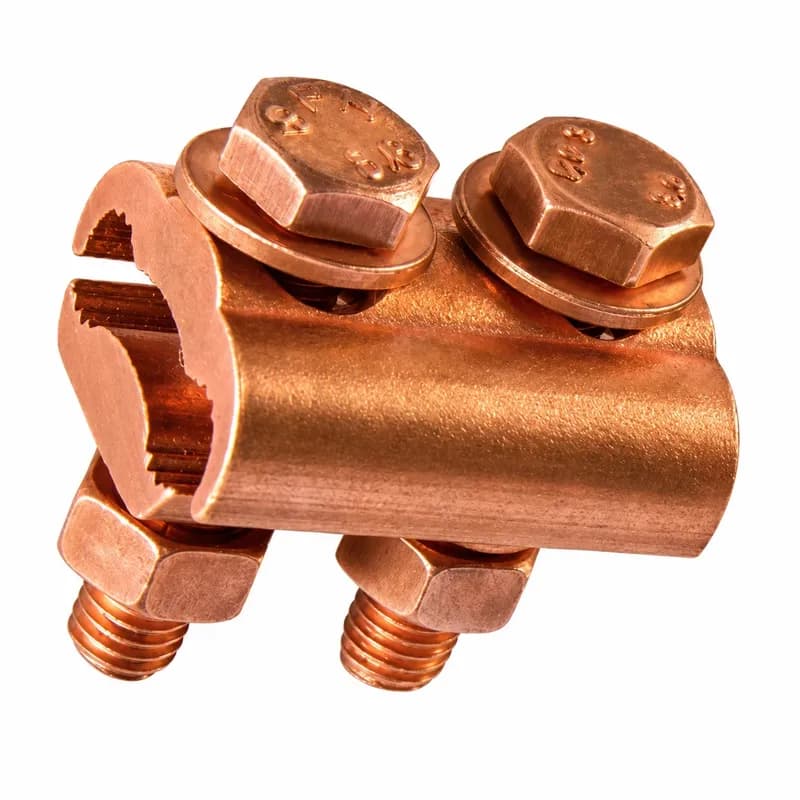
To take a branch from a main bare copper conductor without cutting it, or to continue a run of two conductors, there are three options. The two-bolt parallel clamp (PCC) and the split bolt make a joint that can be opened and re-closed and need only a spanner; the C clamp is closed with a compression tool and a dedicated die and makes a permanent, bolt-free joint.
Galvanised clamps for galvanised conductors and foundation earthing
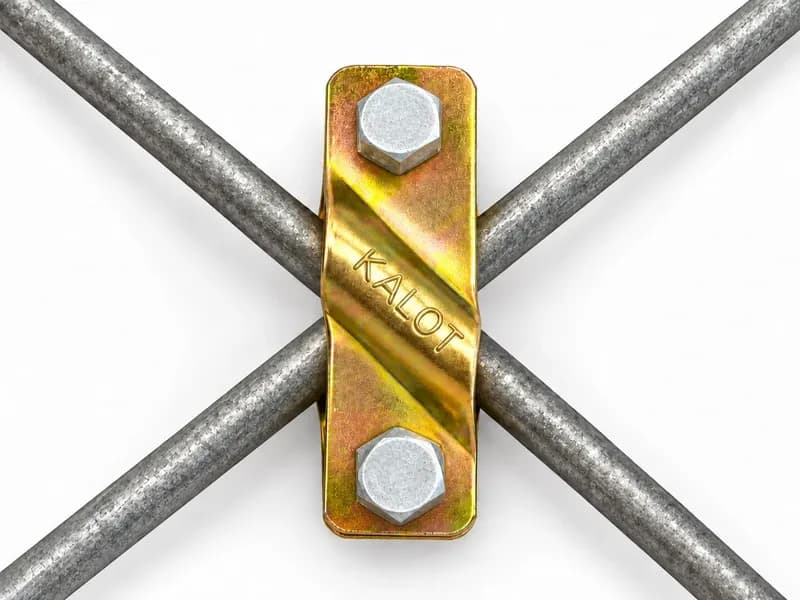
When the conductor or reinforcing bar is galvanised, the clamp must be galvanised too: contact between copper or brass and galvanised steel in damp conditions eats away the zinc coating. The galvanised U clamp, also known on the market as a foundation earth clamp, connects a 50 to 95 mm² conductor to an earth rod or reinforcing bar of 14 to 34 mm, and the galvanised cross clamp makes three-way and four-way branches and crossings of 50 to 95 mm² round conductors in foundation earthing. The galvanised clamp for tape to earth rod and round wire connects galvanised tape, in parallel or at a small angle, to round wire, a reinforcing bar or a steel earth rod. The clamp for connecting galvanised round wire to reinforcing bar connects galvanised round wire, in line, to a reinforcing bar up to size 12, to another round wire or to a stainless steel earth rod.
Which clamp should you choose?
Choose an earth clamp by three things: the connection type, the size of both sides (diameter of the earth rod or reinforcing bar, cross-section of the conductor, width and thickness of the tape) and the installation location. Each clamp code is made for one size range. The table below shows all our earthing clamps side by side, and the exact code for each size is on that product's page.
Clamp | What it connects | Material | Fixing method | Sizes (mm and mm²) | Typical installation location | Can be opened and re-closed |
|---|---|---|---|---|---|---|
Conductor to top of earth rod | Brass, stainless steel bolt | One bolt | Earth rod 14-20, conductor 16-120 | Top of earth rod in an inspection pit | Yes | |
Tape to top of earth rod | Brass, stainless steel bolt | One bolt, no drilling of the tape | Earth rod 16-25, tape 25-50 | Top of earth rod in an inspection pit | Yes | |
U clamp for connecting conductor to earth rod and reinforcing bar | Conductor to earth rod and reinforcing bar | Brass body, stainless steel U-bolt | U-bolt around the earth rod, two nuts | Earth rod or reinforcing bar 9.5-20, conductor 6-300 | Inspection pit; column and foundation reinforcing bars | Yes |
Three-piece U clamp for connecting two conductors to earth rod and reinforcing bar | Two conductors to earth rod or reinforcing bar | Brass, stainless steel U-bolt | U-bolt and three plates | Earth rod 14-20, each conductor 16-150 | Earth inspection pit, reinforcing bars | Yes |
Vertical tape to earth rod and reinforcing bar | Two brass plates, stainless steel U-bolt | U-bolt, two plates, no drilling of the tape | Tape 25, earth rod or reinforcing bar up to 50 | Where the down conductor reaches the earth rod | Yes | |
Galvanised U clamp for connecting conductor to earth rod or reinforcing bar | Galvanised conductor to earth rod or reinforcing bar | Galvanised steel | U-bolt and nut | Earth rod or reinforcing bar 14-34, conductor 50-95 | Foundation earthing | Yes |
Two-piece clamp for connecting conductor to plates and metal structures (TECD) | Conductor to plate and steel structure | Brass, stainless steel bolt | Two plates, one bolt in a hole in the structure | Conductor 16-185 | Steel column, beam and plate | Yes |
One-piece clamp for connecting conductor to plates and metal structures (TECS) | Conductor to plate and steel structure | Brass, stainless steel bolt | One plate, one bolt in a hole in the structure | Conductor 16-185 | Steel column, beam and plate | Yes |
Single-bolt parallel clamp for connecting two conductors to metal structures (PTEC) | Two conductors to each other and to the structure | Brass, stainless steel bolt | One bolt in a hole in the structure | Conductor 120-300; smaller sizes to order | Steel structure, tower and substation | Yes |
Conductor to conductor | Brass, stainless steel bolt | Two bolts, two plates | Conductor 25-185 | Earth conductor run; branch | Yes | |
Brass split bolt for conductor-to-conductor connections (SBC) | Conductor to conductor | Brass | Slotted bolt and nut | Main 10-240, branch 1.5-240 | Panel, pit and earth conductor run | Yes |
Copper C clamp for branch and parallel earth conductor connections (CCC) | Conductor to conductor (branch and parallel) | Copper | Compression with a tool and dedicated die | Main 10-240, branch 1.5-240 | Accessible branches of the earthing network | No, permanent |
Galvanised cross clamp for conductor-to-conductor connections | Branches and crossings of galvanised round conductors | Galvanised steel | Plate and bolt | Conductor 50-95 | Foundation earthing | Yes |
Galvanised clamp for connecting tape to earth rod and round wire | Galvanised tape to round wire, reinforcing bar or earth rod | Galvanised steel | Plate and bolt | Tape 25-30, round conductor 8-16 | Foundation earthing | Yes |
Clamp for connecting galvanised round wire to reinforcing bar | Galvanised round wire to reinforcing bar, round wire or earth rod | Galvanised steel | Plate and bolt | Round wire 8-10, reinforcing bar 8-16 | Foundation earthing | Yes |
Earth clamp material: brass, copper or galvanised?
The body of most of our earthing clamps is brass, and their bolts, nuts and U-bolts are stainless steel; the split bolt is all brass, the C clamp is copper, and the galvanised U and cross clamps are made of galvanised steel. On the market, brass clamps are also called "copper clamps"; brass is a copper alloy, but it is not pure copper.
The rule for choosing material is simple: the clamp must be compatible with the material of the conductor and earth rod. Brass and copper clamps are used for copper tape, copper conductors and copper or copper-bonded earth rods, and galvanised clamps for galvanised conductors and reinforcing bars. Stainless steel is compatible with most metals in an earthing system, which is why the bolts on our brass clamps are stainless steel, so that galvanic corrosion does not destroy the contact between conductor and earth rod over time. Also, do not install copper parts above galvanised parts: particles washed off the copper by rain eat away the zinc coating, even without direct contact.
Installing and inspecting earth clamps
- Clean the contact surface of the conductor, earth rod or structure with a wire brush until the metal is bright; do not abrade plated parts.
- Choose a clamp that matches the size of the conductor and earth rod, so neither is damaged or crushed.
- Seat the conductor fully in the clamp opening, so the whole clamp surface bears on it.
- Tighten the nuts evenly and in turn, following the manufacturer's instructions.
Place bolted joints where they stay accessible for inspection and measurement, for example inside an inspection pit or next to an earth bar. During periodic inspection, check the clamps for corrosion, looseness and damage; open any joint that has loosened or corroded, clean it and re-tighten it, or replace the clamp. To measure earth termination resistance, the conductor is disconnected at the test joint; an earth bar makes this possible.
Standards for earth clamps
IEC 62561-1 is the standard for connection components in lightning protection systems and sets the requirements and tests for clamps and connectors. Under this standard, a component is exposed to corrosive conditions such as salt mist and a sulphurous atmosphere before the lightning current test, and the test class is valid only for the conductor and clamp combination that was tested. Our earthing clamps are designed and manufactured according to IEC 62561-1.
IEC 62305-3 accepts bolted, compression, welded and brazed joints in lightning protection systems, asks for as few joints as possible, and recommends a test joint, openable only with a tool, where each down conductor reaches the earthing system. IEC 60364-5-54 likewise permits connecting the earth conductor to the electrode by exothermic welding, a compression connector or a clamp, provided it is installed according to the manufacturer's instructions and does not damage the conductor or the electrode.
For permanent joints in substation earthing grids, IEEE 837 sets the thermal cycling, corrosion and short-circuit current tests. To learn more, read our article on standards for designing and installing earthing systems.
Request an earth clamp quote from KALOT Group
For a quote, send us the connection type, the diameter of the earth rod or reinforcing bar, the cross-section of the conductor or the dimensions of the tape, the conductor material, the quantity and the installation location. If you have a project drawing, attach it too, so our specialists can recommend the right clamp for each point of the earthing system.
Frequently asked questions about earth clamps
What is an earth clamp and what is it used for?
A metal part that connects a conductor of the earthing system, by bolt or compression, to an earth rod, reinforcing bar, metal structure or another conductor, creating a continuous path for fault current and lightning current to earth.
What types of earth clamp are there?
Earth rod clamps for the top of the earth rod (G-type and A-type), U clamps for earth rods and reinforcing bars, conductor clamps for plates and metal structures, conductor-to-conductor clamps (parallel clamp, split bolt and C clamp), and galvanised clamps for galvanised conductors. You can see them all side by side in the earth clamp selection table.
Which clamp is best for connecting an earth conductor to an earth rod?
For a conductor of up to 120 mm² on the top of an earth rod, the G-type clamp is the simplest option. For larger conductors of up to 300 mm², and also on a reinforcing bar or an earth rod without a flat top, the U clamp is the better fit.
How do you connect an earth conductor to an earth rod?
Clean the top of the earth rod and the conductor with a wire brush, place a clamp of the right size on the earth rod, seat the conductor fully in the clamp opening, and tighten the bolt or nuts according to the manufacturer's instructions. Place the joint where it stays accessible for inspection and measurement, for example inside an inspection pit.
Which clamp should be used to connect an earth conductor to foundation reinforcing bars?
A brass U clamp for copper conductors and a galvanised U clamp for galvanised conductors. Because the joint can no longer be seen once the concrete is poured, common practice is to fix the conductor with two clamps onto two reinforcing bars; tying with binding wire is not suitable for carrying lightning current.
How do you connect an earth conductor to a building's steel frame?
With a conductor-to-structure clamp: a hole is made in the column or beam, paint and rust are cleaned from the contact surface, and the clamp presses the conductor onto the structure with one bolt. The one-piece and two-piece clamps take a conductor of up to 185 mm², and the single-bolt parallel clamp takes two conductors of up to 300 mm².
How do you choose the size of an earth clamp?
You need two figures: the actual diameter of the earth rod or reinforcing bar, and the cross-section of the conductor or the width and thickness of the tape. Each clamp code is made for one size range; see the range of each clamp in the table "Which clamp should you choose?", and if you are not sure, send both sizes to our specialists.
What are earth clamps made of: is brass or copper better?
Neither is better in general; what matters is that the clamp material is compatible with the conductor and earth rod. Most of our earthing clamps have a brass body and stainless steel bolts, and suit copper conductors and tapes and copper or copper-bonded earth rods; our C clamp is copper, and galvanised clamps are used for galvanised conductors.
Which is better: an earth clamp or exothermic welding?
Both are accepted connection methods, and the choice depends on where the joint is. A clamp makes a joint that can be opened for inspection, measurement or changes, and suits accessible points such as inspection pits and structures. Exothermic welding makes a permanent joint and is chosen for joints buried in the soil. A compression C clamp also makes a permanent joint, but it is installed without flame and in any weather.
What does the price of an earth clamp depend on, and how do you get a quote?
The price of an earth clamp depends on its type, material, size and quantity. Send us the connection type, the size of the earth rod or reinforcing bar, the cross-section of the conductor or the dimensions of the tape, and the quantity, and our specialists will tell you the right clamp and its price.