
Franklin France ESE air terminals | Wider coverage, faster design
A technical guide to choosing Franklin France ESE air terminals, how ΔT works, how they differ from a conventional system, and the ACTIVE models. With 30 years representing Franklin France in Iran, we at KALOT Group will make the best choice for your project conditions.
- Three specialist models
- Chosen project by project
- KALOT technical support


The complete ACTIVE product family from Franklin France
Three technology levels for testing, control and monitoring to suit your project
ACTIVE 4D · flagship of the family
45 years
Franklin France in business
30 years
KALOT Group representing Franklin France in Iran
Precise selection, sound protection
Guide to choosing a Franklin France ESE air terminal, with technical support from KALOT Group
Understanding the technology
What is an ESE air terminal and how does it differ from a passive or conventional one?
An ESE air terminal is essentially a Capturing Device, in other words a lightning capture unit: it offers a preferred point for the cloud's downward leader to connect to. Carrying the current to earth is the job of the down conductors and the earthing system, which must be designed as separate but coordinated parts of the whole.
The technical difference between an ESE and a conventional air rod lies in "early initiation time". In a high-voltage laboratory, the moment the device starts its Upward Leader is compared with that of a reference conventional air rod, and ΔT is measured. This figure is not the direct speed of the leader; it shows how much earlier the upward leader started under test conditions. According to NF C 17-102:2011, the maximum value accepted in protection radius calculations is 60 µs, even if the test result records more than this.
Capturing Device: the preferred point for capturing lightning
ΔT: how much earlier the upward leader starts compared with a conventional air rod
Tested in a high-voltage laboratory
The standard's calculation limit: 60 µs at most
Coverage radius
The parts of a lightning protection system built around an ESE air terminal
The image below shows the role of the lightning capture device, the Rp zone, the tall mast, two down conductors and the earthing system.
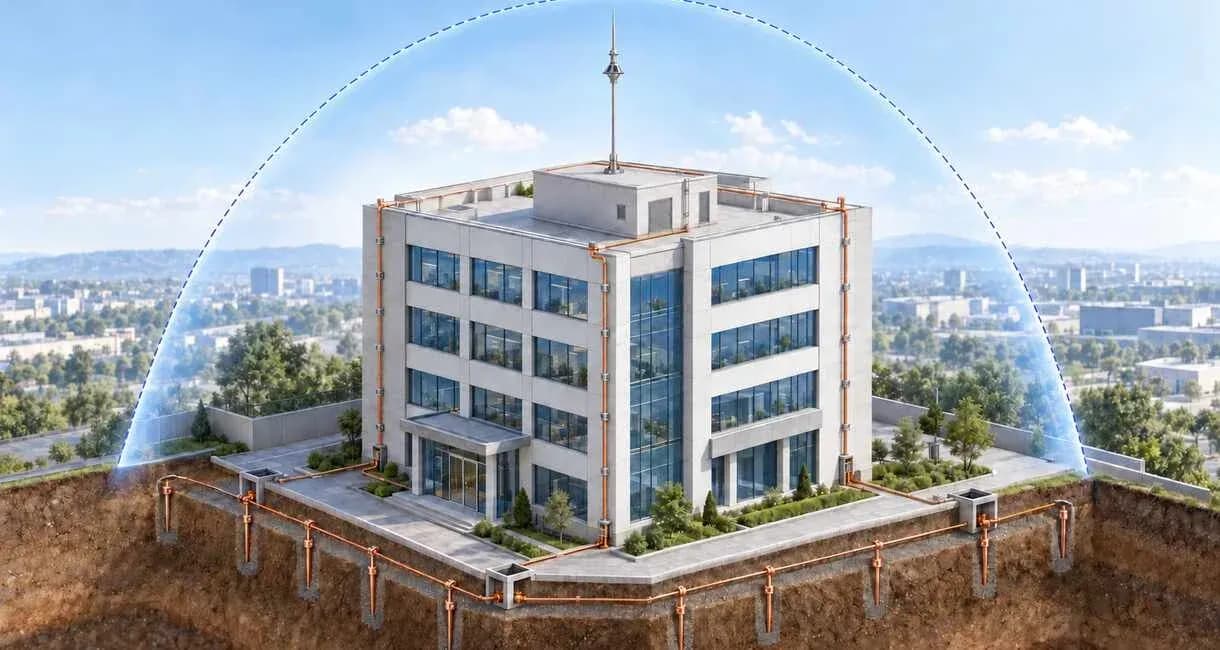
Franklin France ESE air terminal
Installed at the highest point of the structure on a mast of about 5 m
Protection zone (Rp)
Coverage radius according to the protection level and ΔT value
Two independent down conductors
The current travels along two separate routes on two sides of the building
Lightning protection earthing system
Earth ring, deep electrodes and test points
Advantages
Why ESE? How it compares with the conventional IEC 62305 method
With the conventional method, positioning conventional air rods, a mesh network or the Rolling Sphere method can call for more capture points, conductors and fittings. With its tested ΔT and larger Rp radius, a correctly designed ESE can make installation on extensive projects simpler and more economical, but it still needs a down conductor and complete earthing.
A larger coverage radius
The measured ΔT, installation height and protection level determine the Rp radius.
Cost-effective on large projects
Fewer capture points, conductors and fittings can lower the total installation cost.
Faster, lighter installation
On many large sites, the volume of equipment and the installation time are lower than with a conventional network.
Testing to suit each model
1D Plus with a wired tester; 2D and 4D with remote test and control features.
A complete conductor and earthing system
An ESE is only the Capturing Device and must be completed with a down conductor, connections and earthing.
Chosen to suit the project
The model and ΔT are chosen according to the required radius, the site geometry and the protection level.
Technical backing
Franklin France and official representation in Iran
FRANKLIN FRANCE
45 years of activity
A French brand active in lightning protection solutions and the maker of the ACTIVE family of ESE air terminals.

30 years as representative in Iran
KALOT Group supplies Franklin France ESE air terminals in Iran and offers guidance on assessing project needs, choosing the model, designing the system components and technical support.
Available models
Three models in the ACTIVE family
See each model separately and review its technical features, test method and documents on its own dedicated page.
 Franklin France ESE Air Terminals
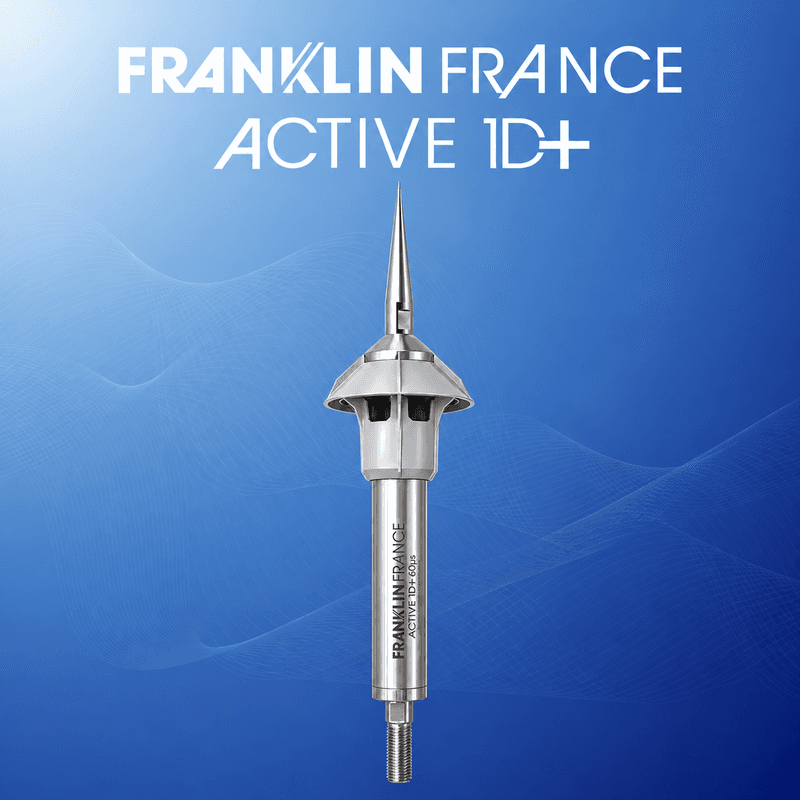
Franklin France ACTIVE 1D+ ESE air terminal
Can be tested with a wired tester and telescopic pole
The ACTIVE 1D+ ESE air terminal by Franklin France comes in four models with ΔT of 12, 25, 45 and 60 microseconds, with test reports and Bureau Veritas inspection certificates, and is supplied by KALOT Group.
View product specifications and downloads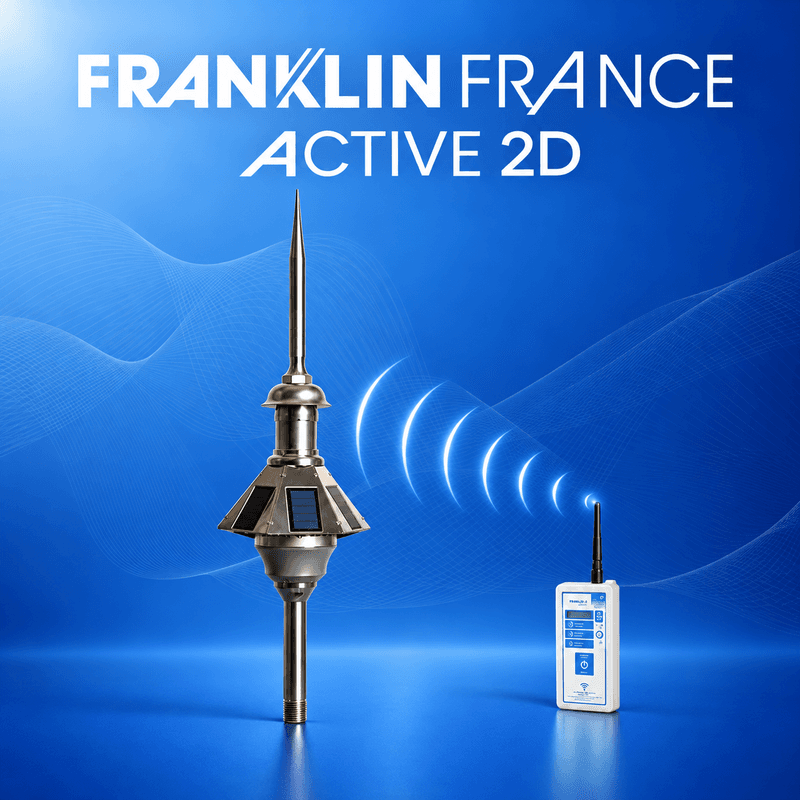 Franklin France ESE Air Terminals
Franklin France ACTIVE 2D ESE air terminal
Wired test or remote test on site
The Franklin France ACTIVE 2D is an ESE, or active, air terminal with a dual triggering system. Its main energy source is the ambient electrostatic field as a storm cloud approaches. Alongside this, a power capacitor acts as a backup, charged by solar cells on the body, so that the energy needed to continue the upward leader is available at the right moment. The device's performance can be checked on site, from a distance of up to 100 metres, using the remote tester.
View product specifications and downloads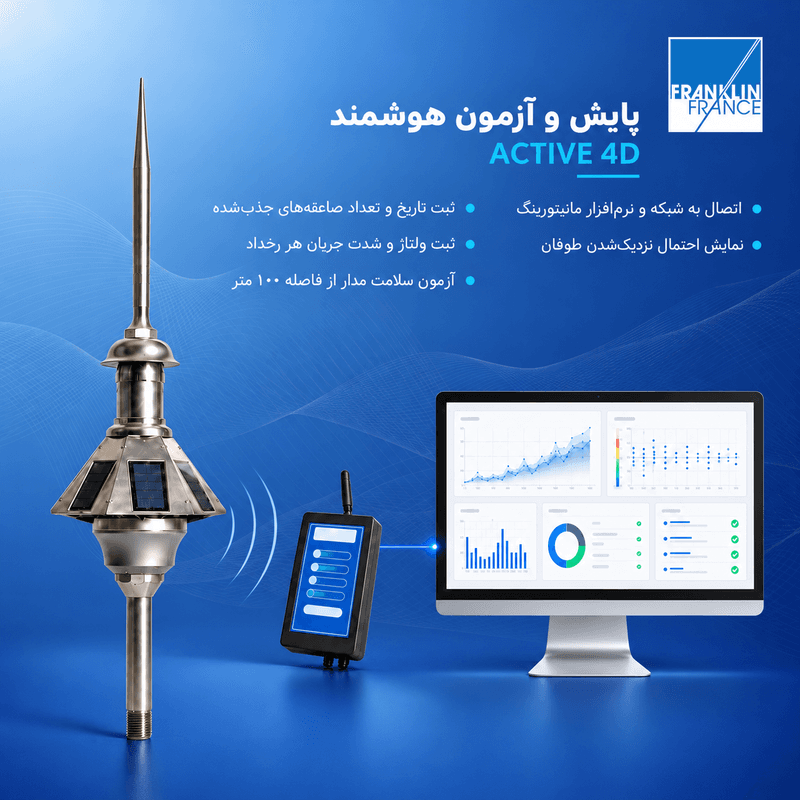 Franklin France ESE Air Terminals
Franklin France ACTIVE 4D ESE air terminal
Smart monitoring and control of the lightning protection system
Franklin France's next-generation capacitive electronic lightning rod, certified to NFC 17-102.
View product specifications and downloads
Accessories
ESE air terminal accessories
Like every other product on our site, each part has its own dedicated page in our standard product layout.
 Franklin France ESE Air Terminals
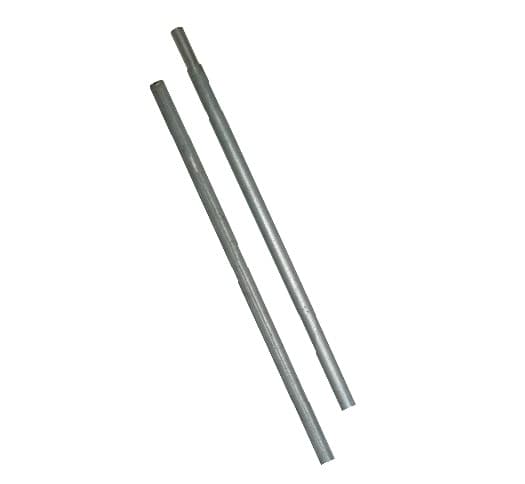
Telescopic mast for ESE air terminals
The KALOT telescopic mast for ESE air terminals consists of two 2 m galvanised steel tubes with a male and female joint. Stainless steel connectors join the two sections and mount the unit at the top of the mast. The nominal length of the mast assembly is 4 m, and with a one-metre air terminal it makes an assembly 5 m high.
 Franklin France ESE Air Terminals
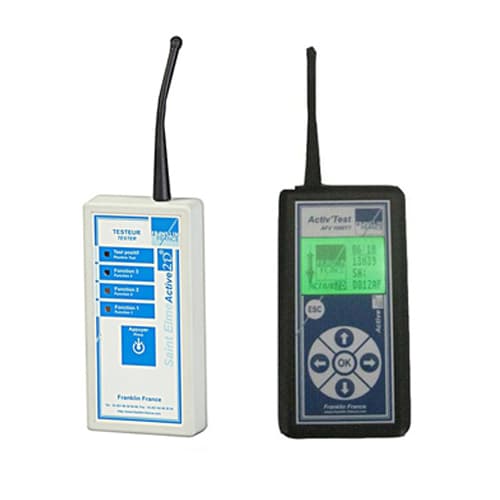
Franklin France ACTIVE 2D remote tester for ESE air terminals
The ESE air terminal remote tester is an innovative tool from Franklin France, designed to test the health and performance of ESE air terminals from a distance of 100 metres. These devices let you check and monitor the system with no direct connection to the air terminal. The key point is that this remote testing technology was an exclusive innovation of Franklin France. After its introduction, it was included for the first time as a requirement in the new edition of the international lightning protection standards. Other manufacturers then began to develop this equipment and have offered their own models, which naturally do not match the quality and functionality of Franklin France remote testers.
 Franklin France ESE Air Terminals
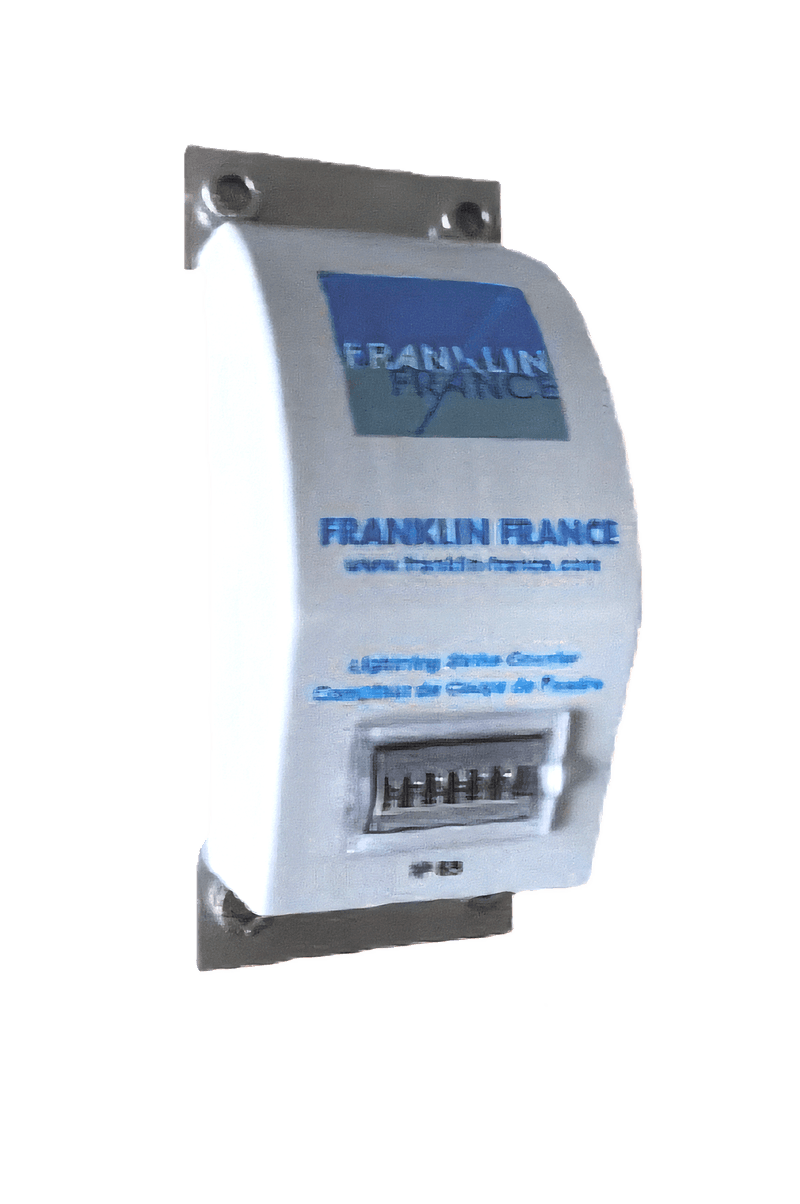
Franklin France lightning strike counter (air terminal counter)
The Franklin France air terminal counter, or lightning strike counter, is installed on the down conductor and records the number of lightning discharges that pass through it. It tells the operator that strikes have occurred and helps plan technical visits and checks of the lightning protection system on a better-informed basis. To ask for a price and buy a lightning counter that suits your project equipment, contact the KALOT specialists. This counter is made to IEC 62561 and has a test certificate.
 Franklin France ESE Air Terminals
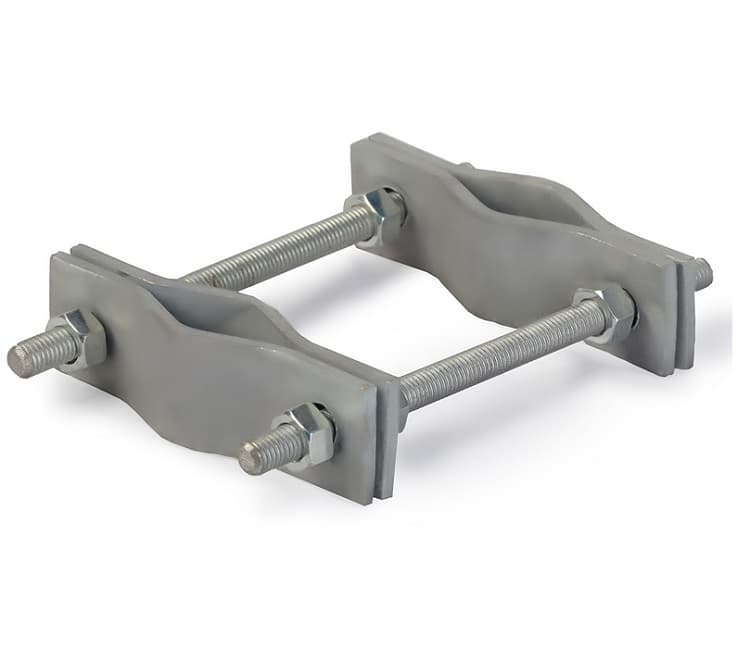
Arched clamp for mounting ESE air terminal masts
The KALOT arched clamp is one of the simplest and most reliable ways to fix an ESE air terminal mast to the pipe support at the installation site. Each clamp is made of two galvanised steel sheet jaws with a pipe recess and two double-ended threaded studs with nuts and washers: one jaw grips the air terminal mast, the other grips the support pipe, and the studs tighten the two pipes firmly side by side. At least two arched clamps are usually installed, 30 to 70 cm apart depending on the length of the support. Made by KALOT Group.
Technical framework
Standards for design, installation and system components
This page explains the role of the standards in design, coverage radius calculation and installation of the system components. Downloadable files and documents are on the related product page.
NF C 17-102:2011
Design and installation of ESE systems, Annex C tests and protection radius calculation
IEC 62305
Risk assessment and design of conventional lightning protection systems
IEC 62561 series
Requirements and tests for LPS components: connections, conductors, clamps and lightning counters
Frequently asked questions
Short answers to the main project questions
No. The choice of model and system layout depends on the protection level, the geometry of the structure, the installation height and the project calculations.
No. The air terminal must be designed and installed together with a suitable mast, down conductor routes, connections and an earthing system.
They create reliable discharge paths for the current and fit the project design; the final number and positions must be engineered.
The right model can be chosen after reviewing the project conditions, the testing or monitoring needs and the operating requirements.
Check the certificate and test report from a reputable laboratory for the Annex C tests of NF C 17-102:2011; simply printing ΔT or the name of the standard on a brochure is not enough.
Contact us for technical advice and a price enquiry
Contact our KALOT specialists for technical advice, a price enquiry and to arrange the supply of Franklin France ESE air terminals.