
Clay-base, cost-effective earth-resistance-reducing material, compliant with IEC 62561-7 and IGS-I-EL-001.
View product page and specifications →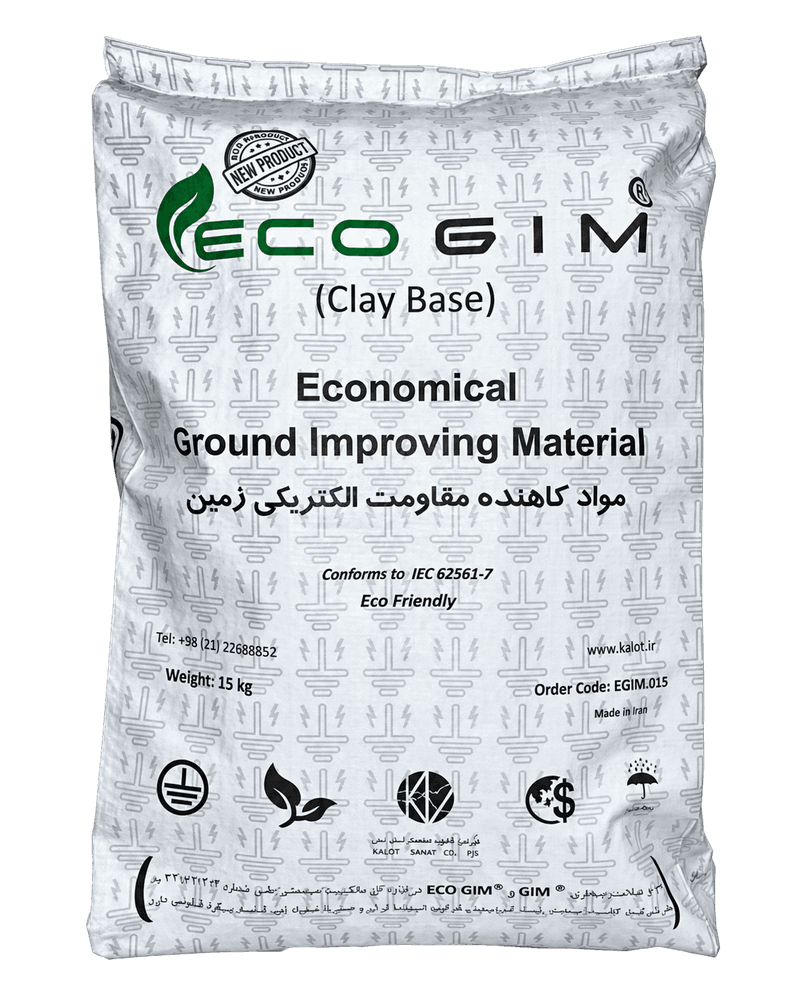
Over 20 years of experience, and Iran's first carbon-based ground improvement material
Ground improvement materials are placed around the earth electrode to increase its contact with the soil and lower the resistance of the earthing system. When the soil is rocky, sandy or dry, when the earth rod cannot reach sufficient depth or there is no room for more electrodes, driving longer earth rods or adding electrodes does not always reach the target resistance. In these conditions, ground improvement materials for earth pits create a stable conductive path between the electrode and the soil.
The quality of a ground improvement material is not measured by lower resistance alone. A material that stays around the electrode must be chemically stable, must not wash out in water and must not corrode copper or galvanised electrodes. IEC 62561-7 defines tests for exactly this purpose: metal leaching, sulphur below 2 percent, resistivity by the four-electrode method, pH, and a corrosion test measuring polarisation resistance on copper and galvanised electrodes. Resistivity and pH must also be stated on the packaging or in the product documents.
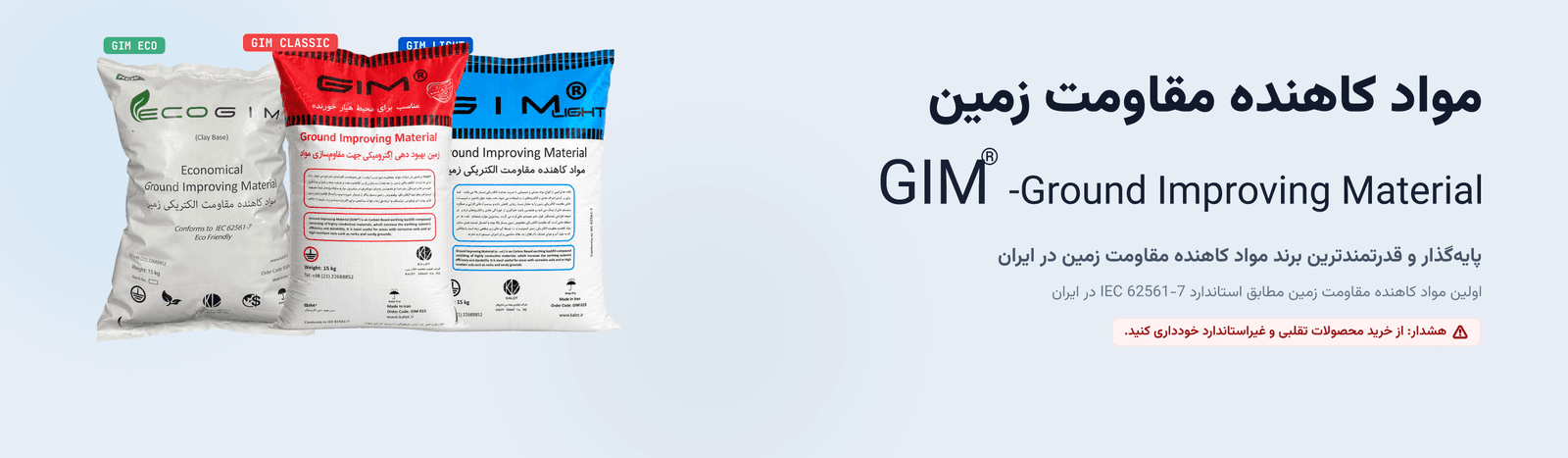
We offer the GIM family of ground improvement materials in three products, so the choice can match the soil conditions and the needs of the project:
GIM ground improvement material, carbon-based for highly corrosive environments: this material suits all soils with high resistivity and is highly effective, and it remains suitable even where the same soil is also highly corrosive. Resistivity below 0.5 Ω·m and polarisation resistance above 8 Ω·m². By preventing conductor corrosion, GIM extends the life of the earth conductor; it is used in ordinary soils and is our choice for highly corrosive environments in industrial, power plant and oil and gas projects. GIM ground improvement material
GIM Light ground improvement material, carbon-based and suitable for all soils with high resistivity, provided the environment is non-corrosive. The same carbon base, the same density and the same installation method as GIM, with resistivity below 1 Ω·m and polarisation resistance above 7.5 Ω·m²; for buildings and general projects in non-corrosive soil. The only difference between GIM and GIM Light is the corrosiveness of the environment: GIM for highly corrosive environments and GIM Light for non-corrosive ones. GIM Light ground improvement material
ECO GIM ground improvement material, clay-based and economical: A multi-mineral, clay-based compound with resistivity below 1 ohm-metre and polarisation resistance above 7.2 ohm-square metres. It is our economical option for ordinary soils where there is no risk of the material being washed out. Each bag of ECO GIM is prepared with 15 kg of good-quality clay and 8 litres of water. ECO GIM ground improvement material
Each 15 kg bag of GIM or GIM Light is mixed on site with 2 kg of Portland cement and 8 litres of water. Once placed, this mortar hardens, its grip and adhesion to the conductor and electrode increase, and surface and groundwater do not wash it away; that is why some sellers and buyers also call it “conductive cement”. ECO GIM is prepared with clay and, like other clay-based materials, does not have this property.
On rocky sites, driving an earth rod or digging a deep pit is hard and costly. With GIM ground improvement material, you simply dig a trench, lay the earth conductor in it and pour the GIM or GIM Light mortar over it. The mortar sets, surrounds the conductor and increases its contact area with the soil. The same property also makes GIM and GIM Light suitable for these locations:
The choice between the two depends only on how corrosive the environment is: GIM for highly corrosive environments and GIM Light for non-corrosive ones.
All three products come in 15 kg bags, and their test results are in the GIM series catalogue. To choose and enquire about ground improvement material for your earth pit, send our specialists the soil type or soil test report, the installation method (horizontal trench, earth rod or copper plate), the dimensions of the work and the target resistance. You can also work out the number of bags with the GIM consumption calculator. If you are a site member, you can use our earthing system resistance calculator for small projects as well.
Clay-base, cost-effective earth-resistance-reducing material, compliant with IEC 62561-7 and IGS-I-EL-001.
View product page and specifications →GIM ground improvement material is a carbon-based product from KALOT Group for high-resistivity and highly corrosive soils and environments. Its resistivity is below 0.5 Ω·m and its polarisation resistance is above 8 Ω·m², a figure that matters for corrosive environments in the IEC 62561-7 corrosion test. GIM ground improvement material contains less than 1.2% sulphur and has a pH above 10; it is not washed away by surface water or groundwater, and its resistance stays stable without periodic topping up with water and salt. Use this earth pit backfill in horizontal trenches, around earth conductors and earth rods, or around copper plates. It is supplied in 15 kg bags, and you can work out the quantity you need with the GIM quantity calculator. Mix each bag with 2 kg of Portland cement and 8 litres of water to prepare the GIM mortar. Once placed, the mortar hardens, bonds to the conductor and is not washed away by surface water, which is why some call it "conductive cement". In rocky ground where driving an earth rod is difficult, simply dig a trench, lay the conductor in it and pour GIM mortar over it; this solves the problem of installing earth conductors in such areas. GIM is also very well suited to high-resistivity, mountainous, sandy and dry ground, and to sites where other ground improvement materials risk being washed out.
View product page and specifications →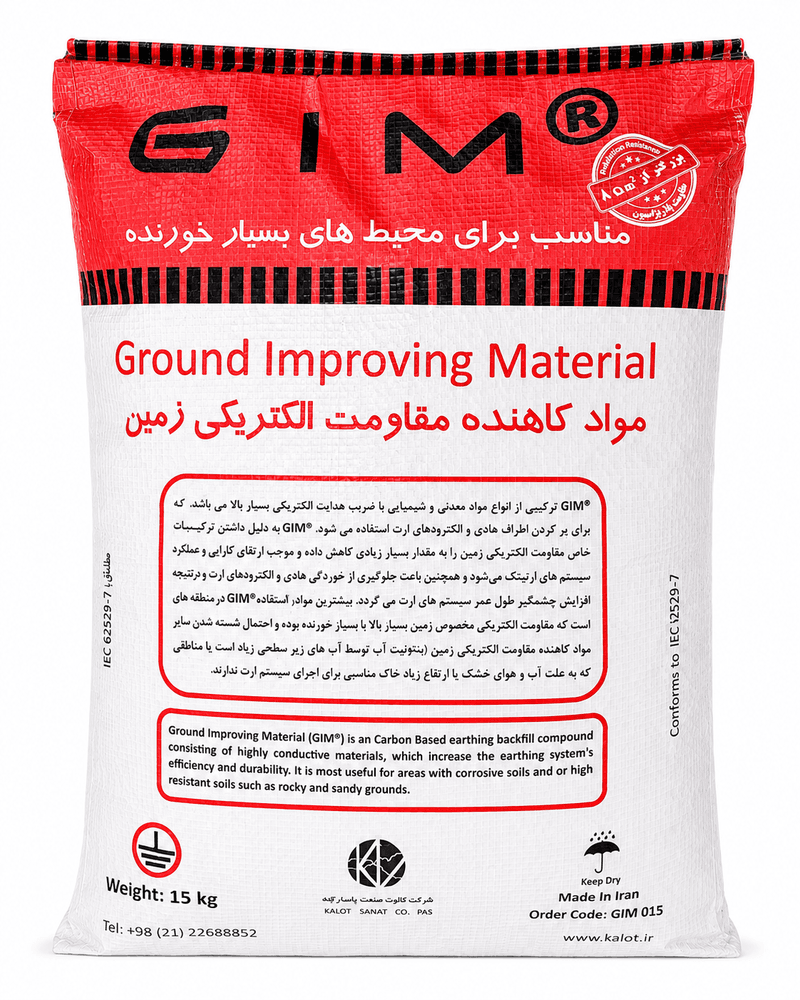
GIM Light is KALOT Group's carbon-based ground improvement material for ordinary, non-corrosive soils. Its density, carbon base and installation method are exactly the same as GIM. Its resistivity is below 1 ohm-metre (Tarbiat Modares University test: 0.77) and its polarisation resistance is above 7.5 ohm-square metres (test: 7.61). For buildings and for industrial and infrastructure projects in non-corrosive soil, GIM Light is installed in a horizontal trench, around an earth rod or around a copper plate. If the soil on site is corrosive, choose GIM. Like GIM, GIM Light is mixed with 2 kg of Portland cement and 8 litres of water per bag. Once placed, the mortar hardens, adheres to the conductor and is not washed away by surface water, which is why some people also call it "conductive cement". On rocky sites where driving an earth rod is difficult, you simply dig a trench, lay the conductor in it and pour the GIM Light mortar over it. GIM Light also suits land with high resistivity, mountainous, sandy and dry sites, and places where ground improvement material might otherwise be washed out.
View product page and specifications →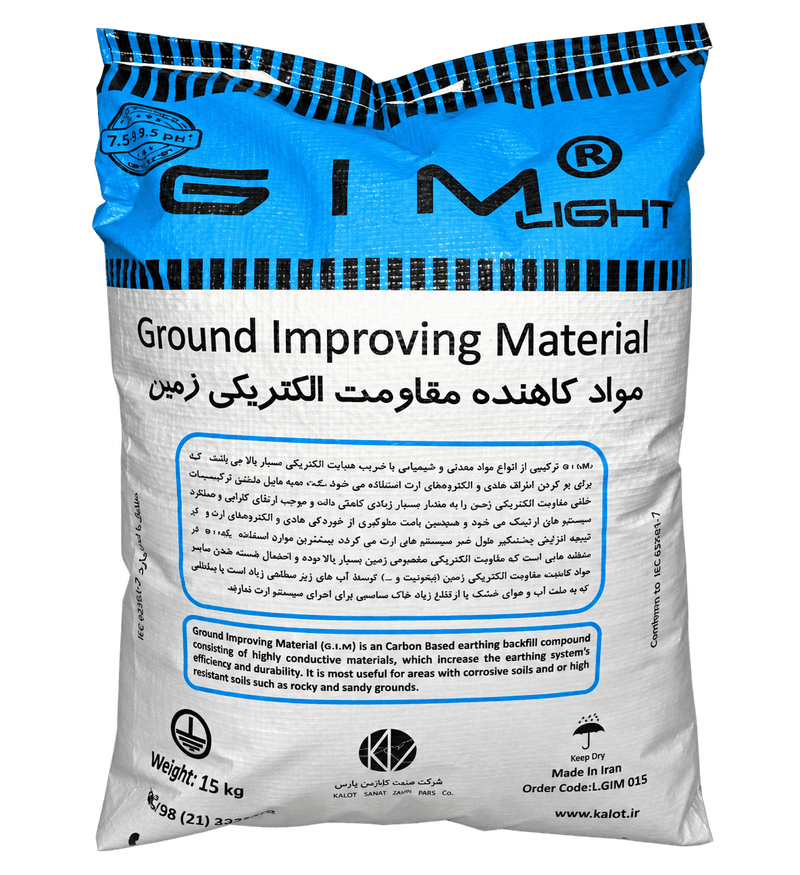
| Feature | GIM® | GIM LIGHT® | ECO GIM® | IEC 62561-7 Standard | IGS-I-EL-001 Standard |
|---|---|---|---|---|---|
| Resistivity (Ω*m) | >0.5 | >1 | >1 | Mentioned In The Catalogue | Mentioned In The Catalogue |
| Polarization Resistivity (PR) (Ω* m²) | > 8 | ~ 7.5 | ~ 7.5 | PR> 4 for None-Corrosive Environments PR> 8 for Corrosive Environments | PR> 4 for None-Corrosive Environments PR> 8 for Corrosive Environments |
| S (%) | >1.4 | >1.5 | >1.9 | >2 | >2 |
| Fe (mg/lit) | 0.21 | 0.17 | 0.18 | 0.3 | 0.3 |
| Cu (mg/lit) | 0.03 | 0.04 | 0.03 | 0.05 | 0.05 |
| Zn (mg/lit) | 0.01 | 0.05 | 0.007 | 3 | 3 |
| Ni (mg/lit) | 0.04 | 0.01 | 0.01 | 0.07 | 0.07 |
| Cd (mg/lit) | 0.002 | 0.002 | 0.001 | 0.003 | 0.003 |
| Co (mg/lit) | 0.01 | 0.03 | 0.03 | 0.05 | 0.05 |
| Pb (mg/lit) | 0.008 | 0.01 | 0.01 | 0.01 | 0.01 |
| As (mg/lit) | 0.009 | 0.008 | 0.009 | - | 0.01 |
| Ba (mg/lit) | 0.06 | 0.05 | 0.05 | - | 0.05 |
| Cr (mg/lit) | 0.03 | 0.02 | 0.02 | - | 0.05 |
| Hg (mg/lit) | 0.0007 | 0.001 | 0.001 | - | 0.001 |
Comparison of GIM®, GIM LIGHT® and ECO GIM® ground improvement materials in line with IEC 62561-7 and IGS-I-EL-001
Industrial projects with corrosive soil, high-rise building earthing systems, and railway/metro infrastructure — anywhere durable earth-resistance reduction to IEC 62561-7 is required.
A material with low resistivity that is placed between the earth electrode and the soil to lower the resistance of the earthing system. IEC 62561-7 calls it an earthing enhancing compound and sets out how it is tested.
We offer both. The carbon-based GIM and GIM Light have lower resistivity, and GIM is intended for corrosive soil. Clay-based ECO GIM is the economical choice for normal soil. The choice depends on how corrosive the soil is and how sensitive the project is.
Bentonite is a natural clay that becomes conductive by absorbing moisture. In dry soil it may dry out, crack and pull away from the electrode. The GIM family is an engineered compound, and GIM works without periodic injections of water and salt.
Conductive cement is the name some sellers and buyers give to ground improvement materials such as GIM and GIM Light. Each 15 kg bag is mixed with 2 kg of Portland cement and 8 litres of water. After placing, the mortar hardens, grips the conductor and electrode more firmly, and is not washed away by surface water or groundwater. That is why on rocky ground it is enough to dig a trench, lay the conductor and pour the mortar over it. ECO GIM is prepared with clay and does not harden in this way.
Our GIM family materials come as a powder in 15 kg bags and are made into a mortar with water on site. Each bag of GIM or GIM Light is mixed with 2 kg of Portland cement and 8 litres of water, and each bag of ECO GIM with 15 kg of good-quality clay and 8 litres of water, then poured around the conductor or electrode. GIM and GIM Light mortar hardens after placing and needs no periodic injections of water and salt.
Heavy metal leaching, sulphur (below 2%), resistivity, pH and electrode corrosion. Reported sulphur is below 1.2% for GIM, 1.5% for GIM Light and 1.9% for ECO GIM.
The quantity depends on the method and on the size of the trench, hole or pit. Use the GIM usage calculator to see the number of bags based on the tables in our brochure. Our specialists confirm the final quantity.
An unsuitable material can be corrosive, which is why IEC 62561-7 measures corrosion through polarisation resistance on copper and galvanised electrodes. A higher figure means less corrosion. GIM, at more than 8 ohm square metres, is intended for corrosive soils.
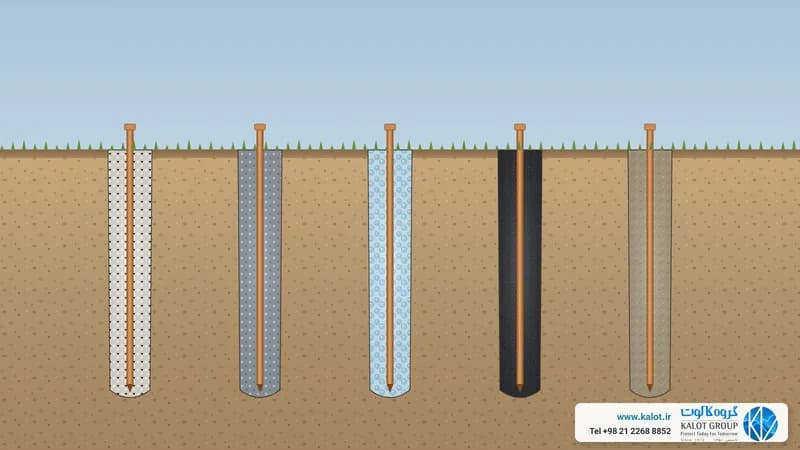
Ground improvement materials are usually grouped by chemical base: clay (bentonite), carbon, polymer, metal and salts. With the help of figures, we explain how each type conducts, whether it needs moisture, what form it comes in and which suits a permanent earthing system.
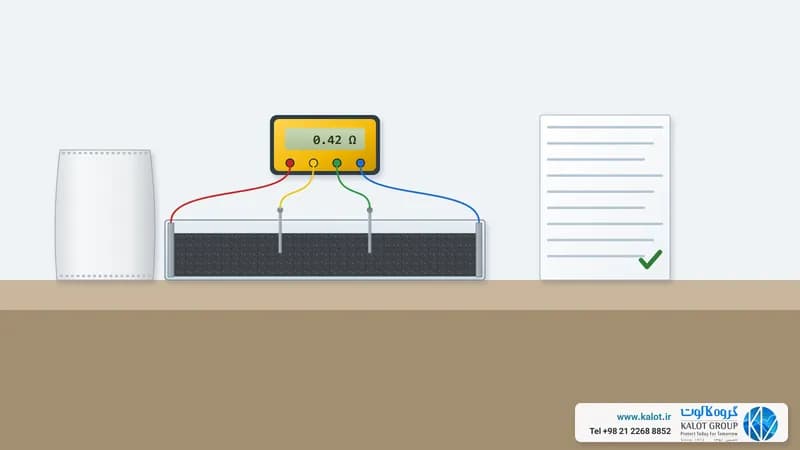
Ground improvement materials have their own dedicated international standard: IEC 62561-7. In this guide we explain what tests it calls for, what is required of these materials in Iran and how to recognise a valid test report.
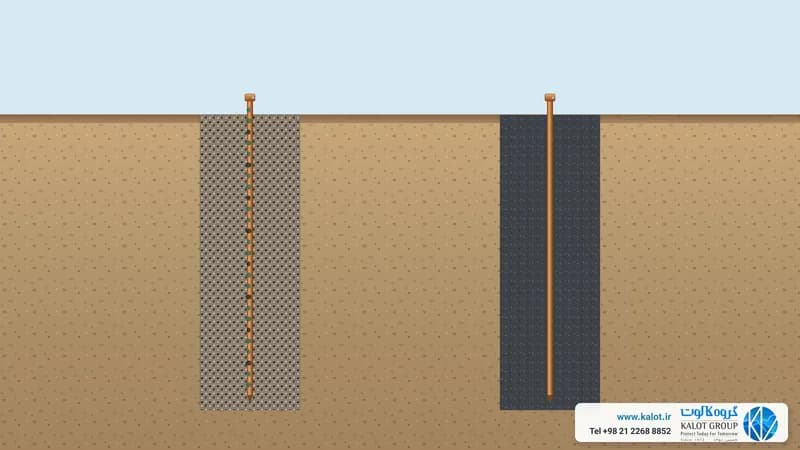
You cannot tell a standard ground improvement material by its appearance. This plain-language guide covers the eight properties of a good material, how each one is assessed, why salt, charcoal and bentonite cannot replace it, and what to look for on the pack and in the seller's documents.
KALOT Group's technical experts are ready to answer your questions about lightning rods and earthing systems.