
Copper-bonded earth rods
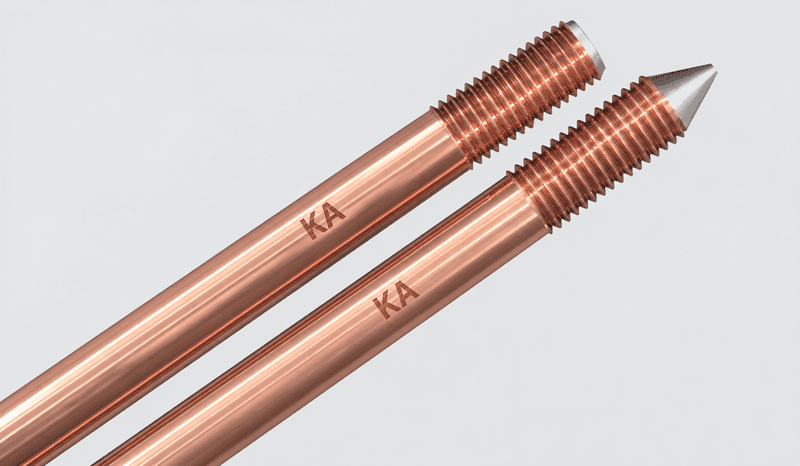
A copper-bonded earth rod is an earth electrode with a high-strength steel core and a layer of pure copper bonded in one piece to the steel. The steel lets the earth rod be driven to great depth without bending, while the copper protects it from corrosion in the soil. That is why this earth rod, also known on the market as a copper-coated earth rod and sometimes a copper earth rod, is among the most common vertical electrodes in earth pits, earth networks and lightning protection systems. At KALOT Group we manufacture threaded copper-bonded earth rods in two diameters, 14.2 and 17.2 mm, and a length of 1.5 m, together with their coupling, tip and driving head.
Installing a copper-bonded earth rod in soil
Why is a copper-bonded earth rod a common and reliable choice of earth electrode?
Earth resistance depends above all on soil resistivity and on the length and depth of the electrode; the material of the earth rod plays only a small part. What the material does determine is durability in the soil, whether the electrode can be driven to the required depth, and the installation cost. On these three, the copper-bonded earth rod strikes a good balance:
- Driving to great depth: the steel core is hard and goes down with a hand or electric hammer into the moist, stable soil layers, exactly where earth resistance is lower and steadier through the seasons.
- Durability of copper in soil: the outer surface of the earth rod is copper. In published laboratory and field comparisons, copper coating corroded far more slowly than zinc (galvanised) coating, and the life of a copper-bonded earth rod has been estimated at several times that of a galvanised earth rod.
- Sensible cost: with similar performance in most soils, it costs far less than a solid copper or stainless steel earth rod.
- Compatible connections: a copper conductor connects directly to the copper surface of the earth rod with brass earthing clamps or exothermic welding.
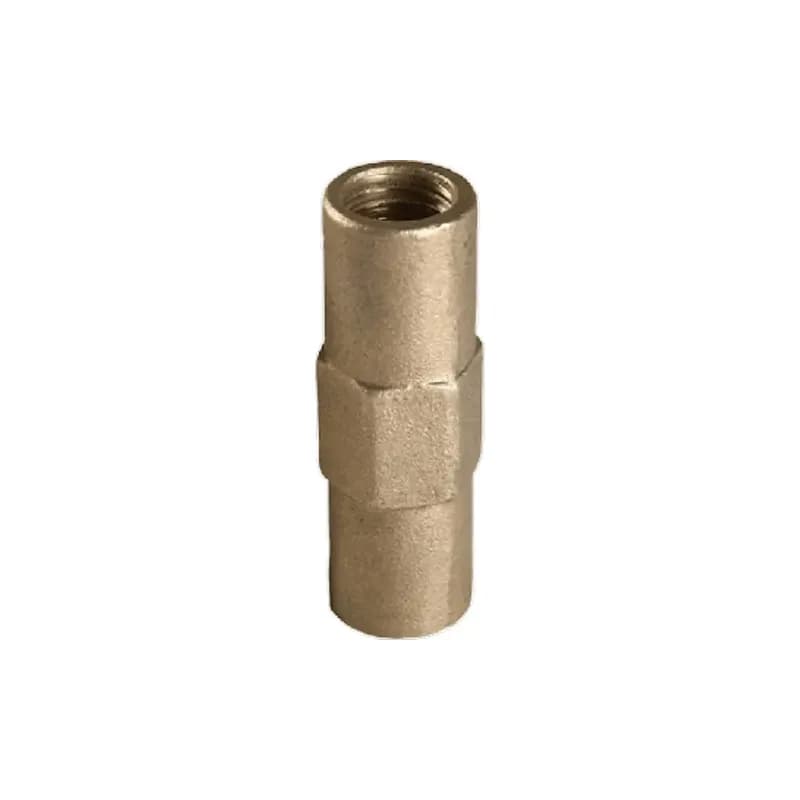
- Extending the length: threaded earth rods join together with a brass coupling, giving whatever depth the design calls for.
Earth rod type | Driving to depth | Durability in soil | Cost | Suitable for |
|---|---|---|---|---|
Copper-bonded (steel core with copper coating) | Very good | Good, with a standard coating | Medium | Most soils, deep earth pits, lightning protection earth terminations |
Limited, as copper is soft | Very good | High | Highly corrosive and saline soils, installation in drilled boreholes | |
Very good | Very good | High | Corrosive soil and locations near buried steel structures | |
Very good | Lower, as the zinc layer is used up sooner | Low | Low-corrosion soils |
For a closer comparison of materials, see our guide to choosing earth electrode materials.
How does a standard copper-bonded earth rod differ from a non-standard one?
Not every copper-coloured earth rod is a standard copper-bonded earth rod. The market also has earth rods with only a thin plated layer of copper on the steel, with cut threads or with a soft steel core. On the day of purchase these earth rods look much the same, but a few years later in the soil the difference shows in the earth resistance. The international standards IEC 62561-2 and IEC 60364-5-54 set clear criteria for these earth rods:
Criterion | Standard copper-bonded earth rod | Non-standard earth rod | Reference |
|---|---|---|---|
Copper coating thickness | At least 250 microns (0.25 mm) at every point for a driven vertical earth rod | Thin or uneven plating that scrapes off during driving and exposes the steel | IEC 60364-5-54 (Table 54.1) and IEC 62561-2 |
Coating adhesion | The copper is bonded to the steel and does not separate in the adhesion test | The copper layer separates from the steel or flakes off | IEC 62561-2 |
Bend test | 90-degree bend over a mandrel with a radius of 5 times the diameter, with no cracking or flaking of the coating | The coating cracks and separates in the bend zone | IEC 62561-2 |
Thread | The thread is cold-rolled after coating, so no copper is removed from the steel | A cut thread that removes the copper and leaves the steel unprotected | IEC 62561-2 |
Steel core | High-strength steel, so the earth rod drives straight and vertical | Soft steel that bends during driving, with a head that gets crushed | IEC 62561-2 (tensile test) |
Actual diameter | At least 14 mm for a vertical copper-bonded earth rod | A diameter smaller than the declared size | IEC 60364-5-54 (Table 54.1) |
Corrosion | After the salt mist and sulphurous atmosphere tests, the base metal shows no corrosion | The steel rusts where the coating is damaged | IEC 62561-2 |
Joining earth rods | A matching, tight coupling; after installation, the earth rod thread is hidden inside the coupling | A mismatched or soft coupling, with thread left exposed | IEC 62561-2 |
Maker's mark | The maker's name or mark is permanently marked on the earth rod | An unmarked earth rod, with no way to know its maker or manufacturing standard | IEC 62561-2 and NEMA GR-1 |


An important point: IEC 60364-5-54 accepts a thinner coating (down to 100 microns) only when the earth rod is placed in a pre-drilled borehole and mechanical damage to the coating during installation is prevented. An earth rod that is going to be driven must have the full 250-micron coating.
What should you check when buying a copper-bonded earth rod?
- Ask for a test report from a reputable laboratory: coating thickness and adhesion, bending, tensile and corrosion tests to IEC 62561-2.
- Measure the coating thickness at several points with a coating thickness gauge (magnetic or eddy current method); no point should be below 250 microns.
- Measure the earth rod diameter with a calliper and compare it with the declared diameter.
- Look at the thread: on a rolled thread, even the roots of the teeth are copper and the grey colour of the steel does not show.
- Roll the earth rod on a flat surface; a standard earth rod is straight and does not wobble.
- The coating surface should be even, with no blisters, scratches, flaking or stains.
- Find the maker's mark on the earth rod; do not buy an unmarked earth rod.
KALOT Group copper-bonded earth rods
We manufacture our copper-bonded earth rods from a high-strength low-carbon steel core and pure electrolytic copper (99.9%). The copper bonds in one piece to the steel and its thickness is never below 0.25 mm at any point. The threads at both ends of the earth rod are cold-rolled after coating, which means copper and steel are formed together in the thread and no part of the steel is left unprotected. The KALOT Group mark is placed on our earth rods so that their authenticity can always be identified.
Our copper-bonded earth rod has successfully passed the IEC 62561-2 tests at the Razi Metallurgical Research Centre:
- Coating adhesion and thickness, bending, electrical resistance, salt mist, humidity and tensile: all to the standard.
- Copper layer thickness: 292 to 315 microns, above the standard's minimum of 250 microns.
- Tensile strength of 662 MPa and yield strength of 601 MPa, with 15% elongation.
- 90-degree bend over a 5d mandrel with no cracking or separation of the coating.
- Salt mist and humidity cycles up to 72 hours; the part stayed fully intact.
The full test reports are available on the threaded copper-bonded earth rod page.
Diameters, lengths and order codes
Order code | Nominal diameter | Actual diameter D (mm) | Thread | Length L (mm) | Weight (kg) |
|---|---|---|---|---|---|
ERCB 1415 | 5/8" | 14.2 | 5/8" | 1500 | 1.90 |
ERCB 1715 | 3/4" | 17.2 | 3/4" | 1500 | 2.70 |
- 14.2 mm diameter (5/8 inch): the most common choice for earth pits in buildings, panels and lightning protection earth terminations in ordinary soils.
- 17.2 mm diameter (3/4 inch): for hard and rocky soil, driving with an electric hammer and great depths where the earth rod has to withstand more blows.
- 1.5 m length: light and easy to handle and drive, even with a hand hammer; for greater depth, earth rods join with a brass coupling (two earth rods = 3 m).
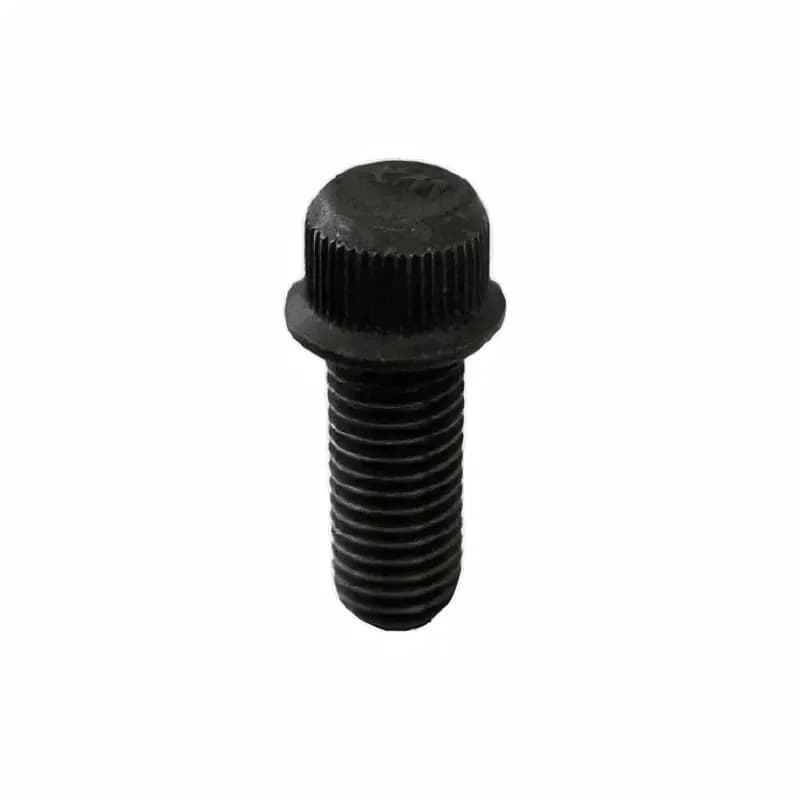
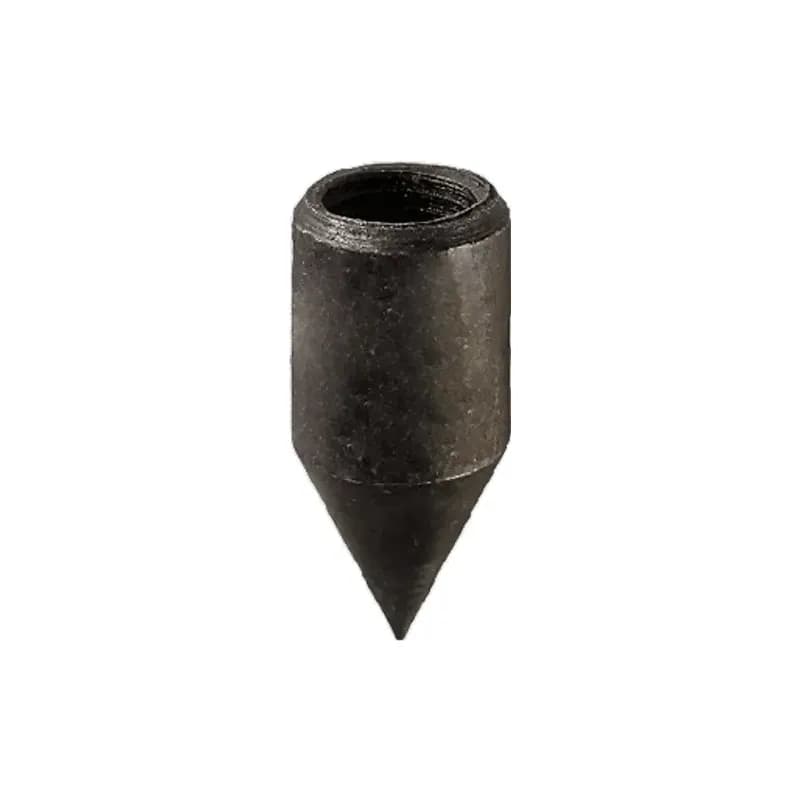
Matching accessories for these earth rods: brass coupling, threaded driving head and steel tip.
Installing a copper-bonded earth rod in a few steps
- Before driving, check the routes of underground services (pipes, cables, gas).
- Fit the coupling on the upper end of the earth rod and screw the driving head into it so the thread is not damaged by the blows; in hard soil, fit the steel tip on the lower end.
- Hold the earth rod vertical and drive it with even blows of a hand or electric hammer.
- For greater depth, fit the next earth rod into the coupling and continue driving.
- Connect the earth conductor to the top of the earth rod with an A-type clamp, a G-type clamp or exothermic welding, then measure the earth resistance.
If you install several earth rods in parallel, space them at least the driven depth apart so their zones of influence do not overlap. In high-resistivity soils, GIM ground improvement material around the earth rod and an earth inspection pit for periodic inspection and measurement both help. See the method in earth resistance calculation.
Frequently asked questions about copper-bonded earth rods
How does a copper-bonded earth rod differ from a copper earth rod?
A copper-bonded earth rod has a steel core with a copper coating, while a copper earth rod is copper all through. Copper-bonded drives more firmly and costs less; a solid copper earth rod is better suited to highly corrosive and saline soils or to installation in a drilled borehole.
What is the standard copper coating thickness for an earth rod?
For a driven vertical earth rod, at least 250 microns (0.25 mm) at every point. The coating thickness of KALOT Group earth rods measured 292 to 315 microns in testing at the Razi Centre.
How can you spot a non-standard copper-bonded earth rod?
Ask for a reputable test report, measure the coating thickness and diameter, and look at the thread: the roots of a rolled thread are copper, while grey steel shows on a cut thread. A flaking or blistered coating, or a warped or unmarked earth rod, signals poor quality.
Should I choose 14.2 mm or 17.2 mm diameter?
In ordinary soils, 14.2 mm (5/8 inch) is sufficient and common. For hard soil, driving with an electric hammer or great depth, 17.2 mm (3/4 inch) is the safer choice. A larger diameter does not lower earth resistance by much; its role is mainly strength during driving.
What should I do for a depth of 3 m or more?
Our copper-bonded earth rods are 1.5 m long. For 3 m, join two earth rods with one brass coupling and drive them one after the other; for greater depth, add a third and fourth earth rod in the same way.
Which soils is a copper-bonded earth rod not suitable for?
In highly saline and corrosive soils, a solid copper earth rod is the better option, and near buried steel structures and pipes, a stainless steel earth rod. Tell our specialists your soil type and they will recommend the right choice.
Do KALOT Group copper-bonded earth rods have a test certificate?
Yes. Their compliance with IEC 62561-2 has been tested at the Razi Metallurgical Research Centre, and the reports are available on the product page.
For an enquiry, send us the project type, the soil type or soil resistivity, the target resistance or design depth, and the number of earth rods; our specialists at KALOT Group will recommend the right diameter, length and accessories.