
Earth bars
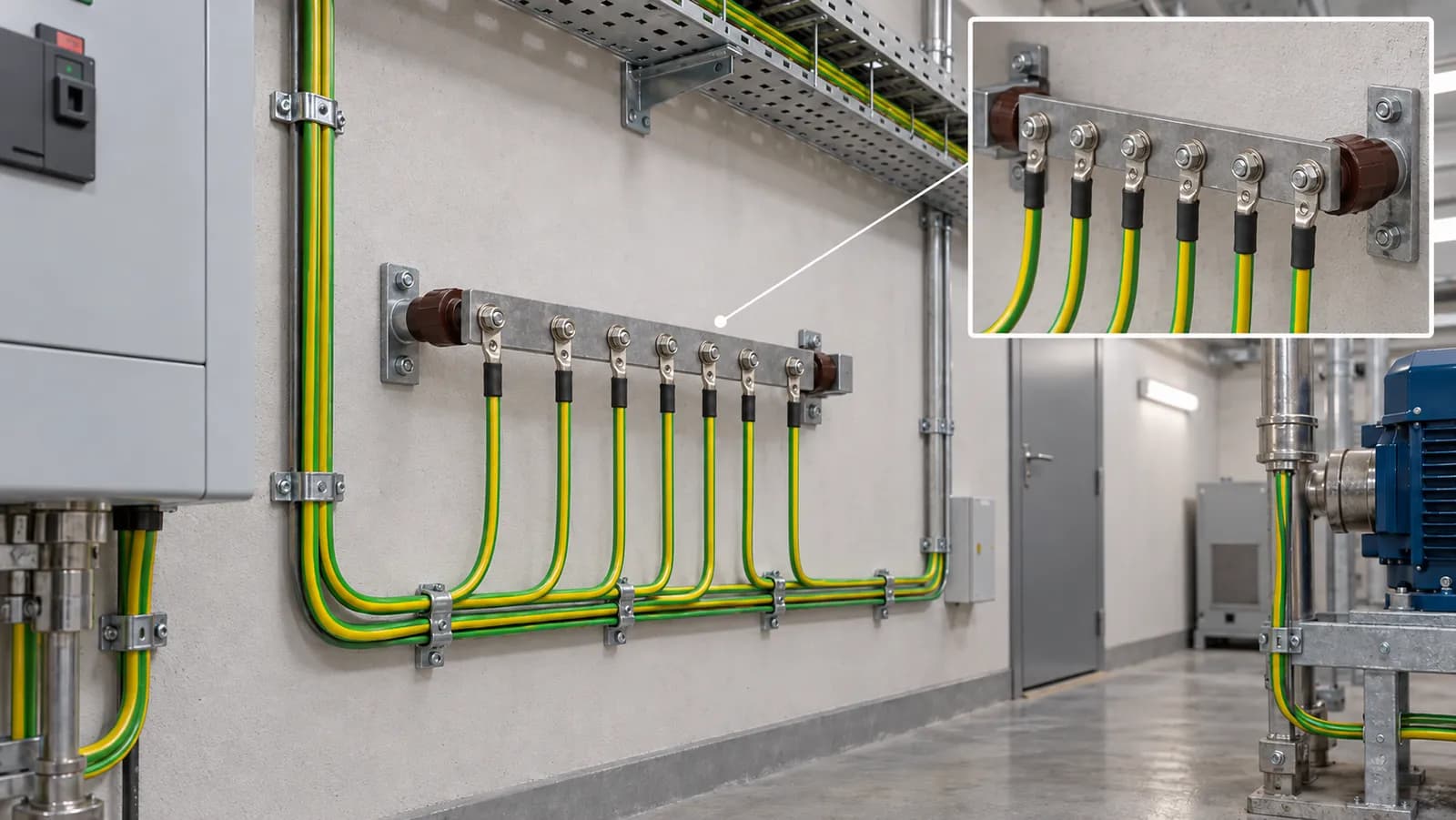
An earth bar is the common point where the earth conductor, protective conductors and bonding conductors meet in a panel, electrical room or plant room. Each conductor is fixed to one of the holes in the bar with a cable lug of its own size and a bolt and nut, so the number of holes, and therefore the length of the earth bar, depends on the number of inputs and outputs.
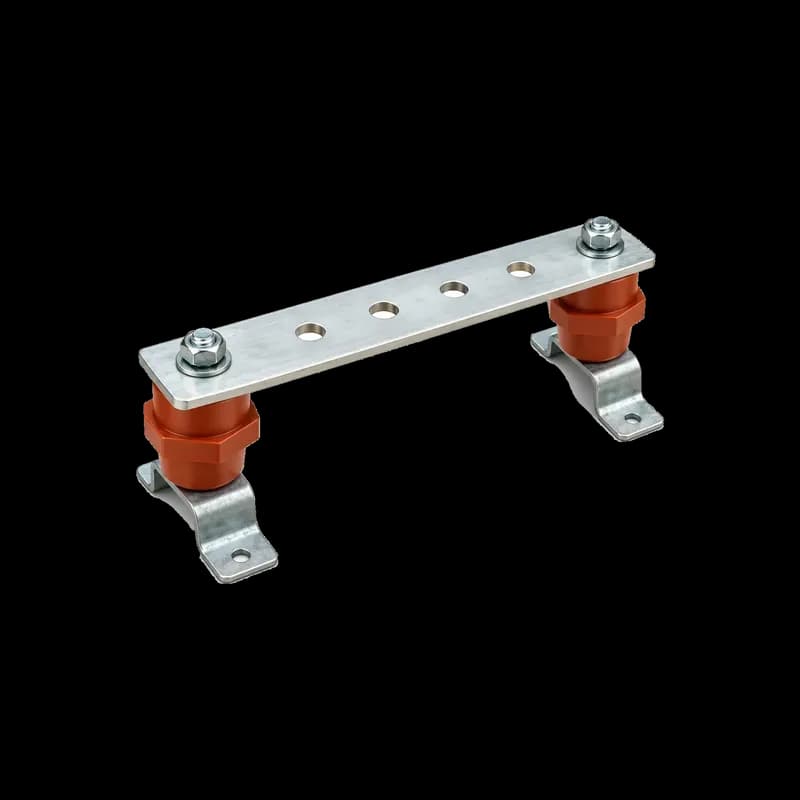
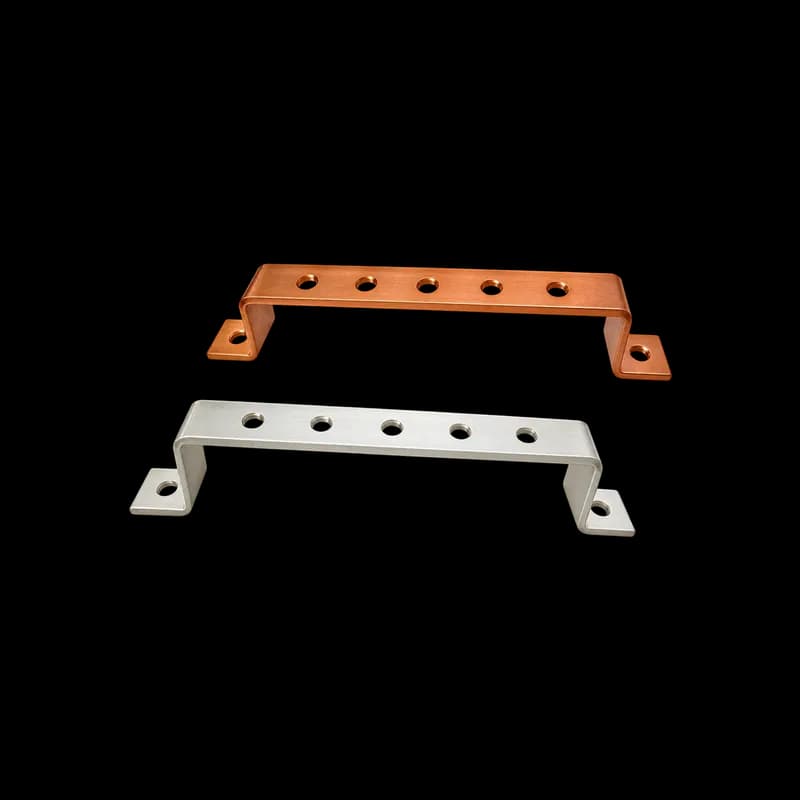
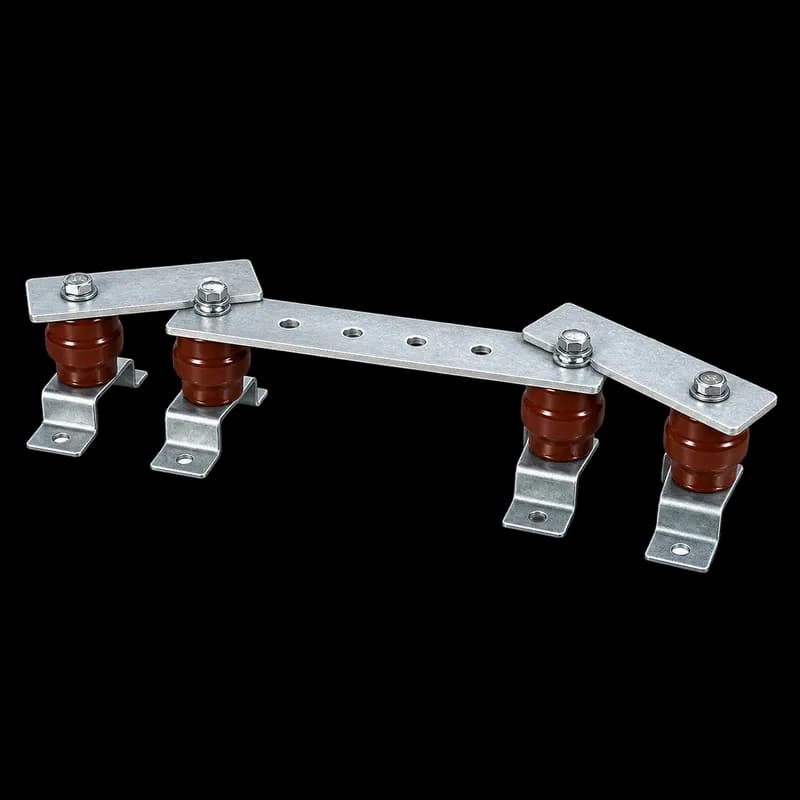
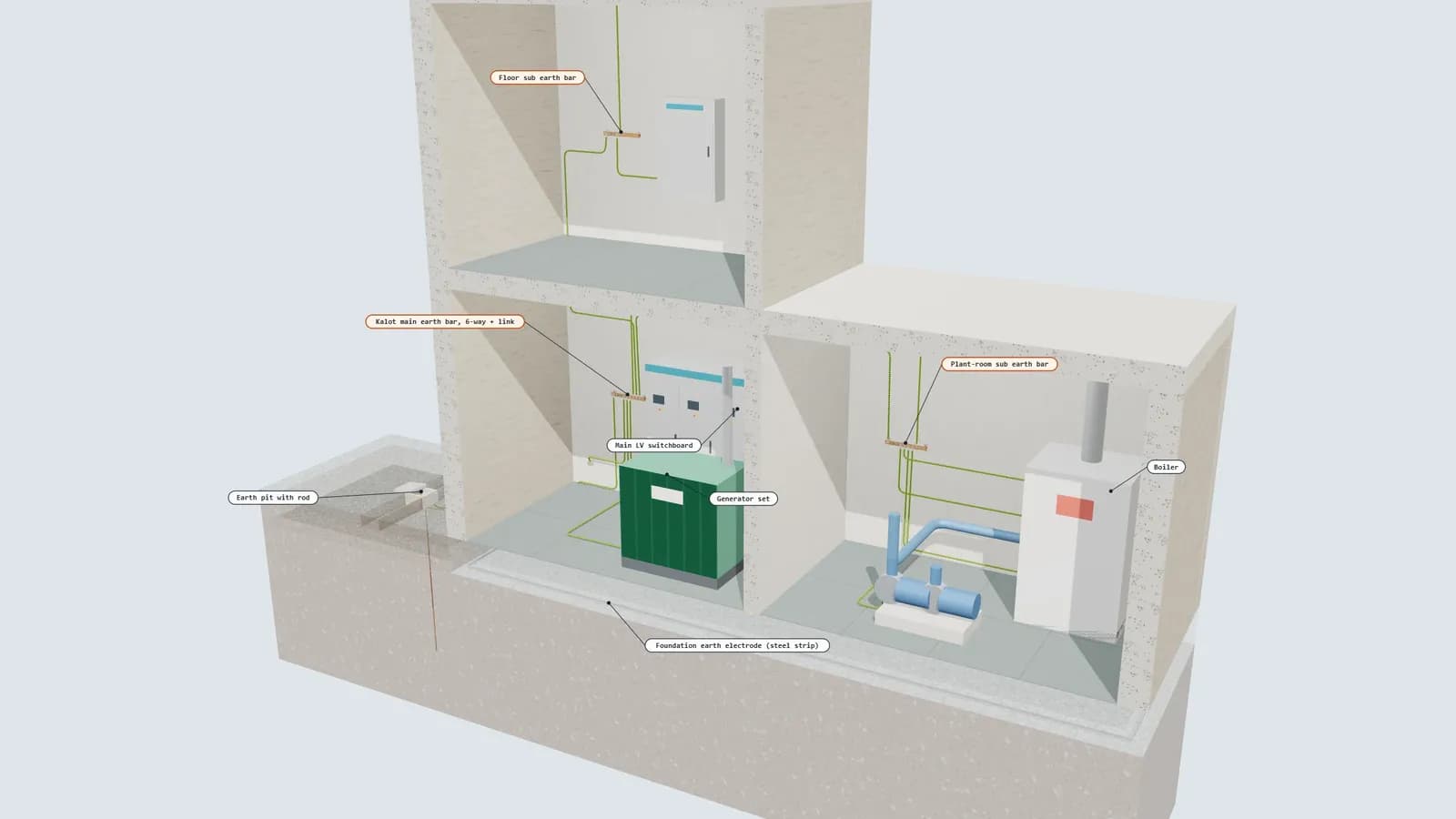
Three-dimensional view of an earth bar installation in a building
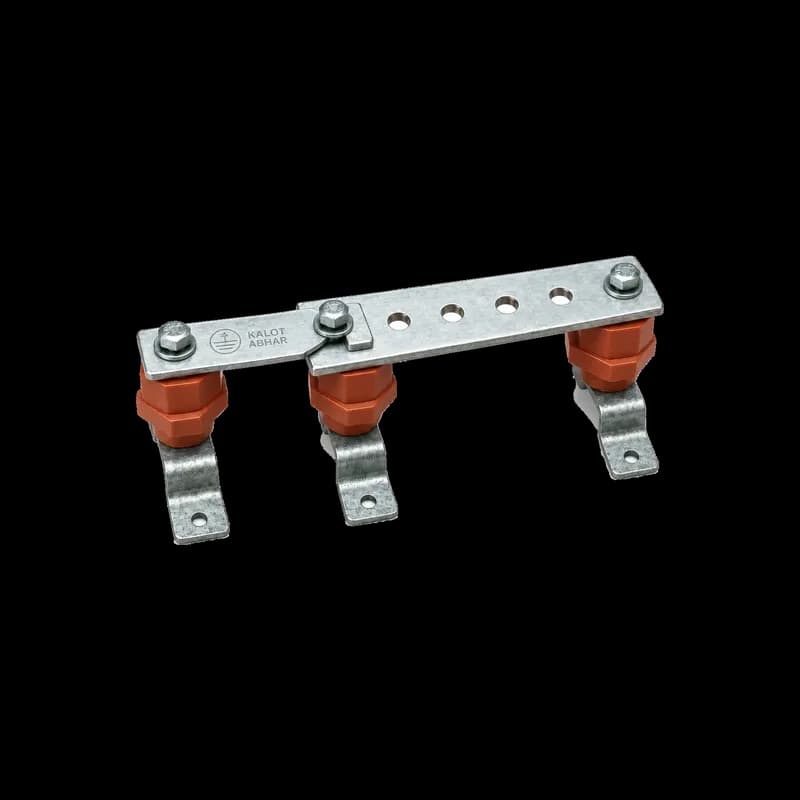
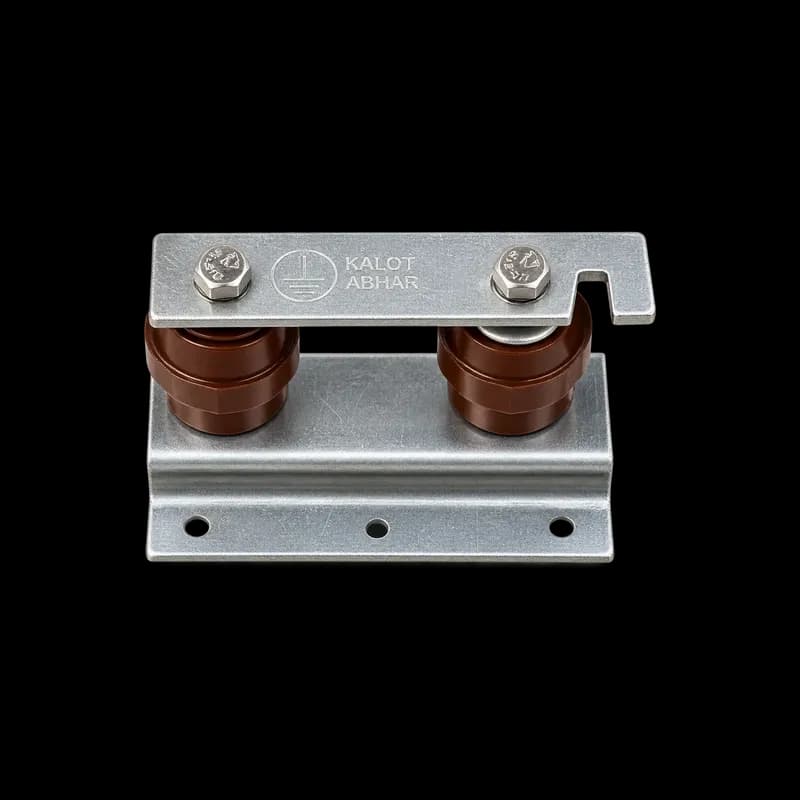
Choosing a model: if the earth bar must stay isolated from the mounting surface, choose the model on insulators; if it must be bonded to the mounting surface, choose the model without insulators. To measure earth resistance without opening the connections to the loads, choose an earth bar with one disconnect link; to bring together two separate earthing systems that are each measured on their own, the earth bar with two links is the right fit. The separate disconnect link and the earth bar protective enclosure are in this same group.
Bare or tinned copper: we make the bar of earth bars on insulators and the disconnect link in both bare copper and tinned copper, and the earth bar without insulators in two versions, copper (EBWI) and tinned copper (ETWI). Bare copper is enough for dry environments and inside panels; in damper or more corrosive environments, the tin coating helps reduce oxidation and discolouration of the copper surface.
Standards: IEC 60364-5-54 provides for a means of disconnecting the earth conductor from the main earthing terminal, in an accessible place and openable only with a tool, and IEC 62305-3 provides for test joints to measure earth resistance in lightning protection systems.
When requesting a quote, tell us the number of inputs and outputs, the number of disconnect links, the cross-section of the conductors, the installation location and the environmental conditions, so our specialists can recommend the right code.
Which earth bar should you choose?
Application | Suitable earth bar |
|---|---|
Main earth bar of a building, one electrode or earth pit | Earth bar with one disconnect link |
Two separate earthing systems on one bar | Earth bar with two disconnect links |
Sub earth bar for a floor or plant room | Earth bar without link |
Direct mounting on a structure or panel, bonded to it | Earth bar without insulators |
Only disconnecting one conductor for measurement | Disconnect link |
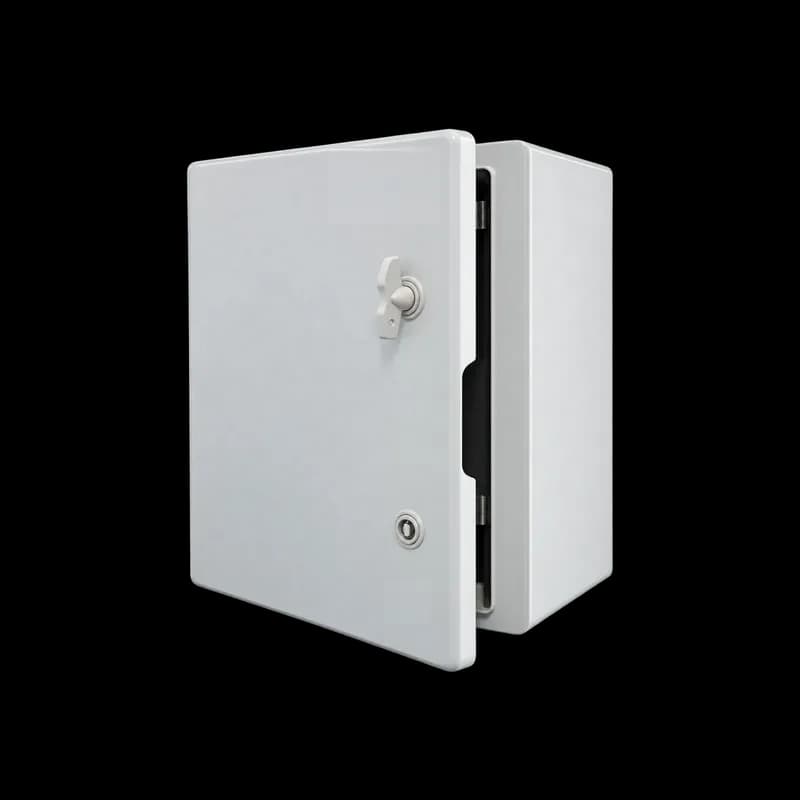
Outdoor or publicly accessible areas | Earth bar protective enclosure |
Frequently asked questions
What is an earth bar?
A copper bar where the earth conductor, protective conductors and bonding conductors meet.
Where should an earth bar be installed?
Near the main panel and the entry point of the earth conductor, in a dry, accessible place.
Copper or tinned copper?
For damp or corrosive environments, tinned.