Short answer: bonding means connecting a building's metal parts with wire or tape so that if electricity or lightning reaches one of them, they all rise and fall together, and no dangerous voltage appears between two metal parts we touch at the same moment. The result of this is called equipotentialisation. So these are not two separate systems: bonding is the "work" and equipotentialisation is the "result".
In this guide, we at KALOT Group explain without engineering complexity what bonding is, what should and should not be connected, what matters in a building with lightning protection, and which part you need for each connection.
What does bonding mean, in simple terms?
Imagine one hand on a metal water tap and the other on the body of a washing machine. If a fault makes the machine live but not the tap, current flows from one to the other through your body. Now, if the two metal parts are already connected by a wire, no voltage difference remains to pass through you. That is exactly what bonding does.
One important point: bonding is not meant to bring everything to "zero" volts. During an electrical fault or lightning strike, the voltage of the whole installation may rise for a moment. What matters is that there is no dangerous difference between things touched at the same time.
How do bonding, equipotentialisation and earthing differ?
- Earthing: connecting a system to the earth itself, with an earth rod, tape or plate placed in the soil.
- Bonding: connecting metal parts to each other and to one common point.
- Equipotentialisation: the result of bonding, meaning the metal parts in a space stay at almost the same voltage.
These three work together and none replaces another. For example, if your earth pit has a very good resistance but the metal water pipe is not connected to the earthing system, the risk is still there. To learn about the different earthing arrangements, see our guide to types of earthing systems.
What should be bonded and what should not?
These usually must be bonded:
- Metal bodies of appliances and electrical boards: through the circuit earth conductor (the green and yellow wire, also called PE).
- Metal pipes entering the building from outside: such as water and heating pipes, at the point of entry. For gas pipes, the rules of the gas company apply.
- Metal frames and structures and reinforcing bars in concrete, if the designer has included them in the earthing design.
- The lightning protection system, whose relationship with the building's other metalwork must be set in the design (explained further below).
These must not connect directly to earth:
- Phase, neutral, data and telephone wires. These are protected through a surge protective device (SPD), not by a direct connection. Connecting them directly to earth is a dangerous mistake.
Usually not needed: any small piece of metal that does not itself bring electricity from anywhere, such as a door handle, window frame or standalone metal shelf, does not need bonding just because it is metal. The test is whether that metal can bring voltage in from outside or relates to the electrical system.
Main bonding in a building: everything comes to the main earth bar
Every building has one central point where all protective connections meet: the main earth bar (shown on drawings as MET or MEB). The conductor from the earth pit, the earth conductor of the main board and the bonding conductors from pipes and structure are all fixed to this bar. This keeps every path tidy, visible and testable.
Which parts do you need for this section?
- Main earth bar: choose a bar with a disconnect link so that the earth pit path can be isolated and measured during periodic inspections, such as an earth bar with one disconnect link or an earth bar with two disconnect links. To protect the bar in a plant room or busy area, we also offer an earth bar protective enclosure. All models are in the earth bars category.
- Earth and bonding conductors: green and yellow earth cable for connections inside the building, with a cable lug to fix the conductor end neatly and firmly on the earth bar.
- Connecting metal pipes: a pipe should be connected with a purpose-made clamp, as wire twisted around it is not a reliable connection. For this we offer the two-piece tape-to-pipe bonding clamp and the one-piece tape-to-pipe bonding clamp.
- Connecting metal structures and frames: a clamp for connecting conductor to plates and metal structures, a tape-to-metal plate bonding clamp or an earth bus (steel bonding cylinder), which is welded to the structure and creates a ready connection point.
- Foundation and concrete column reinforcing bars: a reinforcing bar bonding plate and a stainless steel bonding point are connected to the reinforcing bars before the concrete is poured, so that you later have an accessible connection point on the concrete surface.
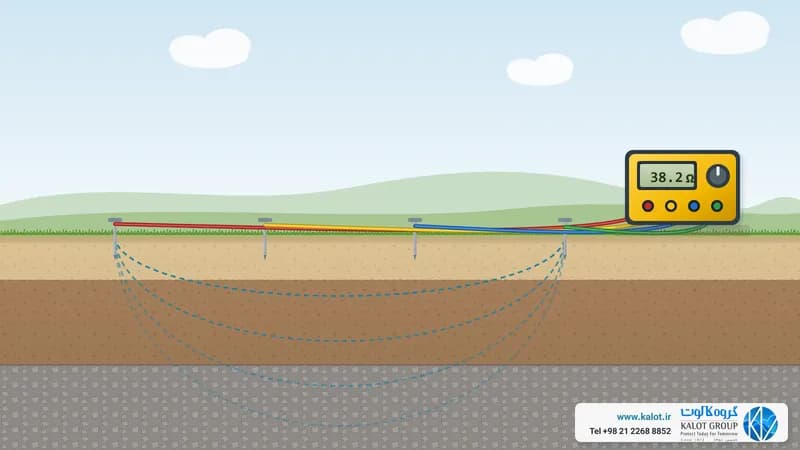
- Connection to earth: copper-bonded earth rods or copper, stainless steel and galvanised earth rods, with an earth inspection pit so that the connection point stays accessible. To measure this connection, see our guide to earth resistance measurement.
A safety note: in common building systems, it is the circuit earth conductor that carries fault current back during a short to the body, so that the fuse or automatic breaker trips. In some systems, the residual current device (RCD) does this job. So do not rely on the earth pit alone. The rules for this section are in IEC 60364-4-41 and IEC 60364-5-54.
Where is supplementary bonding needed?
In some spaces with water, moisture or sensitive equipment, such as bathrooms and wet areas, swimming pools, treatment rooms and plant rooms, regulations may require local supplementary bonding in addition to main bonding. This means the bodies of electrical appliances and the metal pipes in that space connect through short conductors to a small local bar, keeping the voltage difference in that room to a minimum.
This connection is not a replacement for the circuit earth conductor, the protective device or main bonding: it is an extra safety layer. For the local bar you can use small earth bar models, and for parts that vibrate or move (such as a board door, pump or metal duct), flexible copper bonding tape is a good choice.
Why does bonding matter in a building with lightning protection?
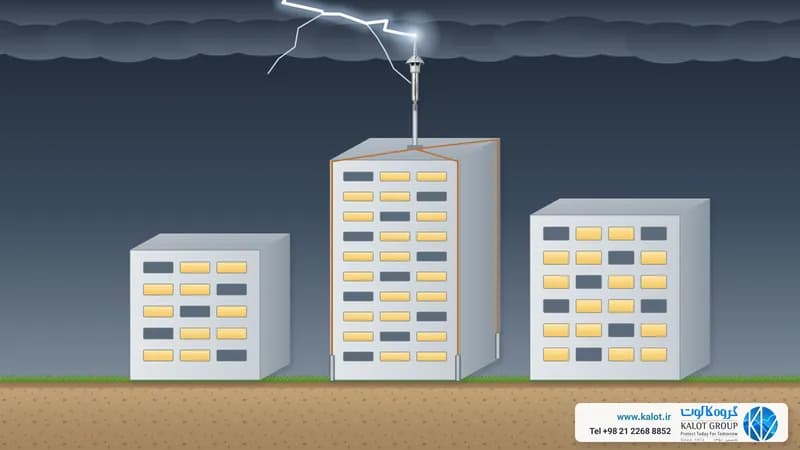
A lightning protection system has three parts: the air terminal on the roof, the down conductor (the wire or tape that brings the current down from the roof) and the lightning earth in the soil. When lightning strikes, a very large current passes through this path for a brief moment and raises its voltage. If a pipe, cable or metal structure inside the building is very close to this path and not connected to it, a spark may jump from one to the other.
There are two ways to prevent this spark, and the designer chooses one:
- Sufficient distance: the lightning path is kept away from internal metalwork by a calculated distance.
- Controlled connection: that metal part is bonded to the lightning protection system with a suitable component.
This distance is not one fixed figure for all buildings; the designer calculates it under IEC 62305-3.
At the building entrance: metal pipes and sheaths coming in from outside connect to the main earth bar at the point of entry. Power and data cables, however, cannot be tied directly to earth. For them, an SPD is installed, which does nothing in normal conditions and only diverts overvoltage to earth during a lightning surge:
- For the electrical board: power surge protective devices (SPDs) in Classes 1, 2 and 3 and combined models.
- For networks, cameras, telephones and control lines: data line surge protective devices (SPDs).
The coordination of this protection is covered in IEC 62305-4, and the requirements for power and data SPDs in IEC 61643-11 and IEC 61643-21.
Lightning protection system parts: earth conductors and tapes are used for the down conductor, and a disconnector (test joint) sits at the bottom of each down conductor so the path can be isolated for measurement. Wall clamps, multi-way connections and bases are in lightning protection clamps and fittings. Connection components for lightning protection systems are tested under IEC 62561-1; a clamp that merely "looks tight" will not necessarily withstand lightning current.
A special case: in oil tanks with floating roofs, the roof constantly moves up and down, and bonding it to the tank shell needs a special device. For this we have designed the ARG® floating roof bonding device.
What makes a good connection?
- Short and straight: the bonding conductor should be as short as possible and not looped. Especially for lightning current, every bend and extra length reduces the effect of the connection.
- With a purpose-made part, not twisted wire: for each type of connection (conductor to earth rod, tape to tape, conductor to structure) there is a clamp made for that job. See the full range in earthing and bonding clamps.
- Connections in soil and concrete: where there will be no later access, a permanent connection is the best choice. KALweld® exothermic welding welds conductors and tapes into one piece with each other or with an earth rod.
- Compatible metals: in soil, do not connect copper and galvanised steel directly, as contact between the two metals in soil causes corrosion.
- Visible and testable: the main connection points should stay accessible, carry labels and be checked during periodic inspections.
Which part connects to what?
Part | Connects to | Suitable parts |
|---|---|---|
Metal bodies of appliances and electrical boards | By circuit earth conductor to the board, and from there to the main earth bar | |
Earth pit and earth rod | By conductor or tape to the main earth bar | |
Incoming metal pipe (water, heating) | At the point of entry, to the main earth bar | |
Metal structure and frame | If included in the design, to the main earth bar | |
Foundation and column reinforcing bars | To the earthing system, before the concrete is poured | |
Appliances and pipes in bathrooms, plant rooms and special spaces | If regulations require it, to the local earth bar | |
Lightning protection down conductor | To the lightning earth; relative to internal metalwork: sufficient distance or bonding as per design | Earth conductor and tape, disconnector, lightning protection clamps |
Incoming power and data cable | Never directly; only through an SPD |
This table is a general guide. Exactly which part, in what size and connected from where depends on the building drawing, the type of electrical system and the lightning protection design.
Step by step: how is a building bonded?
- List the metalwork: mark boards, incoming pipes, the metal frame, foundation reinforcing bars, ducts and the routes of power and data cables on the drawing.
- Choose the location of the main earth bar: close to the main board and the point where pipes enter, accessible and easy to inspect.
- Make the main connections: fix the earth pit, main board, incoming pipes and structure to the earth bar using suitable conductor or tape and purpose-made clamps.
- Check special spaces: if regulations require supplementary bonding for bathrooms, pools or treatment rooms, add it.
- If you have lightning protection, coordinate its distance from internal metalwork and the location of the power and data SPDs with the designer.
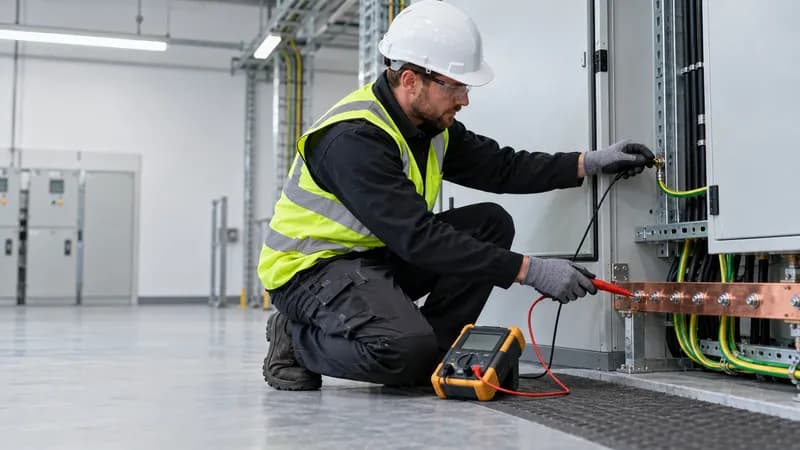
- Test and record: measure the continuity of connections with an instrument, record the result in the handover documents, and do not forget periodic inspection. The method for inspecting and testing installations is in IEC 60364-6.
Figures such as conductor cross-section, safe distance from the lightning protection system or the permitted resistance limit are set separately for each project, from the standard and the designer's calculations.
What matters, and what matters less?
What really matters:
- All metalwork that can bring voltage in from outside is connected to one common point.
- Connections are firm, clean, made with the right part and free of corrosion.
- Phase, neutral and data wires never connect directly to earth.
- Connection points stay accessible and are tested periodically.
What matters less than you might think:
- The earth pit resistance figure alone: a low figure is good, but if pipes and structure are not bonded, safety is not complete.
- Connecting every piece of metal: small isolated metal parts that bring no voltage from anywhere usually do not need bonding.
Common mistakes in bonding and earthing
- Thinking that "bonding makes everything zero volts": the aim is no dangerous difference between neighbouring metal parts, not zero voltage.
- Relying on a single earth rod: a good earth pit does not replace pipe bonding and the circuit earth conductor.
- Connecting the neutral or data wires directly to earth: this is dangerous; they are protected by an SPD.
- Separating or joining the lightning protection earth and electrical earth at will: the relationship between the two must be set in the design, not left to the installer's taste.
- Twisting wire around a pipe or reinforcing bar: this connection loosens and rusts over time; use a purpose-made clamp.
- Long, looped conductors: especially on the lightning path, a short straight conductor performs better.
Reference standards
Each of these standards covers part of the subject. For projects in Iran, the Topic 13 of the National Building Regulations and local rules are the main reference, and international standards are used alongside them.
Standard | What is it about, in simple terms? |
|---|---|
Earth and bonding conductors and the main earth bar in buildings | |
Protecting people against electric shock and automatic disconnection during a fault | |
Inspecting and testing electrical installations, at handover and periodically | |
Designing a building's lightning protection system, safe distance and lightning bonding | |
Protecting electrical and electronic equipment inside a building against lightning | |
Testing the clamps and connection components of lightning protection systems | |
Low-voltage power SPDs | |
Telecom and data line SPDs | |
The European and British editions of the same lightning protection standard | |
The UK wiring regulations, including protective bonding | |
The US electrical code; its Article 250 covers earthing and bonding | |
The US standard for installing lightning protection systems | |
Earthing safety in electrical substations; not the main reference for buildings |
Conclusion
Bonding means connecting a building's metal parts to each other and to one common point so that no dangerous voltage difference appears between them. The main earth bar is the heart of this work: incoming pipes, structure, boards and the earth pit all come to it. Power and data cables are protected by SPDs, not by a direct connection. In a building with lightning protection, its distance from or connection to internal metalwork must also be designed in advance. For further reading, see our guide to calculating earth electrode resistance.
If you send us your earthing drawing, the routes of incoming pipes and cables or your project's lightning protection design, our specialists at KALOT Group will help you choose the right clamp, earth bar, conductor and SPD for each point.