
Earth inspection pits
An earth inspection pit, also called an earth pit inspection chamber, an earth chamber or an earth pit, is a chamber with a removable lid, installed flush with the ground over the top of the earth rod or earth pit and the conductor connections. Lift the lid and you can see the connections and measure earth resistance without digging. We offer this pit in two materials, precast reinforced concrete and polyethylene, and we also provide the dedicated bar for each one separately.
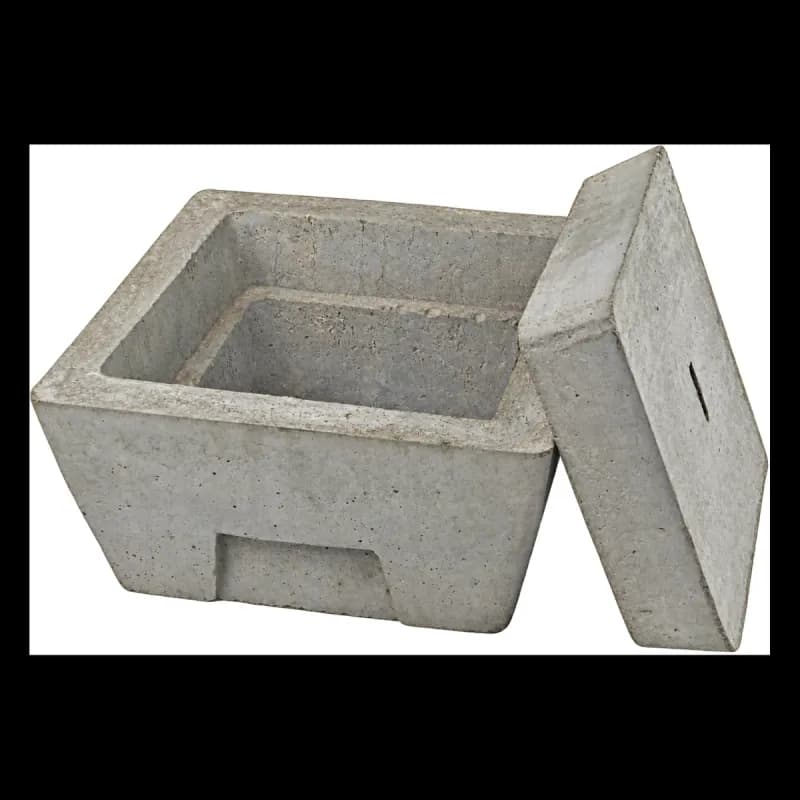
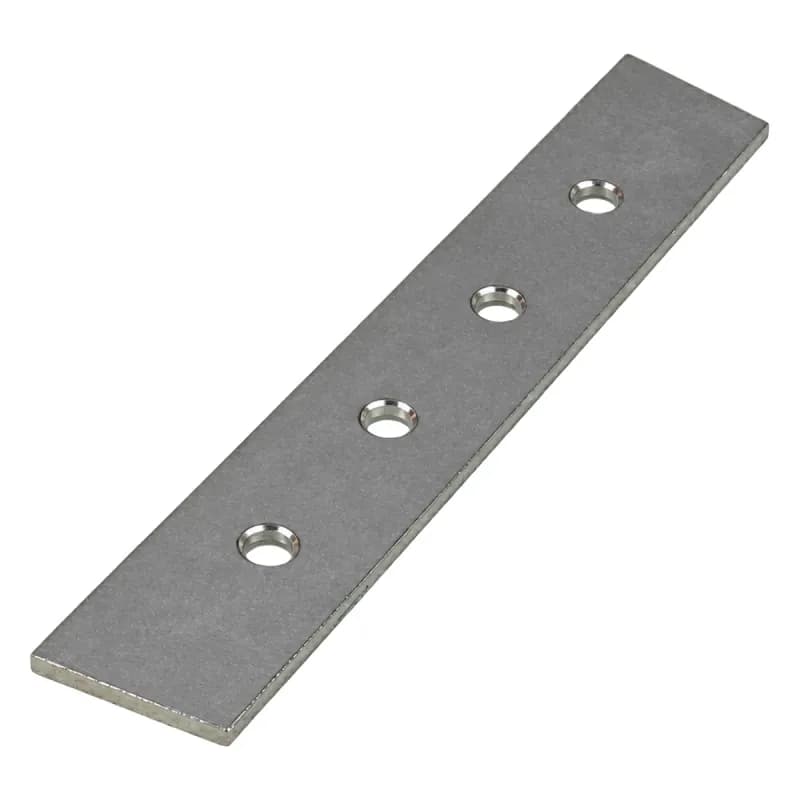
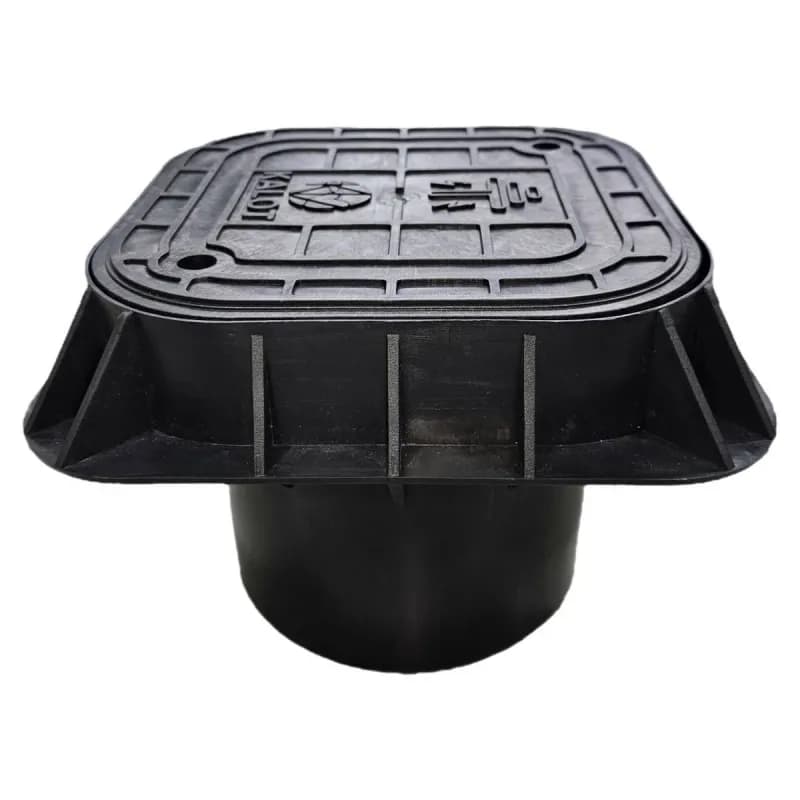
Three-dimensional view of polyethylene earth pit installation
What does an earth inspection pit do, and where is it installed?
Access without digging: a buried connection cannot be seen. The pit keeps the top of the earth rod, the clamp and the bar within reach, so the tightness and corrosion of the connections can be checked at every inspection.
Test point: by undoing the cable lug of the earth rod conductor from the bar, the earth rod is separated from the rest of the system and measured without cutting any conductors.
Common installation points: the top of an earth rod or earth pit, the foot of lightning protection down conductors beside the down conductor disconnector, transformer and substation electrodes, and telecom towers.
KALOT Group earth inspection pit types
Precast reinforced concrete: our concrete earth pit, also known as a cement pit, has a square frame with sloping walls, an open base and a concrete slab lid.
Polyethylene: our polyethylene earth pit (code PE 3030) is made of black polyethylene from virgin resin, with no recycled material and with a UV-resistant additive, and its reinforced lid closes with two recessed Allen bolts. At 1.8 kg it is light, it does not rust, and its edges do not chip as concrete does. It is one of our best sellers and is also exported.
Bar: we make the earth pit bar in a model for each pit: for the concrete pit in bare copper, tinned copper or stainless steel, and for the polyethylene pit in 304 stainless steel (bare or tinned copper to order), both with 4 standard holes. The number, diameter and spacing of holes can be changed to order, and the bar is supplied separately for new installations or replacement.
Drawings, the datasheet, the test report and a three-dimensional view of each pit are on that product's page.
Inside the pit: bar, clamp and conductors
Bar: each conductor (the earth rod conductor, the down conductor, the building conductor or the conductor to the next pit) is fixed with a cable lug to one hole of the bar. The bolts, nuts and washers are stainless steel and are supplied separately.
Connection to the earth rod: copper conductor connects to the earth rod with a U clamp (brass body, stainless steel U bolt) or a G-type clamp, and copper tape with an A-type clamp. Exothermic welding is another option.
Conductors: in the soil and inside the pit, conductors are bare copper conductor or copper tape without any sheath. Only the conductor that comes out of the ground and runs to the building has a green and yellow sheath.
Which earth inspection pit should you choose?
- Material and weight: the polyethylene pit weighs 1.8 kg and is easy to handle. The concrete pit with its lid weighs 21.2 kg.
- Installation point and load class: in IEC 62561-5, class L (4 kN) is for pavements, class M (15 kN) for slow-moving passenger cars and class H (30 kN) for slow-moving multi-axle vehicles. The class of each pit is given in the table below. The support and the concrete around the pit must suit the installation point, and for vehicle routes, please agree the location with our specialists.
- Conductors: the standard bar has 4 holes, and more holes are drilled to order for additional conductors. Whether the conductors are wire or tape determines the type of clamp.
Feature | Concrete earth pit | Polyethylene earth pit |
|---|---|---|
Body | Precast reinforced concrete | Black polyethylene from virgin resin, with UV-resistant additive |
Dimensions (mm) | 310 × 310 × 170 | 300 × 300 × 205 (lid 250 × 250) |
Weight | 21.2 kg (with lid) | 1.8 kg |
Load class in IEC 62561-5 test | Medium (M), 15 kN | Heavy (H), 30 kN; three samples |
Base | Open | Open and slotted |
Bar (mm) | 300 × 50 × 5, both ends mitred; 4 holes Ø12; bare copper, tinned copper or stainless steel | 238 × 30 × 5; 4 holes Ø10; 304 stainless steel (standard), bare or tinned copper to order |
Installing an earth inspection pit
- At the point set by the earthing system designer, dig a hole with room for the pit, a gravel bed and the concrete around it, and drive the earth rod until it reaches the design resistance.
- Spread gravel at the bottom of the hole so that water drains away.
- Place the pit over the earth rod or the top of the earth pit, so that the earth rod passes through the open base and the lid sits flush with the finished ground.
- Connect the conductor to the earth rod using one of our earthing and bonding clamps or by exothermic welding.
- Seat the bar in the slots, fix each conductor with a cable lug to one hole, and tighten the bolts according to the manufacturer's instructions.
- Always pour concrete around the pit so that it stays fixed and level.
- Measure and record the earth rod resistance, then close the lid.
Inspecting and measuring earth resistance from inside the pit
Measurement: lift the lid, undo the cable lug of the earth rod conductor from the bar so that the earth rod is separated from the rest of the system, measure and record the resistance, then refit the cable lug and lid. This must only be done by a trained person once the installation has been confirmed safe. The full method is in our article on measuring the resistance of an earth termination.
Periodic inspection: check bolt tightness and corrosion, and clear soil from the pit. Repeat the measurement periodically and after any change or lightning strike, and record it with the date and pit number. If the resistance has risen, once the connections have been reviewed, adding an electrode or using ground improvement material is considered.
Reference standards for earth inspection pits
IEC 62561-5: defines the earth electrode inspection housing, load classes L, M and H, the space needed for the clamp, the flush lid and the load test. Both our pits were load tested on the basis of this standard at the Razi Metallurgical Research Centre and are made in accordance with IEC 62561-5: concrete in class M at 15 kN and polyethylene in class H at 30 kN, on three samples and based on the 2023 edition.
Other references: IEC 62305-3 and IEC 60364-5-54 call for a test point that opens only with a tool, so that the electrode can be measured separately. Topic Thirteen of the Iranian National Building Regulations requires periodic measurement of the electrode, with the results recorded. See the details in our article on standards for designing and installing the earthing system.
Buying an earth inspection pit and requesting a price
Send our specialists the number of pits, the installation point and the traffic there, the earth rod diameter, and the type and number of conductors, and they will recommend the right pit, bar, clamp and cable lug. See our other products under earthing and bonding equipment.
Frequently asked questions about earth inspection pits
What is an earth inspection pit (earth chamber or earth pit)?
It is a chamber with a removable lid that sits flush with the ground over the top of an earth rod or earth pit, and keeps the conductor connections accessible for inspection and measurement.
What is the difference between an earth inspection pit and an earth pit?
The earth pit or earth rod is the earth electrode itself. The inspection pit is a chamber over its top, which does not replace the electrode and is installed together with it.
Does every earth rod or earth pit need an inspection pit?
Common practice is one inspection pit for each electrode that is inspected or measured separately. The positions of the pits are set by the earthing system designer.
How do the concrete and polyethylene pits differ?
The polyethylene pit is light at 1.8 kg, does not rust and has a heavy load class (H). The concrete pit is reinforced concrete, weighs 21.2 kg with its lid and falls into the medium load class (M). For vehicle routes, please agree the location with our specialists.
What parts go inside the pit?
The top of the earth rod connects to the conductor by clamp or exothermic welding, and each conductor is fixed with a cable lug and stainless steel bolt to one hole of the pit bar. All conductors inside the pit are bare copper.
What is the difference between an earth inspection pit and a wall-mounted earth test box?
An earth inspection pit is installed in the ground over the top of the electrode. An earth test box is on the wall and usually houses an earth bar with a disconnect link, like our earth bar protective enclosure.
How often should earth resistance be measured?
The interval is set by the project's inspection programme. Measurement is needed after installation, periodically, and after any change or lightning strike. Measuring in the same season, preferably after a dry period, makes the results comparable. For suitable resistance values, see our article on earth electrical resistance for different uses.
What does the price of an earth inspection pit depend on?
The price depends on the material and number of pits and the parts that go with them (bar, bolts and nuts, clamp and cable lug). Send us these details and the installation point, and our specialists will propose a price.