
Move your pointer over the image to zoom in
Complete Product Overview
Tape-to-metal plate bonding clamp
Order Code: BBCS 253
Last updated:
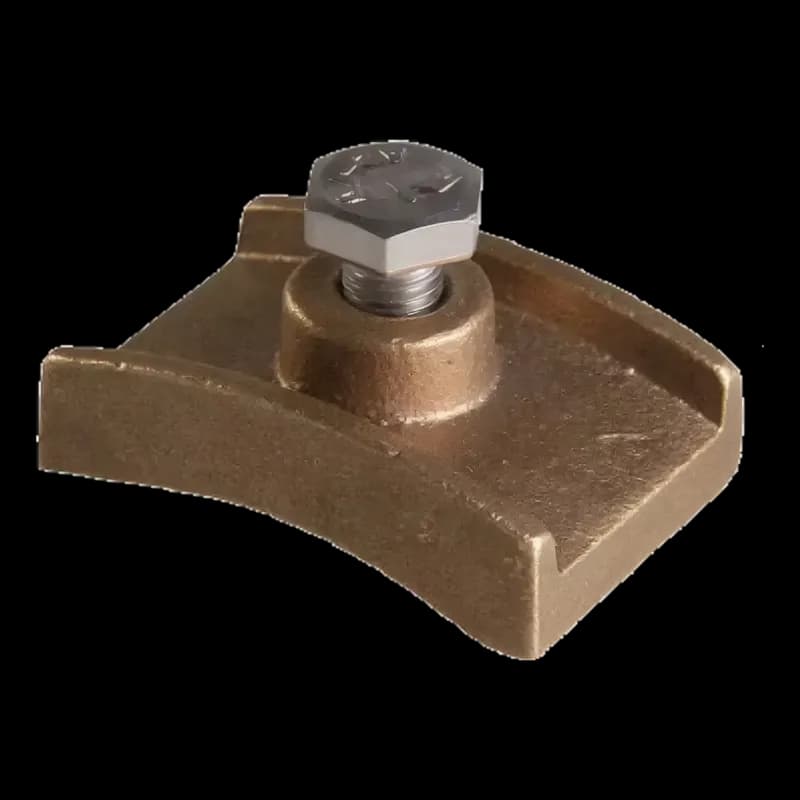
KALOT's tape-to-metal plate bonding clamp (model BBCS 253) bonds flat copper tape to flat steel structures, such as column and beam flanges, sheets and metal plates, connecting the steel structure to the earthing and lightning protection system.
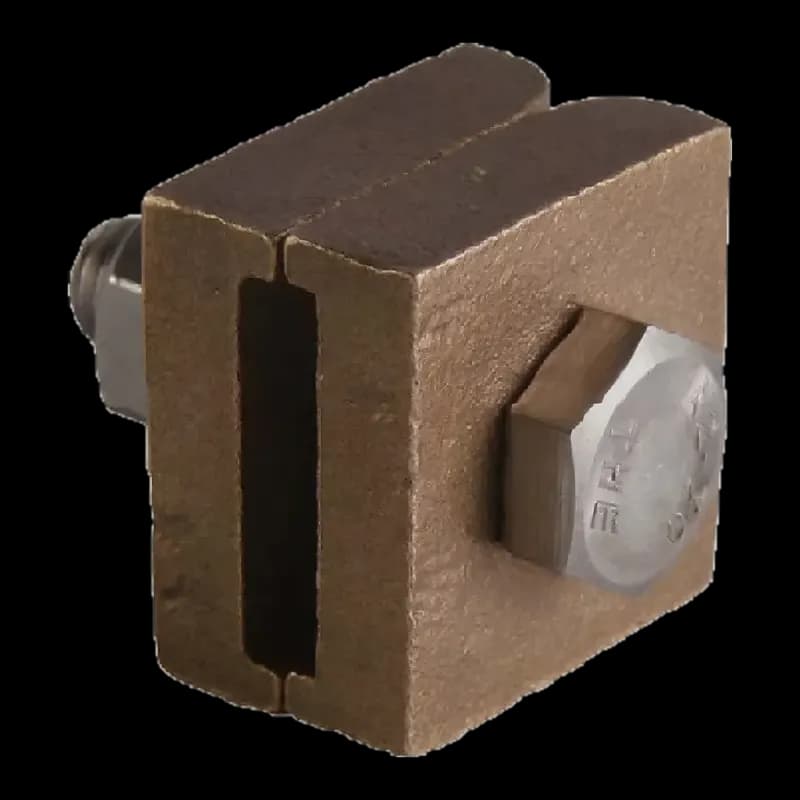
A square brass plate sits on the tape and the two lips beneath it form the tape channel. A stainless steel bolt passes through the clamp, the tape and the steel and is fastened behind the steel with a washer and nut.
For 25 × 3 mm tape; body dimensions 35 × 35 × 10 mm.
We offer this clamp for a direct, reliable connection of copper tape to the steel columns and beams of your project.
A reliable joint between copper tape and steel structure
Columns, beams and other metal parts of a structure usually have to be bonded to the conductors of the lightning protection system and the earthing network, so that no dangerous potential difference or sparking arises between them. This clamp presses the copper tape directly onto the flat steel surface with a bolt and nut joint. The system designer decides the bonding points.
Bonding tape to flat steel structures
Designed for bonding flat copper tape to flat steel structures, such as column flanges, beams or metal sheets.
A tape channel under the clamp
The two lips on the underside of the clamp sit on either side of the tape, so the tape stays in place under the brass plate and the clamp's pressure spreads across its surface.
An inspectable bolt and nut joint
The joint has no welding, so the tightness of the bolt and nut and the contact between tape and steel can be checked during periodic inspection.
Stainless steel bolt
To increase corrosion resistance and the long-term durability of the connection in the brass body.
A set size for 25×3 tape
35 × 35 mm body, 10 mm high, for 25 × 3 mm copper tape, a common size for lightning protection system conductors.
Technical Product Information
Feature | Value |
|---|---|
Product type | Tape-to-metal plate bonding clamp (B Bond) |
Body material | Brass |
Bolt | One hex-head stainless steel bolt with washer and nut |
Structure | Square plate with two lips on the underside (tape channel) and a bolt hole in the centre |
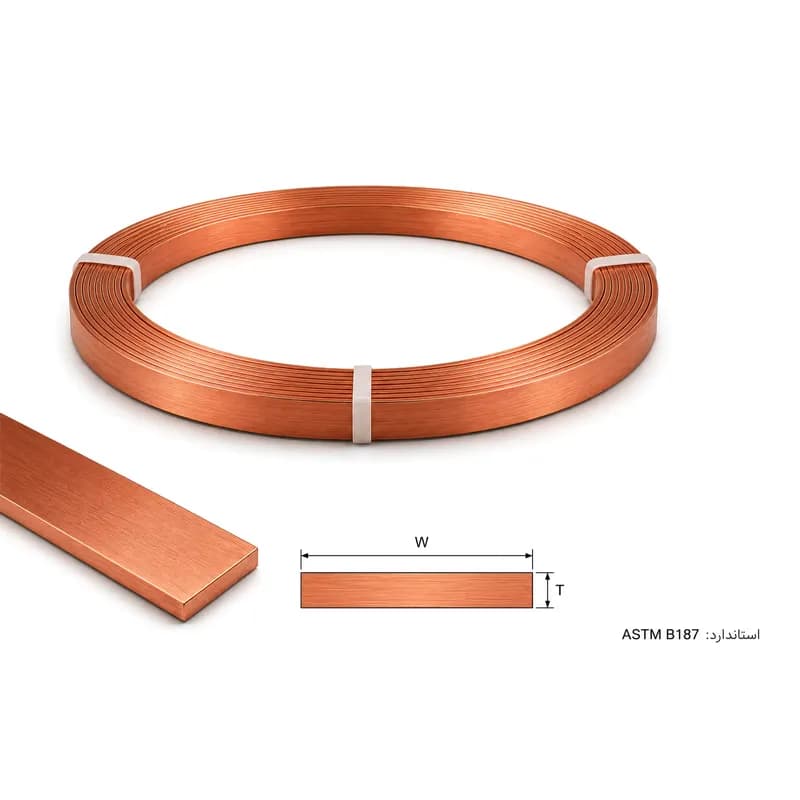
Conductor | Flat copper tape, 25 × 3 mm |
Body dimensions | L = 35 mm, W = 35 mm, H = 10 mm |
Installation location | Flat surface of a steel structure (column and beam flange, sheet, plate); the back of the steel must be accessible to fasten the nut |
Preparation | The tape and steel are drilled at the bolt position |
Order code | BBCS 253 |
This clamp's bolt is A2-70 stainless steel.
Order code | Tape size (mm) | Length L (mm) | Width W (mm) | Height H (mm) | Material |
|---|---|---|---|---|---|
BBCS 253 | 25 × 3 | 35 | 35 | 10 | Brass, stainless steel bolt and nut |
The positions of L, W and H are shown in the "Technical drawing and dimensions" tab. For other tape sizes or very thick steel, please talk to our technical specialists before ordering.
Click to view enlarged
KALOT's three-view drawing shows the front view with the bolt head, the side view with the two lips under the clamp (tape channel) and the section view with the bolt, washer and nut. Dimensions: L = 35 · W = 35 · H = 10 mm, for 25 × 3 mm tape. This is not a manufacturing drawing. Its PDF and SVG files and KALOT's installation drawing are in the "Catalogues and documents" section of this page.
Click to view enlarged
Application
This clamp is used to bond flat steel structures with copper tape, for example connecting steel column or beam flanges, sheets and metal plates, the metal frames of industrial sheds and metal roof structures to the conductors of the lightning protection system or to the earthing network. After connecting to the steel, the tape continues as a bonding conductor to the down conductor, bonding bar or earthing network. Which metal parts are bonded, and at which points, is determined in the system design and by local regulations.
The schematic in this tab shows an example of the clamp installed on the flange of a steel column. KALOT's main installation drawing (isometric) is in the gallery and the documents section of this page.
Choosing between KALOT bonding clamps
- Flat steel surface, such as a column flange, beam or sheet: this clamp, BBCS 253.
- Large-diameter metal pipe: one-piece tape-to-pipe bonding clamp (WMPB 026).
- Rainwater pipes, railings and round objects of various diameters: Two-piece tape-to-pipe bonding clamp (RWPB 026).
- Holding down conductor tape on a wall, without bonding: One-piece tape-to-wall clamp.
Installation sequence
- Choose the bonding point according to the design. The steel surface must be flat and its back must be accessible for fastening the washer and nut.
- Drilling load-bearing members of the structure (columns, beams) must be approved by the structural engineer.
- Clean the contact area on the steel of paint, rust, dirt and loose coating so that the tape touches clean metal.
- Drill the tape and steel at the bolt position. Size the hole to suit the bolt supplied and remove any burrs from its edge.
- Lay the tape on the steel, place the clamp on the tape so that its two lips sit on either side of the tape, and pass the bolt through the clamp, tape and steel.
- Fit the washer and nut behind the steel and tighten gradually until the clamp sits flat and fully on the tape.
- Connect the rest of the tape to the down conductor, bonding bar or earthing network, and after installation check the tightness of the joint and the electrical continuity of the route.
- Protect the area around the joint where paint or coating was removed again, according to the design.
Technical notes and limitations
- This clamp works with a through bolt and nut. On closed sections (such as box sections and pipes), or where the back of the steel cannot be reached, this method alone cannot be applied. For pipes, use tape-to-pipe bonding clamps.
- In KALOT brass clamps, a stainless steel bolt helps reduce the risk of corrosion at the connection and keeps the joint mechanically stable over time, especially in damp or corrosive environments.
- Contact between copper or brass and steel, especially galvanised steel in the presence of moisture, can worsen galvanic corrosion at the joint. Protecting the joint after installation, and choosing how to do it, is up to the system designer.
- A steel structure can form part of the lightning current path only when its electrical continuity has been confirmed. This clamp makes the connection between tape and steel and does not replace checking the continuity of the structure.
Inspection and maintenance
During periodic inspections of the lightning protection and earthing system, check this joint for loose bolts and nuts, corrosion at the contact area, damage to the surrounding paint or coating and mechanical damage to the tape, and measure the electrical continuity of the route if needed. After each time it is opened and closed, clean the contact surface and tighten the nut evenly again.
The following standards are the reference for the design, installation and selection of connection components in lightning protection systems.
System design standard: IEC 62305-3
This standard covers the design, installation, inspection and maintenance of a structure's lightning protection system, including the use of metal parts of the structure with reliable electrical continuity as part of the system, and the equipotential bonding of metal parts to prevent dangerous sparking. Joints must be durable and checked during periodic inspections. The choice of bonding points and the method of connection to the structure rest with the system designer.
Bonding clamps for tape to pipe and metal plate
Documents & Downloads
Drawings & schematics
- Dimensional drawing of the tape-to-metal plate bonding clamp (PDF)Language: Persian (opens in a new tab)
- Installation drawing of the tape-to-metal plate bonding clamp (PDF)Language: Persian (opens in a new tab)
- Working schematic of the tape-to-metal plate bonding clamp on a steel column (PDF)Language: Persian (opens in a new tab)
Frequently Asked Questions
What is the tape-to-metal plate bonding clamp used for?
This clamp bonds flat copper tape to flat steel structures, such as column flanges, beams, sheets or metal plates, in earthing and lightning protection systems.
What size of tape is used with this clamp?
Flat 25×3 mm copper tape. The clamp body measures 35×35 mm and is 10 mm high.
Does the steel have to be drilled for installation?
Yes. The bolt passes through the clamp, the tape and the steel and is fastened behind the steel with a washer and nut, so the tape and steel are drilled at the bolt position. Drilling load-bearing members must be approved by the structural engineer.
Can it also be installed on a metal pipe or box section?
No. This clamp is for flat surfaces and needs access to the back of the steel. For metal pipes, KALOT's one-piece or two-piece tape-to-pipe bonding clamp is a better fit.
Does the structure's paint have to be removed at the joint?
Yes. As a general technical principle, the tape must contact clean metal free of paint and rust to make a reliable electrical connection. After installation, the stripped area is protected again according to the design.
Why is this clamp's bolt made of stainless steel?
Combining brass with an ordinary or galvanised steel bolt, especially in the presence of moisture, can worsen galvanic corrosion. That is why we use a stainless steel bolt in this clamp, so that the electrical connection between tape and plate is not lost to corrosion over time.
Can this connection be inspected?
Yes. It is a bolted joint with no welding, so nut tightness, the condition of the contact area, corrosion and electrical continuity can be checked during periodic inspection.
What is this clamp's bolt, and how is it fastened?
This clamp's bolt is A2-70 stainless steel. Tighten the bolt gradually and evenly until the clamp sits flat on the tape. If your project requires a specific torque, our technical specialists will guide you.
Have a Technical Question?
KALOT Group's technical experts are ready to answer your questions about lightning rods and earthing systems.