
Move your pointer over the image to zoom in
Complete Product Overview
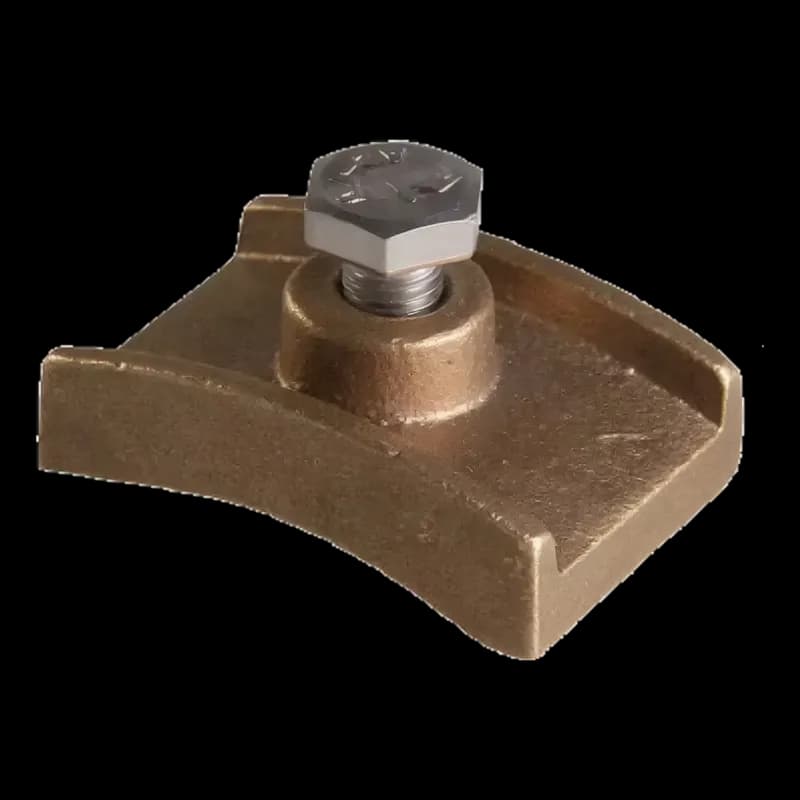
Two-piece tape-to-pipe bonding clamp
Order Code: RWPB 026
Last updated:
The KALOT two-piece tape-to-pipe bonding clamp (model RWPB 026) bonds round metal pipes and objects, such as rainwater pipes and railings, to lightning protection system conductors and the earthing network using copper tape.
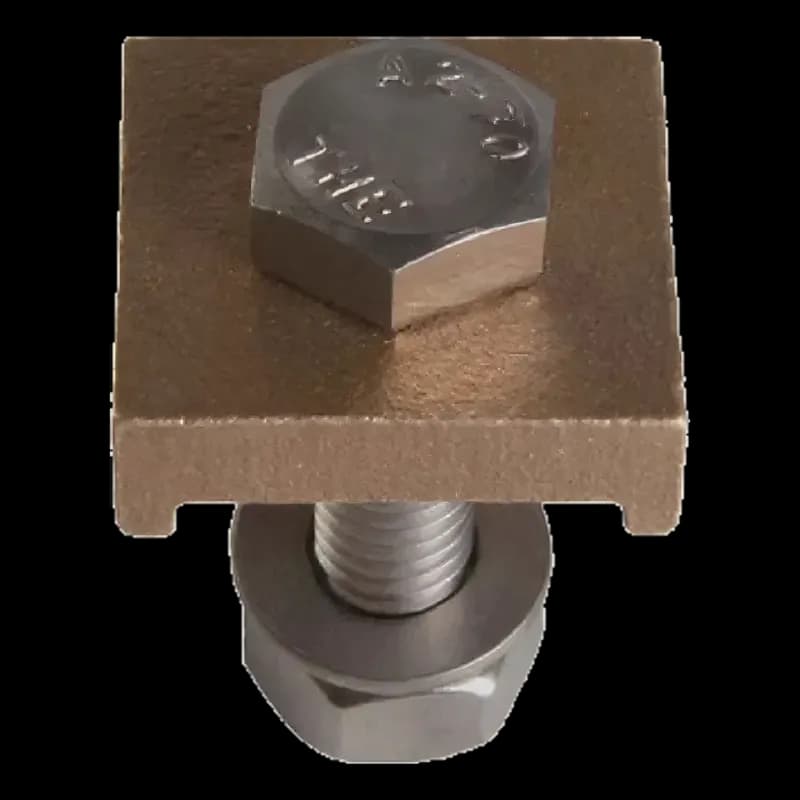
The tape wraps around the pipe and its two ends pass side by side through the channel between the clamp's two jaws. One stainless steel bolt passes through both layers of tape; tightening it makes the jaws press the tape, firming it around the pipe. The pipe is not drilled or welded.
The body is made of brass, measures 32 × 32 × 21 mm and takes flat tape up to 26 mm wide.
We provide this clamp for quick bonding of pipes and railings of different diameters, without damaging the pipe.
Bonding pipes with copper tape, without drilling the pipe
Pipes, railings and other metal parts close to lightning protection conductors usually need bonding to the system, so that no potential difference or dangerous sparking arises between them and the conductors when lightning current flows. With this clamp, the copper tape itself wraps around the pipe and the clamp presses its two ends together, so the connection is made without drilling or welding the pipe. The decision on bonding locations is for the system designer.
Bonding without drilling the pipe
The copper tape wraps around the pipe or railing and the connection is made by the pressure of the tape on the pipe surface, with no drilling or welding on the pipe.
Two matching jaws, one firm bolt
The two ends of the tape sit side by side in the channel between the two jaws, and one stainless steel bolt passing through both layers fixes the jaws on the tape, giving a reliable connection both mechanically and electrically.
Brass body
Compact brass body measuring 32 × 32 × 21 mm, for flat tape up to 26 mm wide.
For round pipes and railings
It can be used wherever the tape can wrap around a round object, such as a rainwater pipe, railing or gas pipe.
Inspectable bolted connection
The connection is mechanical with no welding; during periodic inspection you can check the tightness of the bolt and the condition of the tape contact with the pipe, and retighten the bolt if needed.
Technical Product Information
Feature | Value |
|---|---|
Product type | Two-piece tape-to-pipe bonding clamp (Rainwater Pipe Bond) |
Body material | Brass |
Bolt | One stainless steel bolt with matching nut and washer |
Structure | Two matching jaws; tape channel between the jaws; the bolt passes through the centre of the jaws and both layers of tape |
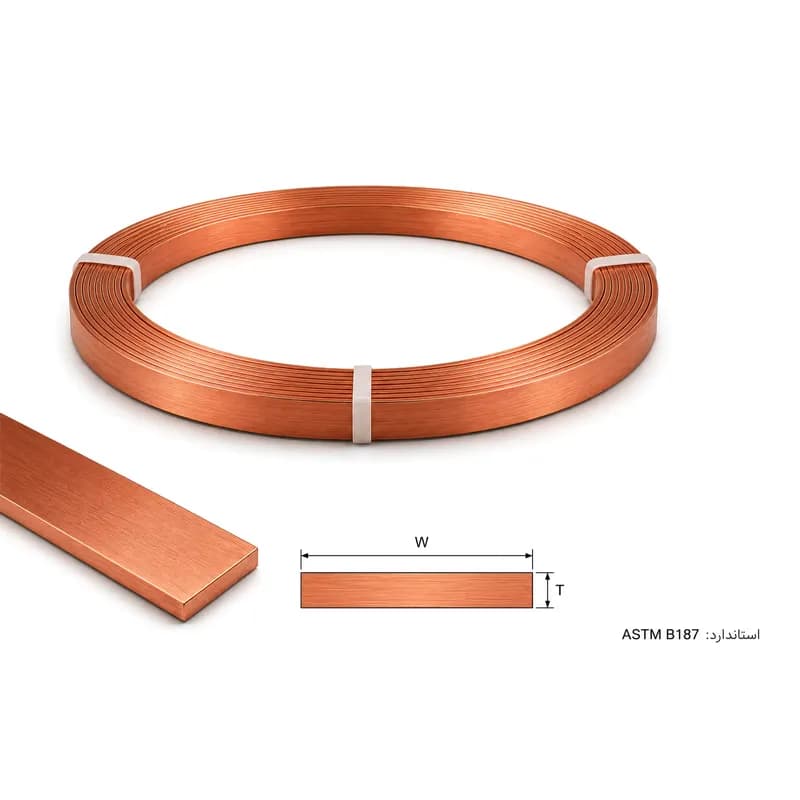
Conductor | Flat copper tape, up to 26 mm wide |
Installation location | Round pipes and objects, such as rainwater pipes, railings and gas pipes |
Preparation | The two ends of the tape are drilled at the bolt position; the pipe is not drilled |
Order code | RWPB 026 |
To be advised by KALOT Group | Bolt size, tightening torque, permitted tape thickness and pipe diameter range |
Dimensions and order code
Product code | Maximum tape width (mm) | Length L (mm) | Width W (mm) | Height H (mm) |
|---|---|---|---|---|
RWPB 026 | 26 | 32 | 32 | 21 |
L and W are the length and width of the clamp in the top view, and H is the height of the two jaws together; the position of each dimension is shown in the "Technical drawing and dimensions" tab. For other tape or another application, please consult us before ordering.
Click to view enlarged
The drawing shows the front view (along the tape), side view and top view of the clamp. L and W appear in the top view and H in the front view: L = 32 mm · W = 32 mm · H = 21 mm. The PDF and SVG files of the drawing are in the "Documents and downloads" section of this page.
Click to view enlarged
The exploded view shows the order of the parts along the bolt axis: nut, upper jaw, the two drilled layers of tape, lower jaw and bolt. To do the work, the two ends of the tape are drilled at the bolt position so that the bolt passes through both layers.
Click to view enlarged
Application
This clamp bonds round metal pipes and objects using copper tape, wherever the tape can wrap around a round object such as a rainwater pipe or railing. After passing through the clamp, the tape continues as the bonding conductor to the lightning protection system or earthing network. Which pipes are bonded, and at which points, is decided in the system design.
Choosing between KALOT bonding clamps
- Round pipe or railing that the tape wraps around: this clamp, RWPB 026.
- Large-diameter metal pipe: one-piece tape-to-pipe bonding clamp (WMPB 026).
- Flat steel structure: tape-to-metal plate bonding clamp (BBCS 253).
Installation sequence
- Clean paint, rust and dirt from the connection point on the pipe so that the tape makes direct contact with the pipe metal.
- Wrap the tape one full turn around the pipe and bring its two ends side by side towards the clamp.
- Drill the two ends of the tape where the bolt passes through; choose a hole size to suit the bolt supplied.
- Place the two layers of tape in the channel between the two jaws and pass the bolt through the jaws and both layers.
- Fit the nut and tighten gradually until the tape is firm around the pipe and the two jaws sit evenly on the tape.
- Continue the longer end of the tape as the bonding conductor to the lightning protection system or earthing network.
Technical notes and limitations
- Pipe material: direct contact between copper or brass and a galvanised or aluminium pipe, especially in a damp or corrosive environment, can lead to galvanic corrosion. Material compatibility and, where needed, the method of protection should be decided by the system designer.
- Non-metallic pipes (such as PVC) are not conductive and do not need this clamp for bonding.
- The condition for use is that the tape can be wrapped around the round object.
- The maximum tape thickness is 3 mm, and the two layers of tape must fit in the channel between the two jaws.
Inspection and maintenance
During periodic inspections of the lightning protection and earthing systems, check this connection for a loose bolt, tape slipping on the pipe, mechanical damage and corrosion, and measure the electrical continuity of the path if needed. After each opening and closing, tighten the bolt evenly again.
Click to view enlarged
The schematic above shows a complete lightning protection system on a flat-roofed building: air rods, a conductor on the parapet, down conductors with a test point and an earth ring. The two-piece tape-to-pipe bonding clamp appears in three common places: the metal roof railing, the top of the metal rainwater pipe and the bottom of the same pipe. The layout is an example, not a construction design.
Why are metal pipes and railings bonded?
When lightning current flows through the down conductors, nearby metal parts such as gutters, rainwater pipes or railings may develop a potential difference with the conductor, and sparks can jump between them. Under the principles of IEC 62305-3, these parts are either kept at a sufficient separation distance from the system or bonded to it so that they become equipotential. Guides from lightning protection equipment makers recommend connecting the bottom of a metal rainwater pipe to the earthing or bonding system, even when the pipe does not count as a down conductor.
Common applications
- Residential, office and commercial buildings: bonding metal rainwater pipes on the facade to the roof conductor or down conductor at the top and to the earthing system at the bottom, especially when the pipe is close to a down conductor.
- Roofs and rooftop structures: tubular railings and parapets, escape stairs, stairs and helipads. In projects completed by KALOT, the roof ring conductor has been bonded to metal stairs and railings.
- Industrial buildings and facilities: metal railings on platforms and stairways, and round metal pipes on the structure or roof that lie within the protection zone.
- Existing buildings and renovation: where drilling or welding pipes and railings is not permitted or not desirable; with this clamp the tape wraps around the pipe and the pipe stays untouched.
When is a different clamp needed?
- Large-diameter metal pipe: one-piece tape-to-pipe bonding clamp (WMPB 026).
- Flat steel structure: tape-to-metal plate bonding clamp (BBCS 253).
- Non-metallic pipe (such as PVC): it is not conductive and is not bonded.
- Isolated protection system: if the designer has chosen a separation distance, the metal part is deliberately not connected to the system.
The decision on which pipes and railings are bonded, and at which points, is for the lightning protection system designer. The PDF and SVG files of this schematic are in the "Documents and downloads" section.
The following standards are the reference for the design, installation and selection of connection components in lightning protection systems.
System design standard: IEC 62305-3
This standard covers the design, installation, inspection and maintenance of lightning protection systems for structures. Equipotential bonding of the structure's and services' metal parts to the protection system, or keeping a sufficient separation distance, is the way to prevent dangerous sparking; connections must be reliable and checked during periodic inspections. Choosing the pipes and points to be bonded is the responsibility of the system designer.
ESE lightning protection systems: NF C 17-102
If this clamp is used in an ESE lightning protection system (with advance time), NF C 17-102 is the reference for designing and installing that system, and it refers to the EN 62561 series for component requirements. This link is at system level and does not mean this clamp is approved to NF C 17-102.
Bonding clamps for tape to pipe and metal plate
Documents & Downloads
Drawings & schematics
- Dimensional drawing of the two-piece tape-to-pipe bonding clamp (PDF)Language: Persian (opens in a new tab)
- Installation schematic of the tape-to-pipe bonding clamp | copper tape around a pipe (PDF)Language: Persian (opens in a new tab)
- Exploded view of the two-piece tape-to-pipe bonding clamp (PDF)Language: Persian (opens in a new tab)
- General schematic of the lightning protection system and the position of the tape-to-pipe bonding clamp (PDF)Language: Persian (opens in a new tab)
Frequently Asked Questions
What is the two-piece tape-to-pipe bonding clamp used for?
It bonds round metal pipes and objects, such as rainwater pipes and railings, to the lightning protection system or earthing network using copper tape. The tape wraps around the pipe and the clamp presses its two ends together.
Does the pipe have to be drilled for installation?
No, the pipe is not drilled or welded. According to the KALOT product text, only the two ends of the tape are drilled at the bolt position so that the bolt passes through both layers of tape.
What tape is this clamp suitable for?
For flat copper tape up to 26 mm wide; the two layers of tape must fit in the channel between the two jaws.
What is the difference between this clamp and the one-piece tape-to-pipe bonding clamp?
This clamp (RWPB 026) is for places where the tape wraps around a round object such as a rainwater pipe or railing; we recommend the one-piece clamp (WMPB 026) for bonding tape to large-diameter metal pipes.
Can it be used on a galvanised or aluminium pipe?
Direct contact between copper or brass and galvanised steel or aluminium, especially in a damp environment, may cause galvanic corrosion. Material compatibility and the method of protection are decided by the system designer.
What should be checked during periodic inspection?
The tightness of the bolt, the tape not slipping on the pipe, mechanical damage and corrosion. If needed, also measure the electrical continuity of the path, and after opening and closing, tighten the bolt evenly again.
Have a Technical Question?
KALOT Group's technical experts are ready to answer your questions about lightning rods and earthing systems.