
Move your pointer over the image to zoom in
Complete Product Overview
Copper earth pit plate (copper plate electrode)
Order Code: SCEP 6603 · SCEP 6605 · SCEP 6653 · SCEP 6655
Last updated:
The copper earth pit plate from KALOT Group is a plate earth electrode of solid copper. It stands upright and vertical in a pit filled with GIM ground improvement material, and its large surface carries fault current and lightning current into the soil. We supply the copper earth plate in two sizes, 660 × 660 and 660 × 500 mm, each in a thickness of 3 or 5 mm, in copper of 99.5% standard purity, or 99.99% purity to order. The earth conductor, a bare copper conductor or tape, is connected to the plate by exothermic welding. Where driving an earth rod is not practical, such as with a hard layer near the surface, tight space or sites with many underground services, the copper plate is a dependable answer.
Our installation method is simple and proven. A pit is dug with a diameter at least 30 cm larger than the plate's width, the plate stands upright on a bed of GIM ground improvement material, and GIM covers it on every side and to at least 10 cm above its edge. For the conductor connection we supply exothermic welding, and for the top of the pit the KALOT earth inspection pit. The comparison table on this page sets the copper plate beside the copper-bonded earth rod and the solid copper earth rod in technical and financial terms.
A plate electrode for hard ground and tight spaces
A copper plate gathers the whole electrode into one pit. Where rock or a hard layer lies near the surface, there is no room for several earth rods or the routes of underground services are crowded, we install the plate in an excavated pit, inside GIM. You get the plate, GIM, exothermic welding and inspection pit from us in one place, so your earth pit is built as a single system.
- Solid copper with a standard purity of 99.5%; 99.99% purity to order
- Two sizes, 660 × 660 and 660 × 500 mm, in 3 or 5 mm thickness
- Vertical installation in a GIM pit, following the KALOT Group method
- Bare copper conductor or tape connected by exothermic welding
Solid copper through the full thickness
The plate comes in solid copper, 3 or 5 mm thick. Copper lasts well in soil, and greater thickness gives a larger corrosion margin. Earth resistance depends on the plate size and the soil, not on its thickness.
Vertical installation inside GIM
The plate stands upright on a 10 cm bed of GIM, in a pit at least 30 cm wider than the plate itself, and GIM rises to 10 cm above its edge. The body of GIM around the plate lowers the electrode's resistance.
Hard layer, tight space, underground services
Where driving an earth rod is not practical, or there is no room for several electrodes at a sufficient spacing, one plate in one pit does the job of the earth electrode.
Exothermic welding, a single solid joint
Bare copper conductor of 16 to 240 mm² or bare copper tape is connected to the plate by exothermic welding, giving a single solid joint that never needs retightening underground.
Six drawings and a datasheet
Copper earth plate datasheet (PDF)You will find the dimensional drawing, technical drawing and weld details, installation schematic, installation steps, connection modes and selection guide as PDF files next to the datasheet.
Technical Product Information
Click to view enlarged
Feature | Value |
|---|---|
Product type | Plate earth electrode (copper earth pit plate) |
Material | Solid copper |
Purity | Copper with a standard purity of 99.5%; 99.99% purity to order |
Dimensions (length × width) | 660 × 660 and 660 × 500 mm |
Thickness | 3 or 5 mm, for both sizes |
Weight | 8.9 to 19.5 kg, depending on size and thickness |
Two-face area | 0.87 m² for 660 × 660 and 0.66 m² for 660 × 500 |
Conductor connection | Bare copper conductor or tape by exothermic welding; conductors of 16, 35, 50, 70, 95, 120 and 240 mm² |
Supplied with welded conductor | We also supply the plate with copper conductor or tape exothermically welded at the factory |
Installation method | Vertical, in a pit with a diameter at least 30 cm larger than the plate's width, inside GIM ground improvement material |
GIM consumption | 37 bags for 660 × 660 and 24 bags for 660 × 500, per the KALOT Group installation table |
Order code | SCEP 6603, SCEP 6605, SCEP 6653 and SCEP 6655 |
Copper plate dimensions, thickness, weight and order codes
Order code | Length L (mm) | Width W (mm) | Thickness H (mm) | Weight (kg) | Two-face area (m²) |
|---|---|---|---|---|---|
SCEP 6603 | 660 | 660 | 3 | 11.7 | 0.87 |
SCEP 6605 | 660 | 660 | 5 | 19.5 | 0.87 |
SCEP 6653 | 660 | 500 | 3 | 8.9 | 0.66 |
SCEP 6655 | 660 | 500 | 5 | 14.8 | 0.66 |
Dimensions are in millimetres. L is the length of the plate, which stands upright in the pit, W is the width and H is the thickness. Weight is calculated by multiplying length, width and thickness by the density of copper (8.94 g/cm³), and the area is the total of both faces. Our products are continually improved and some dimensions may be updated, so please confirm the final dimensions with our specialists before you buy.
Dimensional drawing of the copper earth plate
Download the dimensional drawing (PDF)
Technical drawing and weld location details
Download the technical drawing (PDF)
Material and construction: solid copper plate
The KALOT copper earth plate is a sheet of solid copper, with copper through its full thickness, so scratches or abrasion in transport and installation do not change the plate's material. The standard copper purity is 99.5%, and we also supply the plate with 99.99% purity to order. The earth conductor is connected to the plate near its top edge by exothermic welding, and the plate stands upright in the pit with this edge facing up. The weight of each size and thickness is given in the table above, and weight is a simple way to recognise a solid copper plate.
Click to view enlarged
Applications of the copper earth plate
- Residential, commercial and office buildings: the earth pit for electrical installations and the lightning protection system, especially where only a small area remains for the electrode.
- Factories and industrial workshops: earthing for panels, machinery and equipment, alongside the plant's bonding network.
- Hard layer near the surface: where an earth rod cannot be driven to the required depth and the pit is dug with excavation tools.
- Sites with many underground services: pipe and cable routes leave no room to drive several earth rods at a sufficient spacing, while a plate in one pit takes up little space.
- Projects whose specifications call for a copper plate: power substations, telecommunications and industrial facilities with a plate electrode in their design.
- Dry surface soil: the pit is dug deeper, so the top edge of the plate sits below the dry layer, in moist soil.
- Saline and corrosive soil: copper through the full thickness of the plate gives a larger corrosion margin. The solid copper earth rod is also our option for these soils.
Installation schematic: vertical plate in a GIM pit with an inspection pit
Download the execution schematic (PDF)
Connecting copper conductor and tape to the plate by exothermic welding
Download connection modes (PDF)
How to install a copper plate in an earth pit
- Choose the earth pit location: soil that holds its natural moisture, away from waste, fertiliser and chemicals. Mark the routes of underground services. If you know the soil resistivity, choose the plate size and number based on it.
- Dig a round pit with a diameter at least 30 cm larger than the plate's width: 96 cm for a 660 × 660 plate and 80 cm for a 660 × 500 plate. As far as possible, take the pit depth down to moist soil.
- Prepare the GIM mix: mix each bag of GIM with 8 litres of clean water and 2 kg of cement. Add nothing else, and do not let soil, sand, pieces of bag or plastic get into the mix.
- Connect the bare copper conductor or tape to the plate near its top edge by exothermic welding, at one point at least and at two points for extra assurance. Choose the weld mould according to the conductor cross-section.
- Pour at least 10 cm of GIM mix into the bottom of the pit, then stand the plate upright and vertical on this bed in the middle of the pit, with the welded conductor facing up.
- Pour the GIM mix around the plate until the plate is fully covered and GIM reaches at least 10 cm above its top edge. According to our installation table, a 660 × 660 plate needs 37 bags and a 660 × 500 plate needs 24 bags. For other pits, see the GIM consumption calculator.
- Fill the rest of the pit with sieved soil, compacting it layer by layer. In the top 50 cm, place the earth inspection pit and pour concrete around it. Inside it, fix the bare copper conductor to the inspection pit earth bar with a cable lug, and tighten the bolts according to the manufacturer's instructions.
- Run the conductor bare through the soil from the inspection pit to the building, and use green and yellow conductor only for the above-ground section up to the building's main earth bar. Measure the earth pit resistance after installation and record it with the date in the earthing system file.
Download the installation steps (PDF)
Tools and materials needed
Pit excavation tools, an exothermic weld mould and weld powder matched to the conductor, a container and mixer for the GIM mix, clean water and cement, sieved soil, the inspection pit and its bar, a spanner for the bar bolts and an earth resistance tester.
Measuring resistance and inspecting a plate earth pit
Measure the earth pit resistance after installation using the fall-of-potential method (62%), and record the result with the date, season and soil moisture condition in the earthing system file. Topic 13 of the Iranian National Building Regulations requires measurement after installation and periodic measurements. During periodic inspections, check inside the inspection pit that the conductor is sound and the connection on the earth bar is tight. If the resistance is above the design value, install a second plate at a spacing of at least 2 m, or at least the installation depth for a deep plate, and connect it to the first plate with bare copper conductor. For the measurement method, see how earth termination resistance is measured.
Choosing a size and asking for a copper plate price
To ask for a copper earth plate price, send our specialists the order code or the size (660 × 660 or 660 × 500 mm) and thickness (3 or 5 mm), the purity you need (standard 99.5%, or 99.99% to order), the quantity, the type and cross-section of the conductor for exothermic welding, and the accessories you need (GIM ground improvement material, exothermic weld mould and powder, inspection pit and its earth bar). If you also tell us the soil type, its moisture and the space available, our specialists at KALOT Group will help you choose the right size, number of plates and installation method.
Click to view enlarged
The material and thickness of an electrode do not set the earth pit resistance. The soil, the electrode size and the body of improvement material around it do. A plate thickness of 3 or 5 mm has no effect on resistance: what thickness gives you is a stiffer plate in transport and installation and a larger corrosion margin in the soil. A larger plate gives lower resistance, and two plates at least 2 m apart work better than one plate twice the size. In the pit, the body of GIM around the plate becomes part of the electrode and enlarges its contact surface with the soil. Soil moisture also has a strong effect: a dry surface layer raises resistance, which is why we place the top edge of the plate below this layer, in moist soil. A copper plate does not replace an earth rod on every project. In soft soil with enough room, a copper-bonded earth rod is driven in and costs less to install. The copper plate belongs where an earth rod cannot be driven, space is tight or the project design calls for a plate electrode. In these places, our plate, GIM, exothermic welding and inspection pit make a complete earth pit that can be inspected. We measure the final resistance after installation.
Advantages of the KALOT copper earth plate
- Installation in hard ground and tight spaces: the plate goes into an excavated pit, where driving an earth rod is not practical or there is no room for several electrodes.
- Solid copper: copper through the full 3 or 5 mm thickness of the plate. Surface scratches do not change the plate's material, and the thickness gives a corrosion margin.
- Large contact surface: the plate and the body of GIM around it deliver current to the soil over a large surface, keeping the current density on the plate surface low.
- A single solid joint by exothermic welding: the conductor is connected to the plate by exothermic welding. The underground joint is one piece and never needs retightening.
- Inspectable: the conductor connection on the inspection pit earth bar stays accessible for inspection and measurement.
- All in one place from KALOT Group: you get the plate, GIM, exothermic welding, bare copper conductor, inspection pit and its bar from us in one place.
- Know the limits too: a copper plate needs more excavation and GIM than an earth rod, and its full installation cost is higher. In soft soil with enough room, we recommend the copper-bonded earth rod.
Selection guide: copper plate or earth rod?
Download the comparison and selection guide (PDF)
Copper plate or earth rod? A technical and financial comparison
Feature | Copper plate, 660 × 660 and 660 × 500 | Copper-bonded earth rod (two 1500 lengths) | Solid copper earth rod (two 1500 lengths) |
|---|---|---|---|
Material | Solid copper; standard purity 99.5% | Steel core with copper coating (at least 0.25 mm) | Copper throughout the cross-section |
KALOT sizes | 660 × 660 and 660 × 500 mm; 3 or 5 thick | 5/8 and 3/4 inch; length 1500 | Diameters of 16 and 20; length 1500 |
Installation | A pit with a diameter at least 30 cm larger than the plate's width, by excavation | Driven without excavation; borehole in hard ground | Borehole with improvement material, or driven in soft soil |
GIM ground improvement material | 37 bags (660 × 660) and 24 bags (660 × 500) | No GIM when driven; 3 bags in a 15 cm borehole | As for the copper-bonded earth rod |
Copper weight per electrode (kg) | 8.9 to 19.5 | 0.29 and 0.36 (copper coating) | 5.4 and 8.4 |
Conductor connection | exothermic welding | Exothermic welding or clamp | Exothermic welding or clamp |
Corrosion resistance | Very good; copper through the full thickness | Good, as long as the coating is intact | Very good |
Saline and chloride soil | Good | Medium | Good |
Raw metal value per electrode (US dollars) | 131 to 289 | 6.0 and 7.7 | 79 and 124 |
Metal value index (two 5/8 inch copper-bonded earth rod lengths = 1) | 22 to 48 | 1 and 1.3 | 13 and 21 |
Full installation cost rank (1 = lowest) | 3 | 1 | 2 |
Recommended use | Rock or a hard layer near the surface, tight space, many underground services and projects whose specifications call for a plate | Most projects: buildings, substations, lightning protection and towers | Saline and corrosive soils; high fault current |
This table was prepared on 21 Mehr 1405. Raw metal value is calculated from the metal weight of each electrode: copper at the official London Metal Exchange (LME) price of those days, 14,822 dollars per tonne, and the steel core of the copper-bonded earth rod at the current steel price. This value changes with the metal price, and the selling price also includes the manufacturing cost. For earth rods, two 1500 mm lengths (3 m depth) are shown, with a smaller and a larger size for each type. The cost rank is for the full installation of one electrode: metal, excavation, GIM and connection. Earth pit resistance depends on the soil and the electrode size, not on its material or thickness, and we measure the final resistance after installation. To learn more, see choosing the right material for an earth electrode and calculating earth termination resistance.
For a complete plate earth pit installation, see these products too
Product | When |
|---|---|
Bed and cover for the plate in the pit: 37 bags for 660 × 660 and 24 bags for 660 × 500. | |
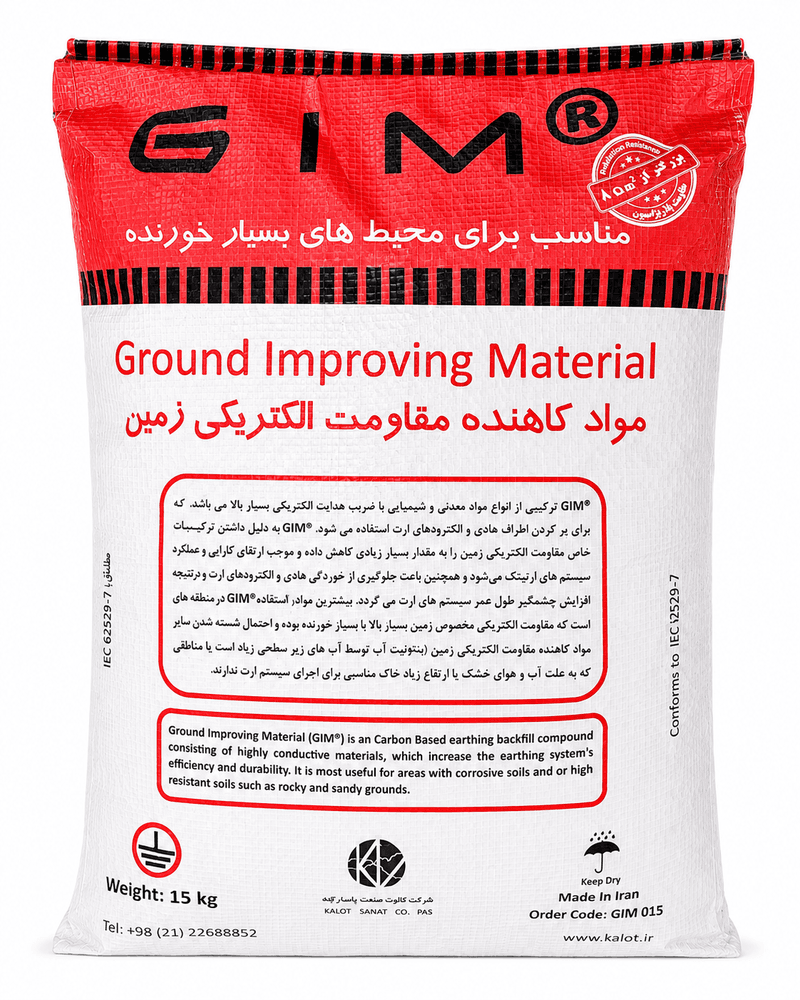
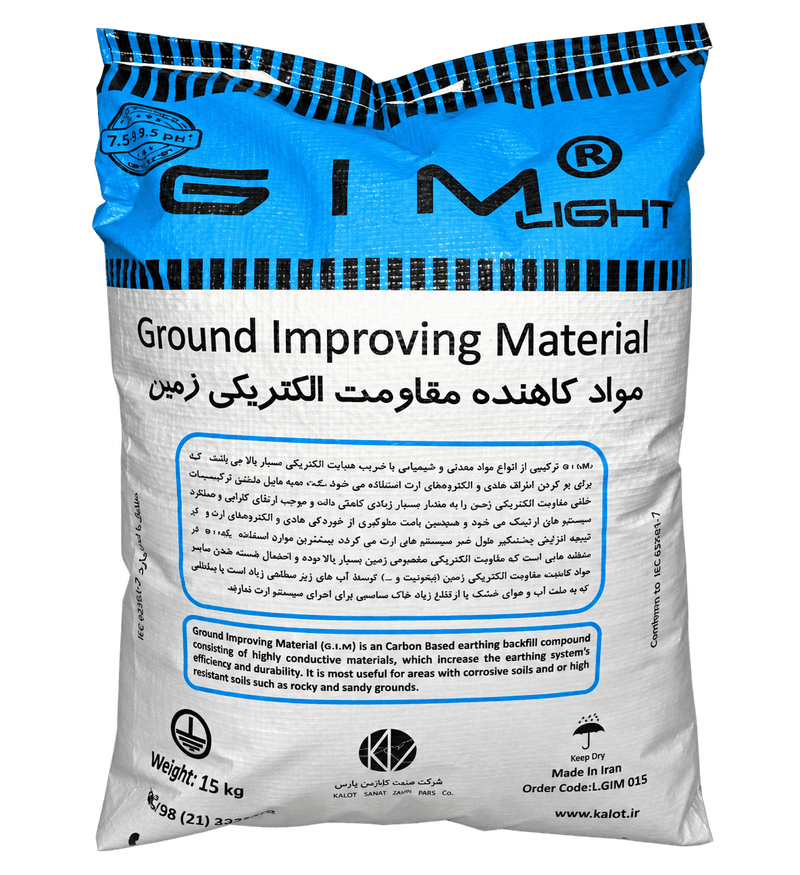
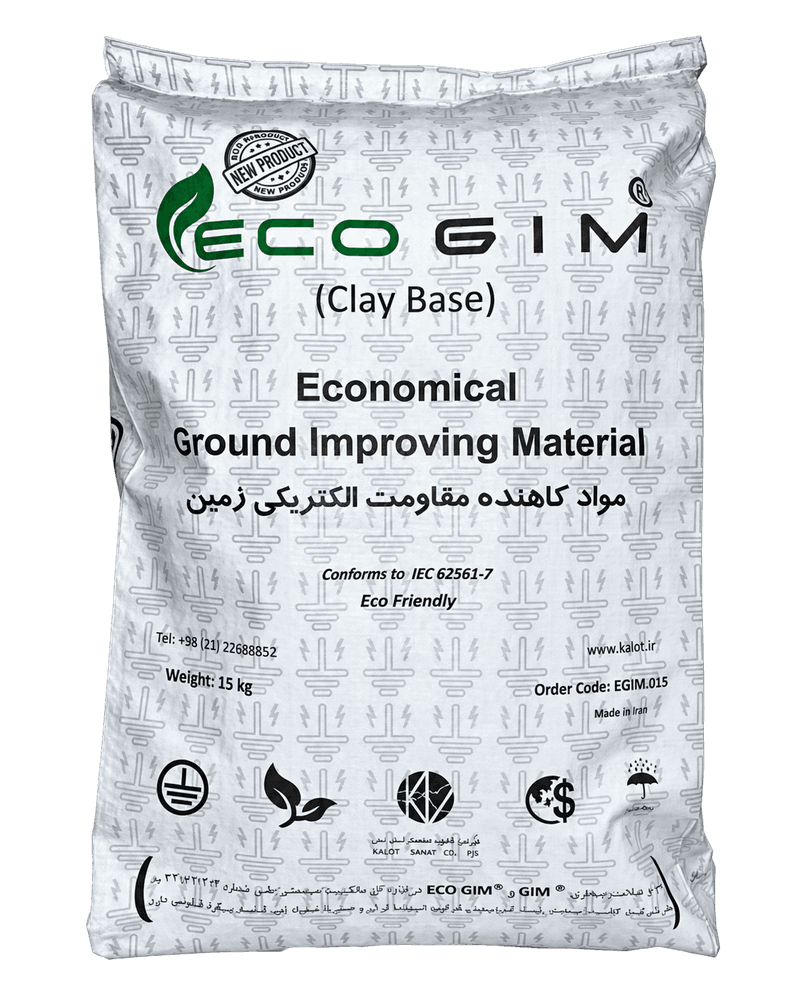
The KALOT GIM, GIM Light and ECO GIM family. | |
Connects bare copper conductor or tape to the plate; choose the mould according to the conductor cross-section. | |
The plate's conductor to the inspection pit and the building, and the link between two parallel plates. | |
A flat conductor for connecting to the plate by exothermic welding. | |
In the top 50 cm of the pit, for inspection and measurement; concrete is poured around it. | |
A lightweight pit; like the concrete pit, it has concrete poured around it. | |
Connects the plate's conductor with a cable lug inside the inspection pit. | |
Only for the above-ground section, from the inspection pit to the building's main earth bar. | |
The building's main earth bar. | |
For soft soil with enough room; driven without excavation. | |
For saline and corrosive soils, driven or installed in a borehole. | |
The other electrode in the "Other earth electrodes" group. |
To help you understand the requirements for plate electrodes, we have summarised the main references here. These are design references: the final size, number and depth of the plates are set by the earthing system design and by measurement after installation.
Topic 13 of the Iranian National Building Regulations (Appendix 1) treats the copper plate as one type of earth electrode. For a copper plate buried in an earth pit, it sets minimum dimensions of 50 × 50 cm and a minimum thickness, and requires vertical installation in all cases. The dimensions of our plates and their 3 and 5 mm thicknesses meet or exceed these minimum values. The same Topic says that in damp ground at least 1.5 m of soil should remain above the top edge of the plate, and that in dry ground the plate should be installed deeper than 3 m to reach moist layers. For connecting the conductor to the plate, it accepts a crimped cable lug with two copper bolts or suitable welding. It describes filling the pit with improvement material and compacted sieved soil, and it requires resistance measurement after installation and periodically, with a dated file for each electrode.
IEC 60364-5-54 (earthing arrangements) lists the plate among earth electrodes and sets a minimum thickness for solid copper plates; the 3 and 5 mm thicknesses of our plates exceed it. The guidance annex of the same standard prefers vertical installation, so that both faces stay in contact with the soil. For connections, it accepts exothermic welding, pressure connectors or suitable clamps, and its annex advises that a joint between dissimilar metals should not be in contact with the soil.
Iranian National Standard 4123 (code of practice for earthing) recommends installing the plate vertically where the soil stays moist, considers a spacing of 2 m suitable between parallel plates, and says two parallel plates of equal size are more economical than one plate twice as large. It also notes that in Iran, because of low soil moisture, plates are usually installed deeper than 3 m, and for deep plates it requires a horizontal spacing of at least the installation depth.
IEEE Std 142 (earthing of industrial and commercial power systems) says that a plate buried upright on its edge needs less excavation and makes better contact with the backfill, and that the difference in resistance between a horizontal and a vertical plate is small.
IEC 62561-2 (lightning protection system components: conductors and earth electrodes) has a separate clause and tests for earth plates.
Three-dimensional view of copper earth plate installation
Documents & Downloads
Catalogues & datasheets
Drawings & schematics
- Dimensional drawing of the copper earth plateLanguage: Persian (opens in a new tab)
- Copper earth plate technical drawingLanguage: Persian (opens in a new tab)
- Copper earth plate installation schematicLanguage: Persian (opens in a new tab)
- Copper earth plate connection modesLanguage: Persian (opens in a new tab)
- Copper earth plate installation stepsLanguage: Persian (opens in a new tab)
- Copper earth plate comparison and selection guideLanguage: Persian (opens in a new tab)
Similar & Complementary Products
Frequently Asked Questions
What is a copper earth pit plate and what is it used for?
A copper earth pit plate is a plate earth electrode of solid copper. It stands upright in a pit filled with GIM ground improvement material and carries fault current and lightning current into the earth. We recommend it for buildings and factories, especially where there is a hard layer near the surface, space is tight or there are many underground services, so driving an earth rod is not practical.
What are the dimensions and thicknesses of the KALOT copper earth plate?
We supply the copper earth plate in two sizes, 660 × 660 mm (66 × 66 cm) and 660 × 500 mm (66 × 50 cm), each in a thickness of 3 or 5 mm. The order codes are SCEP 6603 and SCEP 6605 for 660 × 660, and SCEP 6653 and SCEP 6655 for 660 × 500. The last digit of the code shows the plate thickness.
How much does a copper earth plate weigh and how is it calculated?
The weight comes from multiplying length, width and thickness by the density of copper (8.94 g/cm³). The 660 × 660 plate weighs 11.7 kg at 3 mm and 19.5 kg at 5 mm, and the 660 × 500 plate weighs 8.9 kg at 3 mm and 14.8 kg at 5 mm. Weight is a simple way to recognise a solid copper plate.
Which is better, 3 mm or 5 mm thickness?
Thickness has no effect on earth pit resistance. Resistance depends on the plate size, the soil and the body of GIM around the plate. A thicker plate is stiffer and has a larger corrosion margin, so we recommend 5 mm for saline, acidic and corrosive soils, and 3 mm for ordinary soils.
Is a copper plate installed horizontally or vertically in an earth pit?
Vertical. In our installation method, the plate stands upright on a bed of GIM in the middle of the pit, and GIM covers it on every side. Topic 13 of the Iranian National Building Regulations requires vertical installation in all cases, and IEC 60364-5-54 also prefers it, so that both faces of the plate stay in contact with the soil. An upright plate also needs less excavation.
How deep should a plate earth pit be?
Soil moisture sets the depth. In our method, we dig the pit down to moist soil wherever possible. Topic 13 says that in damp ground at least 1.5 m of soil should remain above the top edge of the plate, and that in dry ground the plate should be installed deeper than 3 m to reach moist layers. In many parts of Iran, plates are installed deep because the soil is dry. The final depth is set by the design and by measurement after installation.
How do we connect the earth conductor to the copper plate?
We connect the bare copper conductor or tape to the plate near its top edge by exothermic welding, at one point at least and at two points for extra assurance. Conductors of 16, 35, 50, 70, 95, 120 and 240 mm² are joined to the plate by exothermic welding. The underground joint is a single solid piece and never needs retightening. Bolted connections are used only inside the inspection pit, on its bar. The conductor stays bare in the soil and inside the inspection pit, and only the above-ground section to the building is green and yellow.
How many bags of GIM does one copper plate installation need?
According to our installation table, a 660 × 660 plate (96 cm pit, the 100 cm row of the table) needs 37 bags of GIM, and a 660 × 500 plate in an 80 cm pit needs 24 bags. These amounts include the 10 cm bed under the plate and the 10 cm cover above it. Mix each bag with 8 litres of clean water and 2 kg of cement. For other pits, see the GIM consumption calculator.
Which is better, a copper plate or an earth rod?
Each has its place. In soft soil with room to drive, a copper-bonded earth rod goes in without excavation and costs less to install. A copper plate needs more excavation and more GIM, and in the comparison table on this page it has the highest full installation cost. It belongs where there is a hard layer near the surface, tight space, sites crowded with underground services and projects whose specifications call for a plate electrode. For both, resistance depends on the soil and the electrode size, and we measure the final resistance after installation.
What is the difference between a solid copper plate and a copper-coated earth plate?
A copper-coated plate is a steel sheet with a thin layer of copper on it. Its durability depends on that layer staying sound: if the coating is damaged in transport, during installation or in the soil, the steel beneath comes into contact with the soil. A solid copper plate is copper through its full thickness. Weight offers a simple way to tell them apart: a solid copper plate weighs its length × width × thickness × the density of copper. The plates we supply are solid copper.
What standard applies to the copper earth pit plate?
For a copper earth pit plate, Topic 13 of the Iranian National Building Regulations sets minimum dimensions of 50 × 50 cm and a minimum thickness, and requires vertical installation. IEC 60364-5-54 also gives a minimum thickness for solid copper plates. Iranian National Standard 4123 recommends vertical installation in moist soil and a spacing of 2 m between parallel plates. The dimensions of our plates and their 3 and 5 mm thicknesses meet or exceed the minimum values in these references. You will find a summary of them in the "Standards" tab.
What does the price of a copper earth plate depend on?
The price depends above all on the weight of copper in the plate and the current copper price, with the manufacturing cost added on top. So size, thickness, purity and quantity set the price. For a current price, send our specialists the order code, or the size and thickness, along with the quantity and the cross-section of the conductor to be welded. The comparison table on this page shows the metal value of the plate alongside earth rods.
Have a Technical Question?
KALOT Group's technical experts are ready to answer your questions about lightning rods and earthing systems.