
Move your pointer over the image to zoom in
Complete Product Overview
Concrete earth pit (concrete earth inspection pit)
Last updated:
The KALOT Group concrete earth pit is installed over the head of an earth rod or earth pit and keeps the connection between the earth electrode and the conductors accessible for inspection and resistance measurement, with no need to dig up the soil. Its body and cover are precast reinforced concrete, it measures 310 × 310 × 170 mm, and once installed the top of the cover is level with the ground. The earth bar sits in the slots across the diagonal of the pit and connects the earth rod conductor, the lightning protection down conductor, the building conductor and the conductor to the next pit, using cable lugs. This pit is made to IEC 62561-5 and was placed in medium class (M) in the load test. We also recommend the right earth bar, clamp and cable lug.
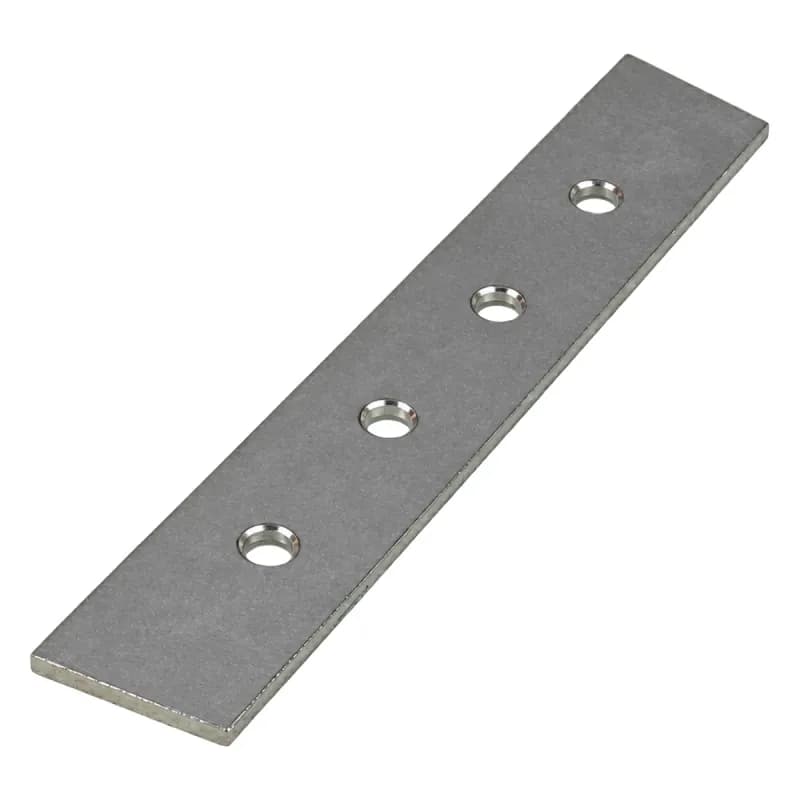
The base of this earth chamber is open so that the earth rod can enter, and the conductors pass through the slots at the bottom of the walls. The earth bar for this pit is supplied separately: it measures 300 × 50 × 5 mm (two angled ends, short edge 280) and has 4 Ø12 holes as standard, with more holes made to order. We manufacture it in bare copper, tinned copper or stainless steel, and we also supply its stainless steel bolts, nuts and washers separately. Always pour concrete around the pit so that it stays firmly in place. To see a three-dimensional view of how this pit is installed, click here. If you want a lighter pit (1.8 kg) with heavy load class (H), see our polyethylene earth pit.
Concrete pit for earth pit inspection
The pit sits over the earth rod and keeps the connection between the electrode and the conductors accessible at all times. For inspection or measurement, you simply lift the concrete cover.
- Compliant with IEC 62561-5, medium load class (M)
- Open base for the earth rod to enter
- Earth bar slots across the diagonal of the pit
- Precast reinforced concrete body and cover
Bar seating
Slots across the diagonal of the pit hold the 300 × 50 × 5 earth bar (two angled ends, short edge 280) with 4 Ø12 holes upright, so that conductors can be fixed to it with cable lugs. We make the bar in bare copper, tinned copper or stainless steel and supply it separately.
Open base and wall slots
The earth rod enters the pit through the open base, and the conductors pass through the slots at the bottom of two opposite walls.
Medium load class (M)
Load test report (PDF)Website membership required · Sign in or joinThe load test on this pit was carried out to IEC 62561-5 at the Razi Metallurgical Research Centre, and the pit was placed in medium class (M), which withstands a force of 15 kN (about 1.5 tonnes).
Drawings and datasheet
Concrete earth pit datasheet (PDF)The dimensional drawing, technical drawing, exploded view, installation schematic, installation steps and earth rod connection methods are all available as PDF files, alongside the datasheet.
Advice from KALOT Group specialists
Along with the pit, our specialists recommend the right clamps, bar and cable lugs for your installation location and conductor types.
Technical Product Information
Click to view enlarged
Feature | Value |
|---|---|
Type | Earth electrode inspection pit (earth inspection chamber) |
Body and cover material | Precast reinforced concrete |
Dimensions | 310 × 310 × 170 mm (length × width × overall height with cover) |
Weight | 21.2 kg (with cover) |
Body | Square frame with no base and sloping walls; slots at the bottom of two opposite walls for conductors to pass through |
Cover | Concrete slab with a lifting slot, seated in the top rim of the body |
Standard | To IEC 62561-5 |
Load class | Medium class (M) in the IEC 62561-5 load test; withstands 15 kN (about 1.5 tonnes) |
Bar seating | Slots across the diagonal of the pit, for an upright earth bar |
Bar (supplied separately) | 300 × 50 × 5 mm (two angled ends, short edge 280); 4 Ø12 holes (standard); more holes to order; bare copper, tinned copper or stainless steel |
Earth bar bolts, nuts and washers | Stainless steel; supplied separately |
Base | Open; the earth rod enters the pit from the floor |
Installation location | Over the head of the earth rod or earth pit, level with the finished ground, with concrete around the pit |
Sizes
Model | Length L (mm) | Width W (mm) | Overall height H (mm) |
|---|---|---|---|
Concrete pit | 310 | 310 | 170 |
Dimensions are in millimetres. The overall height includes the cover. The body narrows towards the bottom with sloping walls, and once installed the top of the cover is level with the finished ground. We are always improving our products and some dimensions may be updated, so please confirm the final dimensions with our specialists before you buy.
Dimensional drawing
Download the dimensional drawing (PDF)
Technical drawing
Download the technical drawing (PDF)
Exploded view
Download the exploded view (PDF)
Pit construction
The pit has two parts, a body and a cover, both of precast reinforced concrete. The body is a square frame with no base that narrows towards the bottom with sloping walls. The earth rod enters through the open base, and the slots at the bottom of two opposite walls let the conductors through. Slots across the diagonal of the pit hold the earth bar upright so that conductors can be fixed to it with cable lugs, and the bar's two angled ends match the sloping walls. The cover is a concrete slab that sits on a step inside the top rim of the body and is lifted and replaced using the slot in it.
Click to view enlarged
Applications of the concrete earth pit
- Building earth pits and earth rods: an inspection and resistance measurement point for the earth electrode, over an earth rod or earth pit.
- Lightning protection systems: at the foot of every air terminal down conductor, where it joins the earth electrode.
- Earth rings and multiple electrodes: the point where electrodes connect to one another and to the building's earth bar, with conductors reaching the bar inside the pit through the slots at the bottom of the walls.
- Yards, pavements and green spaces: wherever a sturdy pit level with the ground is needed. For locations with heavier loads, see our polyethylene earth pit with heavy load class (H). For vehicle routes, please discuss the installation location with our specialists.
Installation schematic
Download the execution schematic (PDF)
Earth rod connection inside the pit
Download connection modes (PDF)
Installation steps for the concrete earth pit
- Dig a hole that leaves enough room around the pit for concrete, and drive the earth rod until the design resistance is reached.
- Lay a bed of gravel on the bottom of the hole and around the earth rod, so that water can drain and the pit sits on a level bed.
- Set the pit on the bed so that the earth rod enters through the open base and the top of the cover is level with the finished ground.
- Connect the earth rod to the conductor with a U clamp, G clamp, A clamp or exothermic welding, and bring the external conductors into the pit through the slots at the bottom of the wall.
- Stand the earth bar upright, longer edge up, in the slots across the diagonal of the pit so that its two angled ends match the sloping walls. Then fix the earth rod conductor, down conductor, building conductor and the conductor to the next pit, each with a cable lug on its own hole. Put the earth rod conductor on an end hole so it can be undone easily for testing. Tighten the bolts according to the manufacturer's instructions.
- Always pour concrete around the pit so that it stays firmly in place and does not tilt or settle over time. Take care that no concrete gets into the pit through the slots at the bottom of the wall. Then backfill the surrounding area and level it.
- Undo the earth rod conductor's cable lug from the earth bar so that the earth rod is isolated from the rest of the system, then measure its resistance and record it. Refit the cable lug to the earth bar and put the concrete cover in place.
Download the installation steps (PDF)
Installation tools
For installation you will need a shovel and digging tools, a hammer or earth rod driver, concrete for around the pit, a spanner for the clamp and cable lugs, and an earth resistance tester.
Inspection and measurement
During periodic inspections, remove the cover, check the condition of the clamp and cable lugs, undo the earth rod conductor's cable lug, measure the earth rod's resistance, record it and reconnect. You can also read our article on earth resistance measurement.
Selection and price enquiry
For a price on the concrete earth pit, send our specialists the quantity, the installation location, the earth rod diameter, the conductor types and the earth bar you need (bare copper, tinned copper or stainless steel, and the number of holes).
Click to view enlarged
The connection between the earth electrode and the conductors is one of the key points in an earthing system, and it needs to be seen and tested over time. If this point stays buried, every inspection or measurement means digging. An earth pit keeps it level with the ground and within reach: you lift the cover, see the connections, undo the earth rod conductor's cable lug and measure the earth rod's resistance.
Advantages of the concrete earth pit
- Medium load class (M): in the load test to IEC 62561-5, it withstands a force of 15 kN (about 1.5 tonnes).
- Inspection with no digging: the earth rod and conductor joints are always within reach.
- Sturdy concrete body: the body and cover are precast reinforced concrete and, with concrete around the pit, stay firmly in place without tilting.
- Place for an earth bar: several conductors connect with cable lugs on one earth bar with 4 standard holes. We make more holes to order and manufacture the bar in bare copper, tinned copper or stainless steel.
- Conductor slots: conductors enter the pit through the slots at the bottom of two opposite walls.
- Concrete slab cover: the cover is lifted and replaced using the slot in it.
Concrete or polyethylene earth pit: a comparison
Feature | Concrete earth pit | Polyethylene earth pit |
|---|---|---|
Body and cover material | Precast reinforced concrete | Black polyethylene from virgin resin, no recycled material, with a UV-resistant additive |
Dimensions (mm) | 310 × 310 × 170 | 300 × 300 × 205 (lid 250 × 250) |
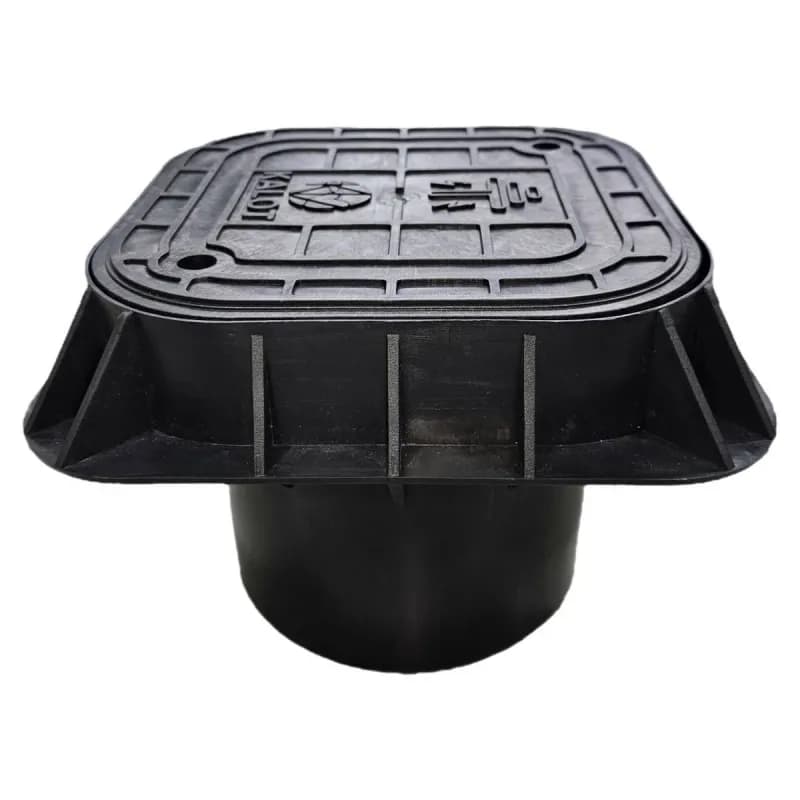
Body shape | Square frame with sloping walls and a slot at the bottom of two opposite walls | Wide base flange with reinforcing ribs and a 190 diameter cylindrical body |
Base | Open; the earth rod enters the pit from the floor | Slotted; the earth rod passes through the centre of the floor |
Cover | Concrete slab with a lifting slot | Reinforced cover with the KALOT mark and earth symbol, with two recessed Allen bolts |
Bar seating | Upright in slots across the pit's diameter | Diagonal, in two slots on the inner rim |
Bar (separate) | 300 × 50 × 5 (both ends bevelled), 4 Ø12 holes; bare copper, tinned copper or stainless steel | 238 × 30 × 5, 4 Ø10 holes; 304 stainless steel (standard), bare or tinned copper to order |
Load rating in IEC 62561-5 testing | Medium (M), 15 kN; 2017 edition | Heavy (H), 30 kN; 2023 edition, three samples |
Weight and handling | 21.2 kg | 1.8 kg; easy to handle |
Installation | Level with the ground, always with concrete around the pit | Level with the ground, always with concrete around the pit |
For details of the polyethylene pit, see our polyethylene earth pit, and for the bar, see our earth pit bar.
If this matches your situation, see these products too
Product | When |
|---|---|
For the earth electrode under the pit. | |
For the 300 × 50 × 5 earth bar (two angled ends, short edge 280) inside the pit, in bare copper, tinned copper or stainless steel. | |
U clamp for connecting conductor to earth rod and reinforcing bar | For clamping bare copper conductor to the earth rod. |
For connecting copper conductor to the earth rod. | |
For connecting copper tape to the earth rod. | |
For a permanent joint between conductor and earth rod. | |
When you want a lighter pit (1.8 kg) with heavy load class (H). | |
When earth resistance needs to come down. |
We design and manufacture the concrete earth pit in accordance with IEC 62561-5, the standard that sets the requirements for earth electrode inspection housings, including enough room to fasten and undo connections and mechanical load classification. The load test on this pit was carried out to IEC 62561-5 at the Razi Metallurgical Research Centre, and the pit was placed in medium class (M), which withstands a force of 15 kN (about 1.5 tonnes).
IEC 62305-3 requires periodic inspection and testing of the earthing system of a lightning protection installation, and an earth pit keeps the place for this inspection and measurement within reach.
Part Thirteen of the Iranian National Building Regulations requires earth electrode resistance to be measured after installation and periodically thereafter.
The earthing system designer decides the pit locations, electrode type and connection method. To learn more, see earthing system design and installation standards.
Three-dimensional view of concrete earth pit installation
Documents & Downloads
Catalogues & datasheets
Drawings & schematics
- Concrete earth pit dimensional drawingLanguage: Persian (opens in a new tab)
- Concrete earth pit technical drawingLanguage: Persian (opens in a new tab)
- Concrete earth pit exploded viewLanguage: Persian (opens in a new tab)
- Concrete earth pit installation schematicLanguage: Persian (opens in a new tab)
- Concrete earth pit connection modesLanguage: Persian (opens in a new tab)
- Installation steps for the concrete earth pitLanguage: Persian (opens in a new tab)
Certificates & test reports
- Compression test report for concrete earth inspection pit | Razi Metallurgical Research Centre 2013Persian · 2013
- Load test report for concrete earth inspection pit | Razi Metallurgical Research Centre 2020Persian · 2020
Similar & Complementary Products
Frequently Asked Questions
What is a concrete earth pit and what is it used for?
It is a small precast reinforced concrete chamber installed over the head of an earth rod or earth pit, flush with the ground. It keeps the connection between the earth electrode and the conductors accessible for inspection and resistance measurement, with no need to dig up the soil.
What are the dimensions of the concrete earth pit?
The pit measures 310 × 310 mm and its overall height with the cover is 170 mm. The body narrows towards the bottom with sloping walls, and the pit is installed so that the top of the cover is level with the finished ground.
How does the earth bar sit in the concrete pit?
The 300 × 50 × 5 mm earth bar (two angled ends, short edge 280) is supplied separately and stands upright, longer edge up, in the slots across the diagonal of the pit, with its angled ends matching the pit's sloping walls. The standard bar has 4 Ø12 holes, and we make more holes to order; we manufacture it in bare copper, tinned copper or stainless steel. Each hole takes one conductor with a cable lug, for example the earth rod conductor, the lightning protection down conductor, the building conductor and the conductor to the next pit. The earth rod conductor goes on an end hole so it can be undone easily for testing. We also supply matching stainless steel bolts, nuts and washers separately.
How do the conductors enter the pit?
The earth rod enters the pit through the open base, and the external conductors come in through the slots at the bottom of two opposite walls.
What load can the concrete earth pit withstand?
The load test on this pit was carried out to IEC 62561-5 at the Razi Metallurgical Research Centre, and the pit was placed in medium class (M), which withstands a force of 15 kN (about 1.5 tonnes). For locations with heavier loads, see our polyethylene earth pit with heavy class (H). For vehicle routes, please discuss the installation location with our specialists.
Why must concrete be poured around the pit?
Concrete around the pit holds it in place, so over time it does not tilt or shift with soil settlement or passing loads, and the cover always stays level with the ground.
How is the concrete cover removed?
The cover is a concrete slab with a slot in it. Lift the cover through this slot with a suitable tool, and put it back on the body after the inspection.
Which is better, a concrete or a polyethylene pit?
The concrete pit has a sturdy body and weighs 21.2 kg. Its load class is medium (M) at 15 kN, and it takes a 300 × 50 × 5 earth bar (two angled ends, short edge 280) with 4 Ø12 holes in bare copper, tinned copper or stainless steel. The polyethylene earth pit is far lighter at 1.8 kg and is made of new polymer resin with no recycled material. In a load test on three samples to IEC 62561-5:2023 it was placed in heavy class (H) at 30 kN. Its standard earth bar is 304 stainless steel, 238 × 30 × 5 with 4 Ø10 holes, and sits diagonally in two slots in the inner rim; we also make a bare or tinned copper bar for it to order. The choice depends on the installation location and method.
How do we measure earth pit resistance from inside the pit?
Remove the cover and undo the earth rod conductor's cable lug from the earth bar, so that the earth rod is isolated from the rest of the system, then measure its resistance with an earth resistance tester. Record the result and reconnect.
What information should we send for a quote?
Send us the number of pits, the installation location, the earth rod diameter, the conductor types and the earth bar you need (bare copper, tinned copper or stainless steel, and the number of holes), and our specialists will recommend the clamp, earth bar and cable lug and give you a price.
Have a Technical Question?
KALOT Group's technical experts are ready to answer your questions about lightning rods and earthing systems.