
Move your pointer over the image to zoom in
Complete Product Overview
Solid copper earth rod (all copper)
Order Code: SCER 1615 · SCER 2015
Last updated:
KALOT Group's solid copper earth rod, or all-copper earth rod, is an earth electrode that is copper across its entire cross-section, with no steel core. So a scratch, a thread or the grip of a clamp cannot expose a steel core. We make this earth rod in 16 and 20 mm diameters and 1500 mm lengths. Each length has an internal thread at both ends, and lengths are joined with dowels so the electrode reaches the required depth.
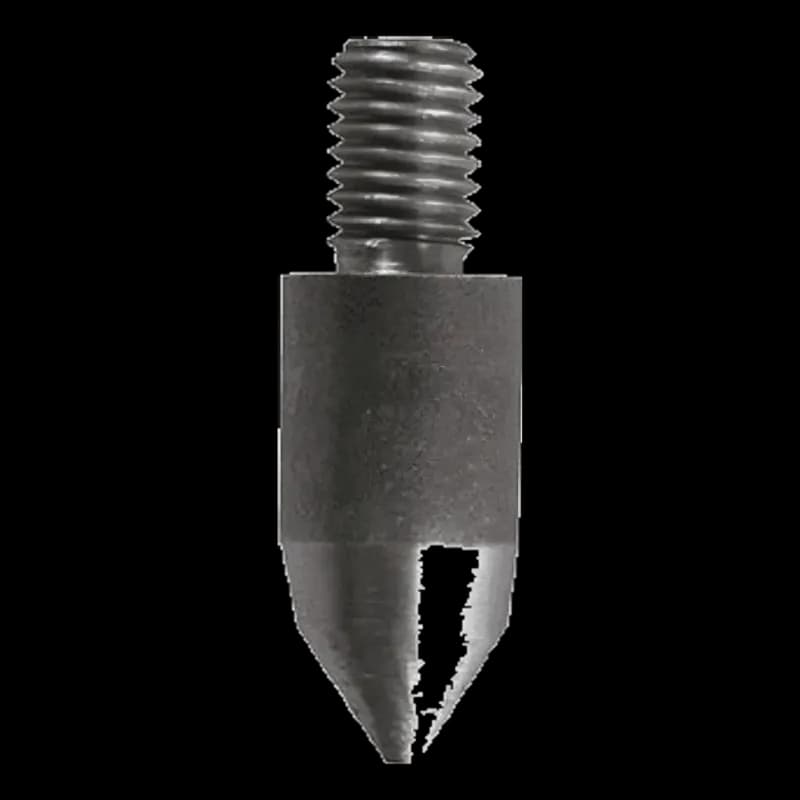
The copper earth rod is chosen for saline, coastal and corrosive soils and for installations that demand very high electrode durability. Copper is soft, so we do not sharpen the end of this earth rod. Instead, a steel tip fits into its lower thread. To compare it with the copper-bonded earth rod and the stainless steel earth rod, see the comparison table on this page.
All copper, from surface to core
A solid copper earth rod has no coating to damage: the whole cross-section is copper. That makes it a durable choice in saline and corrosive soils and in systems whose conductors are copper as well.
- Copper across the whole cross-section, no steel core
- Diameters of 16 and 20 millimetres, 1500 millimetre sections
- Internal thread at both ends; joined with a dowel
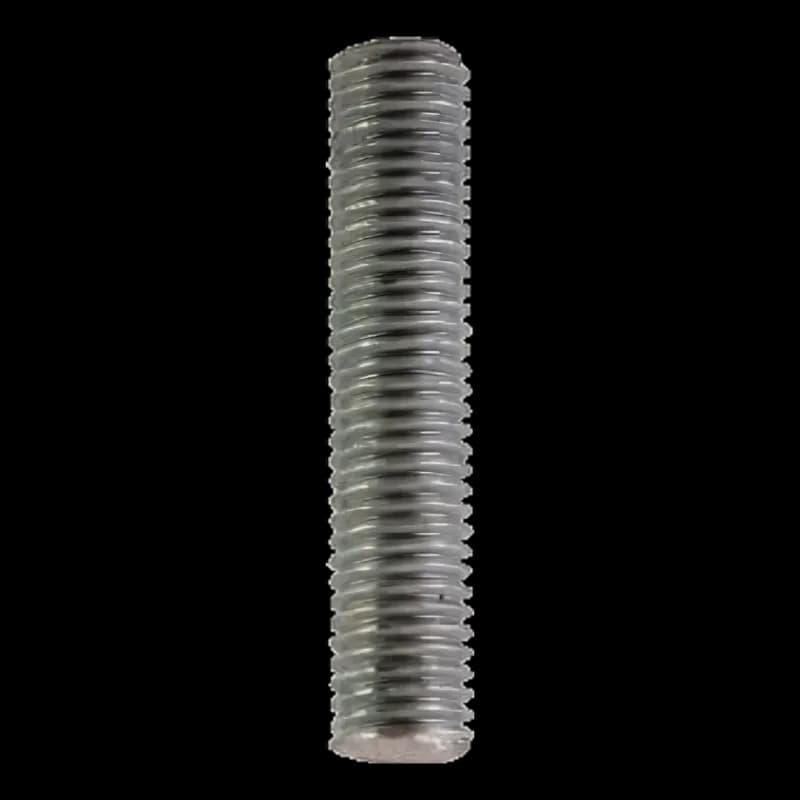
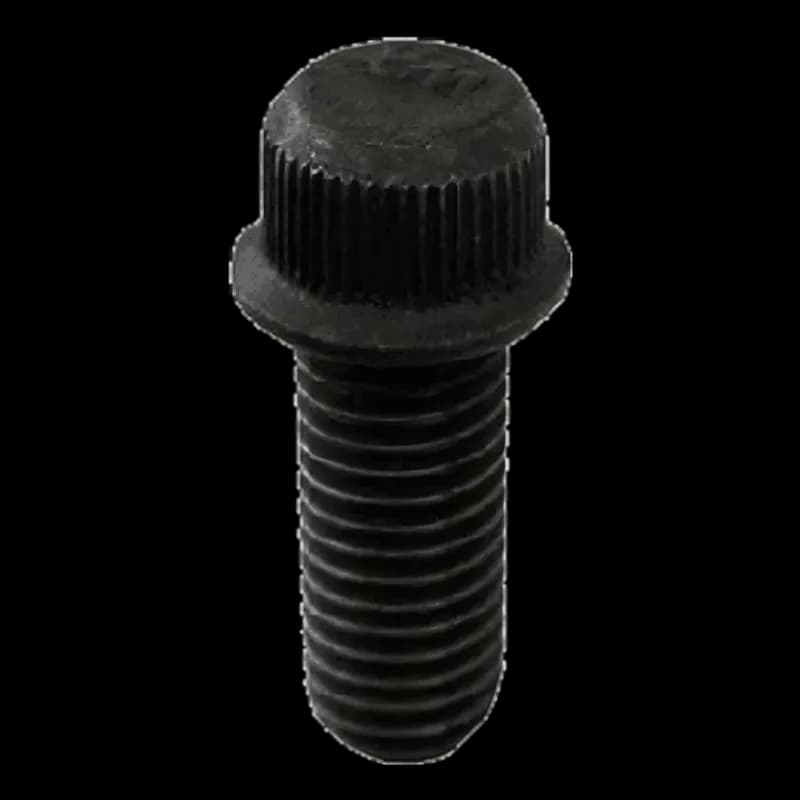
- Steel tip and threaded driving head
No steel core
A scratch or the bite of a clamp only exposes more copper; there is no steel core to corrode in the soil.
Identical sections with internal threads
Every section has an internal thread at both ends, so with a dowel you reach the depth you want and the electrode surface stays smooth.
For saline and corrosive soils
The shores of the Persian Gulf and the Sea of Oman and other saline soils, where galvanised steel soon perishes.
Steel tip, driving head, dowel
Copper is soft: the steel tip opens the way, and the driving head protects the top of the earth rod while it is driven.
Seven drawings and a datasheet
Solid copper earth rod datasheet (PDF)You will find the dimensional drawing, technical drawing, exploded view, installation schematic, installation steps, connection modes and comparison table as PDF files beside the datasheet.
Technical Product Information
Click to view enlarged
Feature | Value |
|---|---|
Product type | Solid copper earth rod (earth electrode), in sections |
Material | Copper across the whole cross-section (all copper) |
Diameter D | 16 and 20 mm |
Thread | Internal at both ends, M10 at a depth of 20 millimetres (both diameters) |
Length of each section | 1500 millimetres; other lengths to customer order |
Ends | Chamfered; the steel tip fits into the lower thread |
Joining lengths | M10 dowel, 40 millimetres long, in brass or stainless steel; the end faces of the two sections meet |
Driving accessories | Steel tip in the lower thread and threaded driving head in the upper thread |
Weight of each section | 2.68 kilograms (diameter 16) and 4.19 kilograms (diameter 20) |
Design basis | IEC 62561-2 requirements for solid copper earth rods |
Order code | SCER 1615 and SCER 2015 |
Order code and dimensions
Order code | Diameter D (mm) | Internal thread | Thread depth L1 (mm) | Length L (mm) | Weight (kg) |
|---|---|---|---|---|---|
SCER 1615 | 16 | M10 | 20 | 1500 | 2.68 |
SCER 2015 | 20 | M10 | 20 | 1500 | 4.19 |
Both ends of every section have an internal thread, and all sections are identical. We make other lengths to customer order. The M10 dowel, 40 millimetres long, the steel tip and the driving head are ordered separately. Our products are constantly improving and the dimensions of some may be updated, so please confirm the final dimensions with our specialists before you buy.
Dimensional drawing
Download the dimensional drawing (PDF)
Technical drawing
Download the technical drawing (PDF)
Exploded view
Download the exploded view (PDF)
Structure of the solid copper earth rod system
The solid copper earth rod system is built from identical sections, each with an internal thread at both ends. A steel tip fits on the lowest section, opens the way through the soil and stays at the bottom of the electrode after driving. The sections join with a dowel, and during driving a threaded driving head in the upper thread takes the blows instead of the top of the earth rod.
Click to view enlarged
Applications of the solid copper earth rod
- Saline, coastal and corrosive soils: the coasts of the Persian Gulf and the Sea of Oman, and soils high in salt.
- Substations, power plants and industrial facilities: where high fault current and long electrode life matter.
- Lightning protection systems: vertical (Type A) electrodes for each down conductor, and auxiliary earth rods beside the earth ring.
- Copper systems: when the conductors and tapes are copper and the electrode should be the same metal.
- Rocky or very dry ground: installation in a drilled borehole, with GIM ground improvement material filled around it; with this method the softness of copper is no limitation.
- Telecom towers and coastal data centres: if galvanised footings or piles are connected to the earthing system, see the stainless steel earth rod.
- One point to note: in acidic soils, soils containing sulphur compounds, peat and organic soils, copper corrodes sooner; in these soils, see the stainless steel earth rod.
Installation schematic: driven or in a borehole
Download the execution schematic (PDF)
Ways of connecting the conductor to the earth rod
Download connection modes (PDF)
How to install and drive the copper earth rod
- Check the soil resistivity and the electrode location, and mark the route of underground services. Dig the hole for the earth inspection pit.
- Screw the steel tip fully into the lower thread of the first section, and the driving head fully into its upper thread.
- Hold the earth rod vertical and use a sledgehammer or light hammer to strike gently, evenly and along its axis. Copper is soft, and for hard soil or great depths the borehole method is more suitable. If the earth rod tilts, stop work and straighten it.
- When only a short part of the section is left above ground, remove the driving head, screw the dowel halfway into the thread, and turn the next section onto the dowel until the end faces of the two sections meet. Fit the driving head on the new section and carry on.
- In hard or rocky soil or for great depths, drill a borehole, place the joined sections in its centre, and fill around them with ground improvement material, compacting it layer by layer.
- Measure the resistance after each section, and at the required depth remove the driving head.
- Connect the copper conductor to the top of the earth rod with a KALOT G clamp or exothermic welding, then place the earth inspection pit and pour concrete around it.
Download the installation steps (PDF)
Installation tools
A sledgehammer or light hammer with a face suited to the driving head, a spanner for fitting the dowel and tip, a level or plumb line to keep the earth rod vertical and, for hard soil, a borehole drilling machine.
Measurement and inspection
Measure the electrode resistance with the fall-of-potential method (62 percent); in systems with several electrodes connected together, a clamp-on tester is also used. Record the result with the season and soil moisture, and at periodic inspections inside the pit check that the clamp is tight and the conductor is sound. For the measurement method, see how the resistance of an earth termination is measured.
Selection and price enquiry
To request a price for the solid copper earth rod, send our specialists the diameter (16 or 20 millimetres), the number of sections or depth needed for each electrode, the number of electrodes and the accessories you need (dowel, steel tip, driving head, clamp and earth inspection pit). Our specialists at KALOT Group will stay with you in choosing the right diameter, installation method and material for your project's soil.
Click to view enlarged
The electrode material does not decide the resistance of the earth termination: the soil and the electrode length do. What the material decides is how long the electrode lasts in the soil. A solid copper earth rod has no coating to crack or wear away. It is highly durable in saline soils and in systems with copper conductors, and its exothermic welding joint to the conductor is copper to copper. On the other hand, copper is soft and must be used with care next to buried steel structures.
Advantages of the KALOT solid copper earth rod
- Copper across the whole cross-section: scratches and abrasion expose no other metal.
- Flush joint: the dowel sits inside the sections and their end faces meet, so the electrode surface stays smooth.
- Durable in saline and chloride soils: where galvanised steel soon corrodes.
- Same metal as copper conductors: direct connection to copper wire and tape, and copper-to-copper exothermic welding.
- Identical sections: each section has an internal thread at both ends, so their order does not matter.
- Above the minimum diameter in the standard: both the 16 and the 20 millimetre diameters exceed the 15 millimetre minimum of IEC 62561-2.
Comparison and selection guide
Download the comparison and selection guide (PDF)
KALOT earth rod comparison table
Feature | Galvanised | Copper-bonded | Solid copper | Stainless steel 304L | Stainless steel 316 |
|---|---|---|---|---|---|
Material | S275 steel core with hot-dip galvanised coating (50 to 70 microns) | Steel core with copper coating (at least 0.25 mm) | Copper throughout the cross-section | Low-carbon austenitic stainless steel (18% chromium, 8% nickel) | Austenitic stainless steel with molybdenum (10% nickel, 2% molybdenum) |
KALOT sizes | Diameters of 16 and 20; lengths of 1500 and 2000 | 5/8 and 3/4 inch; length 1500 | Diameters of 16 and 20; length 1500 | Diameters of 16 and 20; lengths of 1500 and 2000 | Diameters of 16 and 20; lengths of 1500 and 2000 |
Weight per 1500 length (kg) | 2.38 and 3.71 | 1.95 and 2.76 | 2.68 and 4.19 | 2.36 and 3.70 | 2.38 and 3.72 |
Joining lengths | One piece, no thread; several parallel earth rods with a galvanised conductor | Brass coupling; several lengths end to end | M10 dowel; several lengths end to end | Integral dowel; first earth rod and extension earth rods | Integral dowel; first earth rod and extension earth rods |
Installation method | Direct driving with a driving cap, or a borehole with ground improvement material | Driving to great depth | Borehole with ground improvement material, or driving in soft soil | Driving; in rocky soil, a borehole with ground improvement material | Driving; in rocky soil, a borehole with ground improvement material |
Minimum diameter according to IEC 62305-3 (mm) | 14 | 14 (with 0.25 mm coating) | 15 | 15 | 15 |
Tensile strength according to IEC 62561-2:2018 (N/mm²) | 350 to 770 | 350 to 770 | 200 to 450 | 350 to 770 | 350 to 770 |
Maximum electrical resistivity according to IEC 62561-2:2018 (µΩ·m) | 0.25 | 0.25 | 0.018 | 0.80 | 0.80 |
Corrosion resistance | Moderate; the zinc coating is gradually consumed | Good, as long as the coating is intact | Very good | Good | Very good |
Saline and chloride soil | Poor to moderate | Medium | Good | Moderate; pitting corrosion is possible | Very good |
Acidic and organic soil | Poor | Medium | Medium | Good | Good |
Beside buried steel and cathodic protection | Compatible, with faster consumption of the zinc coating; not when connected to foundation reinforcing bars | With caution | With caution | More suitable than copper; in coordination with the designer | More suitable than copper; in coordination with the designer |
Ease of driving | Very good | Very good | Limited | Good | Good |
Raw metal value per 1500 length (US dollars) | 1.2 and 1.8 | 3.0 and 3.8 | 39.7 and 62.1 | 5.2 and 8.1 | 10.3 and 16.1 |
Metal value index (copper-bonded = 1) | 0.4 to 0.5 | 1 | 13 to 16 | 1.7 to 2.1 | 3.4 to 4.2 |
Cost rank (1 = lowest) | 1 | 2 | 5 | 3 | 4 |
Recommended use | All-galvanised earthing networks: towers, fences and galvanised steel structures; temporary site earthing; neutral, well-drained soil | Most projects: buildings, substations, lightning protection and towers | Saline and corrosive soils; high fault current | Beside foundations and steel pipes and tanks; low-salt, well-drained soil | Coastal areas, chloride soil, chemical industries; projects that call for IEC requirements |
This table was prepared on 21 Mehr 1405. Metal value is calculated from the official London Metal Exchange (LME) prices for copper, nickel and zinc, global market reference prices for steel, chromium and molybdenum on those same days, and the weight of each length, and it changes as metal prices change; the selling price also includes manufacturing cost. Weights are for the smaller and larger size of each type. Earth resistance is determined by the soil and the electrode length, not the material; choose the material based on the soil, the surrounding metal structures and the installation method. To learn more, see choosing the right material for an earth electrode and calculating earth termination resistance.
If this matches your situation, see these products too
Product | When |
|---|---|
Next to buried steel pipes, tanks and structures, or facilities with cathodic protection. | |
For all-galvanised earthing networks such as towers, fences and galvanised steel structures, with the lowest metal value. | |
For most projects, and for driving to great depths at lower cost. | |
For joining sections of the solid copper earth rod. | |
For driving without damaging the top of the earth rod. | |
For the lowest section. | |
Connects copper wire to the earth rod. | |
Connects copper tape to the earth rod. | |
To protect the top of the earth rod and the connection, and to allow measurement. | |
A lightweight inspection pit that is easy to handle; like the concrete one, it has concrete poured around it. | |
For filling the borehole and lowering resistance in high-resistivity soil. |
IEC 62561-2 (lightning protection system components: conductors and earth electrodes) sets the minimum cross-section of a solid copper earth rod at 176 square millimetres, that is, a diameter of 15 millimetres; our 16 and 20 millimetre diameters exceed it. We design and manufacture the KALOT solid copper earth rod on the basis of the requirements of this standard.
IEC 62305-3 (protection of structures against lightning) lists a diameter of 15 millimetres for solid copper and stainless steel earth rods in its table of electrode dimensions. In a Type A arrangement, at least one electrode is connected to each down conductor, and the minimum number of electrodes is two.
IEC 60364-5-54 (earthing arrangements) gives a minimum diameter of 15 millimetres for a vertical solid copper earth rod, and 12 millimetres only for protection against electric shock. It requires soil corrosion, adjacent dissimilar metals and stray currents to be considered when choosing the material.
Topic 13 of the Iranian National Building Regulations requires a driven vertical electrode to reach a depth of at least 2 metres, sets the minimum diameter of a copper earth rod at 12 millimetres, and in a separate table shows the compatibility of different metals when bonded in the soil.
BS 7430 (code of practice for earthing) considers solid copper especially suitable where fault current is high, and points out that steel inside concrete is compatible with copper, but that bare galvanised steel must not be connected to a copper electrode.
Installing a solid copper earth rod by driving into soil
Documents & Downloads
Catalogues & datasheets
Drawings & schematics
- Solid copper earth rod dimensional drawingLanguage: Persian (opens in a new tab)
- Solid copper earth rod technical drawingLanguage: Persian (opens in a new tab)
- Solid copper earth rod exploded viewLanguage: Persian (opens in a new tab)
- Solid copper earth rod installation schematicLanguage: Persian (opens in a new tab)
- Solid copper earth rod connection modesLanguage: Persian (opens in a new tab)
- Solid copper earth rod installation stepsLanguage: Persian (opens in a new tab)
- Solid copper earth rod comparison and selection guideLanguage: Persian (opens in a new tab)
Frequently Asked Questions
What is a solid copper (all-copper) earth rod?
It is an earth rod that is copper across its whole cross-section, with no steel core. We make the KALOT solid copper earth rod in diameters of 16 and 20 millimetres and in 1500 millimetre sections, each with an internal thread at both ends.
Which is better: a copper earth rod or a copper-bonded one?
The material does not decide the earth resistance; the difference lies in durability and installation. Solid copper lasts longer in saline and corrosive soils and has no coating to damage. The copper-bonded earth rod drives better thanks to its steel core, costs less and suits most projects.
Can a copper earth rod be driven?
Yes, in soft, moist soil, with the steel tip at the bottom and the driving head on top, using even blows. Copper is soft, so in hard or rocky soil or for great depths, drill a borehole and fill around the earth rod with ground improvement material.
How are copper earth rod sections joined?
With an M10 dowel, 40 millimetres long, in brass or stainless steel. One half goes into the internal thread of the lower section and the other half into the upper section. The upper section is turned until the end faces of the two sections meet, so that the driving blow passes from face to face.
Which is better, diameter 16 or 20? Does a larger diameter lower the resistance?
Diameter has little effect on earth resistance: for a 3 metre electrode, the difference between 16 and 20 millimetres is no more than a few percent. Diameter 20 is stiffer, takes harder blows and has more metal to lose to corrosion; diameter 16 is lighter and more economical, and it is enough for soft soil or installation in a borehole.
Is one 1500 millimetre section enough?
Topic 13 of the Iranian National Building Regulations requires a driven vertical electrode to reach a depth of at least 2 metres, so join at least two sections with a dowel. The final depth is decided by the resistance the project needs and by the measurement results.
How can you tell an earth rod really is all copper?
A magnet does not stick to copper, and the cut face or thread hole shows copper right to the centre. Weight is also a good sign: each 1500 millimetre KALOT section weighs 2.68 kilograms at 16 millimetres diameter and 4.19 kilograms at 20 millimetres diameter.
What diameters and lengths are available?
Diameters of 16 and 20 millimetres with an M10 internal thread at both ends, in 1500 millimetre sections. We make other lengths to customer order.
How is the earth wire connected to a copper earth rod?
With a KALOT G clamp for copper wire, a KALOT A clamp for copper tape, or exothermic welding, which makes a permanent copper-to-copper joint. Keep bolted connections inside an earth inspection pit so they can be checked.
Does a copper earth rod cause problems next to a steel pipe or structure?
Copper is more noble than steel. If a copper electrode is connected to an uncoated steel pipe, tank or structure in the soil, corrosion of the steel gets worse, and next to structures with cathodic protection it wastes the protective current. In these places, see the stainless steel earth rod and coordinate the design with the cathodic protection designer. Steel inside concrete is compatible with copper.
Is it good to pour salt around an earth rod?
No. Salt is corrosive, eats away the electrode and is washed out by water. For a lasting reduction in resistance, fill the borehole with GIM ground improvement material.
How is earth rod resistance measured?
Usually with the fall-of-potential method and an earth resistance tester: the current electrode sits at a far distance and the voltage electrode at 62 percent of that distance. Repeat the measurement after installation and at periodic inspections.
Have a Technical Question?
KALOT Group's technical experts are ready to answer your questions about lightning rods and earthing systems.