
Move your pointer over the image to zoom in
Complete Product Overview
Earth pit bar (inspection pit earth bar)
Last updated:
The KALOT Group earth pit bar is the common connection point for the conductors of the earthing system inside the inspection pit: the earth rod conductor, the lightning protection down conductor, the building conductor and the conductor to the next pit are each fixed to one of its holes with a cable lug. The same bar is the test point of the earthing system: undo the cable lug of the earth rod conductor, the earth rod separates from the rest of the system, and you can measure its resistance. We make the bar in two models: for the concrete earth pit, in bare copper, tinned copper or stainless steel, measuring 300 × 50 × 5, with two angled ends and four Ø12 holes; and for the PE 3030 polyethylene earth pit, in 304 stainless steel, measuring 238 × 30 × 5, with four Ø10 holes. We also make this second bar to order in bare or tinned copper.
The bars are supplied separately from the pit, for new installations and for replacing the bar in existing pits. We also make the concrete pit bar with more holes, and on the polyethylene pit bar the number, diameter and spacing of the holes change to order to suit the project. We supply the stainless steel bolts, nuts and washers separately too. To see all our pits, visit Earth inspection pits.
Connection and test point inside the earth pit
All the conductors of the earthing system meet on a single earth bar inside the pit. To inspect or measure, you simply lift the cover and undo the cable lug you need.
- Two models: concrete pit and PE 3030 polyethylene pit
- Bare copper, tinned copper or stainless steel
- 4 holes, Ø12 or Ø10; custom holes to order
- Connection and test point of the earthing system
Two models for two pits
A 300 × 50 × 5 earth bar with two angled ends and four Ø12 holes for the concrete earth pit, and a 238 × 30 × 5 earth bar with four Ø10 holes for the PE 3030 polyethylene earth pit.
Connection and test point
Each conductor is fixed to one hole. To take a measurement, you undo the cable lug of the earth rod conductor and refit it afterwards.
Your choice of earth bar material
We make the concrete pit earth bar in bare copper, tinned copper or stainless steel, and the polyethylene pit earth bar in 304 stainless steel as standard, or to order in bare or tinned copper.
Drawings and datasheet
Earth pit bar datasheet (PDF)The dimensional drawing, technical drawing, exploded view of the cable lug connection, position of the earth bar in both pits, installation steps and conductor layout are all available as PDF files alongside the datasheet.
Separate purchase and spares
Order the earth bar separately from the pit, for a new installation or a replacement. Our experts will help you choose the model, material and number of holes.
Technical Product Information
Click to view enlarged
Feature | Value |
|---|---|
Type | The connection and test bar inside the earth inspection pit |
Concrete earth pit bar | 300 × 50 × 5 mm, two angled ends (long edge 300 and short edge 280); 4 Ø12 holes; bare copper, tinned copper or stainless steel |
Hole spacing on the concrete pit bar | Along the long edge: 68 mm from one end to the first hole, 55 mm between holes and 67 mm to the other end |
Polyethylene earth pit bar | For the PE 3030 pit: 238 × 30 × 5 mm, straight ends; 4 Ø10 holes at 40 mm spacing (59 mm from each end); 304 stainless steel (standard); bare or tinned copper to order |
Holes to order | The concrete pit bar is also made with more holes; on the polyethylene pit bar the number, diameter and spacing of the holes change to order to suit the project |
Seating | Concrete pit: on edge in the diagonal slots of the pit, long edge up; polyethylene pit: on edge across the diagonal, in two slots in the inner rim |
Connecting conductors | With a cable lug and stainless steel bolt, nut and washers; one conductor per hole |
Supply | Separately from the pit, for new installation or replacement. We also supply the stainless steel bolts, nuts and washers separately |
Models and sizes
Model | Dimensions L × W × T (mm) | End shape | Standard holes | Material |
|---|---|---|---|---|
Concrete earth pit bar | 300 × 50 × 5 | Two angled ends, short edge 280 | 4 × Ø12 | Bare copper, tinned copper or stainless steel |
PE 3030 polyethylene earth pit bar | 238 × 30 × 5 | Straight ends | 4 × Ø10 | 304 stainless steel (standard); bare or tinned copper to order |
Dimensions are in millimetres. We also make the concrete pit bar with more holes; on the polyethylene pit bar the number, diameter and spacing of the holes change to order to suit the project. We continually improve our products and some dimensions may be updated, so please confirm the final dimensions with our experts before you buy.
Dimensional drawing
Download the dimensional drawing (PDF)
Technical drawing
Download the technical drawing (PDF)
Exploded view
Download the exploded view (PDF)
Bar shape and seating
The bar is a flat section with its holes along its long axis. The concrete pit bar is bare copper, tinned copper or stainless steel, with two angled ends, a 300 mm long edge and a 280 mm short edge, so that it sits on edge with the long edge up in the diagonal slots of the pit. The polyethylene pit bar, 304 stainless steel as standard and bare or tinned copper to order, has straight ends and sits on edge across the diagonal, in two slots in the inner rim of the pit. Each conductor is fixed to one hole with a cable lug.
Click to view enlarged
Applications of the earth pit bar
- Concrete earth pit: the 300 × 50 × 5 bar sits on edge with the long edge up in the diagonal slots of the concrete earth pit.
- Polyethylene earth pit: the 238 × 30 × 5 bar sits on edge across the diagonal, in two slots in the inner rim of the polyethylene earth pit.
- Lightning protection system: where the lightning protection down conductor joins the earthing system, and its test point.
- Earth pit and earth ring: joins the earth rod, the building conductor and the conductors to the next pits at one accessible point.
Installation schematic
Download the execution schematic (PDF)
Conductor layout on the bar
Download connection modes (PDF)
Steps for installing the bar and fixing the conductors
- Place the bar in the slots of the pit: in the concrete pit, on edge in the diagonal slots with the long edge up; in the polyethylene pit, on edge across the diagonal, in two slots in the inner rim.
- Connect the earth rod conductor to the earth rod with a U clamp, a G clamp or exothermic welding. Conductors are bare copper in the soil and inside the pit; only the riser conductor, from ground level to the building, has green and yellow insulation.
- On the end of each conductor, crimp a cable lug that matches the conductor and the bar hole (Ø12 on the concrete pit bar and Ø10 on the polyethylene pit bar), using a suitable tool.
- Clean the bar surface and the palm of the cable lug with solvent and let them dry. Do not scrape the tin coating of a tinned bar.
- Fit the bolt, flat washer, cable lug, bar, flat washer, spring washer and nut in that order, with only one cable lug per hole. Fix the earth rod conductor to an end hole so that it comes off easily for testing.
- Tighten the bolts according to the manufacturer's instructions.
- After installation, undo the cable lug of the earth rod conductor, measure and record the earth rod resistance, and reconnect the joint.
Download the installation steps (PDF)
Installation tools
For installation you need a cable lug crimping tool, a spanner to fit the bolts and cleaning solvent.
Inspection and measurement
During periodic inspections, check the tightness of the bolts and the condition of the cable lugs and bar surface. To take a measurement, undo the cable lug of the earth rod conductor to separate the earth rod from the rest of the system, measure and record the resistance, and reconnect the joint. Only a trained person should do this, and only after making sure the installation is safe. For more on earth resistance measurement, see our article.
Selection and price enquiry
To request a price for the earth pit bar, send our experts the pit type (concrete or PE 3030 polyethylene), bar material (bare copper, tinned copper or stainless steel; the standard polyethylene pit bar is 304 stainless steel), number of bars, number of holes per bar and the quantity of stainless steel bolts and nuts you need.
Click to view enlarged
Conductors that meet in an earth pit need an accessible point where they can be seen, tightened and separated for testing. The bar inside the pit is that point: each conductor is fixed to one hole with its own cable lug, and undoing a single lug separates the earth rod from the rest of the system for measurement, with no digging and no cutting of conductors.
Advantages of the KALOT earth pit bar
- Two models for two pits: the size and shape of each bar match the slots of its own pit.
- Your choice of material: the concrete pit bar in bare copper, tinned copper or stainless steel; the polyethylene pit bar in 304 stainless steel or, to order, in bare or tinned copper.
- A hole for every conductor: the concrete pit bar has four Ø12 holes and the polyethylene pit bar four Ø10 holes, with one conductor per hole.
- Holes to order: we also make the concrete pit bar with more holes; on the polyethylene pit bar the number, diameter and spacing of the holes change to suit the project.
- An accessible test point: to measure the earth rod resistance, only one cable lug has to come off.
- Separate supply: the bar and the stainless steel bolts, nuts and washers are supplied separately, for new installations or for replacing the bar in existing pits.
Which bar for which pit?
Feature | Concrete earth pit bar | Polyethylene earth pit bar |
|---|---|---|
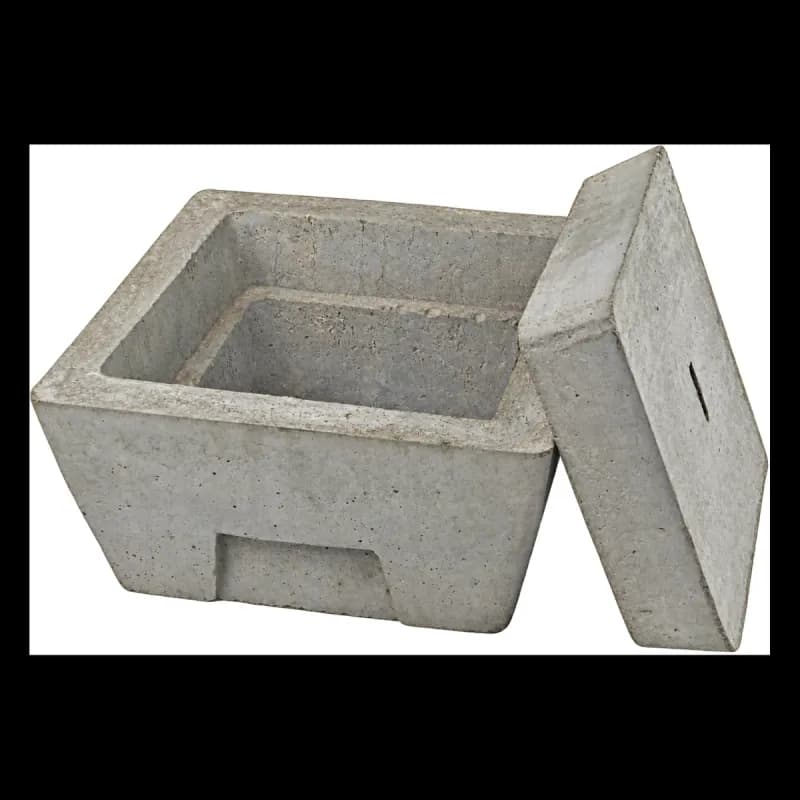
Pit | Concrete earth pit 310 × 310 × 170 | PE 3030 polyethylene earth pit, 300 × 300 × 205 |
Dimensions (mm) | 300 × 50 × 5 | 238 × 30 × 5 |
End shape | Two angled ends; long edge 300 and short edge 280 | Straight ends |
Standard holes | 4 Ø12 holes; 68, 55, 55, 55 and 67 mm along the long edge | 4 Ø10 holes at 40 spacing; 59 mm from each end |
Holes to order | More holes | Number, diameter and spacing of holes to suit the project |
Seating | On edge in the diagonal slots of the pit, long edge up | Diagonal, in two slots on the inner rim |
Material | Bare copper, tinned copper or stainless steel | 304 stainless steel (standard); bare or tinned copper to order |
Bolt, nut and washer | Stainless steel, separately | Stainless steel, separately |
Supply | Separately from the pit | Separately from the pit |
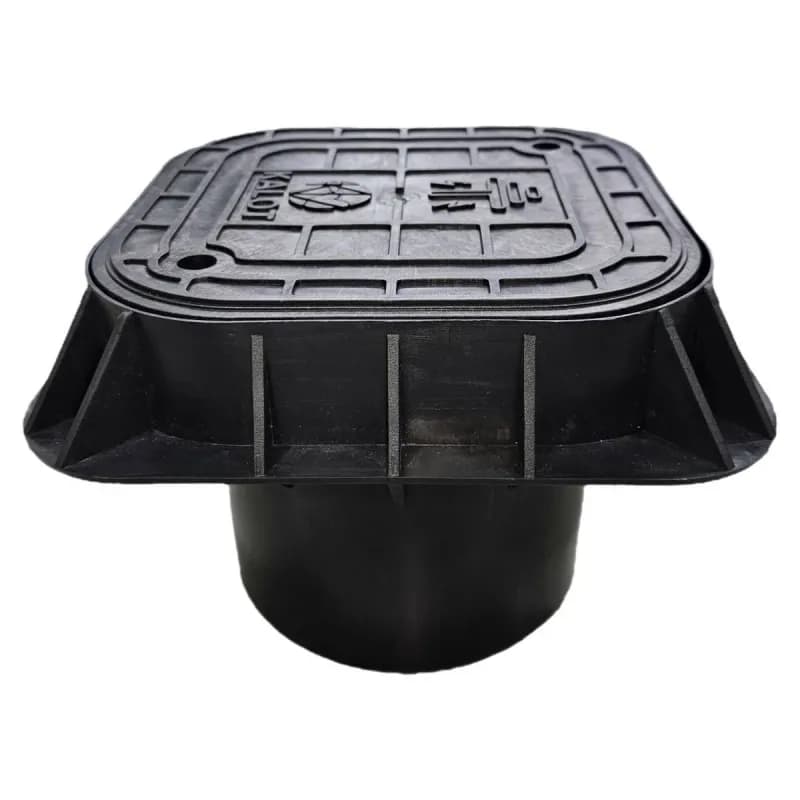
For the details of each pit, see the concrete earth pit and the polyethylene earth pit.
If this matches your situation, see these products too
Product | When |
|---|---|
For installing the 300 × 50 × 5 bar with two angled ends. | |
For installing the 238 × 30 × 5 bar. | |
For the earth electrode under the pit. | |
For fixing the earth rod conductor. | |
U clamp for connecting conductor to earth rod and reinforcing bar | For fixing a copper conductor to the earth rod. |
When you need a wall-mounted or panel earth bar for the building. |
In a lightning protection system, IEC 62305-3 calls for a test joint where down conductors connect to the earthing system, except for natural down conductors connected to the foundation electrode. This joint opens only with a tool and stays closed in normal service; the bar inside the pit is where it is made.
IEC 62561-5 sets the requirements for earth electrode inspection housings, the enclosures that keep the connections between conductors and the earth electrode accessible for inspection and testing. The load test of our pits is given on the page of each pit.
IEC 60364-5-54 allows protective conductor joints that open with a tool for testing, and requires joints to be made according to the manufacturer's instructions, with attention to corrosion where different metals touch.
Part Thirteen of the Iranian National Building Regulations requires the earth electrode resistance to be measured after installation and periodically. To learn more, see earthing system design and installation standards.
Three-dimensional view of polyethylene earth pit installation
Documents & Downloads
Catalogues & datasheets
Drawings & schematics
- Earth pit bar dimensional drawingLanguage: Persian (opens in a new tab)
- Earth pit bar technical drawingLanguage: Persian (opens in a new tab)
- Earth pit bar exploded viewLanguage: Persian (opens in a new tab)
- Earth pit bar installation schematicLanguage: Persian (opens in a new tab)
- Earth pit bar connection modesLanguage: Persian (opens in a new tab)
- Earth pit bar installation stepsLanguage: Persian (opens in a new tab)
Similar & Complementary Products
Frequently Asked Questions
What is an earth pit bar, and how does it differ from a panel earth bar?
The earth pit bar sits inside the inspection pit, where the conductors of the earthing system meet, and it is also where the system is tested. A panel earth bar or wall-mounted earth bar is installed in the building and does a different job.
Which earth bar is for the concrete pit and which for the polyethylene pit?
The 300 × 50 × 5 earth bar, with two angled ends (short edge 280) and four Ø12 holes, is for the concrete earth pit. The 238 × 30 × 5 earth bar, with straight ends and four Ø10 holes, is for the PE 3030 polyethylene earth pit.
How many holes does the earth bar have?
Both earth bars have four holes as standard. The concrete pit earth bar has four Ø12 holes: 68 mm from one end to the first hole, 55 mm between holes and 67 mm to the other end. We also make this bar with more holes. The polyethylene pit earth bar has four Ø10 holes at 40 mm spacing, and the number, diameter and spacing of its holes change to order to suit the project. Each hole takes one conductor, so count the conductors on site and tell us when you order.
What material is the earth bar made of?
We make the concrete pit earth bar in bare copper, tinned copper or stainless steel. The standard polyethylene pit earth bar is 304 stainless steel, and we also make it to order in bare or tinned copper. The tin coating keeps the contact surface between the copper earth bar and the cable lug stable in the damp conditions of the pit.
How does the earth bar sit inside the pit?
In the concrete pit, the earth bar stands on edge with its long edge facing up, in the diagonal slots of the pit, and its two angled ends sit in those slots. In the polyethylene pit, the earth bar stands on edge across the diagonal, in two slots in the inner rim of the pit.
How are the conductors connected to the earth bar?
A cable lug of matching size is crimped onto the end of each conductor, then fixed to one hole with a bolt of matching size, flat washer, spring washer and nut. The bolts, nuts and washers are stainless steel and we supply them separately, so tell us the quantity when you order. Tighten the bolts according to the manufacturer's instructions.
How do we measure earth pit resistance with this earth bar?
Undo the cable lug of the earth rod conductor to separate the earth rod from the rest of the system, measure the resistance, record it and reconnect the joint. Only a trained person should do this, and only after making sure the installation is safe.
Can the earth bar be bought separately from the pit?
Yes. Both earth bars are supplied separately, for new installations and for replacing the earth bar in existing pits.
What information should we send for a quote?
Send us the pit type (concrete or polyethylene), earth bar material, number of bars, number of holes per bar and the quantity of stainless steel bolts and nuts you need, and our experts will propose the cable lugs and bolts and give you a price.
Have a Technical Question?
KALOT Group's technical experts are ready to answer your questions about lightning rods and earthing systems.