
Move your pointer over the image to zoom in
Complete Product Overview
Threaded copper-bonded earth rod (steel core with copper coating)
Order Code: ERCB 1415 · ERCB 1715
Last updated:
KALOT Group's threaded copper-bonded earth rod is made from a high-strength steel core and a coating of pure electrolytic copper bonded to the steel as one piece. It drives as firmly as steel and lasts in soil like copper.
The copper coating is nowhere thinner than 0.25 mm, and the threads at both ends are cold rolled after coating, so the copper is not thinned or cut at the thread. The earth rods join together with brass couplings and drive to great depths.
We manufacture this earth rod in two diameters, 14.2 and 17.2 mm (5/8 and 3/4 inch), and a length of 1.5 m. Its compliance with IEC 62561-2 has been tested at the Razi Metallurgical Research Centre.
The strength of steel, the endurance of copper
The most common and cost-effective earth electrode for earth pits, earthing networks and lightning protection systems. A copper-bonded earth rod drives to great depth without bending, and its copper coating protects the steel for years.
Thick, integral copper coating
The copper layer measured 292 to 315 microns in the 2023 Razi Centre test. The coating is welded to the steel and does not come away during driving.
High-strength steel core
Tensile strength of 662 MPa and yield of 601 MPa in the tensile test. The earth rod drives under a power hammer without bending.
Tested to IEC 62561-2
Coating adhesion and thickness, bending, electrical resistance, salt mist, humidity and tensile tests at the Razi Metallurgical Research Centre.
Rolled thread at both ends
The thread is cold rolled after coating. Copper and steel are both present in the thread, so the joint with the coupling is firm and conductive.
Two diameters, 1.5 m long
14.2 and 17.2 mm (5/8 and 3/4 inch) at 1500 mm long. Reach the depth you need by joining several earth rods.
Technical Product Information
Click to view enlarged
Feature | Value |
|---|---|
Type | Threaded copper-bonded earth rod (vertical earth electrode), extendable with couplings |
Core | High-strength low-carbon steel. 2023 Razi Centre tensile test: ultimate strength 662 MPa, yield 601 MPa, elongation 15% |
Coating | Pure electrolytic copper (99.9%) with an integral bond to the steel |
Copper coating thickness | At least 0.25 mm at every point; 292 to 315 microns in the 2023 Razi Centre test |
Nominal / actual diameter | 5/8 inch: 14.2 mm; 3/4 inch: 17.2 mm |
Thread | Cold rolled after coating, at both ends; 5/8 and 3/4 inch; thread length 30 mm (3/4 inch: 35 mm) |
Ends | One end pointed for driving; the other for the coupling and driving head |
Length | 1500 mm |
Weight | 1.90 kg (14.2 diameter) and 2.70 kg (17.2 diameter) |
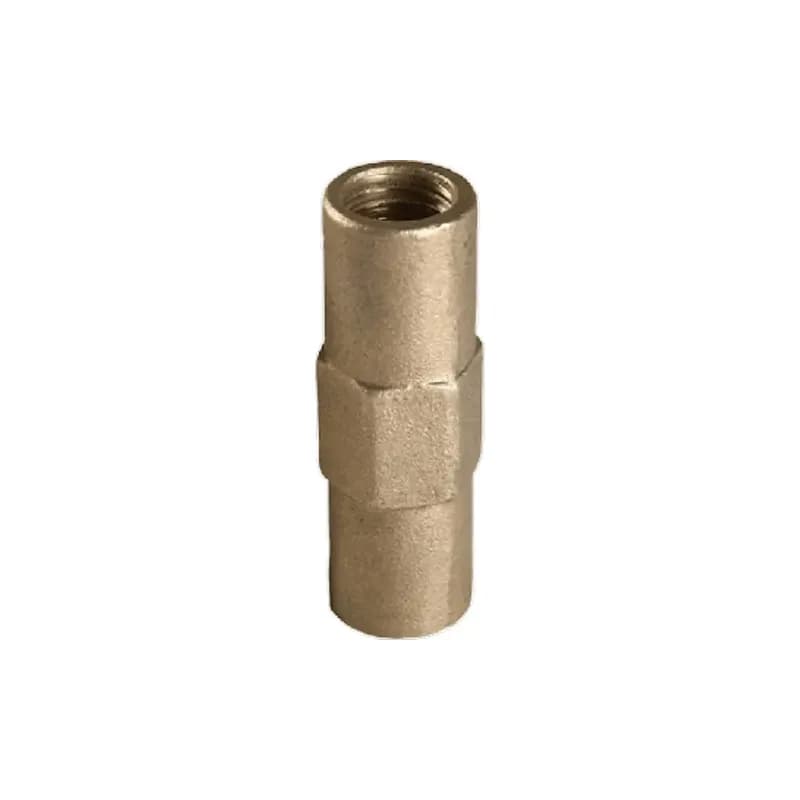
Joining earth rods | Round TCR or hexagonal TCH brass coupling |
Conductor connection | G-type clamp (conductor), A-type clamp (tape), U clamp or exothermic welding |
Marking | KALOT Group mark on the earth rod |
Standard | IEC 62561-2: compliance test at the Razi Metallurgical Research Centre |
Codes | ERCB 1415 and ERCB 1715 |
Copper-bonded earth rod codes (ERCB)
Code | Nominal diameter | Actual diameter D (mm) | Thread | Thread length L1 (mm) | Length L (mm) | Weight (kg) |
|---|---|---|---|---|---|---|
ERCB 1415 | 5/8" | 14.2 | 5/8" | 30 | 1500 | 1.90 |
ERCB 1715 | 3/4" | 17.2 | 3/4" | 35 | 1500 | 2.70 |
The first two digits of the code number show the earth rod diameter (14 or 17 mm) and the last two its length (15 decimetres, that is 1.5 m). Our products are continually improved and some dimensions may be updated, so please confirm the final dimensions with our specialists before buying.
Dimensional drawing
Download the dimensional drawing (PDF) and the vector version (SVG)
Components of the copper-bonded earth rod system
Download the system components drawing (PDF)
Earth rod structure: steel core, copper coating
The steel core gives the earth rod the strength to be driven deep with a hand or power hammer without bending. The outer copper layer is the surface in contact with the soil: it carries current into the soil and protects the steel from corrosion. In a copper-bonded earth rod the copper is bonded to the steel, not drawn over it like a copper sleeve, so it does not come away during driving and no gap remains between copper and steel.
Rolled thread
The threads at both ends of the earth rod are formed by cold rolling after coating, not by machining. Rolling displaces the metal without removing it, so copper stays on the teeth and at the thread root and the steel in the thread is not left unprotected. A rolled thread is stronger than a machined one and holds the coupling without play.
Click to view enlarged
Applications of copper-bonded earth rods
- Earth pits and vertical electrodes in protective earthing systems for buildings, electrical panels and equipment;
- Earth termination of lightning protection systems, usually one electrode for each down conductor;
- Earthing grids of substations, power plants, telecom towers and industrial sites, together with horizontal conductors and ring electrodes;
- Reaching moist, low-resistance soil layers by driving several earth rods one after another.
Installation schematic
Installing a 3 m earth rod with two 1.5 m earth rods: 1 prepare the location; 2 first earth rod with a steel tip; 3 drive with a hammer and driving head; 4 fit the second earth rod into the brass coupling; 5 drive to ground level; 6 complete 3 m electrode, with the copper conductor connected by a clamp.
The earth rod is driven and its top stays inside a polyethylene earth pit or a concrete earth pit, keeping the conductor connection accessible for inspection and measurement. The conductors in the soil and inside the pit are bare copper.
Choosing the diameter and number of earth rods
Conditions | Recommendation |
|---|---|
Ordinary soil, building earth pits and lightning protection earth terminations | 14.2 mm diameter (5/8 inch) |
Hard or rocky soil, driving with a power hammer, great depth | 17.2 mm diameter (3/4 inch), with a steel tip |
Depth of 3 m or more | Two or more 1.5 m earth rods joined with brass couplings |
A larger diameter does little to lower earth resistance; its main role is greater strength during driving. What brings resistance down is greater depth and reaching moist soil.
Depth, number and spacing of earth rods
- Earth resistance depends above all on soil resistivity and electrode depth. Deeper layers are usually moister and more stable, and change less in dry and freezing seasons.
- If one earth rod does not reach the target resistance, either take it deeper with a coupling or drive another earth rod parallel to it.
- Space parallel earth rods at least as far apart as their driven depth. With less spacing, their zones of influence overlap and the drop in resistance becomes negligible.
- In high-resistivity soils, GIM ground improvement material around the earth rod reduces resistance.
- See the method in calculating earth termination resistance.
Steps for installing and driving the earth rod
- Choose the earth rod location according to the earthing drawing and, before driving, check the routes of underground pipes, cables and gas lines.
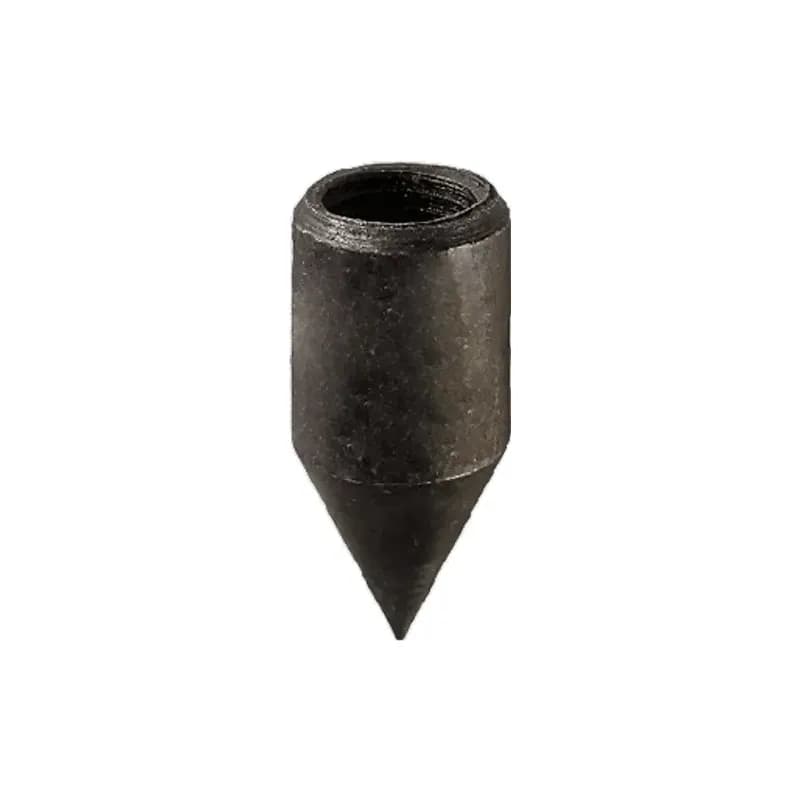
- In hard or rocky soil, fit the TDT steel tip on the thread at the lower end of the earth rod.
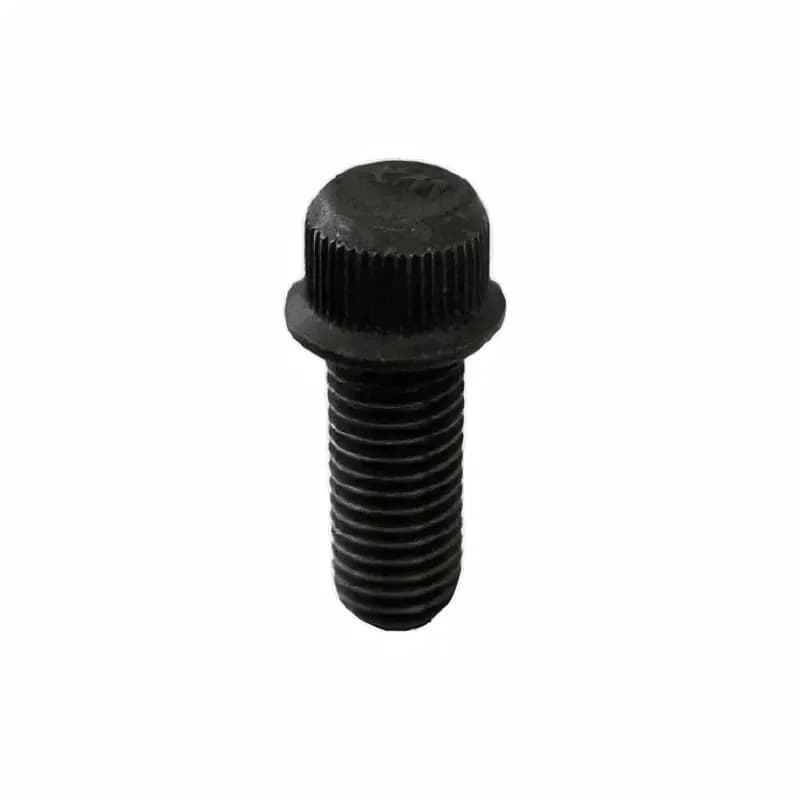
- Fit the brass coupling on the top end and screw the driving head into it so that the thread is not damaged by the blows.
- Hold the earth rod vertical and drive it with even blows from a hand or power hammer.
- For greater depth, remove the driving head, screw the next earth rod fully into the same coupling until the ends of the two earth rods butt together, and continue driving.
- At design depth, remove the driving head, connect the bare copper conductor to the top of the earth rod with a clamp or exothermic welding, and measure the earth resistance.
Download the installation steps (PDF)
Ways to connect the conductor to the earth rod
Download the connection methods (PDF)
Connect copper conductor with a G-type clamp, copper tape with an A-type clamp, and a conductor that must run past the earth rod with a U clamp. For a permanent joint buried in the soil, we recommend exothermic welding.
Installation tools
A heavy hand hammer or electric demolition hammer with a chisel sized to the driving head, a spanner for tightening couplings and clamps, a wire brush for cleaning the joint, and a level or plumb line to keep the earth rod vertical.
Inspection and measurement
The earthing system must be checked at periodic inspections: look for looseness and corrosion at the conductor connection to the earth rod and measure the earth resistance with an earth tester. If resistance has risen compared with earlier measurements, open, clean and re-tighten the connection. See the measurement method in How is earth termination resistance measured?
Selection and price enquiry
When you enquire, send us the project type, soil type or resistivity, target resistance or design depth, the diameter, length and number of earth rods, and the conductor type, and our specialists will confirm the codes, accessories and price.
Click to view enlarged
The material of an earth rod makes little difference to earth resistance. What decides the choice is the electrode's durability in soil, the ability to drive it to the required depth and the cost of installation. A copper-bonded earth rod offers all three: a steel core for deep driving, a copper coating for durability in soil and a price far below a solid copper or stainless steel earth rod. That is why it is one of the most widely used earth electrodes in the world.
Advantages of KALOT Group copper-bonded earth rods
- Deep driving without bending: the high-strength steel core withstands the blows of a power hammer.
- Coating thicker than the standard minimum: 292 to 315 microns in the Razi Centre test; the standard minimum is 250 microns.
- Rolled thread: copper stays on the thread and the joint with the coupling is firm.
- Extendable with couplings: a brass coupling takes it to whatever depth the design requires.
- Copper-compatible connections: copper conductor connects directly to the copper surface of the earth rod with a brass clamp or exothermic welding.
- KALOT Group mark on the earth rod: its authenticity can always be verified.
Copper-bonded, solid copper, stainless steel or galvanised?
Feature | Copper-bonded | Solid copper | Stainless steel | |
|---|---|---|---|---|
Driving to depth | Very good | Limited, as copper is soft | Very good | Very good |
Durability in soil | Good, with a standard coating | Very good | Very good | Lower, as the zinc layer is used up sooner |
Cost | Medium | High | High | Low |
Suitable for | Most soils and projects | Highly saline and corrosive soil | Near buried steel structures and pipes | Low-corrosion soils |
For a closer comparison of materials, see our guide to choosing earth electrode materials.
Standard or non-standard copper-bonded earth rod?
Not every copper-coloured earth rod is a standard copper-bonded one. An earth rod with a thin coating, a machined thread or a soft steel core looks like a standard earth rod on the day of purchase, but its coating scrapes off during driving, it rusts in the soil after a few years, and earth resistance rises.
Criterion | Standard minimum | KALOT Group ERCB earth rod |
|---|---|---|
Copper coating thickness | 250 microns | 292 to 315 microns (Razi test, 2023) |
90-degree bend on a 5d mandrel | No cracking or separation | No defects at all |
Thread | Rolled, with no copper removed | Cold rolled after coating |
Salt mist and humidity | No corrosion of the base metal | Specimen fully intact after 72 hours |
Tensile | As per the table in the standard | Strength 662 MPa and yield 601 MPa |
Vertical earth rod diameter | At least 14 mm | 14.2 and 17.2 mm |
Maker's mark | Permanently marked on the earth rod | KALOT Group mark on the earth rod |
Download the comparison of coating, thread, driving and bending (PDF) and the comparison of driving and corrosion (PDF). The full guide to recognising a standard earth rod when buying is on the copper-bonded earth rods page.
If these conditions apply to you, see these too
Product | When |
|---|---|
Highly saline and corrosive soil, or installation in a drilled borehole. | |
Proximity to buried steel structures and pipes. | |
Low-corrosion soils and projects where initial cost matters more than durability. | |
When driving an earth rod is not possible and a horizontal or plate electrode is needed. | |
High-resistivity or dry soil where an earth rod alone does not reach the target resistance. |
KALOT Group copper-bonded earth rods are designed and manufactured to IEC 62561-2, the standard that sets the requirements for conductors and earth electrodes of lightning protection systems. Under this standard, a coated earth rod is assessed by tests of coating thickness, coating adhesion, 90-degree bending, tension, yield-to-tensile ratio, electrical resistance and corrosion (salt mist and sulphurous atmosphere). The thread of a coated earth rod must be rolled so that copper is not removed, and in a threaded joint no thread remains exposed after installation.
IEC 60364-5-54, the standard for earthing systems in electrical installations, sets a minimum in its electrode size table for a vertical copper-coated steel earth rod: 14 mm diameter and a 250 micron coating. A thinner coating is accepted only when the earth rod is placed in a drilled borehole and damage to the coating during installation is prevented.
IEC 62305-3 covers the earth termination of lightning protection systems and its periodic inspection, and BS 7430, the code of practice for earthing, gives the method for calculating earth rod resistance and the spacing of parallel earth rods. In the United States, UL 467 and NEMA GR-1 also require a coating of at least 0.25 mm and a thread rolled after coating for copper-bonded earth rods.
To learn more, see standards for designing and installing earthing systems.
Razi Metallurgical Research Centre test reports
- IEC 62561-2 compliance test (2014): coating adhesion and thickness, bending, electrical resistance, salt mist, humidity and tensile; compliant with the standard.
- Copper coating thickness (2023): 292 to 315 microns across three zones.
- Tensile test (2023): ultimate strength 662 MPa, yield 601 MPa, elongation 15%.
- Bending test (2023): 90-degree bend on a 5d mandrel with no defects at all.
- Salt mist and humidity test (2023): specimen fully intact after 72 hours.
- Electrical resistance test (2023): measured with direct current.
Installing a copper-bonded earth rod in soil
Documents & Downloads
Drawings & schematics
- Dimensional drawing of the KALOT ERCB threaded copper-bonded earth rod (PDF)Language: Persian (opens in a new tab)
- Component drawing of the threaded copper-bonded earth rod system (PDF)Language: Persian (opens in a new tab)
- Standard and non-standard copper-bonded earth rods compared: coating, threading, driving and bending | KALOT Group (PDF)Language: Persian (opens in a new tab)
- Standard and non-standard copper-bonded earth rods compared: driving and corrosion in soil | KALOT Group (PDF)Language: Persian (opens in a new tab)
- Methods of connecting conductors to copper-bonded earth rods | KALOT Group (PDF)Language: Persian (opens in a new tab)
Certificates & test reports
- Bend test report for copper-bonded steel earth rod | Razi Metallurgical Research Centre 2023Persian · 2023
- Copper coating thickness test report for copper-bonded steel earth rod | Razi Metallurgical Research Centre 2023Persian · 2023
- Electrical resistance test report for copper-bonded steel earth rod | Razi Metallurgical Research Centre 2023Persian · 2023
- Salt spray test report for copper-bonded steel earth rod | Razi Metallurgical Research Centre 2023Persian · 2023
- Tensile test report for copper-bonded steel earth rod | Razi Metallurgical Research Centre 2023Persian · 2023
- IEC 62561-2 conformity test report for copper-bonded steel earth rod | Razi Metallurgical Research Centre 2014Persian · 2014
Installation & application guides
Frequently Asked Questions
What is a copper-bonded earth rod?
An earth rod with a steel core and a copper coating bonded to the steel as one piece. It combines the strength of steel for driving with the durability of copper in soil.
How thick is the copper coating on KALOT earth rods?
At least 0.25 mm at every point. A 2023 test at the Razi Metallurgical Research Centre measured 292 to 315 microns.
Which is better, a copper-bonded earth rod or a copper earth rod?
Earth resistance depends on the soil, not on the electrode material. A copper-bonded earth rod drives more firmly and costs less, while a solid copper earth rod suits highly corrosive soils and placement in a drilled borehole.
How are copper-bonded earth rods joined together?
With a threaded brass coupling (round TCR or hexagonal TCH) that matches the thread size of the earth rod.
Which diameter should I choose?
14.2 mm (5/8 inch) suits ordinary soils and is the most common choice. 17.2 mm (3/4 inch) is for hard soil, driving with a power hammer and greater depths.
Has this copper-bonded earth rod been tested to a standard?
Yes. Its compliance with IEC 62561-2 has been tested at the Razi Metallurgical Research Centre, and the reports are in the documents section of this page.
What lengths do you offer?
Our earth rods are 1500 mm long. For greater depth, several earth rods are joined with brass couplings: for example, two earth rods for 3 m.
How can I spot a non-standard copper-bonded earth rod?
Measure the coating with a coating thickness gauge (250 microns minimum), ask for an IEC 62561-2 test report, look for the maker's mark on the earth rod and inspect the thread: on a rolled thread, even the roots of the teeth are copper.
Have a Technical Question?
KALOT Group's technical experts are ready to answer your questions about lightning rods and earthing systems.