Short answer: every test that IEC 62561-7 requires for a ground improvement material checks one risk. An untested material means those risks have never been checked. The usual result is premature corrosion of the electrode and joints, washing out and loss of the material, seasonal swings in earth resistance, soil and water pollution and a gradual rise in the resistance of the earthing system. Using no material at all, in high-resistivity, rocky or dry soil, also leads to poor contact between electrode and soil and to higher resistance.
What happens if we use no ground improvement material at all?
Not always a problem. In moist, low-resistivity soil, an electrode of the right length and number reaches the required resistance on its own and the material is not needed (Must ground improvement material always be used?). In three situations, though, going without it causes trouble:
- Rocky or coarse-grained soil: air gaps remain between the earth rod and the soil, so the electrode does not make full contact with the earth.
- High-resistivity soil: reaching the required value takes more electrodes or deeper ones. For example, a 3 m copper-bonded earth rod of 14.2 mm diameter in 100 ohm-metre soil has about 34 ohms of resistance; with a 10 cm diameter column of material around it, this falls to about 24 ohms (Why ground improvement material is useful).
- Dry soil or soil with variable moisture: soil resistance changes with its moisture. Without the material, resistance rises in the dry season (The role of soil moisture in earth resistance).
In these cases, the gap must not be filled with salt, charcoal or any unbranded powder. This is where the main risk lies.
What does a non-standard ground improvement material mean?
A non-standard material is one with no valid test report to IEC 62561-7 or the national standard INSO 18499-7. Salt, charcoal, coke, bentonite without a test report and powders of unknown composition all fall into this group. In Iran, the "Earthing System Safety Regulation" (1401), in Article 63, also requires additives to be safe for people and the environment and tested to INSO 18499-7. We set out these requirements in detail in The standard for ground improvement materials.
Every standard test guards against one risk
When a standard treats a property as a key test, it means a material can fall short on that property and cause damage. Testing leaching, for instance, means that a material which fails will wash away with subsurface water, and after a while nothing of it remains around the electrode.
IEC 62561-7 test | What it measures | If the material fails |
|---|---|---|
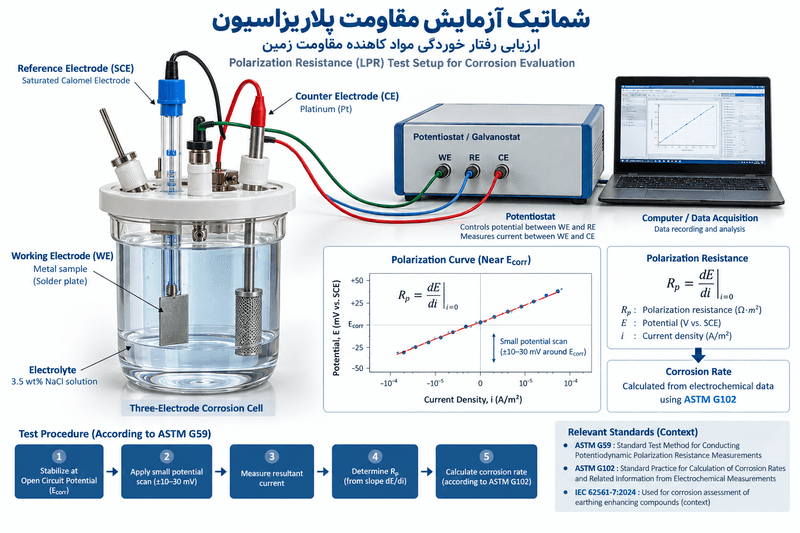
Corrosion | The effect of the material on the electrode metal | Earth rods, tapes and joints corrode before the end of their design life |
Leaching | Substances that water separates from the material | The material washes out and reaches the soil and groundwater |
Sulphur content | The sulphur contained in the material | In the presence of moisture, sulphur compounds speed up the corrosion of copper and steel |
Resistivity | The conductivity of the material itself | Earth resistance does not fall as far as you expect |
pH | How acidic or alkaline the material is (since the 2024 edition) | An unsuitable pH speeds up electrode corrosion |
The five main risks of a non-standard ground improvement material
- Premature corrosion and wear of the earthing system: salt, sulphur, coke and an unsuitable pH eat away copper and steel. The weakest point is usually the joint between conductor and electrode, and the earthing system may be cut off years before the end of its design life, with nothing visible from the surface (Ground improvement materials and corrosion).
- Washing out and loss of the material: a material that dissolves in water is carried away from the electrode by rain and subsurface water. The filler column settles and a void opens between electrode and soil (Salt and charcoal in earth pits).
- Seasonal swings in earth resistance: a material that conducts only when wet loses its conductivity in the dry season. An earthing system may pass a spring measurement and fail in summer.
- Soil and water pollution: washed-out substances reach the surrounding soil and the groundwater. This is why the regulation requires the material to be safe for people and the environment (Do ground improvement materials pollute?).
- Gradual rise in earthing system resistance: once the material washes out and the electrode corrodes, resistance climbs year after year. A good reading on day one is no measure of quality; resistance must stay low for years, and in the dry season too.
What do these risks mean in practice?
High earth resistance is more than a number on an instrument:
- People's safety: in many systems, timely disconnection of the supply during an earth fault depends on the earth resistance. If resistance rises, a dangerous touch voltage may remain on equipment enclosures (Protective earthing system specifications).
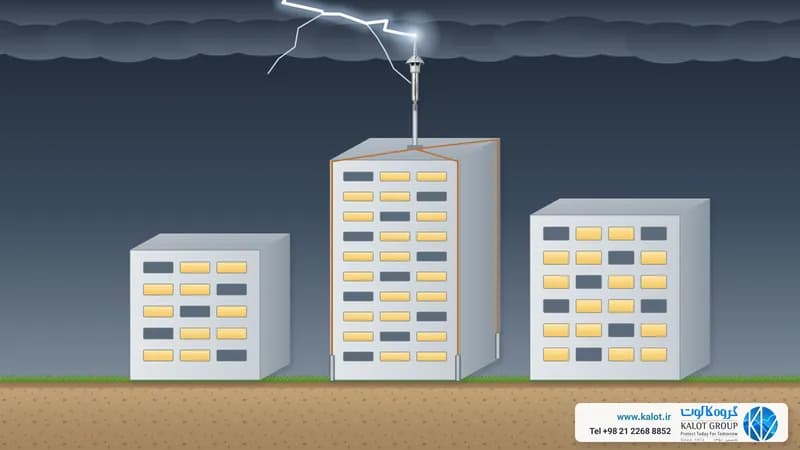
- Lightning protection: IEC 62305-3 recommends, where possible, a resistance below 10 ohms for the lightning protection earthing system. An earthing system that climbs above this figure over time does not disperse lightning current well.
- The cost of rework: a corroded electrode or a washed-out pit has to be dug and installed again. This usually costs more than the price difference of a standard material.
How to recognise a standard ground improvement material
- Test report: ask for a laboratory report to IEC 62561-7 or INSO 18499-7 that covers all five tests.
- Testing on the final mix: the test must be done on exactly what goes around the electrode; if the material is mixed with cement and water, for example, on that same mix (Carbon-based ground improvement materials).
- Matching name: the product name and model on the bag must match those on the test report.
- Installation instructions: the manufacturer must state the water ratio, the installation method and the quantity to use.
- Must not dissolve in water: a material that dissolves in water, as salt does, will not stay around the electrode.
See the full selection criteria in Specifications of standard ground improvement materials and a comparison of the material types in the Comparison table of ground improvement materials.
If your earthing system was installed with a non-standard material
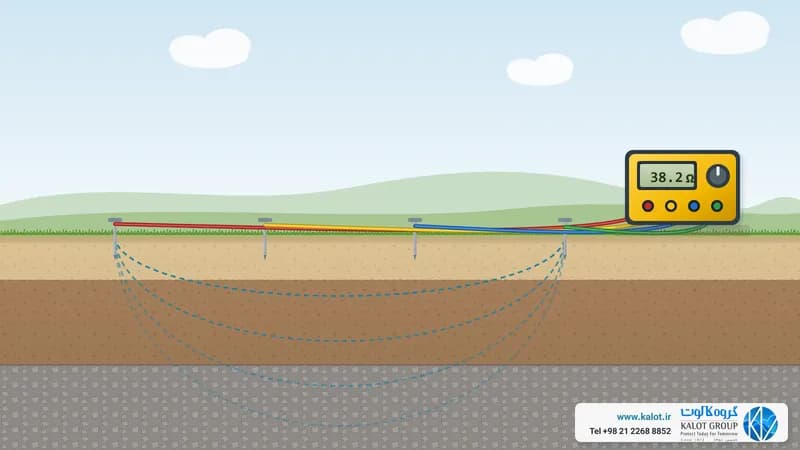
- Measure the resistance of the earthing system, preferably in the dry season (Measuring earth resistance).
- Inspect the joint between conductor and electrode for corrosion.
- If the resistance is high or the electrode has corroded, install a new electrode such as a threaded copper-bonded earth rod with GIM ground improvement material and connect it to the existing system.
- For later inspections and measurements, fit a polyethylene inspection pit.
We also carry out earthing system measurement and testing, periodic inspection and earthing system design.
KALOT ground improvement materials
GIM, the first carbon-based ground improvement material in Iran, has been used in earthing projects for more than 20 years. According to the catalogue, its resistivity is below 0.5 ohm-metres and it does not dissolve or wash out in water. We also produce the GIM Light and ECO GIM versions. See them all under Earthing equipment. To estimate the quantity you need, send our specialists your soil resistivity measurement results or the project specifications, or reach us through our Contact us page.