Short answer: a standard ground improvement material has no special visual feature. You can only recognise it from its laboratory test results and its marking and documents. A good material has low resistivity, does not corrode the electrode, stays stable over the years, does not wash out, adheres to the electrode and does not pollute soil or groundwater. These properties are assessed in the tests of IEC 62561-7.
In this guide we at KALOT Group explain these properties one by one and tell you what to look at when choosing the right material. Which standards and rules apply to these materials is covered in our article on the standard for ground improvement materials.
What qualities does a standard ground improvement material have?
Article 63 of the "Earthing System Safety Regulation" (1401) lists eight properties for earthing system additives. We explain each one along with how it is assessed:
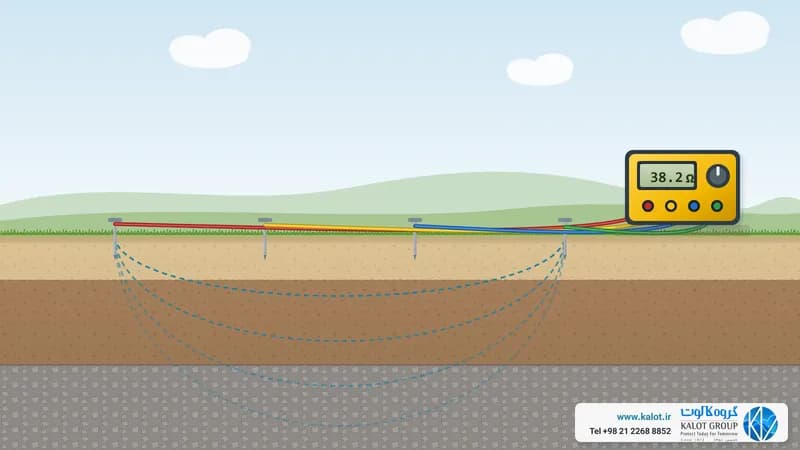
- Low resistivity: the lower it is, the more easily current passes from the electrode into the soil. It is measured in a four-electrode soil box (ASTM G57) after the curing time. The standard sets no limit value, so only compare figures obtained by the same method. For example, the resistivity of GIM is below 0.5 Ω·m.
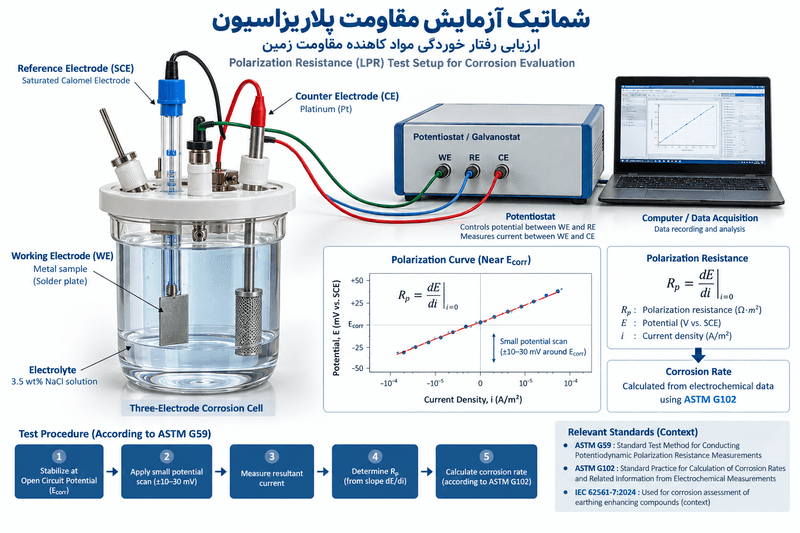
- Very low corrosivity: the material stays in contact with the electrode for years and must not eat it away. This is assessed with the polarisation resistance test: the higher the figure, the lower the corrosion. For copper electrodes in corrosive environments, reputable manufacturers work to more than 8 Ω·m² (Ground improvement materials and earthing system corrosion).
- Long life and stability: the resistance of the earthing system must not rise with the seasons and years. The material must be chemically and physically stable.
- Environmental compatibility: the material must not release heavy metals into soil and groundwater. The leaching test (EN 12457-2) measures iron, copper, zinc, nickel, cadmium, cobalt and lead in water, and the material's sulphur content must also be below 2% (Are ground improvement materials pollutants?).
- Absorbing and holding moisture: it keeps moisture around the electrode so that resistance changes less in the dry season.
- Suitable pH: the material must not create an acidic environment that corrodes the electrode metal. Since the 2024 edition of the standard, pH must be measured and declared on the pack or in the documents.
- No wash-out: it must not be washed away and lost by surface and ground water, which is the main problem with salt.
- Adhesion to the electrode: no gap should form between the material and the electrode, because a gap means higher resistance. Carbon-based materials are usually mixed with cement and water for better adhesion, and the tests are carried out on this final mix (Carbon-based ground improvement materials).
Why salt, charcoal and bentonite cannot replace a standard material
- Salt and charcoal: the salt is washed away by subsurface water, speeds up electrode corrosion and does not adhere to the electrode either (Are salt and charcoal a standard material?). Injecting brine into an earth pit is damaging for the same reason.
- Bentonite: its resistance rises quickly when moisture is short, and it shrinks as it dries and pulls away from the electrode. Commercial bentonite may also contain salt. Its advantages are low cost and usefulness in humid regions (Is bentonite a standard material?).
- Tested ground improvement material: it has low, stable resistance, does not wash out, adheres to the electrode and has passed the corrosion test. In dry soils and high-altitude regions, carbon-based materials, which conduct even without moisture, are used more widely (Which materials for which soils?).
What to look for on the pack and in the seller's documents
Under IEC 62561-7:2024, the pack of a ground improvement material or its accompanying documents must show the manufacturer's name or trademark, the product identification mark, the type or batch number, resistivity and pH. To choose the right material, also ask the seller for these documents:
- a test report from an accredited laboratory with the numerical result and pass or fail verdict for each test (leaching, sulphur, resistivity, pH and corrosion);
- for workplaces covered by the Labour Law in Iran, testing to INSO 18499-7, as Article 63 of the regulation requires;
- a datasheet giving resistivity and how it was measured, sulphur percentage, pH and polarisation resistance;
- preparation and installation instructions: water ratio, application method and curing time;
- a safety data sheet (SDS) for safe storage and handling of the material.
How much ground improvement material do you need?
A ground improvement material is not always needed: it depends on soil resistivity and the target resistance (Should ground improvement materials always be used?). To estimate the quantity, use our GIM calculator, and for the formulas, see our article on calculating earth termination resistance with ground improvement materials. After installation, measure the termination's resistance (measuring earth termination resistance). We also carry out soil resistivity measurement and earthing system testing.
We produce the GIM family of ground improvement materials in line with IEC 62561-7 and IGS-I-EL-001: GIM for highly corrosive soils and environments, GIM LIGHT for normal conditions, and ECO GIM. The test reports for each product are on its own page. To choose, send our specialists the soil type, soil resistivity, the dimensions of the pit or trench and the target resistance, or get in touch through our contact page.