Short answer: no. Salt and charcoal are not a standard ground improvement material. There is no test for them to IEC 62561-7 or the national standard INSO 18499-7, and the Earthing System Safety Regulation (1401), in Article 63, requires earth pit additives to be tested. Salt and charcoal lower resistance at first, but they have three main faults: salt washes out with subsurface water, they speed up the corrosion of the electrode and joints and they do not bond to the electrode. As a result, resistance climbs again over time.
What is a salt and charcoal earth pit?
In the traditional method, a pit several metres deep is dug, a copper plate or copper earth rod is placed at the bottom, and the pit is filled with layers of salt, charcoal and soil. Salt absorbs moisture and the salt solution increases the conductivity of the surrounding soil. Charcoal is meant to hold moisture. This is why the resistance of the pit is usually low in the first days.
Advantages of salt and charcoal
- Cheap and easy to get: the materials can be found everywhere.
- Low initial resistance: right after installation, especially after watering, the instrument shows a good reading.
These two advantages are why the method is still common. But the day-one reading is no measure of the quality of an earthing system; resistance must stay low and stable for years, and in the dry season too.
Disadvantages of salt and charcoal in earth pits
- Salt washes out: salt dissolves in water and leaves the pit with rain and subsurface water. The resistance of the pit rises over time and it needs watering and more salt again.
- Corrosion: the chloride ions in salt speed up the corrosion of copper and steel. Charcoal and coke are also conductive and, in contact with metal, can cause galvanic corrosion. The plate, the earth rod and especially the conductor joint fail before the end of their design life (Ground improvement materials and corrosion and Carbon-based ground improvement materials).
- No bond to the electrode: salt and charcoal do not stick to the earth plate or earth rod. As the salt washes out, the filler column settles and a void opens between electrode and soil, so no sound connection forms between electrode and earth.
- Unstable resistance: resistance changes from season to season with soil moisture. It may pass a spring measurement and exceed the permitted limit in summer.
- Environmental effect: washed-out salt reaches the surrounding soil and the groundwater (Do ground improvement materials pollute?).
Salt and charcoal, bentonite or standard ground improvement material?
Feature | Salt and charcoal | Bentonite | Standard ground improvement material |
|---|---|---|---|
Initial resistance | Low | Low in moist soil | Low |
Long-term stability | Poor; washes out | Medium; shrinks when dry | Stable; does not wash out |
Corrodes the electrode | High | Low | Corrosion test to IEC 62561-7 |
Contact with the electrode | Poor | Pulls away as it dries | Adhesive and monolithic |
Maintenance | Regular watering and adding salt | Watering in the dry season | Only periodic inspection and measurement |
Test certificate | No | Usually none | Yes |
We set out the requirements for a standard material in The standard for ground improvement materials and the selection criteria in Specifications of standard ground improvement materials. Where the material is worthwhile and how far it lowers resistance is explained in Why ground improvement material is useful.
If your earth pit contains salt and charcoal
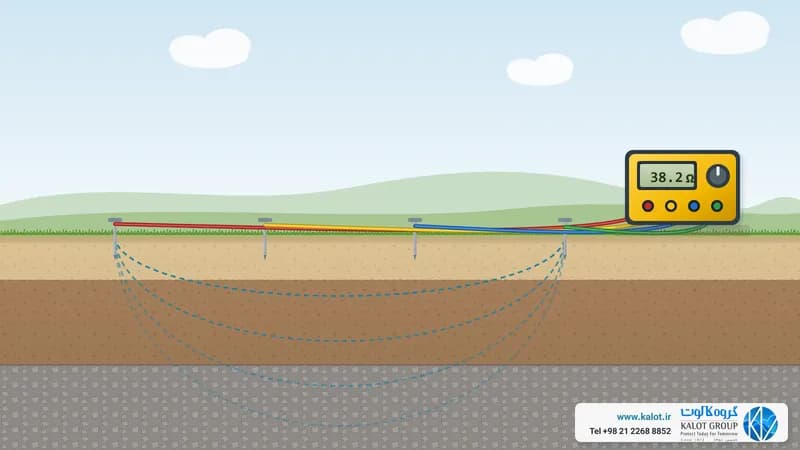
- Measure the resistance of the earthing system, preferably in the dry season (Measuring earth resistance).
- Inspect the joint between conductor and electrode for corrosion.
- If the resistance is high or the electrode has corroded, install a new electrode such as a copper-bonded earth rod with standard GIM ground improvement material and connect it to the existing system.
- For future inspection and measurement, fit an inspection pit.
We carry out earthing system measurement and testing, periodic inspection and earthing system design. For advice, send our specialists your measurement results or the site address, or reach us through our Contact us page.