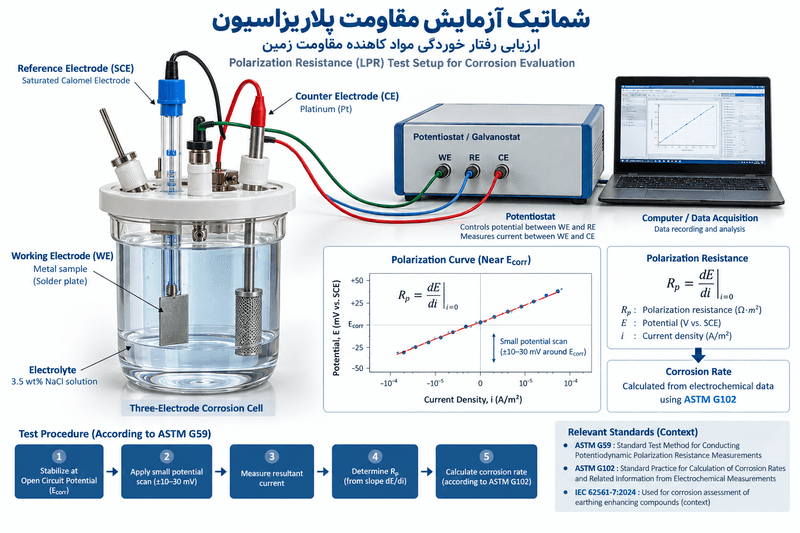
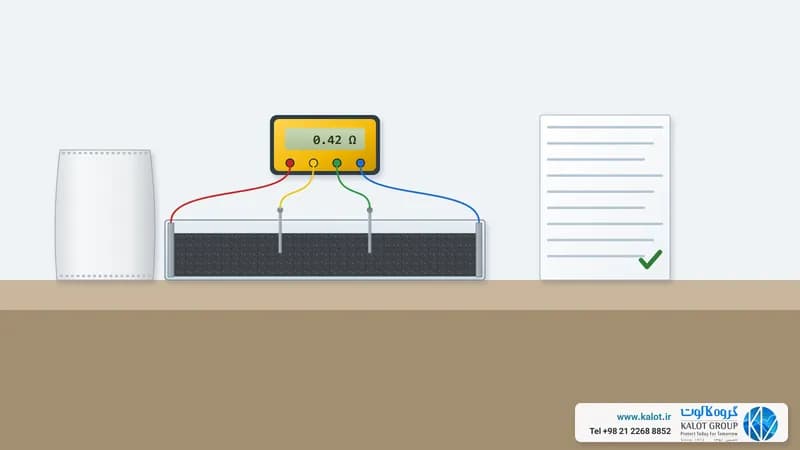
Short answer: no ground improvement material stops corrosion completely, but it makes a big difference compared with soil and unsuitable backfill. A material that has passed the IEC 62561-7 corrosion test surrounds the electrode evenly and separates it from corrosive soil, so it does not speed up corrosion and helps the earthing system last longer. By contrast, salt, charcoal, coke and salty bentonite can make electrodes corrode far faster.
This question plays a key part in choosing a ground improvement material, because an earthing system stays buried for years and a corroded electrode is noticed late. In this article we at KALOT Group explain where corrosion comes from and how to keep it from speeding up.
What eats away an earth electrode in the soil?
BS 7430:2026 shows in Table 9 that the corrosion of copper and galvanised steel in soil depends on these factors:
- Salt and dissolved chloride: they make soil water more conductive and more corrosive.
- Acidic soil (pH below 6) and organic acids: such as marshy soil and soil rich in plant matter. Organic acids greatly increase copper corrosion.
- Varying moisture and oxygen: repeated wetting and drying of the soil, and differences in oxygen at different depths.
- Connection to another metal: when the earthing system is connected to another metal pipe or structure, galvanic corrosion occurs between the two metals, at a rate that depends on the type of metals and their surface area ratio (clause 8.11.2). That is why the same standard says joints between dissimilar metals should not be made in the soil.
How does a ground improvement material affect corrosion?
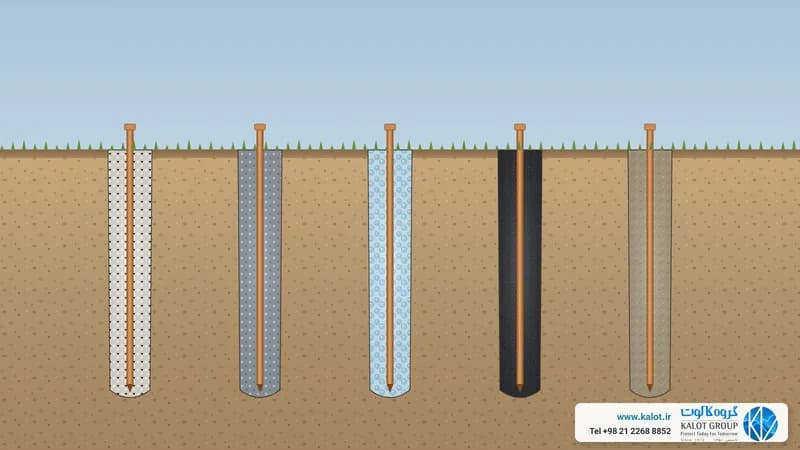
The material is the environment the electrode sits in for years, so being non-corrosive matters as much as its resistivity. A standard material forms an even column bonded around the electrode, reduces the electrode's contact with corrosive soil and does not wash out. A non-standard material is itself a cause of corrosion:
- Salt and brine: according to IEEE Std 142, salts lower soil resistance, but they do not last, must be renewed periodically and damage the electrode's protection against corrosion (Are salt and charcoal a standard material?).
- Charcoal, coke and ash: BS 7430:2026 lists coke and fly ash among prohibited backfills, despite their conductivity, because they contain corrosive substances that greatly shorten the life of copper and galvanised electrodes. Charcoal is also usually added along with salt.
- Salty bentonite: bentonite sold as a "ground improvement material" or "active bentonite" may contain a lot of salt. A simple test: dissolve a little in a glass of water. Once the water has evaporated, if a white layer of salt remains on the glass, the material contains salt. This is only an indication, not a standard test.
In fairness to bentonite itself: in an academic study (Industrial University of Santander, Colombia, 2017), the lowest copper corrosion rate was measured in low-salt bentonite and the highest in bentonite with added salt. So corrosion is not the main problem with pure bentonite. Its weakness is that it shrinks in dry conditions and pulls away from the electrode (Is bentonite a standard material?).
How is the corrosivity of a ground improvement material assessed?
You cannot tell from its appearance whether a material is corrosive. That is why IEC 62561-7 includes several tests:
- Corrosion load assessment: the behaviour of the electrode metal in the prepared mix is measured and compared with the "low and high corrosion load" limits (Annex A; its chart was simplified in the 2024 edition).
- pH: since the 2024 edition, it must be measured and declared on the pack or in the documents.
- Sulphur and leaching: the material's sulphur content must be below 2%, and heavy metals released into water are measured.
When buying, ask the seller for the reports of these tests. The other properties of a good material are covered in the specifications of standard ground improvement materials, and the different types are compared in our comparison table of ground improvement materials.
A few tips for a longer-lasting earthing system
- Fill completely and evenly around the electrode with the ground improvement material, so that no part of it touches corrosive soil or air.
- Do not pour salt or brine into the earth pit.
- Make underground connections with KALweld® exothermic welding so that no bolted joints or corrosive crevices remain, and do not connect dissimilar metals in the soil.
- In corrosive soils, choose a suitable electrode material, for example a copper-bonded earth rod or a copper earth rod.
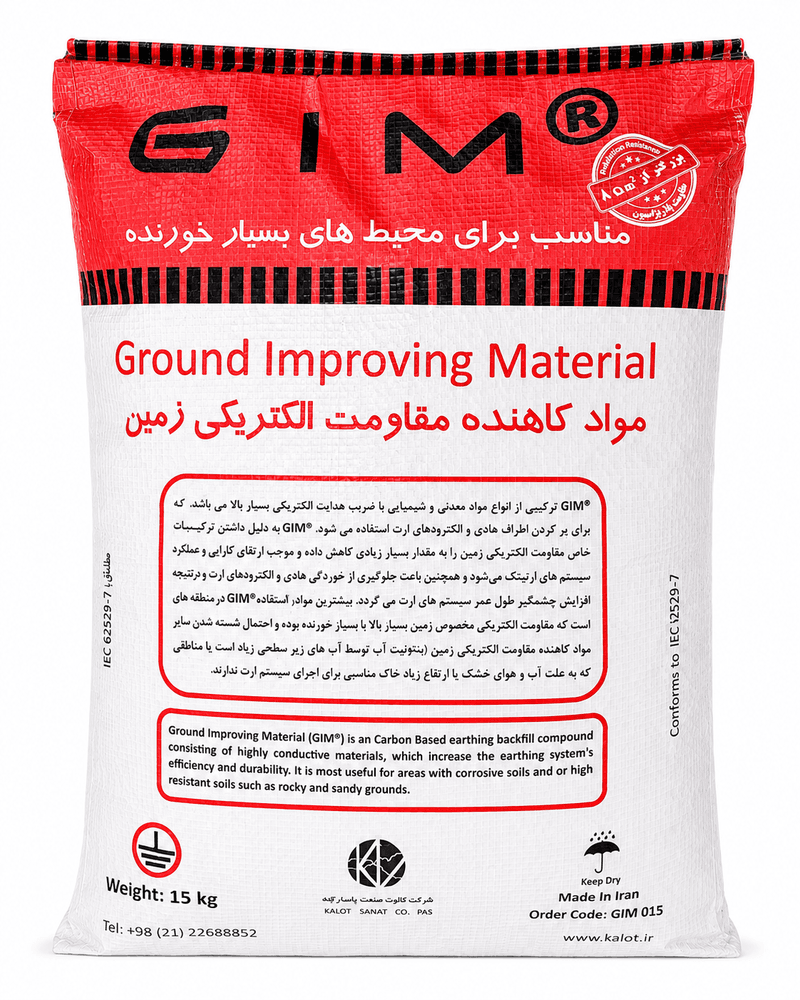
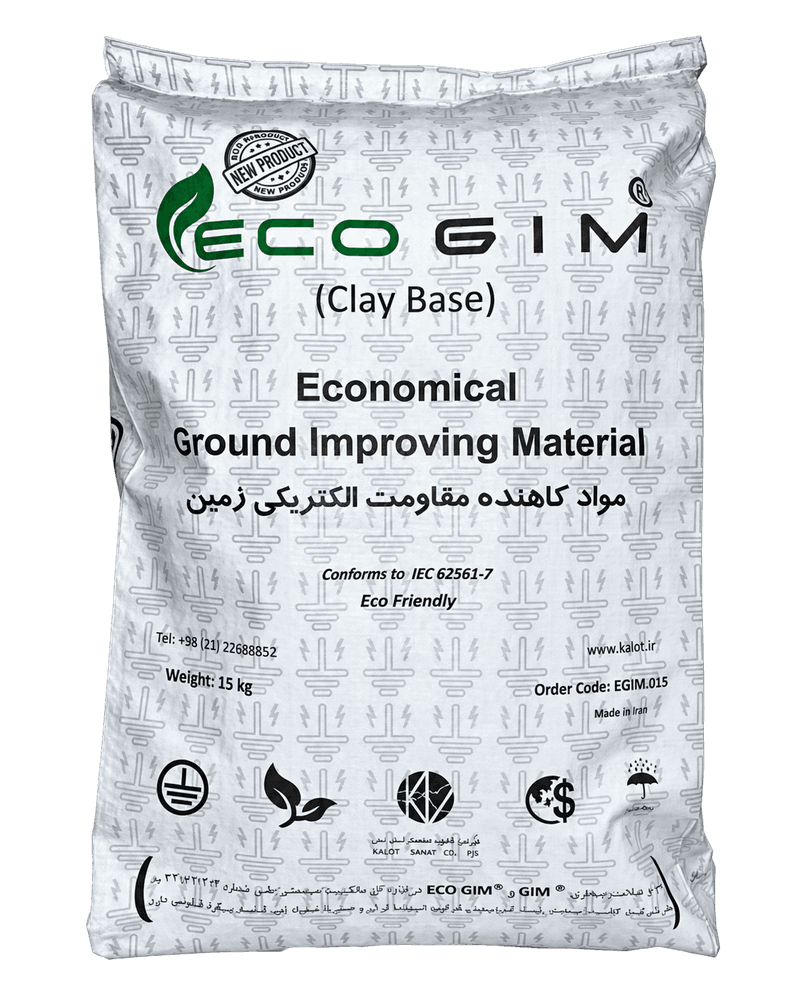
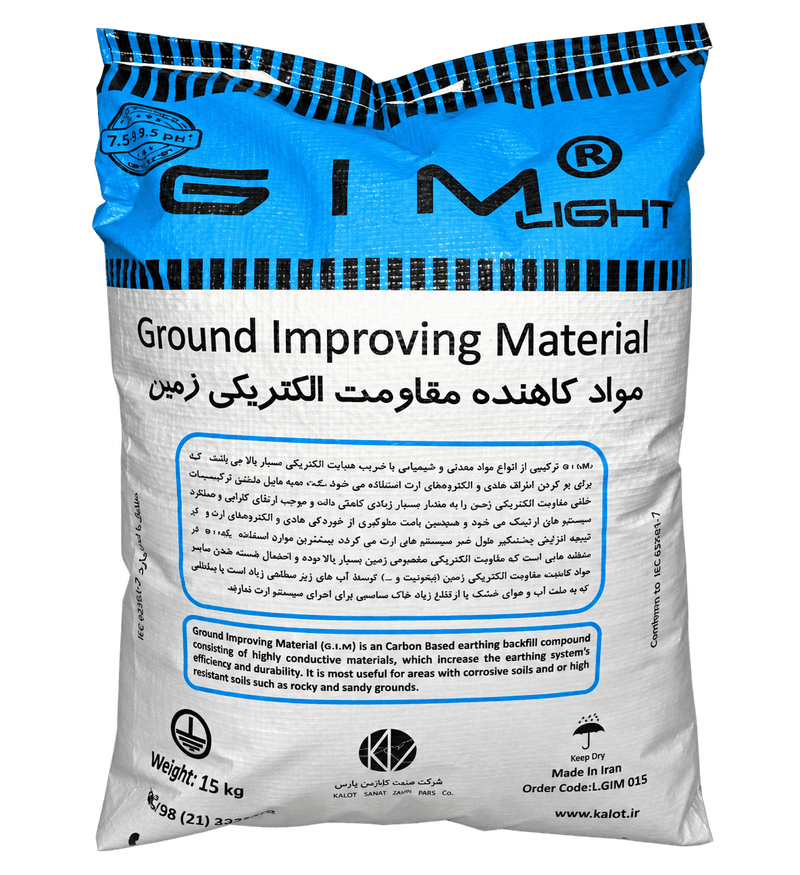
We produce the GIM family of ground improvement materials in line with IEC 62561-7: GIM for highly corrosive soils and environments, GIM LIGHT for normal conditions, and ECO GIM. The test reports for each product are on its own page. You can read about the standards for these materials in the standard for ground improvement materials.