Short answer: Carbon-based (Carbon Base) materials are a new generation of ground improvement materials, designed and processed to meet the requirements of the standards. Their main component is carbon, which conducts without needing moisture, has little tendency to combine with elements in the soil and is insoluble in water, so it does not wash out. At installation they are mixed with some cement and water so that they bond to the earth electrode. The standard test is also carried out on this final mix.
How does carbon-based material work?
In salt and bentonite, current passes through the ions dissolved in the thin film of water around the particles, so when the soil dries or the salt washes out, the current path is broken. In a carbon-based material, the carbon or graphite particles are in contact with one another and current flows electronically through the particles themselves. That is why its conductivity does not depend on moisture and it does not wash out over time. We cover what these materials are made of in What are ground improvement materials made of?
Carbon alone cannot pass all the standard tests. Manufacturers therefore use a special formula to make the material resistant to corrosion and safe for the environment. BS 7430:2026 accepts carbon and graphite slurries for filling around the electrode, but it rejects the use of coke (Coke Breeze). So "carbon-based" is not the same as charcoal or coke (salt and charcoal in earth pits).
Why is it mixed with cement and water?
On their own, carbon-based materials bond poorly to the earth electrode. That is why they are mixed with some cement and water at the point of use, forming a solid, adhesive column around the electrode. This casing covers the electrode and ensures its full contact with the earth. The standard tests are carried out on this final mix (with cement), so a "tested ground improvement material" means the final mix, not what comes in the bag. The ratio of water, cement and material must therefore follow the manufacturer's instructions exactly.
Installing carbon-based material around the electrode
- Drill a borehole or dig a trench: diameter and depth as set by the earthing system design.
- Prepare the slurry: the material is mixed with water, and with cement if the manufacturer requires it.
- Pour around the electrode: the copper-bonded earth rod or copper tape is placed in the centre and the slurry is poured around it, leaving no voids.
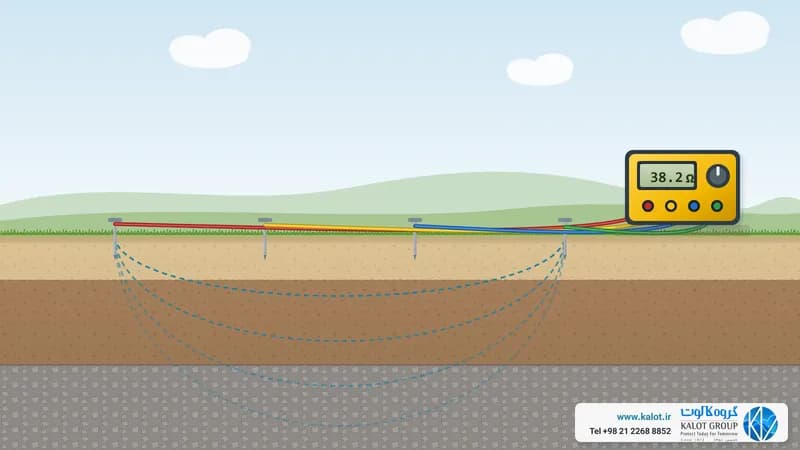
- Cover and measure: it is covered with soil, an inspection pit is installed and the resistance is measured.
Advantages and selection tips
- Conductivity without moisture: resistance changes less in the dry season and no watering is needed.
- No washout: it is insoluble in water and groundwater does not carry it away from the electrode.
- A solid column: with cement it bonds to the electrode and leaves no voids.
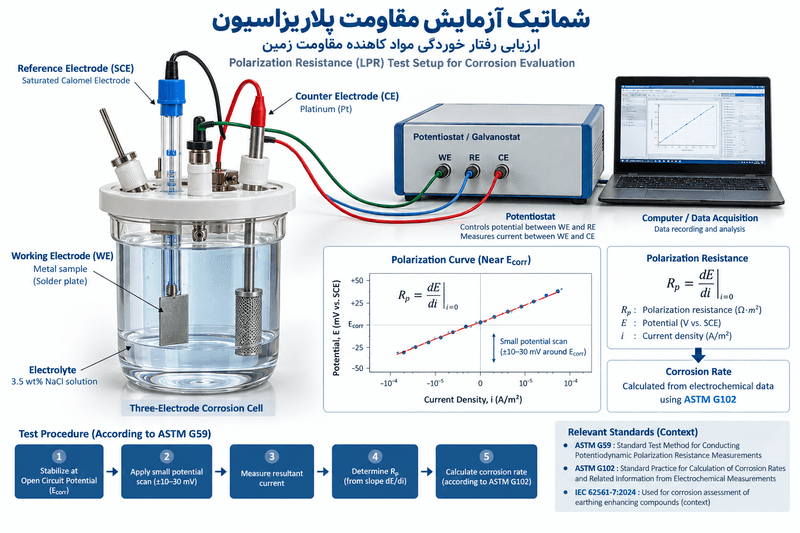
- Ask for the test evidence: not all carbon-based materials are alike, and their corrosion test results differ too. Treat a material as non-corrosive only if it has an IEC 62561-7 test report covering corrosion, leaching, sulphur and resistivity. Article 63 of the Earthing System Safety Regulations (1401) also requires additives to be tested to INSO 18499-7 (standard for ground improvement materials, specifications of a standard material, ground improvement materials and corrosion).
See how carbon-based material compares with bentonite and salt in the comparison table of ground improvement materials, and how far a material lowers resistance in why ground improvement materials are useful.
KALOT carbon-based ground improvement materials
GIM, the first carbon-based ground improvement material in Iran, has been used in earthing projects for more than 20 years and, according to its catalogue, has a resistivity below 0.5 ohm-metres. We also produce the GIM Light and ECO GIM versions. You can see them all under earthing equipment. To estimate the quantity of material, send the result of your soil resistivity measurement or the design specifications to our specialists, or reach us through the contact us page.