
Move your pointer over the image to zoom in
Complete Product Overview
Galvanised earth rod (S275 steel with hot-dip galvanised coating)
Order Code: GVER 1615 · GVER 1620 · GVER 2015 · GVER 2020
Last updated:
The KALOT Group galvanised earth rod is a one-piece earth electrode with a solid steel core and a hot-dip galvanised (zinc) coating 50 to 70 microns thick. One end is pointed so that it enters the soil easily and the other is flat so that it can be driven with a driving cap. The steel core is stiff and drives well, and the zinc coating protects the steel in the soil. This earth rod has the lowest metal value among our earth rods and suits earthing networks in which every component is galvanised steel: towers, supports, fences and galvanised steel structures, as well as temporary site earthing.
We manufacture the galvanised earth rod in diameters of 16 and 20 mm and lengths of 1500 and 2000 mm, and we also supply galvanised round wire and matching galvanised clamps. In rocky or high-resistivity soil, the earth rod can be installed in a borehole with GIM ground improvement material. In neutral, well-drained soil the zinc coating is consumed slowly; in saline and acidic soils, or beside a reinforced concrete foundation, we recommend the copper-bonded earth rod, the solid copper earth rod or the stainless steel earth rod. The comparison table on this page sets the five KALOT earth rods side by side, technically and financially.
For all-galvanised earthing networks
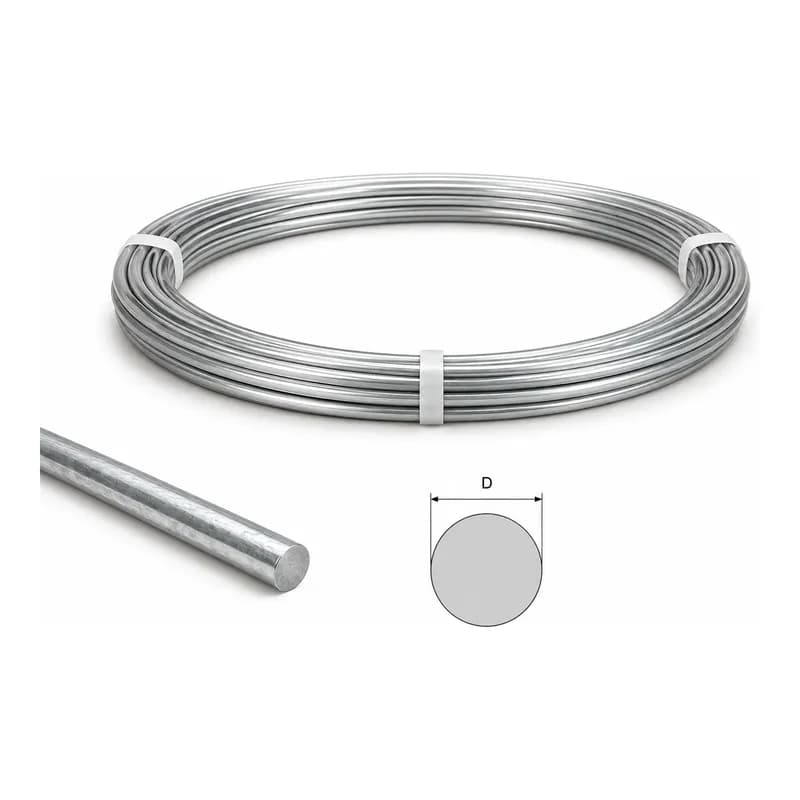
A galvanised earth rod works well in a network where every component is the same material: earth rod, conductor and clamp, all galvanised steel. We also supply galvanised round wire and manufacture the matching galvanised clamps, so your system stays single-material.
- S275 steel core with a 50 to 70 micron hot-dip galvanised coating
- Diameters of 16 and 20; lengths of 1500 and 2000 mm
- One pointed end, one flat end; direct driving or borehole installation with GIM
- The lowest metal value among KALOT earth rods
One piece, pointed and flat
No thread and no connecting part. The pointed end opens the way through the soil and the flat end takes the blows from the driving cap. For lower resistance, we drive several earth rods in parallel and connect them with a galvanised conductor.
The same material as KALOT galvanised round wire and clamps
Our galvanised earth rod, galvanised round wire and galvanised U clamp form a single-material system. Topic 13 of the Iranian National Building Regulations considers bonding galvanised steel to galvanised steel suitable.
Towers, fences and galvanised structures
Telecom and radio towers, supports, railings and galvanised steel structures whose earthing network is of the same material as the structure itself.
Stiff and easy to drive
The solid steel core stands up well to impact and the conical tip opens the way through the soil, while the driving cap protects the flat end and its coating.
Seven drawings and a datasheet
Galvanised earth rod datasheet (PDF)You will find the dimensional drawing, technical drawing, driving cap view, execution schematic, installation steps, connection modes and selection guide as PDF files alongside the datasheet.
Technical Product Information
Click to view enlarged
Feature | Value |
|---|---|
Product type | One-piece solid steel earth rod (earth electrode) with a hot-dip galvanised coating |
Material | Solid S275 steel core with a zinc coating |
Coating | Hot-dip galvanised, 50 to 70 microns thick |
Diameter D | 16 and 20 mm |
Length L | 1500 and 2000 mm |
Ends | One conical pointed end with a 20 mm tip length, the other end flat; no thread |
Weight of a 1500 length | 2.38 kg (16 diameter) and 3.71 kg (20 diameter) |
Electrode arrangement | One piece; for lower resistance, several parallel earth rods at a spacing of at least their length, connected with a galvanised conductor |
Installation method | Direct driving; in rocky or high-resistivity soil, borehole installation with GIM ground improvement material |
Driving tools | Sledgehammer or power hammer, with a driving cap on the flat end; we make the cap on request |
Conductor connection | Galvanised conductors and clamps only: galvanised U clamp (both diameters) and galvanised tape-to-earth rod clamp (16 diameter) |
Design basis | Diameter and coating thickness based on the requirements of IEC 60364-5-54 and Topic 13 of the Iranian National Building Regulations |
Order code | GVER 1615, GVER 1620, GVER 2015 and GVER 2020 |
Models, order codes and weight
Order code | Diameter D (mm) | Length L (mm) | Tip length P (mm) | Weight (kg) |
|---|---|---|---|---|
GVER 1615 | 16 | 1500 | 20 | 2.38 |
GVER 1620 | 16 | 2000 | 20 | 3.18 |
GVER 2015 | 20 | 1500 | 20 | 3.71 |
GVER 2020 | 20 | 2000 | 20 | 4.95 |
The galvanised earth rod is one piece: a pointed lower end with tip length P and a flat upper end, with no thread. L is the overall length and D is the diameter of the earth rod. The hot-dip galvanised coating is 50 to 70 microns and the weights are given for a 60 micron coating. Our products are continually improved and the dimensions of some may be updated, so please confirm the final dimensions with our specialists before you buy.
Dimensional drawing
Download the dimensional drawing (PDF)
Technical drawing
Download the technical drawing (PDF)
Exploded view
Download the exploded view (PDF)
Construction: steel core, zinc coating, pointed end and flat end
The KALOT galvanised earth rod is one piece. Its core is solid S275 steel, which gives the stiffness needed for driving, and a hot-dip galvanised coating 50 to 70 microns thick protects it in the soil. The lower end is conical and pointed to open the way through the soil, and the upper end is flat so that the driving cap sits on it and, after driving, the conductor clamp is fixed to it inside the earth inspection pit. Each earth rod is a complete electrode; for lower resistance, several parallel earth rods are driven and connected with a galvanised conductor.
Click to view enlarged
Applications of the galvanised earth rod
- Telecom and radio towers, and galvanised steel towers and supports: an earthing network whose buried conductors, like the electrode, are galvanised steel.
- Fences, railings and galvanised steel structures: earthing in the same material as the structure itself.
- Temporary earthing of sites and construction equipment: quick installation by driving, at low cost.
- Beside buried steel pipes and tanks: zinc is more active than steel and does not aggravate corrosion of the nearby steel. In this situation the zinc coating on the earth rod is consumed sooner, and the design must be coordinated with the cathodic protection designer.
- Arrays of several parallel earth rods: reaching the required resistance with several one-piece earth rods connected by a galvanised conductor.
- Neutral, sandy, well-drained soil: where the zinc coating is consumed slowly.
- Rocky or high-resistivity soil: installation in a borehole, filling around the earth rod with GIM ground improvement material.
Execution schematic: direct driving, borehole with GIM and several parallel earth rods
Download the execution schematic (PDF)
Modes of connecting the conductor to the galvanised earth rod
Download connection modes (PDF)
How to install and drive the galvanised earth rod
- Check the soil resistivity and the electrode location; moist soil away from waste, fertiliser and chemicals is best. Mark the routes of underground services and dig the pit for the earth inspection pit with enough room for concrete around it.
- Place the driving cap on the flat end and set the earth rod vertical, pointed end down, using a level or plumb line.
- With a sledgehammer or power hammer, strike even, light, axial blows until the top of the earth rod sits inside the earth inspection pit, at least 20 cm above its floor. If the earth rod leans, stop and straighten it. In rocky or high-resistivity soil, drill a borehole, place the earth rod at its centre and fill around it with GIM ground improvement material.
- Remove the cap. If the zinc coating on the top of the earth rod has been damaged, repair it with zinc-rich paint.
- Measure the electrode resistance. If it is above the required value, drive another earth rod at a spacing of at least its length. Topic 13 gives the optimum spacing as at least twice the electrode depth.
- Connect the earth rods with a bare galvanised steel conductor at a depth of 50 to 80 cm in the soil. For a buried conductor, IEC 60364-5-54 and Topic 13 require tape of at least 90 mm² with a thickness of 3 mm (for example 30×3) or round wire of at least 10 mm, and the design sets the final size.
- Inside the earth inspection pit, fix the galvanised conductor to the top of the earth rod with a galvanised U clamp (both diameters) or a galvanised tape-to-earth rod clamp (16 diameter), and tighten the nuts according to the manufacturer's instructions. Do not use copper or brass conductors or clamps.
- Set the earth inspection pit in place and pour concrete around it; the connection inside the pit stays dry and accessible for inspection. Record the measured value, with the date, in the earthing system file.
Download the installation steps (PDF)
Installation tools
Sledgehammer or power hammer, driving cap (on request), level or plumb line, open-end or ring spanner for the clamp nut, zinc-rich paint for coating repair and an earth resistance tester.
Measurement and inspection
After installation, measure the electrode resistance by the fall-of-potential method (62%) and record the result with the date, season and soil moisture in the earthing system file. At periodic inspections inside the earth inspection pit, check the clamp tightness, the condition of the conductor and the zinc coating on the top of the earth rod, and repair any damaged coating. In more corrosive soils, shorten the inspection intervals. For the measurement method, see how earth termination resistance is measured.
Selection and price enquiry
To ask for a price on the galvanised earth rod, send our specialists the order code or the diameter (16 or 20 mm), length (1500 or 2000 mm), quantity and the accessories you need (driving cap, galvanised U clamp, galvanised round wire, GIM ground improvement material and earth inspection pit). If you also tell us the soil type and the surrounding metal structures, our specialists at KALOT Group will help you choose the right material and size of earth rod.
Click to view enlarged
The electrode material does not determine the earth termination resistance; the soil and the electrode length do. What the material determines is the life of the electrode and how it behaves beside other metals. In soil, zinc is more active than steel and protects the steel beneath it sacrificially; if the coating is scratched somewhere, the surrounding zinc still protects the steel. How fast the zinc is consumed depends on the soil: slowly in neutral, low-moisture, well-drained soil and quickly in acidic, organic, saline or high-chloride soil. In soil, galvanised steel is electronegative relative to copper and to steel in concrete. BS 7430 considers connecting bare galvanised steel to copper and to steel in concrete incorrect, and Topic 13 considers bonding a galvanised steel electrode to copper, stainless steel and steel in concrete unsuitable. That is why we choose galvanised for all the conductors and clamps of this earth rod. The galvanised earth rod does not aggravate corrosion of nearby buried steel, and among our earth rods it has the lowest metal value.
Advantages of the KALOT galvanised earth rod
- Economical: the lowest metal value among KALOT earth rods, well suited to projects with many electrodes.
- Same material as the galvanised system: it forms an integrated system with KALOT galvanised round wire and galvanised clamps.
- Stiff when driven: solid steel core and conical tip for easy penetration into the soil.
- One piece and ready to use: no coupling or dowel; each earth rod is a complete electrode.
- Beside buried steel: zinc is more active than steel and does not aggravate corrosion of nearby steel pipes and tanks. In this situation the zinc coating is consumed sooner, and near cathodic protection you should coordinate the design with the designer.
- Coating and diameter based on requirements: we have chosen the 50 to 70 micron hot-dip galvanised coating and the 16 and 20 mm diameters based on the requirements of IEC 60364-5-54 and Topic 13.
Comparison and selection guide
Download the comparison and selection guide (PDF)
Technical and financial comparison table of KALOT earth rods
Feature | Galvanised | Copper-bonded | Solid copper | Stainless steel 304L | Stainless steel 316 |
|---|---|---|---|---|---|
Material | S275 steel core with hot-dip galvanised coating (50 to 70 microns) | Steel core with copper coating (at least 0.25 mm) | Copper throughout the cross-section | Low-carbon austenitic stainless steel (18% chromium, 8% nickel) | Austenitic stainless steel with molybdenum (10% nickel, 2% molybdenum) |
KALOT sizes | Diameters of 16 and 20; lengths of 1500 and 2000 | 5/8 and 3/4 inch; length 1500 | Diameters of 16 and 20; length 1500 | Diameters of 16 and 20; lengths of 1500 and 2000 | Diameters of 16 and 20; lengths of 1500 and 2000 |
Weight per 1500 length (kg) | 2.38 and 3.71 | 1.95 and 2.76 | 2.68 and 4.19 | 2.36 and 3.70 | 2.38 and 3.72 |
Joining lengths | One piece, no thread; several parallel earth rods with a galvanised conductor | Brass coupling; several lengths end to end | M10 dowel; several lengths end to end | Integral dowel; first earth rod and extension earth rods | Integral dowel; first earth rod and extension earth rods |
Installation method | Direct driving with a driving cap, or a borehole with ground improvement material | Driving to great depth | Borehole with ground improvement material, or driving in soft soil | Driving; in rocky soil, a borehole with ground improvement material | Driving; in rocky soil, a borehole with ground improvement material |
Minimum diameter according to IEC 62305-3 (mm) | 14 | 14 (with 0.25 mm coating) | 15 | 15 | 15 |
Tensile strength according to IEC 62561-2:2018 (N/mm²) | 350 to 770 | 350 to 770 | 200 to 450 | 350 to 770 | 350 to 770 |
Maximum electrical resistivity according to IEC 62561-2:2018 (µΩ·m) | 0.25 | 0.25 | 0.018 | 0.80 | 0.80 |
Corrosion resistance | Moderate; the zinc coating is gradually consumed | Good, as long as the coating is intact | Very good | Good | Very good |
Saline and chloride soil | Poor to moderate | Medium | Good | Moderate; pitting corrosion is possible | Very good |
Acidic and organic soil | Poor | Medium | Medium | Good | Good |
Beside buried steel and cathodic protection | Compatible, with faster consumption of the zinc coating; not when connected to foundation reinforcing bars | With caution | With caution | More suitable than copper; in coordination with the designer | More suitable than copper; in coordination with the designer |
Ease of driving | Very good | Very good | Limited | Good | Good |
Raw metal value per 1500 length (US dollars) | 1.2 and 1.8 | 3.0 and 3.8 | 39.7 and 62.1 | 5.2 and 8.1 | 10.3 and 16.1 |
Metal value index (copper-bonded = 1) | 0.4 to 0.5 | 1 | 13 to 16 | 1.7 to 2.1 | 3.4 to 4.2 |
Cost rank (1 = lowest) | 1 | 2 | 5 | 3 | 4 |
Recommended use | All-galvanised earthing networks: towers, fences and galvanised steel structures; temporary site earthing; neutral, well-drained soil | Most projects: buildings, substations, lightning protection and towers | Saline and corrosive soils; high fault current | Beside foundations and steel pipes and tanks; low-salt, well-drained soil | Coastal areas, chloride soil, chemical industries; projects that call for IEC requirements |
This table was prepared on 21 Mehr 1405. Metal value is calculated from the official London Metal Exchange (LME) prices for copper, nickel and zinc, global market reference prices for steel, chromium and molybdenum on those same days, and the weight of each length, and it changes as metal prices change; the selling price also includes manufacturing cost. Weights are for the smaller and larger size of each type. Earth resistance is determined by the soil and the electrode length, not the material; choose the material based on the soil, the surrounding metal structures and the installation method. To learn more, see choosing the right material for an earth electrode and calculating earth termination resistance.
If this matches your situation, see these products too
Product | When |
|---|---|
For most projects and for driving to great depth, with copper conductors and clamps. | |
Beside a reinforced concrete foundation and for an electrode connected to the foundation reinforcing bars. | |
For saline and corrosive soils. | |
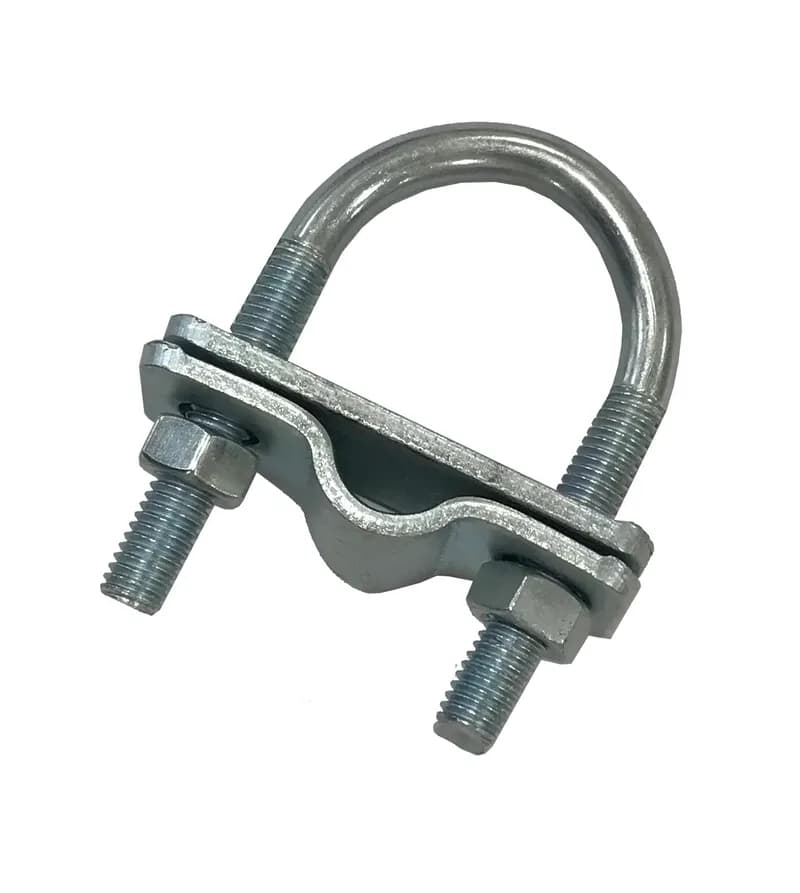
Galvanised U clamp for connecting round wire to an earth rod | Connects galvanised round wire or tape to the top of 16 and 20 earth rods. |
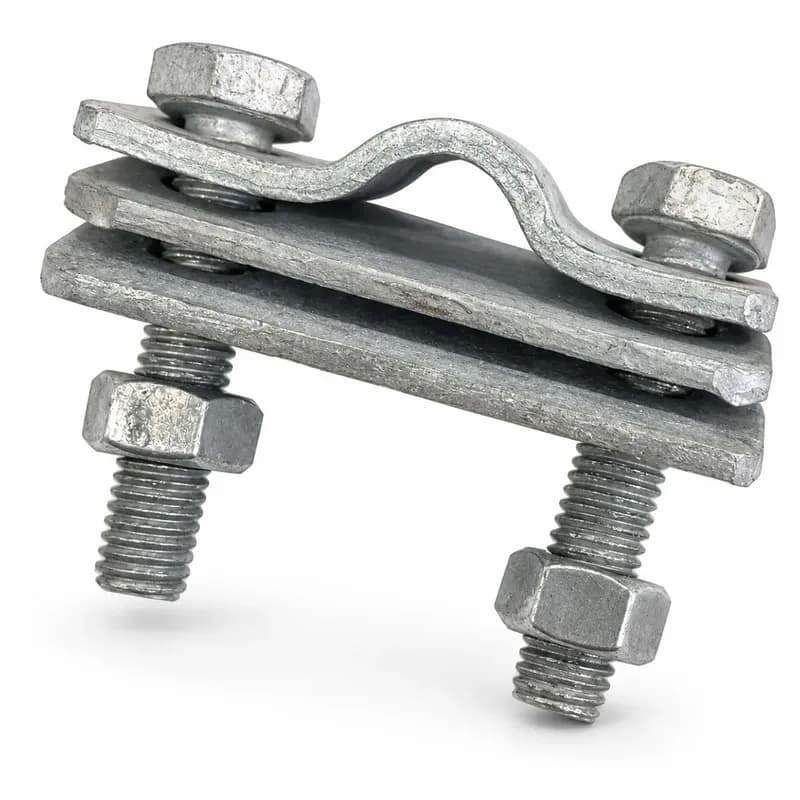
Galvanised clamp for connecting tape to earth rod and round wire | Connects galvanised tape to a 16 earth rod. |
A conductor of the same material, for down conductors and connection to the structure. | |
Connects galvanised round wires to each other. | |
Protects the top of the earth rod and the conductor connection, and allows measurement. | |
A lightweight pit; like the concrete pit, it has concrete poured around it. | |
For borehole installation in rocky or high-resistivity soil. |
IEC 62561-2:2018 (lightning protection system components: conductors and earth electrodes) gives, for a solid hot-dip galvanised steel earth rod, a minimum cross-section of 150 mm² and a recommended diameter of 14 mm, and recommends a pointed or chamfered end for easier driving. The KALOT galvanised earth rod has a conical pointed end, and its cross-section exceeds this minimum in both diameters.
IEC 62305-3 (protection of structures against lightning) gives, in its table of electrode dimensions, a diameter of 14 mm for a solid hot-dip galvanised steel earth rod.
IEC 60364-5-54 (earthing arrangements) requires, for a vertical hot-dip galvanised steel earth rod, a minimum diameter of 16 mm, a minimum zinc coating weight of 350 g/m² and a minimum thickness of 45 microns. An annex of the same standard says the junction of two dissimilar metals must not be in contact with the soil and recommends a material other than galvanised steel for supplementary electrodes beside buildings with foundation electrodes; so for these buildings we recommend the stainless steel earth rod. The 16 and 20 mm diameters and the 50 to 70 micron hot-dip galvanised coating of the KALOT galvanised earth rod have been chosen based on the requirements of this standard.
Topic 13 of the Iranian National Building Regulations sets the minimum diameter of a vertical hot-dip galvanised steel earth rod at 16 mm with a 45 micron coating, requires a driven vertical electrode to reach a depth of at least 2 m, and in its metal compatibility table considers bonding a galvanised steel electrode to galvanised steel suitable, and bonding it to copper, tinned copper, stainless steel and steel in concrete with a larger surface area unsuitable.
BS 7430:1998 (code of practice for earthing) gives 16 mm as the preferred nominal diameter of a galvanised steel earth rod, prefers several parallel earth rods to one long earth rod, and notes that bare galvanised steel should not be connected to copper or to steel in concrete. In its table of metal behaviour in soil, the durability of galvanised steel is not reduced in neutral soil with a pH of 6 to 8 and is greatly reduced in acidic soil with a pH below 6.
Installing a galvanised earth rod with U-clamp and galvanised conductor
Documents & Downloads
Catalogues & datasheets
Drawings & schematics
- Galvanised earth rod dimensional drawingLanguage: Persian (opens in a new tab)
- Galvanised earth rod technical drawingLanguage: Persian (opens in a new tab)
- Galvanised earth rod exploded viewLanguage: Persian (opens in a new tab)
- Galvanised earth rod installation schematicLanguage: Persian (opens in a new tab)
- Galvanised earth rod connection modesLanguage: Persian (opens in a new tab)
- Galvanised earth rod installation stepsLanguage: Persian (opens in a new tab)
- Galvanised earth rod comparison and selection guideLanguage: Persian (opens in a new tab)
Frequently Asked Questions
What is a galvanised earth rod and where is it used?
A galvanised earth rod is an earth electrode with a solid S275 steel core and a hot-dip galvanised coating. It is driven into the soil to carry fault current and lightning current to earth. We recommend it for earthing networks in which every component is galvanised steel, such as towers, fences and galvanised steel structures, and for temporary site earthing, in neutral, well-drained soil.
Is a galvanised earth rod only for temporary earthing?
No. IEC 60364-5-54 lists hot-dip galvanised steel among earth electrode materials, and Topic 13 of the Iranian National Building Regulations sets the minimum size of a hot-dip galvanised steel earth rod. The hot-dip galvanised coating on our earth rod is 50 to 70 microns. Its durability depends on the soil. In neutral, well-drained soil, and in a network where every component is galvanised, it serves as a permanent electrode, and periodic measurement and inspection show its condition over time.
Which is better, a galvanised or a copper-bonded earth rod?
Each has its place. A galvanised earth rod is more economical and is used in galvanised steel networks, and its zinc coating is gradually consumed. A copper-bonded earth rod has a copper coating, lasts longer in most soils and is used with copper conductors and clamps. Do not connect the two in the same buried network. The comparison table on this page sets out the technical and financial differences between the five KALOT earth rods side by side.
How long does a galvanised earth rod last?
The life of a galvanised earth rod depends above all on the soil and the thickness of the zinc coating. In neutral, low-moisture, well-drained soil the zinc is consumed slowly. In acidic, organic, saline or high-chloride soil, and where it is connected to a dissimilar metal, it goes much faster. That is why you should measure the electrode resistance at periodic inspections and check the coating on its top inside the earth inspection pit. In corrosive soils we recommend a copper-bonded or stainless steel earth rod.
Is a 16 or a 20 mm diameter better?
Diameter has only a slight effect on earth resistance. The 20 mm diameter is stiffer and better suited to driving with a power hammer in hard soil, while the 16 mm diameter is lighter and more economical. For the 16 mm diameter we supply the galvanised U clamp and the galvanised tape-to-earth rod clamp, and for the 20 mm diameter the galvanised U clamp.
Should I choose a 1500 or a 2000 mm galvanised earth rod?
A 2000 mm earth rod goes deeper into the soil and gives lower resistance. The 1500 mm length is used for arrays of several parallel earth rods, for earthing fences and galvanised steel structures, and for temporary site earthing. Topic 13 of the Iranian National Building Regulations requires a driven vertical electrode to reach a depth of at least 2 m, and the top of the electrode also stays inside the earth inspection pit, above its floor. For such work we recommend the threaded copper-bonded earth rod or the stainless steel earth rod, whose lengths join end to end. The final depth and number are set by the required resistance and the measurement results.
Can a copper conductor or a brass clamp be connected to a galvanised earth rod?
No. In soil, galvanised steel is electronegative relative to copper, and if it is connected to copper, brass or stainless steel its zinc coating corrodes faster. BS 7430 considers connecting it to copper unsuitable, and Topic 13 considers bonding it to copper and stainless steel unsuitable. Choose a conductor of galvanised steel round wire or tape and fix it with a galvanised U clamp or a galvanised tape-to-earth rod clamp. If the project's earthing network is copper, choose a copper-bonded or solid copper earth rod.
Is a galvanised earth rod suitable beside a foundation or connected to the foundation reinforcing bars?
In soil, steel in concrete has a potential close to that of copper. For this reason IEC 60364-5-54 recommends a material other than galvanised steel for supplementary electrodes beside buildings with foundation electrodes, and Topic 13 considers connecting galvanised steel to steel in concrete unsuitable. For an electrode connected to the reinforcing bars or the foundation earth ring, we recommend the stainless steel earth rod.
What is the difference between a galvanised earth rod and a plain reinforcing bar?
A plain construction reinforcing bar has no coating and rusts in soil. IEC 60364-5-54 accepts uncoated steel only for electrodes in concrete. A galvanised earth rod has a hot-dip galvanised coating that protects the steel, its pointed end is made for driving, and its diameter and coating have been chosen based on the requirements of IEC 60364-5-54 and Topic 13.
Can a galvanised earth rod be cut or welded?
Cutting, drilling or welding destroys the zinc coating at that point. Use the earth rod at its manufactured length and fix the conductor to it with a galvanised clamp. If cutting or welding cannot be avoided, repair the spot with zinc-rich paint.
How many galvanised earth rods are needed, and at what spacing are they driven?
Put simply, the resistance of a vertical earth rod is directly proportional to soil resistivity and inversely proportional to its length. If one earth rod is not enough, drive further earth rods at a spacing of at least their length; Topic 13 gives the optimum spacing as at least twice the electrode depth. Calculation and measurement decide the number; see calculating earth termination resistance.
How thick is the coating on a galvanised earth rod?
The coating on the KALOT galvanised earth rod is applied by hot-dip galvanising, and its thickness is 50 to 70 microns. IEC 60364-5-54 and Topic 13 set the minimum zinc coating thickness for a hot-dip galvanised steel earth rod at 45 microns.
Can a galvanised earth rod be installed with GIM?
Yes. In rocky, dry or high-resistivity soil, drill a borehole, place the earth rod at its centre and fill around it with GIM ground improvement material to lower the electrode resistance. Measure and record the resistance after installation.
What tools are used to drive a galvanised earth rod?
With a sledgehammer or power hammer and a driving cap that sits on the flat end, so that the blows land on the cap and not on the top of the earth rod and its coating. We make the driving cap on request and supply it with the earth rod.
How is the price of a galvanised earth rod determined?
The price depends on diameter, length, quantity and the current prices of steel and zinc. The galvanised earth rod has the lowest metal value among KALOT earth rods, and the comparison table on this page shows the metal value of each type. For today's price, send our specialists the order code and quantity.
Have a Technical Question?
KALOT Group's technical experts are ready to answer your questions about lightning rods and earthing systems.