
Move your pointer over the image to zoom in
Complete Product Overview
Brass coupling for copper-bonded earth rods
Order Code: TCR 58 · 34 / TCH 58 · 34
Last updated:
An earth rod coupling joins two threaded copper-bonded earth rods so that the electrode reaches the required depth. The KALOT Group brass coupling has a full-length internal thread: the ends of the earth rods butt together inside it and the threads stay completely hidden within the coupling.
As a result, the driving force passes from the upper earth rod directly to the lower one rather than through the threads, and after installation no thread remains in contact with the soil. The coupling is also where the externally threaded driving head is fitted.
We manufacture this coupling from high-copper brass in two models, round (TCR) and hexagonal (TCH), for 14.2 and 17.2 mm (5/8 and 3/4 inch) earth rods.
A joint that stays firm even under impact
The coupling is the most sensitive point of a multi-section electrode: it must withstand hammer blows, keep the threads intact and maintain the electrical continuity of the earth rods in the soil.
Corrosion-resistant brass
High-copper brass is stable in soil and compatible with the copper coating of the earth rod.
Thread protection during driving
The ends of the earth rods meet inside the coupling, so the driving force passes from one to the other, not through the thread.
Round or hexagonal
Both models do the same job; the hexagonal model is easier to hold and tighten with a spanner.
Electrical continuity between earth rods
A complete threaded joint keeps the current path continuous between copper-bonded earth rods.
Technical Product Information
Feature | Value |
|---|---|
Product type | Coupling for joining threaded copper-bonded earth rods |
Material | Brass |
Model | Round TCR / hexagonal TCH |
Thread | Full-length internal, matching the earth rod thread |
Size | 5/8" and 3/4" |
Used with | ERCB copper-bonded earth rod and ETDH externally threaded driving head |
Our products are continually improved and some specifications may be updated, so please confirm the final specifications with our specialists before buying.
Order code | Size | Model | Matching earth rod |
|---|---|---|---|
TCR 58 | 5/8" | Round | ERCB 14.. |
TCH 58 | 5/8" | Hexagonal | ERCB 14.. |
TCR 34 | 3/4" | Round | ERCB 17.. |
TCH 34 | 3/4" | Hexagonal | ERCB 17.. |
You need one coupling for each joint between two earth rods, plus one for the top of the first earth rod when driving with an externally threaded driving head.
Click to view enlarged
The KALOT drawing shows the round TCR and hexagonal TCH couplings with their full-length internal thread (dashed line) and a front view of each model. The table gives the code for each size and its matching copper-bonded earth rod.
Click to view enlarged
Application
- Joining two threaded copper-bonded earth rods to increase electrode depth;
- Fitting point for the externally threaded driving head during driving.
Installation
- Tighten the coupling halfway along its length onto the thread of the driven earth rod.
- Screw the next earth rod into the other half of the coupling until the ends of both meet inside it.
- Fit the driving head into the upper coupling and continue driving.
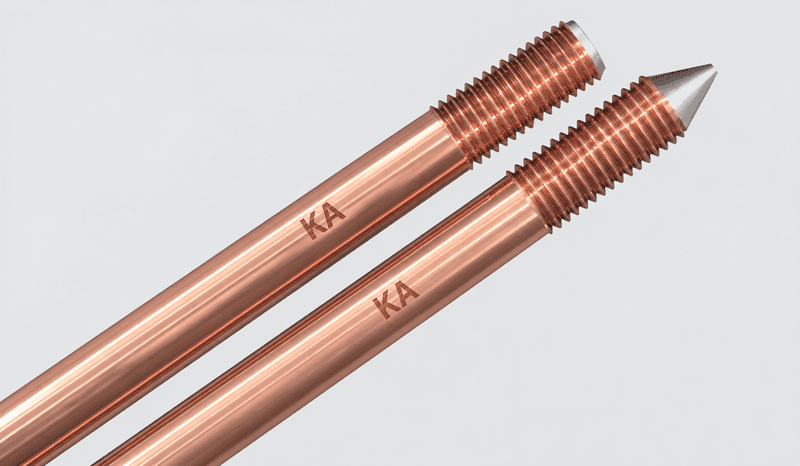
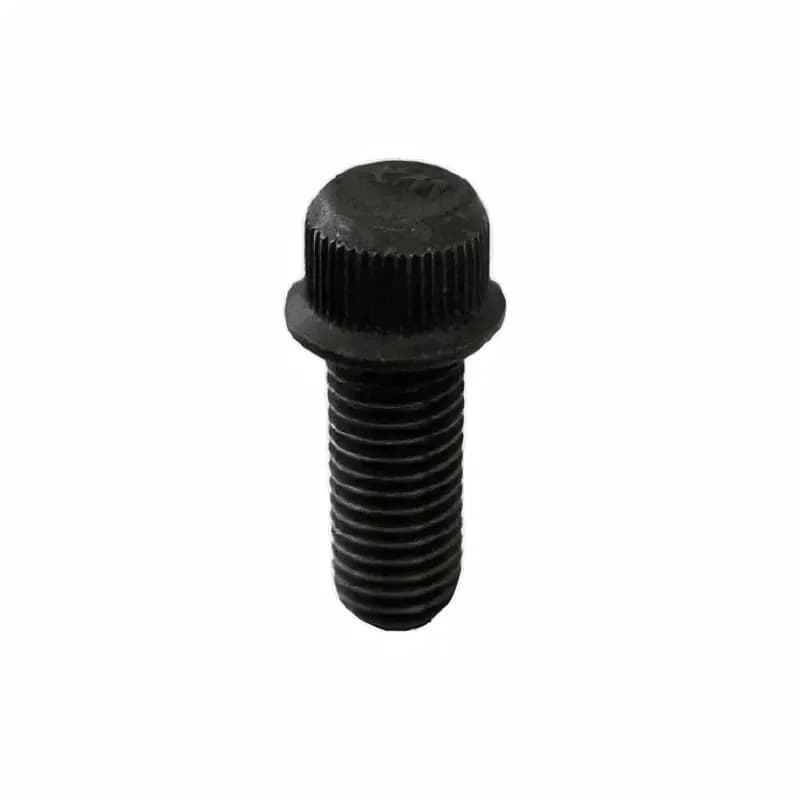
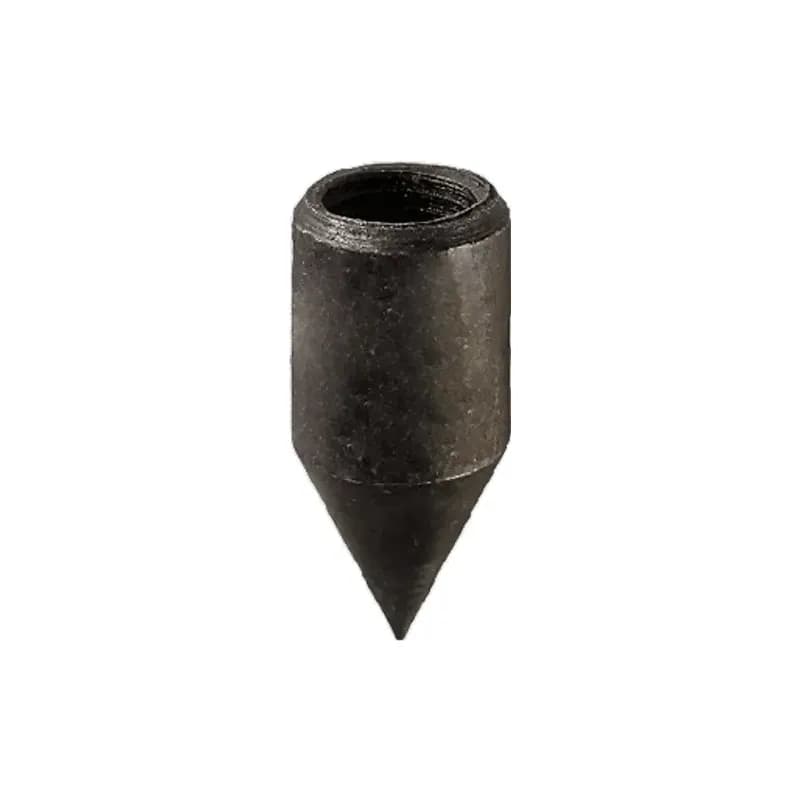
Other components: threaded copper-bonded earth rod, threaded driving head and threaded steel tip.
Technical notes
- The ends of the copper-bonded earth rods must meet fully inside the coupling. The blow then passes from one to the other and the thread is not damaged.
- Choose the coupling size to match the nominal diameter of the earth rod exactly.
If a good earth rod is joined with an unsuitable coupling, that coupling becomes the weakest point of the electrode. Standards and the experience of reputable makers call for these features in an earth rod coupling:
Feature | Suitable coupling | Unsuitable coupling |
|---|---|---|
Length | Long enough to cover the threads of both earth rods completely | Short: part of the thread stays exposed and corrodes in the soil |
End-to-end contact | The ends of the two earth rods butt together inside the coupling and the blow passes from one earth rod to the other | The ends do not meet: the blow passes through the thread and strips or breaks it |
Material | A copper alloy (such as high-copper brass) that is stable in soil and compatible with the earth rod's copper | Iron or ordinary steel, which corrodes faster in contact with copper |
Casting | Smooth surface, no cracks, voids or sharp edges | A porous part that cracks under hammer blows |
Thread | Matches the earth rod thread; tightens fully by hand | Mismatched or loose thread that makes the earth rod lean |
In standard tests, two earth rods are joined with a coupling and subjected to repeated blows, tension, bending and corrosive conditions (salt mist and sulphurous atmosphere). The coupling must not break or crack, and electrical continuity must be maintained.
The standards below set out the requirements for couplings and earth rod joints:
IEC 62561-2 (components for earthing and lightning protection systems)
This standard sets separate requirements for earth rod joints (couplings) and driving tools: the joint must be compatible with the earth rod and strong enough to withstand the driving force; in a threaded joint no earth rod thread remains exposed after installation; and driving heads and driving tools are used according to the maker's instructions.
IEC 60364-5-54 and IEC 62305-3
They set the material and minimum dimensions of earth electrodes: for a vertical copper-bonded earth rod, a minimum diameter of 14 mm and a minimum copper coating of 250 microns. For a full comparison of standard and non-standard earth rods, see the copper-bonded earth rods page.
NEMA GR-1 (earth rods and their couplings)
This standard assesses the copper-bonded earth rod coupling through impact tests (25 consecutive blows without breaking or cracking), tension, 30-degree bending and conductivity. The coupling must also be long enough to cover the threads of both earth rods.
Installing a copper-bonded earth rod in soil
Frequently Asked Questions
What is an earth rod coupling used for?
It joins two threaded copper-bonded earth rods so that the electrode can reach a greater depth, and it protects the threads during driving.
Is a round or hexagonal coupling better?
Both do the same job. The round model moves through soil more easily, and the hexagonal model tightens more firmly with a spanner.
What is the coupling made of?
Brass: resistant to corrosion and compatible with the copper coating of a copper-bonded earth rod.
How is the coupling installed?
The coupling is tightened halfway onto the driven earth rod, and the next earth rod is screwed into the other half until the ends of both meet inside the coupling.
Which size should I order?
Match it to the nominal diameter of the copper-bonded earth rod: TCR/TCH 58 for 5/8" and TCR/TCH 34 for 3/4".
Why should the earth rod thread not stay outside the coupling?
An exposed thread corrodes sooner in soil and becomes the weak point of the electrode. The coupling must fully cover the threads of both earth rods.
What happens if the ends of two earth rods do not meet inside the coupling?
The hammer blow passes through the threads instead of the end of the earth rod, and may strip the threads or crack the coupling. Screw the earth rod fully into the coupling.
Have a Technical Question?
KALOT Group's technical experts are ready to answer your questions about lightning rods and earthing systems.