
Move your pointer over the image to zoom in
Complete Product Overview
Threaded steel tip for copper-bonded earth rods
Order Code: TDT 58 · TDT 34
Last updated:
The KALOT steel tip screws onto the thread at the lower end of the copper-bonded earth rod. It splits hard soil and gravel, makes driving easier and protects the thread and copper coating at that end.
We manufacture this tip in high-strength steel for 5/8" and 3/4" diameters (TDT 58 and TDT 34).
Easy penetration in hard soil
In rocky and compacted soil, the steel tip clears the way so the copper-bonded earth rod reaches depth upright and undamaged.
High-strength steel
The hard conical tip splits through soil and gravel.
Protects the earth rod end
The thread and copper coating on the lower end of the copper-bonded earth rod stay intact under impact and soil abrasion.
Simple installation
Screws onto the thread at the lower end of the earth rod, with no special tools.
For both diameters
TDT 58 and TDT 34 match ERCB copper-bonded earth rods.
Technical Product Information
Feature | Value |
|---|---|
Product type | Threaded driving tip (spike) for copper-bonded earth rods |
Material | High-strength steel |
Installation | Screwed onto the thread at the lower end of the earth rod |
Size | 5/8" and 3/4" |
Length | At least 30 mm |
Our products are continually improved and some specifications may be updated, so please confirm the final specifications with our specialists before buying.
Order code | Size | Type | Matching earth rod |
|---|---|---|---|
TDT 58 | 5/8" | Threaded | ERCB 14.. |
TDT 34 | 3/4" | Threaded | ERCB 17.. |
Each electrode needs only one tip, on the lower end of the first earth rod.
Click to view enlarged
The KALOT drawing shows the conical steel tip with its internal thread (dashed line) as it is fitted to the lower end of the copper-bonded earth rod, with a front view and a code table.
Click to view enlarged
Application
- Driving steel-core, copper-coated (copper-bonded) earth rods in hard, rocky or compacted soil;
- Protecting the thread and coating at the lower end of the earth rod.
How to install and drive
- Mark the earth rod location according to the earthing drawing and a safe distance from foundations and underground services.
- In hard or rocky soil, fit the steel tip on the thread at the lower end of the earth rod.
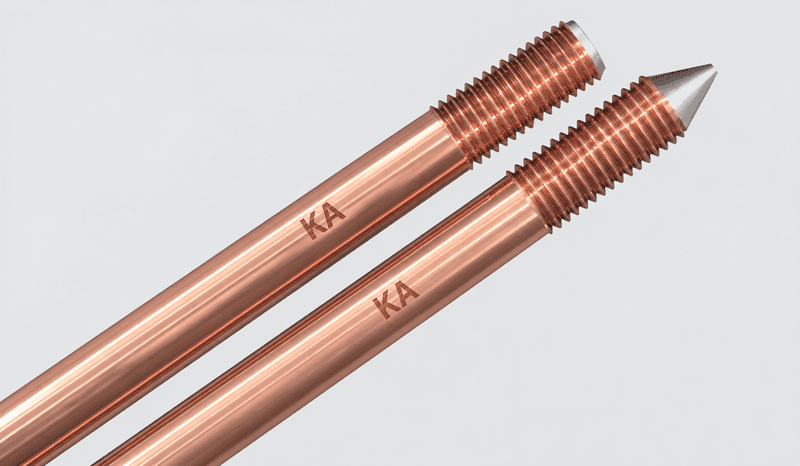
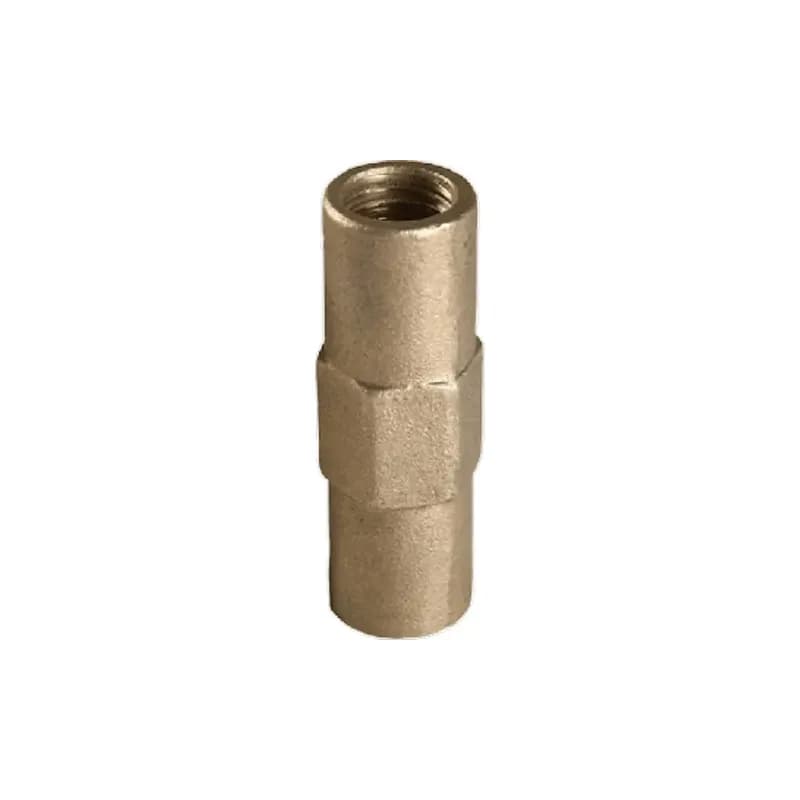
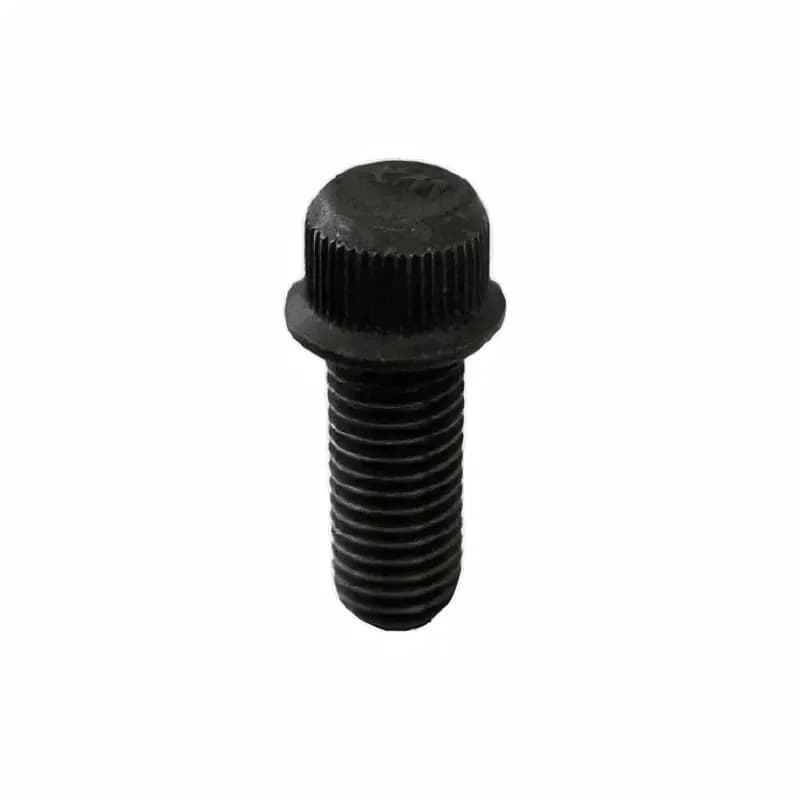
- Fit the brass coupling on the top end of the earth rod and screw the driving head into it so that the threads are not damaged by the blows.
- Hold the copper-bonded earth rod vertical and drive it with even blows from a hand or power hammer.
- For greater depth, remove the driving head, fit the next earth rod into the coupling and drive again. The ends of the earth rods meet inside the coupling.
- Once at design depth, remove the driving head, connect the earth conductor to the top of the electrode with an earth rod clamp or exothermic welding, and measure the earth resistance.
Other components: threaded copper-bonded earth rod, brass earth rod coupling and threaded driving head.
The KALOT Group threaded copper-bonded earth rod has its own pointed end and a steel core, so it drives in without a steel tip in most soils, and tips are less common in everyday practice. The steel tip is a helper part for special conditions:
Soil conditions | earth rod steel tip |
|---|---|
Soft, clay, sandy or normally compacted soil | Not needed: the pointed end of the earth rod is enough |
Soil with gravel and cobbles | Optional: protects the thread and coating at the lower end of the earth rod from abrasion |
Solid rock | Driving is not suitable: drill a borehole and install the earth rod with ground improvement material |
If you use a steel tip, fit it only to the lower end of the first earth rod; it stays in the soil with it. Unlike the tip, a driving head is almost always needed, so that the end and thread of the earth rod are not damaged under impact. If the earth rod leans or stops in rocky soil, do not force it: move to another spot.
The following standards set out the requirements for earth electrodes and their components:
IEC 62561-2 (components for earthing and lightning protection systems)
This standard sets separate requirements for earth rod joints (couplings) and driving tools: the joint must be compatible with the earth rod and strong enough to withstand the driving force; in a threaded joint no earth rod thread remains exposed after installation; and driving heads and driving tools are used according to the maker's instructions.
IEC 60364-5-54 and IEC 62305-3
They set the material and minimum dimensions of earth electrodes: for a vertical copper-bonded earth rod, a minimum diameter of 14 mm and a minimum copper coating of 250 microns. For a full comparison of standard and non-standard earth rods, see the copper-bonded earth rods page.
Installing a copper-bonded earth rod in soil
Frequently Asked Questions
What does an earth rod steel tip do?
It fits on the lower end of the copper-bonded earth rod, making driving into hard soil easier and keeping that end undamaged.
Is a steel tip always needed?
No. Our copper-bonded earth rod has a pointed end and a steel core, so in most soils it drives in without a tip. The steel tip is a helpful extra for gravelly soil.
Does the tip stay in the soil?
Yes. The tip is fixed to the lower end of the earth rod and stays in the soil with it.
Which size should I choose?
Match it to the nominal diameter of the copper-bonded earth rod: TDT 58 for 5/8" and TDT 34 for 3/4".
How many steel tips does one electrode need?
Just one, on the lower end of the first earth rod. The following earth rods join it with couplings.
Can a steel tip drive an earth rod into solid rock?
No. In solid rock you need to drill a borehole and install the earth rod with ground improvement material.
Have a Technical Question?
KALOT Group's technical experts are ready to answer your questions about lightning rods and earthing systems.