
Move your pointer over the image to zoom in
Complete Product Overview
Stainless steel earth tape (stainless steel tape) for earthing and lightning protection
Order Code: SST 252 / SST 302 / SST 353
Last updated:
Stainless steel tape for lightning protection and earthing
KALOT Group stainless steel tape is a flat stainless steel conductor used for roof lightning protection networks, down conductors and parts of the earthing system. The right grade and size of this stainless steel tape depend on the installation location and the project design.
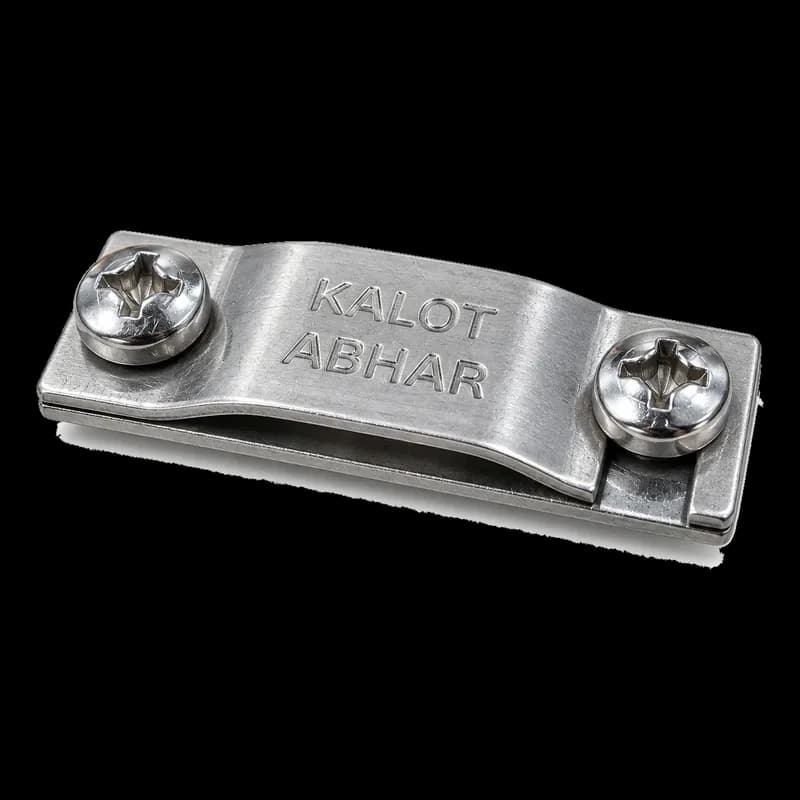
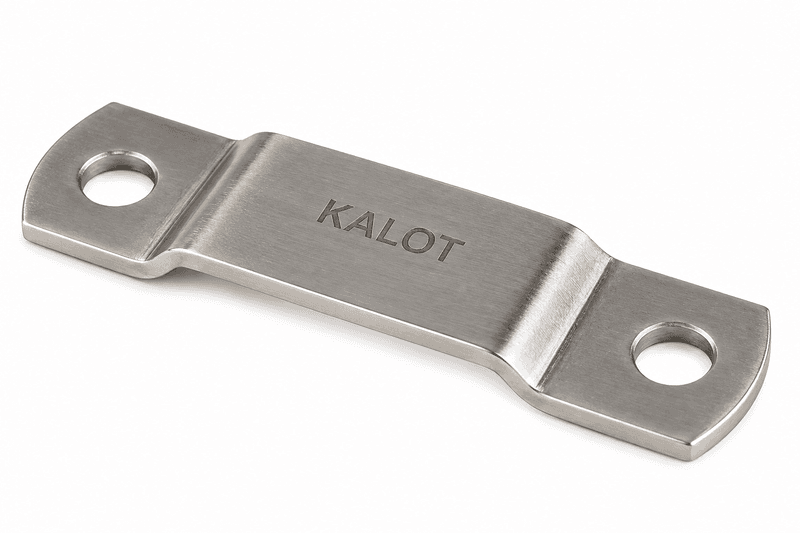
The 25×2 mm size is our main size, always in stock, and it comes in grades 304L and 316L. To fix it on walls and parapets you can use the two-piece stainless steel clamp, and for connections where conductors cross, the multi-purpose stainless steel four-way clamp. These are two examples of the fittings that match stainless steel tape in the KALOT Group range.
The 30×2 mm size comes in both grades, to order. The 35×3 mm size we supply only in grade 316L, for earthing and foundation earthing applications, to order. Buried connections on this route are made by exothermic welding, with a mould and materials matched to the material and dimensions of the tape.
The tape's high mechanical strength helps the conductor route keep its shape and integrity during installation and service. Stainless steel tape is also less attractive to thieves than copper tape, a practical advantage on routes where the conductor is within reach.
To choose the right dimensions, grade and connection method for your project, talk to our specialists.
✓ IEC 62561-2
Guide to selecting and installing stainless steel tape
The basis for choosing stainless steel tape is where it sits in the system: the roof network and down conductor, or the earthing route in concrete and soil. For parts exposed to air, grade 304L or 316L is chosen according to humidity, salinity and site conditions. In humid or saltier environments, 316L can also be the better option for down conductors. The 35×3 mm size we offer for earthing and foundation earthing comes only in grade 316L.
Before installation, review together the required cross-section, the route and bend locations, the material and size of the clamps, the connection method and access for periodic inspection. Connection details also matter wherever the tape touches other metals. The test report for the 25×2 conductor and the material analysis documents are available in the documents section of this page. When citing any report, check the dimensions and grade stated in it against the product in question.
Technical Product Information
Click to view enlarged
Feature | Value |
|---|---|
Product type | Flat stainless steel conductor (stainless steel tape) for lightning protection and earthing |
Material and grade | Stainless steel: 25 × 2 and 30 × 2 in grades 304L and 316L, and 35 × 3 in 316L with at least 2% molybdenum |
Dimensions (width × thickness) | 25 × 2, 30 × 2 and 35 × 3 mm |
Cross-section | 50, 60 and 105 mm² |
Weight per metre | 0.395 kg (25 × 2), 0.474 kg (30 × 2) and 0.829 kg (35 × 3) |
Reference standard | ASTM A240 |
Supply form | Roll |
Order code | SST 252, SST 302 and SST 353 with a grade suffix, such as SST 252-316L |
Connections | KALOT stainless steel and brass clamps in air; buried connections welded and covered |
Main application | 25 × 2 and 30 × 2 (304L or 316L): down conductors and roof networks; 35 × 3 (316L): foundation earthing, concrete to soil passage, earth rings and corrosive locations |
Stainless steel earth tape table: code, dimensions, grade and weight per metre
Order code | Width × thickness (mm) | Cross-section (mm²) | Weight per metre (kg) | Grade |
|---|---|---|---|---|
SST 252-304L | 25 × 2 | 50 | 0.395 | 304L |
SST 252-316L | 25 × 2 | 50 | 0.395 | 316L |
SST 302-304L | 30 × 2 | 60 | 0.474 | 304L |
SST 302-316L | 30 × 2 | 60 | 0.474 | 316L |
SST 353-316L | 35 × 3 | 105 | 0.829 | 316L |
We write tape dimensions as "width × thickness". In the market the same size is also quoted as "thickness by width", so 25 × 2 tape may be called "2 by 25" tape. We supply stainless steel tape in rolls. Our products are continually improved and some dimensions may be updated, so please confirm the final dimensions with our specialists before you buy. They will also explain the stock and delivery time of each size and grade when you enquire.
Dimensions, rolls and code table
Download dimensions, roll and code table (PDF)
Structure of stainless steel tape: 304L and 316L
Stainless steel tape is a flat, one-piece conductor of austenitic stainless steel (chromium-nickel) with no coating, so there is nothing on it to wear away with time, cutting or drilling. 304L is for normal air, and 316L, with at least 2% molybdenum, is for humid, coastal and industrial air and for soil, concrete and corrosive locations. The letter L means low carbon: this steel also stays resistant to intergranular corrosion at the weld. We supply the tape in rolls: 25 × 2 and 30 × 2 in both grades, and 35 × 3 only in 316L.
Click to view enlarged
Applications of stainless steel tape in earthing and lightning protection
- Down conductor: 25 × 2 or 30 × 2 tape in 304L, or in 316L for humid, coastal and industrial air, on walls and columns, with the two-piece stainless steel clamp or the one-piece stainless steel STS clamp, and a brass disconnector above ground level. To get to know the components, see the lightning protection system and its components.
- Roof network: on parapets and roofs, with the square four-way brass clamp at crossings and the two-way tape-to-tape clamp at in-line joints.
- Next to aluminium, zinc and galvanised parts: on roofs and metal facades, and next to aluminium and galvanised gutters, railings and sheets, where copper is not used. Make the connection to an aluminium or galvanised part only in air, for example with the BBCS tape-to-metal plate bonding clamp, and apply an anti-corrosion coating over the joint.
- Foundation earthing and the concrete to soil passage: 35 × 3 tape in 316L connects directly to the reinforcing bars inside the foundation concrete and passes from the concrete into the soil. For foundation earthing, see the earthing system based on foundation earthing.
- Earth ring and corrosive soil: an earth ring around the building with 35 × 3 tape in 316L, especially next to reinforced concrete foundations and in coastal areas. In saline soil, chloride also speeds up the corrosion of stainless steel, so use only 316L there and make the connections welded and covered. This tape forms a same-material system with a grade 316 stainless steel earth rod.
- Lightning protection masts and pipes: fix the tape to masts and pipes with the stainless steel hose clamp.
Foundation earthing and earth ring with 316L tape, concrete to soil passage
Download the foundation earthing and earth ring schematic with 316L tape (PDF)
Roof network and down conductor with stainless steel tape
Download roof grid and down conductor schematic (PDF)
Stainless steel tape connection modes with KALOT clamps
Download connection modes (PDF)
Stainless steel tape installation steps
- Choose the size and grade from the installation location: 25 × 2 or 30 × 2 in 304L or 316L for air, and 35 × 3 in 316L for soil and concrete.
- Unroll the tape without twisting or folding it, and make the bends gentle. Cut the tape with a tool that has not touched ordinary steel, so that no filings stay on the tape.
- Fixing on walls: fix the 25 × 2 and 30 × 2 tapes with the two-piece stainless steel clamp or the one-piece stainless steel STS clamp, and do not drill the tape to install it. IEC 62305-3 recommends a fixing spacing of 1 m on vertical runs up to 20 m high and on horizontal surfaces, and 0.5 m on horizontal runs along walls and vertical runs above 20 m. For ESE air terminals, NF C 17-102 requires three clamps per metre.
- Stainless steel expands with heat (1.6 mm per metre for every 100 °C). On long roof runs, fit an expansion piece every 10 m on soft coverings such as bituminous membrane and every 15 m on hard surfaces. A hand-made bend is not enough for this.
- Secure crossings and tees with the square four-way clamp and in-line joints with the two-way tape-to-tape clamp.
- On each down conductor, above ground level, fit a brass disconnector that opens only with a tool.
- Foundation earthing: inside the foundation concrete, connect 35 × 3 tape in 316L directly to the reinforcing bars. To weld to the reinforcing bars, get the structural designer's permission and make the weld at least 50 mm long. Then bring the tape out of the concrete into the soil.
- Dig the earth ring trench 70 to 80 cm deep and 1 m from the outer walls. In cold regions, lay the tape below the frost depth. IEC 62305-3 requires an earth ring at least 0.5 m below ground and 1 m from the outer walls, Topic 13 places a horizontal electrode at a depth of 0.5 to 0.8 m, and the earthing system installation guideline requires a depth of at least 0.7 m. Lay the tape on edge in the trench and backfill with soft soil free of stones and rubble.
- Weld buried connections and apply an anti-corrosion coating over the weld. Do not bury a clamp in soil. Do not join stainless steel to another metal in soil: make that connection inside the earth pit or above ground.
- After installation, measure the continuity of the route and test the earth resistance with the disconnector open. Record the result with the date in the earthing system file.
Download the installation steps (PDF)
Installation tools
A drill and clamp fixing screws, a spanner, a tape bender, shears or a saw not used on ordinary steel, welding equipment for buried connections, a tape measure, a continuity tester (milliohmmeter), an earth resistance tester and a camera to record the route before concreting and backfilling the trench.
Checking continuity and connections, and inspection
Connections inside concrete and trenches cannot be seen after concreting and backfilling, so check the tape route and every connection before that, and record them with drawings and photographs. At each inspection, check that the clamps are tight and the connections on the building are sound, and measure the earth resistance with the disconnector open. IEC 62305-3:2010 recommends maximum inspection intervals for a lightning protection system: for protection levels I and II, a visual inspection every year and a complete inspection every 2 years; for protection levels III and IV, a visual inspection every 2 years and a complete inspection every 4 years. For sensitive places, such as buildings with sensitive electronic systems, office and commercial buildings and places where many people gather, the same standard recommends a complete inspection every year and also asks for a visual inspection at least once a year. For the measurement method, see how earth terminal resistance is measured.
Choosing stainless steel tape and asking for a price
To ask for a stainless steel tape price, send our specialists the size, grade (304L or 316L), length, application (down conductor, roof network, foundation earthing or earth ring) and the clamps and accessories you need (stainless steel wall clamp, four-way clamp, disconnector, hose clamp, stainless steel earth rod and earth pit). If you also send the earthing drawing or lightning protection design of the project, our specialists at KALOT Group will give you a list of tape and accessories with the current price.
Click to view enlarged
Austenitic stainless steel carries a thin protective layer that forms again after scratching, and it has no coating to wear away with time or cutting. Stainless steel tape is used in air next to aluminium, zinc and galvanised parts, and sheds no copper particles onto them. Its scrap value is also lower than copper's. In soil, use only 316L with at least 2% molybdenum: this tape passes from foundation concrete into soil and stays stable next to reinforced concrete foundations, where galvanised material corrodes. Keep two points in mind. The resistivity of stainless steel is more than 40 times that of copper, so where high fault current and conductivity matter, as in a substation earthing grid, use copper tape. And in anaerobic clay soil stainless steel corrodes too, so the design sets the electrode material. For conductor and electrode materials, see earth electrode materials.
Durability of stainless steel tape against atmospheric corrosion
Stainless steel corrodes far more slowly in open air than other metals. In a 20-year field test, the relative durability of 316 stainless steel against atmospheric corrosion was about 6,661 times that of plain steel, and that of 304 about 2,228 times. The same index is 17 for copper and 5.2 for zinc, the coating metal of galvanised steel. These figures are relative indices, not the service life of the tape in years.
Download the chart of relative metal durability against atmospheric corrosion (PDF)
Advantages of KALOT stainless steel tape
- No coating: there is no coating to be damaged by time, cutting or drilling.
- Next to aluminium and galvanised parts: used in air next to aluminium, zinc and galvanised parts.
- 316L for soil: at least 2% molybdenum, for foundation earthing, the concrete to soil passage and corrosive soils.
- Lower scrap value than copper: for places where theft of copper conductors is a concern.
- Test reports: down conductor test of a 25 × 2 sample at the Niroo Research Institute and chemical composition analysis reports from the Razi Metallurgical Research Centre.
- Connection with KALOT products: stainless steel and brass wall clamps, four-way clamps, disconnectors and hose clamps, and stainless steel earth rods.
Stainless steel, copper or galvanised tape? Choosing by installation location
Installation location | Our recommendation | Note |
|---|---|---|
Down conductors and roof grids | 25 × 2 or 30 × 2 stainless steel tape (304L or 316L) or copper tape | Stainless steel where you do not want copper |
Next to aluminium, zinc and galvanised parts, in air | Stainless steel tape or tinned copper tape | Connect only in air and covered; tinned tape below the galvanised or aluminium part |
Foundation earthing and the concrete to soil passage | 35 × 3 stainless steel tape (316L) | Galvanised tape does not pass from concrete into soil |
Earth ring in normal soil | Copper tape or 35 × 3 stainless steel tape (316L) | No 304L in soil |
Saline soil and coastal and industrial areas | 35 × 3 stainless steel tape (316L) | Chloride increases corrosion; no 304L; connections welded or sealed |
Substation earthing grid and high fault current | Copper tape | The resistivity of stainless steel is more than 40 times that of copper |
All-galvanised system | Galvanised tape | In soil, do not connect galvanised to stainless steel |
The rules in this table come from IEC 62561-2:2018, IEC 62305-3:2010, IEC 60364-5-54:2011 and Topic 13 of the National Building Regulations. The final size is set by the design and the fault current calculation. For conductor materials, see earth electrode materials.
See these products too
Product | When |
|---|---|
Fixing 25 × 2 and 30 × 2 tapes on walls and parapets. | |
Fixing 25 and 30 mm tapes on walls. | |
Tape crossings and tees on roofs. | |
Down conductor test point above ground level. | |
Fixing tape to masts and pipes. | |
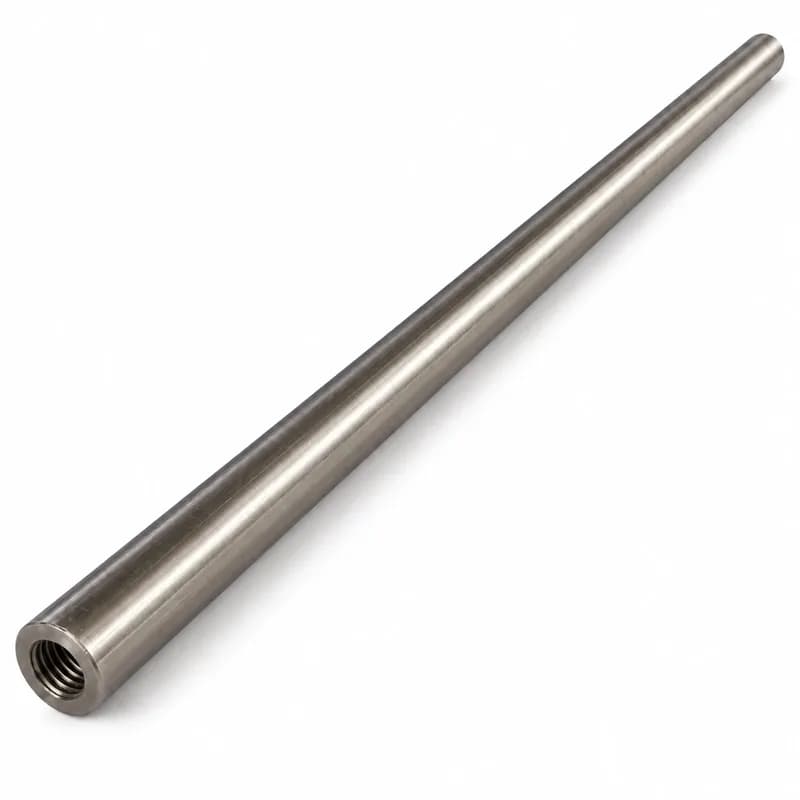
Same-material grade 316 electrode for corrosive soils. | |
For high fault current and substation earthing grids. | |
For places where a copper system meets galvanised parts in air. | |
For all-galvanised systems and inside concrete. | |
Earth pit with a stainless steel bar. |
IEC 62561-2:2018 (lightning protection system components: conductors and earth electrodes) sets the minimum cross-section of stainless steel tape for air termination conductors and down conductors at 50 mm² with a recommended thickness of 2 mm, and recommends 75 mm² where thermal and mechanical considerations matter. For this tape it requires at least 16% chromium, at least 8% nickel and at most 0.08% carbon. For an earth electrode, it requires stainless steel tape of at least 100 mm² with a thickness of 2 mm, and it sets the maximum resistivity of stainless steel, for conductors and electrodes, at 0.80 µΩm.
IEC 62305-3:2010 (protection of structures against lightning) requires the same minimum cross-section for stainless steel tape. It accepts stainless steel for a conductor passing from foundation concrete into soil and for an electrode next to reinforced concrete foundations, permits its direct connection to reinforcing bars, and points out that stainless steel also corrodes in anaerobic clay soil. It recommends a tape support spacing of 1 m on vertical runs up to 20 m and on horizontal surfaces, and 0.5 m on horizontal runs along walls and vertical runs above 20 m.
IEC 60364-5-54:2011 (earthing arrangements and protective conductors) requires 90 mm² with a thickness of 3 mm for a stainless steel tape earth electrode, and for stainless steel in soil it specifies at least 16% chromium, at least 5% nickel, at least 2% molybdenum and at most 0.08% carbon. It does not accept soldered joints in protective conductors, and it asks that joints of two different metals are not in contact with soil.
Topic 13 of the National Building Regulations and the guideline for installing earthing systems in buildings require 90 mm² with a thickness of 3 mm for a stainless steel tape earth electrode. The Topic 13 table on metal corrosion in bonding considers smaller galvanised steel next to larger stainless steel in soil to be unsuitable.
NF C 17-102:2011 (ESE air terminals) requires a down conductor to be fixed with three clamps per metre, does not accept drilling it for fixing and requires conductors to be joined with clamps of the same material.
Stainless steel earthing tape: section and use
Documents & Downloads
Catalogues & datasheets
Drawings & schematics
- Stainless steel tape dimensional drawing and code tableLanguage: Persian (opens in a new tab)
- Foundation earthing and earthing ring schematic with 316L stainless steel tapeLanguage: Persian (opens in a new tab)
- Roof network and down conductor schematic with stainless steel tapeLanguage: Persian (opens in a new tab)
- Stainless steel tape connection modesLanguage: Persian (opens in a new tab)
- Stainless steel tape installation stepsLanguage: Persian (opens in a new tab)
Certificates & test reports
- IEC 62561-2 conformity test report for 25×2 mm stainless steel down conductor tape | Niroo Research Institute 2017Persian · 2017
- Chemical composition test report for 304L stainless steel down conductor tape | Razi Metallurgical Research Centre 2025Persian · 2025
- Chemical composition test report for 304L stainless steel down conductor tape | Razi Metallurgical Research Centre 2018Persian · 2018
- Chemical composition test report for 304L stainless steel down conductor tape | Razi Metallurgical Research Centre 2026Persian · 2026
- Chemical composition test report for 316L stainless steel down conductor tape | Razi Metallurgical Research Centre 2024Persian · 2024
- Chemical composition test report for 304L stainless steel down conductor tape | Razi Metallurgical Research Centre 2019Persian · 2019
- Chemical composition test report for 304L stainless steel down conductor tape | Razi Metallurgical Research Centre 2021Persian · 2021
- Chemical composition test report for 304L stainless steel down conductor tape | Razi Metallurgical Research Centre 2023Persian · 2023
- Chemical composition test report for 304L stainless steel down conductor tape | Razi Metallurgical Research Centre 2024Persian · 2024
Frequently Asked Questions
What is stainless steel earth tape, and how is it used in lightning protection and earthing?
Stainless steel earth tape is a flat, one-piece stainless steel conductor used as a down conductor, in roof networks, as a foundation earth conductor and as an earth ring. We supply it in three sizes: 25 × 2 and 30 × 2 in 304L or 316L for use in air, and 35 × 3 in 316L for soil and concrete.
Stainless steel tape table: what are the dimensions and weight per metre?
One metre of 25 × 2 tape (50 mm²) weighs 0.395 kg, one metre of 30 × 2 tape (60 mm²) weighs 0.474 kg and one metre of 35 × 3 tape (105 mm²) weighs 0.829 kg. You will find the code, dimensions, grade and weight of each size in the table on this page.
Stainless steel tape 304 or 316: which grade is right for earthing?
Grade 304L suits normal air, meaning down conductors and roof networks, and we also supply the 25 × 2 and 30 × 2 tapes in 316L. For soil, for the passage from concrete to soil and for coastal and industrial areas, use 316L: IEC 60364-5-54 requires at least 2% molybdenum in a stainless steel electrode, and the molybdenum content of 304L does not reach that level.
Can stainless steel tape be buried in soil to make an earth ring?
Yes, with 35 × 3 tape in 316L: this tape has the size and composition the standards require for an earth electrode. The 25 × 2 and 30 × 2 tapes, in any grade, are for down conductors and roof networks and are not used for burial in soil.
Which is better, stainless steel tape or copper tape?
Neither is better everywhere. Copper tape conducts far better and is the stronger choice for high fault current and substation earthing grids: the resistivity of stainless steel is more than 40 times that of copper. Use stainless steel tape where you do not want copper: next to aluminium and galvanised parts, where theft of copper conductors is a concern, and for the passage from foundation concrete to soil.
Stainless steel tape or galvanised tape?
Use galvanised tape only in an all-galvanised system and inside concrete: it must not pass from concrete into soil. For the passage from concrete to soil, next to reinforced concrete foundations and in corrosive soils, 35 × 3 tape in 316L is the right choice. In soil, do not connect galvanised tape to stainless steel tape.
Is 25 × 2 stainless steel tape enough for a down conductor?
Yes. IEC 62561-2 sets the minimum cross-section of stainless steel tape for a down conductor at 50 mm² with a thickness of 2 mm, and 25 × 2 tape meets exactly that, while 30 × 2 tape at 60 mm² offers a larger cross-section. Where thermal and mechanical considerations matter, the same standard recommends 75 mm². For such a route, please coordinate 35 × 3 tape and its clamps with our specialists.
How do we connect stainless steel tape to reinforcing bars, an earth rod or copper tape?
Inside the foundation concrete, connect 35 × 3 tape in 316L directly to the reinforcing bars. Make the connection to a stainless steel earth rod of grade 316 inside the earth pit. Make the connection to copper tape or copper conductor in air, with a brass or stainless steel clamp, and seal the joint in corrosive and coastal locations. Never join two different metals in soil.
Which clamp suits stainless steel tape, and how far apart should the clamps be?
Fix the 25 × 2 and 30 × 2 tapes with the two-piece stainless steel clamp or the one-piece stainless steel STS clamp, and do not drill the tape to install it. IEC 62305-3:2010 recommends a support spacing of 1 m on vertical runs up to 20 m high and on horizontal surfaces, and 0.5 m on horizontal runs along walls and vertical runs above 20 m. For ESE air terminals, NF C 17-102 requires three clamps per metre. The 35 × 3 tape is mostly installed inside concrete and soil.
Does stainless steel tape rust or stain?
Stainless steel forms its own protective layer and does not rust in normal air. Near the sea and in industrial air, a pale brown stain may appear on 304L. 316L resists this better, so use 316L in those places. Cut the tape with a tool that has not touched ordinary steel, so that its filings do not rust on the tape.
Is stainless steel tape magnetic? How can we tell 304 from 316?
Austenitic stainless steel is essentially non-magnetic, but after cold rolling and bending it may become slightly magnetic, so a magnet does not reveal the grade. Chemical composition analysis does. The analysis reports from the Razi Metallurgical Research Centre for our 304L and 316L samples are in the documents section of this page.
Is stainless steel tape suitable for ESE air terminals?
Yes. The 25 × 2 and 30 × 2 tapes have the cross-section a down conductor needs. NF C 17-102 requires an ESE down conductor to be fixed with three clamps per metre, does not accept drilling it for fixing and requires conductors to be joined with clamps of the same material. So in this system, choose stainless steel clamps for stainless steel tape as well. See also our ESE air terminals, such as the ACTIVE 1D+ ESE air terminal.
Is stainless steel tape supplied in rolls?
Yes, we supply stainless steel tape in rolls. Just tell us the size, grade and length you need when you enquire.
How is the price of stainless steel earth tape determined?
The price depends on the grade (304L or 316L), size and length. 316L costs more than 304L because it contains more nickel and molybdenum. Send our specialists the size, grade, length, application and clamps you need, and they will give you the current price along with a list of accessories.
Have a Technical Question?
KALOT Group's technical experts are ready to answer your questions about lightning rods and earthing systems.