
A new generation of ESE air terminalsFranklin France ESE Air Terminals
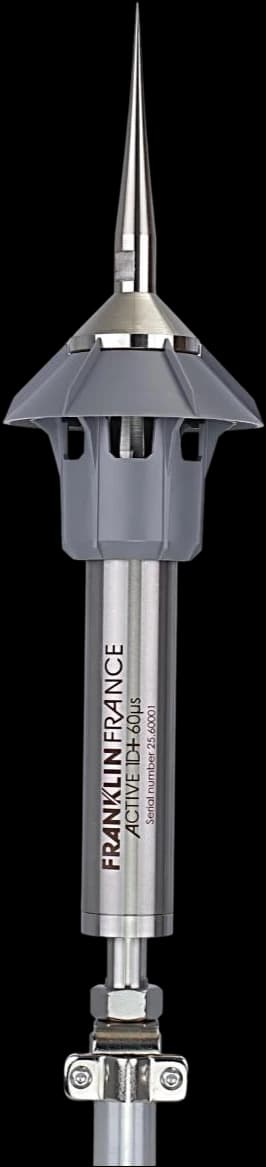
Franklin France ACTIVE 1D+ ESE air terminal
Early streamer emission (ESE) air terminal
The ACTIVE 1D+ ESE air terminal by Franklin France comes in four models with ΔT of 12, 25, 45 and 60 microseconds, with test reports and Bureau Veritas inspection certificates, and is supplied by KALOT Group.
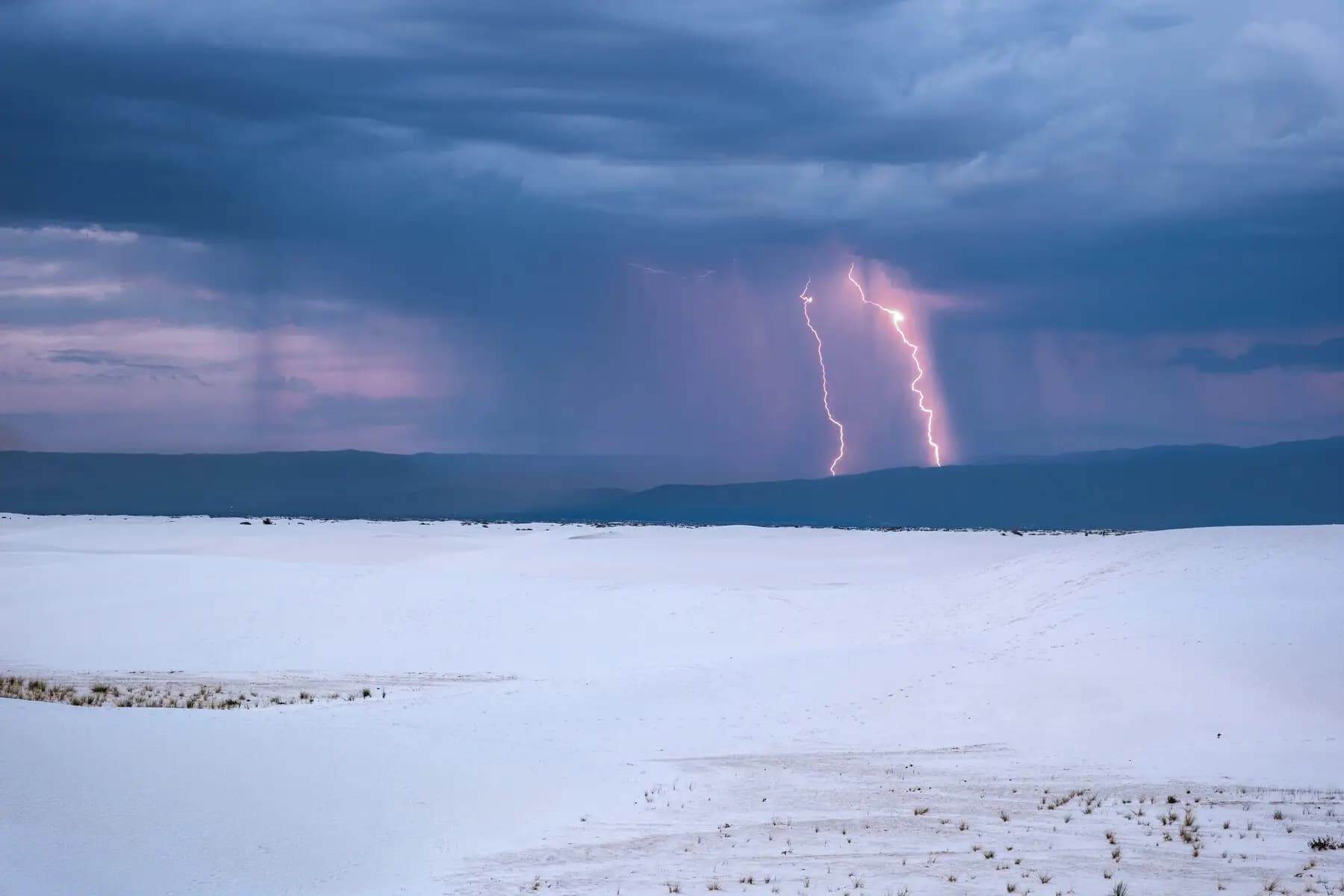
 Early Streamer Emission

An engineering heritage in lightning protection
ACTIVE 1D+ is made by Franklin France and is designed, produced and assembled in France.
Made in France
Designed, produced and assembled in France
Powered by the storm’s natural field
No battery and no external power supply
Independent inspection
Test sequence inspected by Bureau Veritas
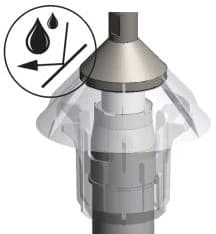
How it works: ACTIVE 1D+
The priming system is activated by the storm's natural field and needs no battery, control cable or external power supply to work.
Polarisation of the internal system
As the storm's electric field rises, the internal system connected to the air terminal tip takes on a positive or negative polarisation.
High-voltage pulse generation
The natural corona effect feeds the oscillating circuit, which produces high-voltage pulses at the same time as the precursor phenomena of lightning.
Field strengthening at the receiving tip
The voltage produced strengthens the electric field and the ionisation around the tip.
Earlier formation of the upward leader
The upward leader forms at the right moment, earlier than from a passive air rod, so that it connects with the cloud's downward leader and the lightning is captured at the designed point.
- What ΔT means: it is the average difference in upward leader start time between an ESE air terminal and a reference conventional air rod under standard test conditions. The protection radius is not set by this figure alone; installation height and protection level also enter the calculation.
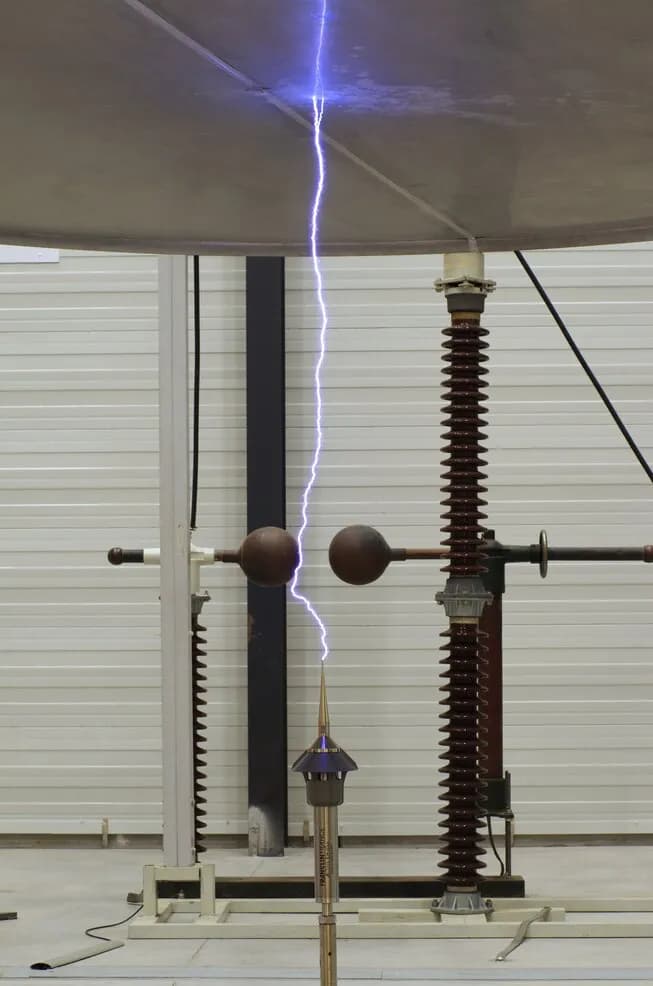
Recorded tests and assessments
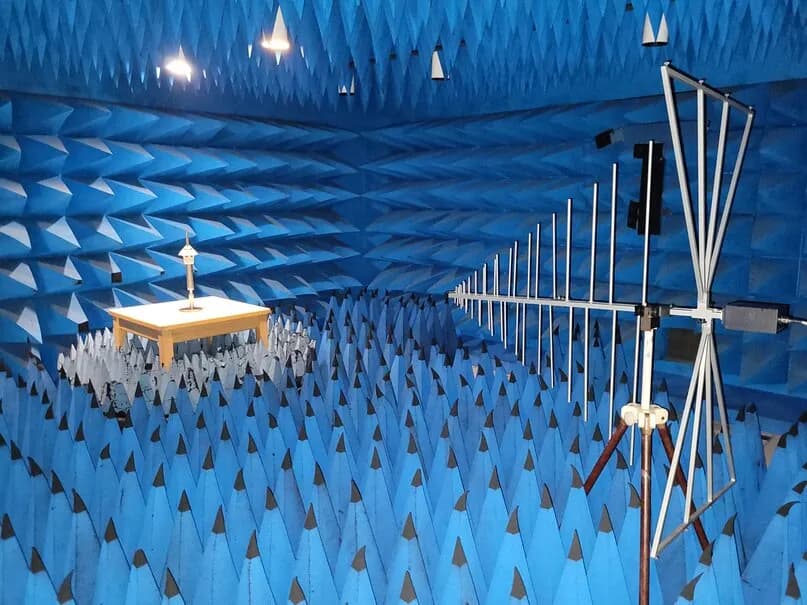
The Annex C test sequence was carried out on a single sample, and the product assessment covers repeatability of performance, environmental durability, impulse current withstand and electromagnetic compatibility.
Specifications, tests and protection radius
| Brand / manufacturer | Franklin France |
|---|---|
| Model | ACTIVE 1D+, four models: 12, 25, 45 and 60 µs |
| Air terminal type | ESE air terminal (Early Streamer Emission) |
| Advance time ΔT | 12, 25, 45 or 60 µs (depending on the model) |
| Protection radius | In line with NF C 17-102:2011, clause §5.2.3.2 |
| Performance check | With a dedicated tester; the tester is not in the product package |
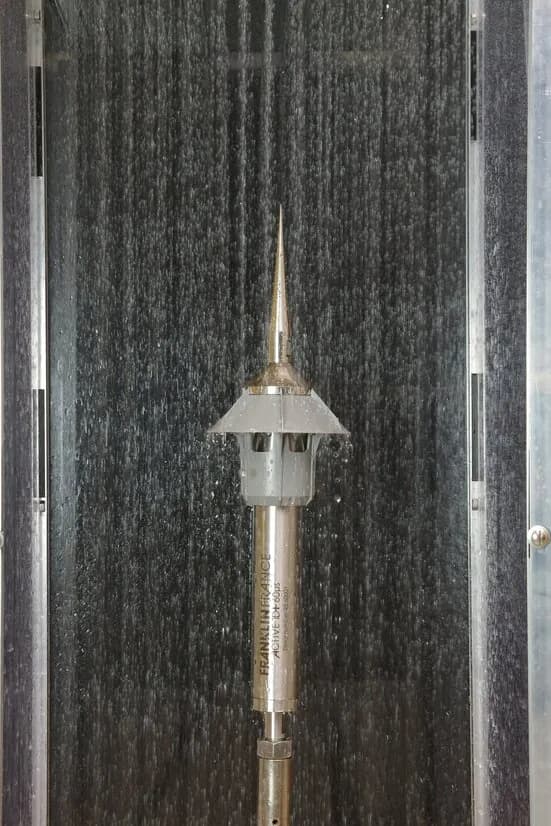
| Weather resistance | Insulation assured by a special deflector; tested under a flow of more than 56 L/min/m² |
| KALOT warranty | 18 months |
| Receiving tip material | Nickel-plated copper |
| Body material | 304L stainless steel |
| Deflector material | Polycarbonate |
| Internal insulation | PTFE |
| Connection to the extension mast | M20 male thread with lock nut |
| Net weight | About 2.2 kg |
| Gross weight | 2.630 kg |
| Overall height | 490 mm |
| Maximum air terminal head diameter | Ø120 mm |
| Body diameter | Ø42 mm |
| Lower connection section diameter | Ø20 mm |
Standards and inspection
- Product standard (ESE air terminal)
- NF C 17-102:2011, Annex C
- Third-party inspection
- Bureau Veritas, 25 µs certificate24603101/3/1.3.R · 60 µs certificate: 24603101/3/1.1.R
- Lightning protection system design standard
- IEC 62305reference for system design; the product itself conforms to NF C 17-102
Product test status
- Marking testCompletedlaser engraving; report LiRi-EMA-22112024
- Mechanical testPassedNF EN 62561-2 / NF C 17-102; report LiRi-EM-22112024
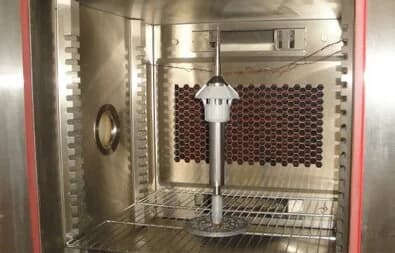
- Environmental testPassedNF EN 60068-2-52 and NF EN ISO 22479; report LCIE 24449057-806976
- Electrical testPassed100 kA, 10/350 µs; report CITEL LER-24-102-RE
- ESE performance testPassedreport LiRi-HT-13022025
- EMC testReport availableNF EN 61000-6-2 and NF EN 61000-6-3; report XP30525433
Manufacturer certificates
- quality management system · ISO 9001:2015; AFNOR 2022:102639.9
Choosing a model does not replace system design
A larger ΔT is not automatically the better engineering choice for every project. The model must suit the risk level, the size and height of the structure, the points exposed to strikes, the down conductor routes and the layout of the earthing system.
- Assess the risk and set the protection level
- Model the protected volume on the real geometry of the structure
- Design the down conductors, bonding and earthing system
- Check the separation distance and internal protection requirements

Catalogues and documents
Catalogues & datasheets
- Download catalogueLanguage: Persian (opens in a new tab)
- Download 12 µs datasheetLanguage: English · Version: FT149EN.QLF.00 (opens in a new tab)
- Download the Persian 25 µs datasheetLanguage: Persian · Version: FT148EN.QLF.00 (Persian translation) (opens in a new tab)
- Download the Persian 45 µs datasheetLanguage: Persian · Version: FT147EN.QLF.00 (Persian translation) (opens in a new tab)
- Download the Persian 60 µs datasheetLanguage: Persian · Version: FT146EN.QLF.00 (Persian translation) (opens in a new tab)
- Download the Persian brochureLanguage: Persian · Version: 1 (opens in a new tab)
- Franklin France general catalogue of lightning and overvoltage protection products 2026Version: CP001FR.QLF.07 (opens in a new tab)
Certificates & test reports
- View 12 µs inspection certificateMultilingual · Revision 0
- View 25 µs inspection certificateMultilingual · Revision 0
- View 45 µs inspection certificateMultilingual · Revision 0
- View 60 µs inspection certificateMultilingual · Revision 0
Frequently Asked Questions
What is the ACTIVE 1D+ air terminal and what is it used for?
ACTIVE 1D+ is an active air terminal of the ESE type, designed for use in a lightning protection system. The right model should be chosen from the required protection level, the project conditions and the system design.
How do the ACTIVE 1D+ models differ?
ACTIVE 1D+ models come with different ΔT values, and this difference affects the protection area that can be calculated when designing the system. The model should be chosen according to the dimensions of the structure, the protection level and the project requirements.
Does the ACTIVE 1D+ air terminal comply with NF C 17-102?
ACTIVE 1D+ models are evaluated to NF C 17-102:2011. For final reference on a project, it is best to check the model and the test certificate for that specific unit.
What information is needed to choose the right ACTIVE 1D+ model?
To choose the right model, details such as the installation height, the dimensions and use of the structure, the required protection level and the site conditions need to be reviewed. The final choice is best based on the technical design of the lightning protection system.
Is a tester supplied with the ACTIVE 1D+?
No. According to the manufacturer's datasheet, performance is checked with a dedicated tester, which is not included with the device. For on-site testing, the manufacturer specifies the AFV0050TT wired tester. The test can be done by taking the air terminal down, or with the AFV0087PT telescopic test pole up to a height of about 8 m without taking the device down.
What does the ACTIVE 1D+ protection radius depend on?
According to the manufacturer's brochure, the protection radius (Rp) depends on the ΔT advance time of the chosen model, the protection level LPL (I to IV) and the height h between the air terminal tip and the highest point to be protected. For example, at a height of 5 m and protection level I, the protection radius is 28 m for the 12 µs model and 79 m for the 60 µs model. The full table for each model is in the technical information section, and the final choice should be based on the protection system design.
Have a Technical Question?
KALOT Group's technical experts are ready to answer your questions about lightning rods and earthing systems.