KALOT Group
This translation is an AI-assisted draft pending human review. It is not indexed for search yet.Read the reviewed Persian original

Earthing & Bonding

Electrical safety starts where you often cannot see it: a reliable path for unwanted currents, and an equipotential network that prevents dangerous voltage differences from arising between metal parts.

Earthing and bonding are two complementary but different parts of an electrical safety system. The earthing system carries fault currents and unwanted charges to earth along a controlled path, while electrical bonding connects conductive and metal parts to reduce potential differences and the hazard of touch voltage. Working together, the two can protect human lives, sensitive equipment, facilities and the continuity of your operations.

An effective earthing system takes more than installing an earth rod or digging an earth pit. Soil resistivity, fault currents, the type and arrangement of electrodes, corrosion conditions, the continuity of connections and the control of touch and step voltages must all be considered in the design and installation of the earthing system. Correct electrical bonding and regular earth resistance measurement also play an important part in keeping the system reliable.

In this section, drawing on more than fifty years of engineering and project experience, we at KALOT share practical guidance on the design principles, installation methods, equipment selection, measurement, inspection and maintenance of earthing and bonding systems: knowledge that supports more accurate decisions and a safer environment.

Articles in this section

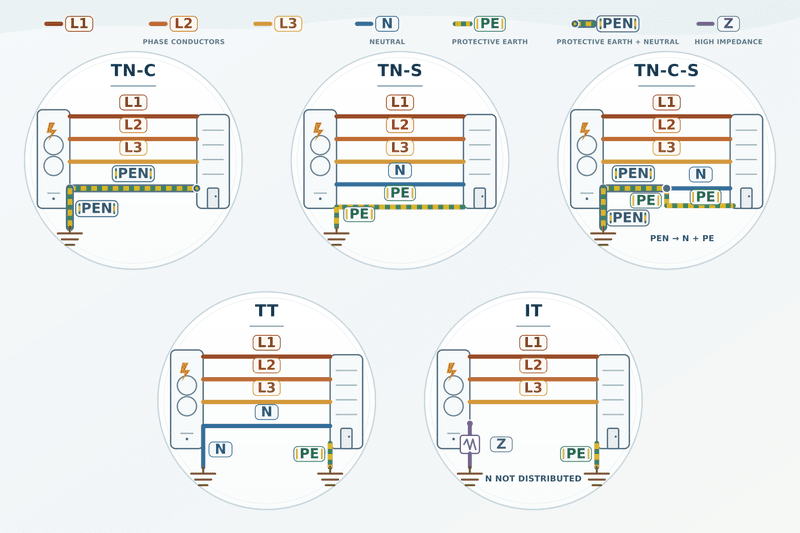
Earthing and Its TypesEarthing | Earth termination systemWhat is soil resistivity and how is it measured?What is soil resistivity (ρ)? Unit, table of values and influencing factorsWhat earth resistance is required for different applications?How is earth termination resistance measured? The three-point, Wenner and Schlumberger methodsEarth electrode and earth pit resistance formulas to BS 7430 (with a worked example)How to choose an earth electrode material: copper, copper-bonded, galvanised and stainless steel earth rods comparedWhat Is a Foundation Earth? Installation and Bonding Drawing to DIN 18014 and BS 7430What Is Protective Earthing vs. Electrical (Functional) Earthing?How are protective earthing system specifications determined? Touch voltage, disconnection time and earth resistanceHow are the specifications of an electrical earthing system determined? Transformer neutral earthing, earthing conductor and resistanceWhat Are Bonding and Equipotentialisation, and How Are They Carried Out in Earthing and Lightning Protection?What are the standards for designing and installing earthing systems?What is a TN-S system? Structure, protection condition, benefits and usesWhat is a TN-C system? PEN conductor, limitations and risksWhat Is a TN-C-S System? PEN Split, Conditions and UsesWhat Is a TT System? Local Earth Electrode and Residual Current DeviceWhat Is an Electrical Continuity Test? A Guide to Testing Protective Conductors and BondingWhat Is an IT Earthing System? Isolated Supply and Insulation MonitoringTN-S, TN-C, TN-C-S, TT and IT Earthing Systems Compared: A Practical Selection Guide