
Move your pointer over the image to zoom in
Complete Product Overview
Galvanised steel round wire for foundation earthing and lightning protection
Order Code: RWG 010 · RWG 012
Last updated:
Galvanised earthing wire from KALOT Group, known in the trade as "round wire", is a solid 10 mm round steel conductor with a hot-dip galvanised coating. We use it mostly in foundation earthing: before the concrete pour, the wire runs as a closed ring over the foundation reinforcement and is clamped to the reinforcing bars, so that together with the continuous foundation reinforcement it forms the building's earth electrode and reaches the main earthing terminal. In a lightning protection system, the same wire serves as down conductor and roof mesh conductor, and it is also used for earth rings and for bonding structures and metal parts.
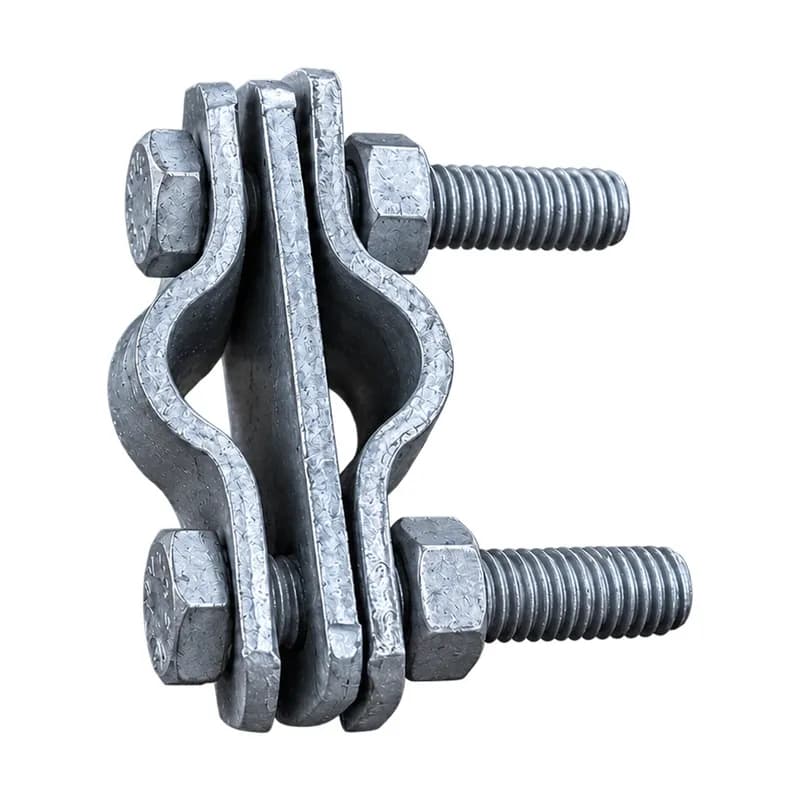
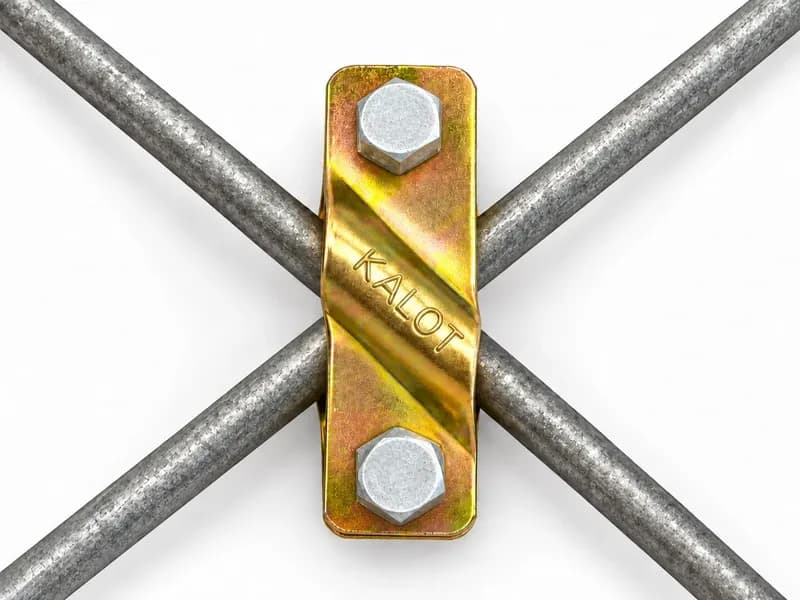
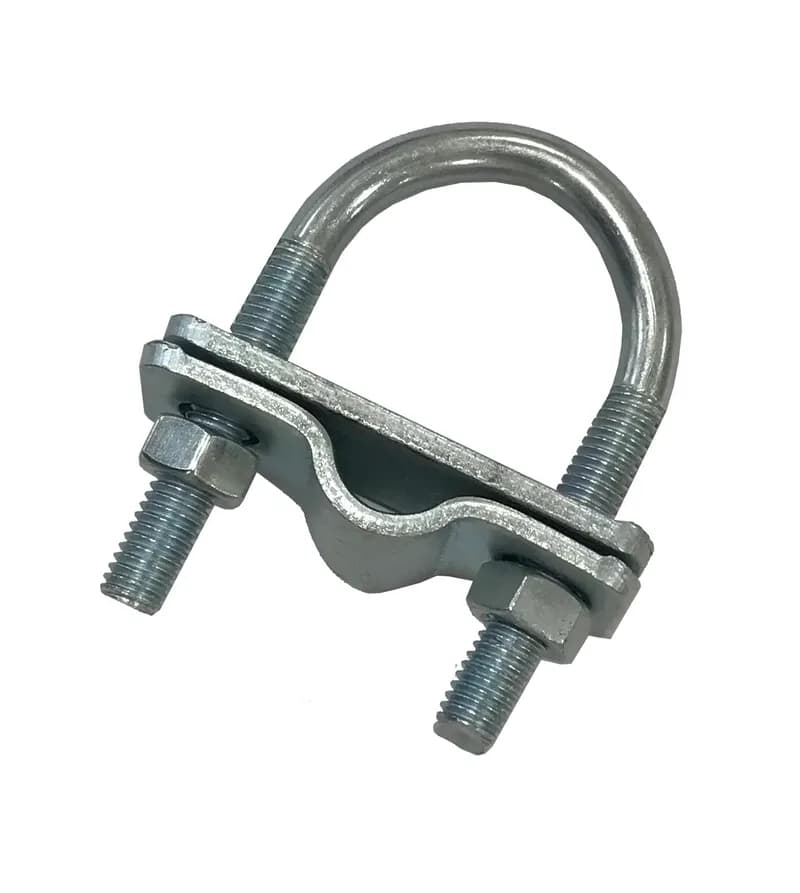
We supply galvanised wire under code RWG 010 in coils of about 37 kg, and 12 mm diameter on request. We also offer its matching galvanised clamps: the clamp for connecting galvanised round wire to reinforcing bar, the galvanised cross clamp, the galvanised U clamp and the foundation earthing and bonding clamp. So from foundation to roof you have one integrated galvanised steel system with no place for copper and brass. We bring the foundation tails up inside the concrete or wall to the inside of the building or above ground level, so that galvanised wire never passes directly from concrete into soil.
From foundation to roof, one galvanised system
To choose and install galvanised wire, weigh up three things: the conductor's role in the design (foundation electrode, down conductor, roof mesh or earth ring in soil), where it goes (in concrete, on walls and roofs or in soil) and the metals it connects to. Inside concrete, galvanised wire is compatible with reinforcing bar; outside concrete, with galvanised clamps and earth rods. It is not used alongside copper and brass.
- Round steel conductor, 10 mm, 78 mm², with a 70 micron hot-dip galvanised coating
- Foundation electrode and reinforcement bonding, installed before the concrete pour
- Down conductor and roof mesh of the lightning protection system
- Same material as KALOT galvanised clamps and earth rods; supplied in coils
Foundation electrode ring
The wire runs as a closed ring on the lowest reinforcement layer, along the outer edge of the foundation, and is clamped to the reinforcing bars at least every 2 m. After the pour, at least 5 cm of concrete surrounds it on all sides, and together with the continuous foundation reinforcement it becomes the building's earth electrode.
One diameter for every role
We chose the 10 mm diameter based on the requirements of IEC 60364-5-54, IEC 62305-3:2010 and Topic 13 of the Iranian National Building Regulations for foundation electrodes, earth rings in soil, air termination conductors, down conductors and bonding conductors.
Matched to reinforcement, away from copper
Inside concrete, galvanised wire and reinforcing bar are compatible. In soil, connect the wire only to galvanised parts; on walls and roofs, use galvanised or stainless steel clamps. Copper and brass have no place anywhere in this system.
A galvanised clamp for every connection
Wire to reinforcing bar, wire to wire, wire to tape, wire to earth rod and wire to wall: we manufacture the right galvanised clamp for each connection and show where each one goes in the connection modes drawing.
Drawings and datasheet
Galvanised wire datasheet (PDF)Next to the datasheet you will find PDF files of the section and coil drawing, foundation installation details, the foundation earthing schematic, the roof mesh and down conductor schematic, the galvanised earthing schematic with earth rods, the connection modes and the installation steps.
Technical Product Information
Click to view enlarged
Feature | Value |
|---|---|
Product type | Solid round steel conductor with galvanised coating (round wire) |
Material | Steel with hot-dip galvanised coating |
Coating thickness | 70 microns |
Diameter D | 10 mm; 12 mm on request |
Cross-section | 78 mm² (diameter 10) and 113 mm² (diameter 12) |
Weight per metre | 0.63 kg (diameter 10) and 0.91 kg (diameter 12) |
Supply form | Coils of about 37 kg; nearly 58 m of 10 mm wire |
Order code | RWG 010; RWG 012 on request |
Matching clamps | Wire-to-reinforcing bar clamp, cross clamp, U clamp, foundation earthing and bonding clamp, tape-to-wire clamp and galvanised one-hole clip |
Main application | Foundation earthing; earth ring; down conductor and roof mesh; bonding |
Design basis | 10 mm diameter, based on the requirements of IEC 60364-5-54, IEC 62305-3:2010 and Topic 13 of the Iranian National Building Regulations |
Galvanised wire codes, dimensions and weight
Order code | Diameter D (mm) | Cross-section (mm²) | Weight per metre (kg) | Supply |
|---|---|---|---|---|
RWG 010 | 10 | 78 | 0.63 | Always available |
RWG 012 | 12 | 113 | 0.91 | On request |
Galvanised wire is supplied in coils of about 37 kg, and D is the diameter of its steel core. Weight per metre is calculated for steel wire with a 70 micron hot-dip galvanised coating. We are always improving our products, and some dimensions may be updated, so please confirm final dimensions with our specialists before you buy.
Section and coil drawing
Download the section and coil drawing (PDF)
Foundation earthing installation details
Download the foundation earthing installation details (PDF)
Galvanised wire: construction and supply form
KALOT galvanised wire is a solid round conductor: a steel core 10 mm in diameter with a 78 mm² cross-section, and a 70 micron hot-dip galvanised coating that protects the steel against corrosion. It is supplied in coils of about 37 kg (nearly 58 m), then uncoiled, straightened and cut to length on site; repair the cut ends with zinc-rich paint. The round section needs no particular orientation in concrete and sits in the saddle of our galvanised clamps. We also supply 12 mm diameter on request.
Click to view enlarged
Uses of galvanised wire in earthing and lightning protection
- Foundation earthing: a closed ring over the foundation reinforcement, fixed to the reinforcing bars at least every 2 m; the wire and the continuous foundation reinforcement together form the building's earth electrode. In large foundations, intermediate branches divide the ring into meshes whose size is set by the design. For details, see earthing systems based on foundation earthing.
- Foundation tails and earthing conductor: taking the foundation electrode to the main earthing terminal, to the connection point of each down conductor and to technical rooms, inside the concrete or wall to the inside of the building or above ground level, and to a stainless steel bonding point in the wall or column.
- Earth ring in soil: a closed ring at a depth of 50 to 80 cm around towers and structures without a foundation electrode, together with a galvanised earth rod.
- Down conductor: on the wall or inside a concrete wall or column, straight and short from the roof mesh to the earth connection point; never inside a gutter or rainwater pipe.
- Air termination conductor and roof mesh: a conductor mesh on the roof's edges, corners and ridge, with mesh sizes set by the protection class. To learn about the system's parts, see the lightning protection system and its components.
- Bonding: connecting structures and metal parts, such as steel frames and antenna masts, to the bonding bar and earthing system. See bonding and equipotentialisation.
- Fully galvanised earthing systems: connecting a galvanised earth rod inside an earth pit, with a riser conductor up to towers, galvanised steel structures and solar panel support structures.
Foundation earthing schematic with galvanised wire
Download the foundation earthing schematic (PDF)
Roof mesh and down conductor schematic
Download roof grid and down conductor schematic (PDF)
Fully galvanised earthing system with earth rods
Download the galvanised earthing system schematic (PDF)
Connection modes for galvanised wire with KALOT galvanised clamps
Download connection modes (PDF)
Galvanised wire installation steps
- Take the route of the ring, the intermediate branches and the tail positions from the earthing drawing: a tail for the main earthing terminal, for the connection point of each down conductor and for technical rooms.
- Uncoil and straighten the wire, then run it as a closed ring on the lowest reinforcement layer, along the outer edge of the foundation. In large foundations, divide the ring with intermediate branches into meshes whose size is set by the design.
- Fix the wire to the reinforcing bar at least every 2 m: up to size 12 with the clamp for connecting galvanised round wire to reinforcing bar, and heavier bar with the galvanised U clamp or the foundation earthing and bonding clamp. Tighten the nuts according to the manufacturer's instructions.
- Join crossings and extensions of the wire with the galvanised cross clamp or with the wire-to-reinforcing bar clamp, two wires side by side. Twisted tie wire alone is not a protective connection; weld only with the structural designer's approval and repair the zinc coating afterwards.
- Allow at least 5 cm of concrete around the wire everywhere. Do not take the wire rigidly across a foundation expansion joint; connect the two sides of the joint outside the concrete with a flexible link.
- Bring the tails up inside the concrete or wall to the inside of the building or above ground level; galvanised wire must not pass directly from concrete into soil. For a fixed connection point on a wall or column, fit a stainless steel bonding point. Leave the tail ends long and marked so that they are not cut during the work.
- Before the concrete pour, measure the electrical continuity of the ring and tails, and record the route, clamps and tails with drawings and photos.
- After the pour, connect the tails to the main earthing terminal and to the down conductor connection points, measure the earth resistance and record the result with the date.
- Roof mesh and down conductor: take the route of the roof mesh over the edges, corners and ridge, and of the down conductors from the corners of the building, from the drawing, with the spacing set by the protection class.
- Straighten the wire and bring the down conductor down straight, by the shortest route and without loops; do not place it inside a gutter or rainwater pipe.
- Fix the wire to the wall and parapet every 1 m with the galvanised one-hole clip.
- Make the roof connections with the galvanised cross clamp or the wire-to-reinforcing bar clamp, two wires side by side. On long roof runs, fit an expansion joint every 15 to 20 m.
- Above ground level, connect each down conductor to a foundation earthing tail through a bolted joint that opens only with a tool (the measuring point), and number it. Measure the continuity of the route and record the result.
Download the installation steps (PDF)
Installation tools
Open-end or ring spanner for the clamp nuts, wire straightening or bending tool, wire cutter, zinc-rich paint for repairing the coating, tape measure, continuity tester (milliohmmeter), earth resistance tester and a camera for recording the route before the concrete pour.
Continuity checks, measurement and inspection
The parts of the system that go into concrete cannot be seen after the pour, so measure the continuity of the ring, clamps and tails before pouring and record them with drawings and photos. After installation, check the earth resistance and the continuity of each down conductor at the measuring point, and keep the results with their dates in the system file. IEC 62305-3:2010 suggests these maximum inspection intervals for a lightning protection system: in Classes I and II, a visual check every year and a complete inspection every 2 years; in Classes III and IV, a visual check every 2 years and a complete inspection every 4 years; in office and commercial buildings and crowded places, a complete inspection every year. At each inspection, check the tightness of the clamps, the condition of the zinc coating and the point where the conductor enters the soil, and repair any damage with zinc-rich paint. For the measuring method, see how earth termination resistance is measured.
Choosing galvanised wire and requesting a price
To request a price for galvanised wire, send our specialists the diameter (10 mm, code RWG 010, or 12 mm on request), the length or number of coils (each coil about 37 kg), the application (foundation earthing, earth ring, down conductor, roof mesh or earthing system with galvanised earth rods) and the clamps you need. If you also send the project's foundation earthing drawing or lightning protection design, our specialists at KALOT Group will give you a list of wire, clamps and accessories with prices.
Click to view enlarged
In foundation earthing, the conductor sits inside concrete, and concrete protects steel: according to IEC 60364-5-54, bare or hot-dip galvanised steel embedded more than 5 cm in concrete is well protected against corrosion. Galvanised steel wire is the same material as reinforcing bar, and inside concrete it connects to the bar without welding, using galvanised clamps. Outside concrete, on walls and roofs, the zinc coating protects the steel. In soil, however, galvanised steel is more active than steel in concrete and copper, and if it is connected to them in soil, its zinc coating corrodes. Topic 13 of the Iranian National Building Regulations considers bonding a galvanised steel electrode to steel in concrete, copper and stainless steel unsuitable; BS 7430:1998 treats connecting it to copper and steel in concrete as incorrect; and IEC 60364-5-54 requires that a hot-dip galvanised steel connection coming out of a foundation electrode is not buried in soil. We use the wire inside concrete, on structures and in air, we bring the foundation tails out of the concrete inside the building or above ground level, and in soil we connect only galvanised parts to one another.
Benefits of KALOT galvanised wire
- Economical: galvanised steel is a low-cost conductor for rings and long runs in foundations, facades and roofs.
- Same material as reinforcement: compatible with reinforcing bar inside concrete, and connects to it without welding using galvanised clamps.
- One material from foundation to roof: forms an integrated system with KALOT galvanised clamps and earth rods.
- Round section: needs no particular orientation in concrete, bends and straightens on site and sits in the saddle of the clamps.
- Diameter 10 for every role: 10 mm diameter, based on the requirements of IEC 60364-5-54, IEC 62305-3:2010 and Topic 13 of the Iranian National Building Regulations for foundation electrodes, earth rings in soil, air termination conductors, down conductors and bonding conductors.
- 70 micron coating: a 70 micron hot-dip galvanised coating, above the 45 micron minimum that IEC 60364-5-54 and Topic 13 of the Iranian National Building Regulations require for horizontal wire in soil.
- Supplied in coils: coils of about 37 kg, nearly 58 m of 10 mm wire; easy to transport and cut to length on site. Diameter 12 on request.
Choosing the conductor by its role in the design
Conductor role | Installation location | Minimum hot-dip galvanised steel size in the standards | Our recommendation |
|---|---|---|---|
Air termination conductor and roof mesh | On the roof | Round wire, 50 mm² (8 mm diameter) | Galvanised wire RWG 010 |
Down conductor | On the wall, or inside the wall and column | Round wire, 50 mm² (8 mm diameter) | RWG 010 |
Bonding conductor and earthing conductor | In concrete and in air | Steel, 50 mm² | RWG 010 |
Foundation electrode (ring in concrete, with or without reinforcement, and its tails) | In concrete | Round wire of 10 mm diameter, or 75 mm² tape, 3 mm thick | RWG 010 |
Buried conductor and earth ring in soil | Soil, 50 to 80 cm deep | Round wire of 10 mm diameter, or 90 mm² tape, 3 mm thick | RWG 010, around structures without a foundation electrode |
Sizes are from IEC 62305-3:2010, IEC 60364-5-54 and Topic 13 of the Iranian National Building Regulations; the design sets the final size of each conductor. For conductor and electrode materials, see earth electrode materials.
See these products too
Product | When |
|---|---|
Clamp for connecting galvanised round wire to reinforcing bar | 10 mm wire running alongside reinforcing bar up to size 12, and two wires side by side. |
Where two wires cross in the foundation ring and roof mesh. | |
Wire to heavy reinforcing bar and to the top of a galvanised earth rod. | |
Wire to reinforcing bars from 20 to 32 in the foundation. | |
Fixed connection point for a foundation tail on a wall or column. | |
Matching electrode for fully galvanised earthing systems. | |
Galvanised clamp for connecting tape to earth rod and round wire | Connecting galvanised tape to wire; also for 12 mm wire. |
Galvanised model for securing the down conductor and roof mesh on walls. | |
For connecting the wire to an earth rod and for measuring; concrete is poured around it. | |
Electrode in soil beside a building with foundation earthing. |
For air termination and down conductors in hot-dip galvanised steel, IEC 62305-3:2010 (protection of structures against lightning) sets a minimum solid wire cross-section of 50 mm², and for a buried earth conductor in the same material, 78 mm² (10 mm diameter). It requires bonding conductors between bonding bars and the earthing system in steel to be at least 50 mm². The protection class sets the roof mesh size and the spacing of down conductors: from a 5 × 5 m mesh and 10 m spacing in Class I to a 20 × 20 m mesh and 20 m spacing in Class IV. The same standard does not recommend galvanised steel in concrete in coastal areas or where groundwater is saline. We chose the 10 mm diameter of our wire based on the requirements of this standard.
For components, IEC 62561-2:2018 (lightning protection system components: conductors and earth electrodes) requires solid hot-dip galvanised steel wire of at least 50 mm² for air termination and down conductors and at least 78 mm² for earth conductors, and requires conductor coatings to be adherent and resistant to corrosion.
IEC 60364-5-54 (earthing arrangements and protective conductors) sets the minimum cross-section of the earthing conductor and main protective bonding conductor in steel at 50 mm². For earth electrodes, whether a round conductor in concrete or horizontal hot-dip galvanised steel wire in soil, it requires a 10 mm diameter, and for horizontal wire it sets a minimum zinc coating of 350 g/m² and a minimum thickness of 45 microns; our wire's coating is 70 microns. The main text of this standard requires that a hot-dip galvanised steel connection coming out of a foundation electrode is not buried in soil.
The annex of IEC 60364-5-54 on foundation electrodes says that bare or hot-dip galvanised steel embedded more than 5 cm in concrete is well protected. The foundation electrode conductor is fixed to the reinforcement at least every 2 m, and the same sizes apply to its tails. Twisted tie wire alone is not enough for a connection. The tails should preferably leave the concrete inside the building or above ground level, and the electrode's installation should be recorded with drawings and photos before the concrete pour.
Topic 13 of the Iranian National Building Regulations lists steel reinforcing bars in reinforced concrete among earth electrodes and treats foundation reinforcement as part of the main bonding. In its table of minimum electrode sizes, it sets a round conductor of 10 mm diameter for steel in concrete, and 10 mm diameter with a 45 micron coating for horizontal hot-dip galvanised steel wire in soil, and it requires horizontal conductors at a depth of 50 to 80 cm. In its metal compatibility table, where galvanised steel is the electrode with the smaller area, it considers bonding to galvanised steel suitable, and bonding to steel in concrete, copper, tinned copper and stainless steel of larger area unsuitable. BS 7430:1998 (code of practice for earthing) also notes that galvanised steel is a more active metal than copper and steel in concrete, and that a bare galvanised electrode must not be connected to them.
Galvanised steel round wire: section and use
Documents & Downloads
Catalogues & datasheets
Drawings & schematics
- Galvanised round wire cross-section and coil drawingLanguage: Persian (opens in a new tab)
- Foundation earthing execution details for galvanised round wireLanguage: Persian (opens in a new tab)
- Foundation earthing schematic with galvanised round wireLanguage: Persian (opens in a new tab)
- Roof network and down conductor schematic with galvanised round wireLanguage: Persian (opens in a new tab)
- Galvanised earthing system schematic with galvanised round wireLanguage: Persian (opens in a new tab)
- Galvanised round wire connection modesLanguage: Persian (opens in a new tab)
- Galvanised round wire installation stepsLanguage: Persian (opens in a new tab)
Frequently Asked Questions
What is galvanised earthing wire (round wire), and how does it differ from ordinary galvanised wire?
Galvanised earthing wire, known in the trade as "round wire", is a solid round steel conductor with a zinc coating, used in earthing and lightning protection systems. Ours has a 10 mm diameter and a 78 mm² cross-section. The thin galvanised wires sold for fencing, farming and tying reinforcement do not have the cross-section needed for lightning and fault currents, and they cannot take the place of an earthing system conductor.
How is galvanised wire installed for foundation earthing?
Before the concrete pour, we run the wire as a closed ring on the lowest reinforcement layer, along the outer edge of the foundation, and fix it to the reinforcing bars with galvanised clamps at least every 2 m. In large foundations, intermediate branches divide the ring into meshes whose size is set by the design. At least 5 cm of concrete stays around the wire on all sides, and the connection tails leave the concrete inside the building or above ground level. Measure continuity before the pour and record the route with photos. For more detail, see earthing systems based on foundation earthing.
What jobs is 10 mm wire suitable for?
The conductor's size depends on its role in the design. For foundation electrodes and conductors buried in soil in hot-dip galvanised steel, IEC 60364-5-54, IEC 62305-3:2010 and Topic 13 of the Iranian National Building Regulations call for wire of at least 10 mm; for air termination, down and bonding conductors, they call for at least 50 mm². We chose our 10 mm wire, with its 78 mm² cross-section, for all of these roles. The table "Choosing the conductor by its role in the design" on this page shows the size for each role. We also supply 12 mm diameter on request.
Can galvanised wire be connected to a copper conductor, a copper earth rod or a brass clamp?
No. Galvanised steel is a more active metal than copper, and contact with copper or brass eats away its zinc coating. Topic 13 of the Iranian National Building Regulations considers bonding a galvanised steel electrode to copper unsuitable, and BS 7430:1998 also treats connecting it to copper as incorrect. In a galvanised system, choose clamps and a galvanised earth rod of the same material. If the project's earthing network is copper, use bare copper conductor and its brass clamps. To learn more about materials, see earth electrode materials.
Can galvanised wire run straight from foundation concrete into the soil?
No. Steel in concrete has a potential in soil close to that of copper, so galvanised steel that leaves the concrete and stays in the soil corrodes against it. IEC 60364-5-54 requires that a hot-dip galvanised steel connection coming out of a foundation electrode is not buried in soil. Bring the tails up inside the concrete or wall to the inside of the building or above ground level, and for a fixed connection point fit a stainless steel bonding point in the wall or column. If another electrode is needed in the soil beside a building with a foundation electrode, we recommend a stainless steel earth rod.
Is galvanised wire suitable for down conductors and the roof mesh of a lightning protection system?
Yes. For air termination and down conductors in hot-dip galvanised steel, IEC 62305-3:2010 sets a minimum cross-section of 50 mm², and our 10 mm wire has 78 mm². The roof mesh runs along edges, corners and ridges, with mesh sizes from 5 × 5 m in Class I to 20 × 20 m in Class IV. Down conductors come down from the corners, straight and short, are clamped to the wall every 1 m, and are never placed inside a gutter or rainwater pipe. For the parts of this system, see the lightning protection system and its components.
Galvanised wire or galvanised tape for foundation earthing?
Both are used, and the design decides. Round wire needs no particular orientation in concrete, sits in the saddle of the clamps and bends more easily along complicated reinforcement routes. Tape is installed on edge in concrete so that no void is left beneath it. For an electrode in concrete, IEC 60364-5-54 sets the minimum as 10 mm wire or 75 mm² tape, 3 mm thick.
How is galvanised wire connected to a galvanised earth rod?
Inside the earth pit, fix the wire with a galvanised U clamp to the top of a 16 or 20 mm galvanised earth rod, and pour concrete around the pit. We use this fully galvanised system for towers and galvanised steel structures, and we do not connect it to foundation reinforcement in the soil. Our 10 mm wire also serves as the buried conductor between earth rods.
What is a "multi clamp", and which clamp should we choose?
In the market, clamps for galvanised wire are also called "multi clamps" or "round wire clamps". We manufacture a separate clamp for each connection: the clamp for connecting galvanised round wire to reinforcing bar for wire running alongside reinforcing bar up to size 12 and for two wires side by side, the galvanised cross clamp where two wires cross, the galvanised U clamp for heavy reinforcing bar and earth rods, the foundation earthing and bonding clamp for reinforcing bars from 20 to 32, and the galvanised clamp for connecting tape to earth rod and round wire for joining tape to wire. The connection modes drawing on this page shows where each clamp goes. For 12 mm wire, our specialists recommend the right clamp with your order.
Can the wire be tied to reinforcing bar with tie wire, or welded to it?
Tie wire is fine for holding the round wire in place, but IEC 60364-5-54 does not accept twisted wire alone as a protective connection. The connection is made by welding, a compression joint, a clamp or a suitable mechanical connector. Welding to reinforcement is done only with the structural designer's approval and destroys the zinc coating at the weld, so repair that spot with zinc-rich paint. Galvanised clamps make the connection weld-free and open to inspection.
What should we do in a foundation with damp-proofing or thermal insulation?
If the foundation is separated from the soil by thermal insulation or a plastic sheet thicker than 0.5 mm, IEC 60364-5-54 says the foundation concrete is no longer an effective earth electrode. Fix the galvanised wire to the reinforcement inside the slab as usual so that it acts as a bonding conductor, and install the earth electrode separately, outside the insulation and in the soil. For this electrode we recommend a stainless steel earth rod and stainless steel tape. Connect the two inside the concrete or above ground level, not in the soil.
Can galvanised wire also be used in coastal areas?
IEC 62305-3:2010 does not recommend galvanised steel in concrete in coastal areas or where groundwater is saline. For these projects we recommend a stainless steel earth rod and stainless steel tape, and our specialists will help you choose the conductor material.
What is the weight per metre of KALOT galvanised wire, and in what form is it supplied?
The 10 mm wire, code RWG 010, has a 78 mm² cross-section and weighs 0.63 kg per metre. We supply it in coils of about 37 kg, or nearly 58 m. We supply 12 mm wire (RWG 012, 0.91 kg per metre) on request. Send our specialists the length you need and they will give you the number of coils and the price.
How thick is the galvanised coating on KALOT wire?
Our wire has a hot-dip galvanised coating 70 microns thick. For horizontal hot-dip galvanised steel wire in soil, IEC 60364-5-54 and Topic 13 of the Iranian National Building Regulations set a minimum coating thickness of 45 microns. Repair cuts and welds with zinc-rich paint so that the coating stays continuous.
How is the price of galvanised wire set, and what should we send for a quote?
The price depends on the diameter, the length and the current price of steel and zinc. Send our specialists the diameter, length, application (foundation, down conductor, roof or earthing system with earth rods) and the clamps you need, and they will give you the current price along with the clamp list.
Have a Technical Question?
KALOT Group's technical experts are ready to answer your questions about lightning rods and earthing systems.