
Move your pointer over the image to zoom in
Complete Product Overview
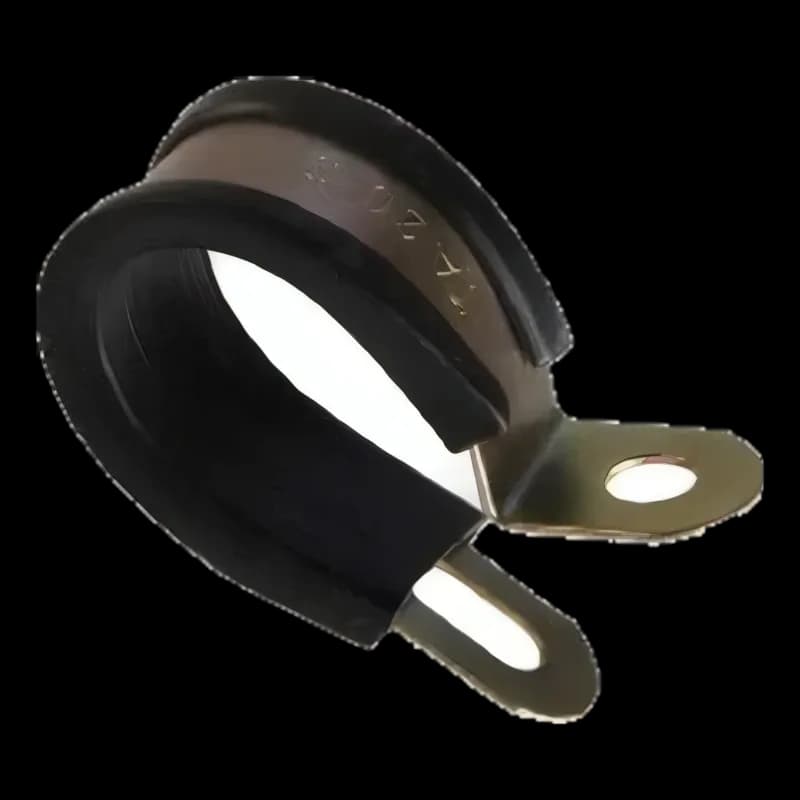
One-hole cable clip for fixing conductors to walls (One Hole Cable Clip)
Last updated:
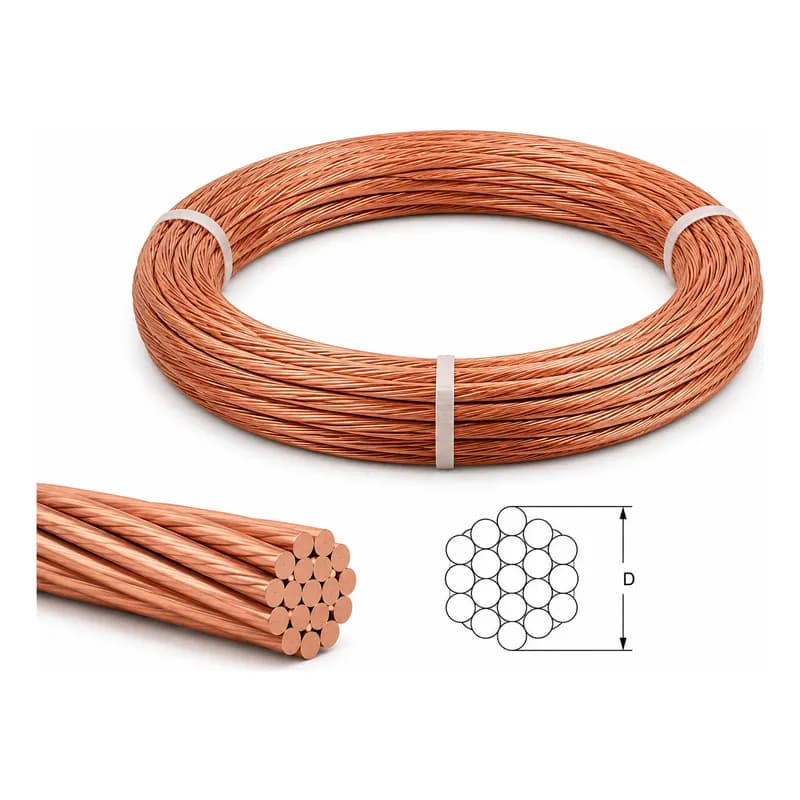
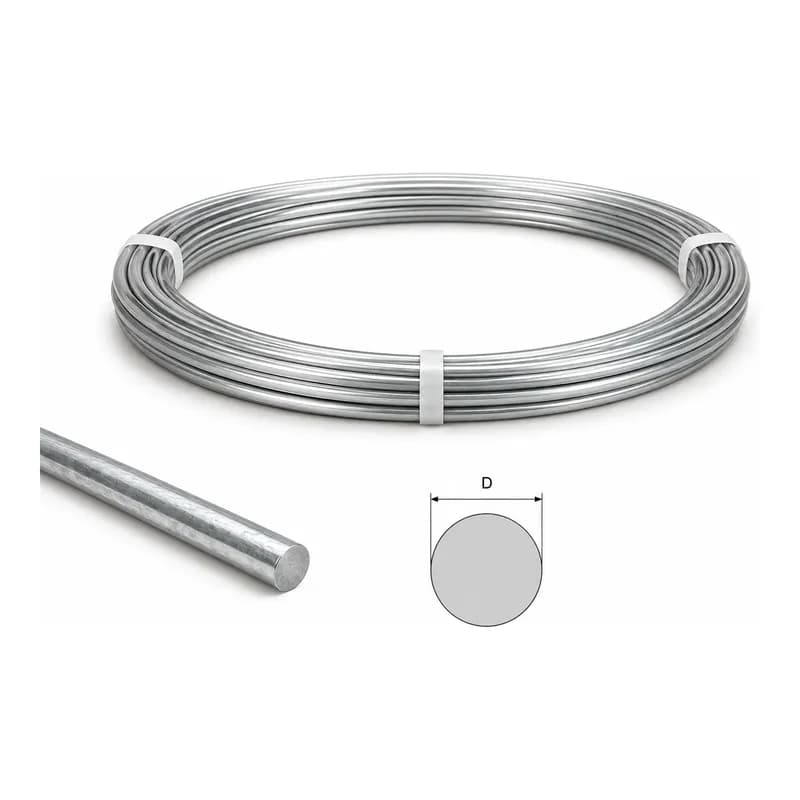
KALOT's one-hole clip fixes bare round conductors, such as solid or stranded copper wire and galvanised steel round wire, to walls, façades, parapets and other surfaces. It is made from a bent metal strip: the conductor sits inside the clip's loop, and the two end tabs sit one on top of the other and fasten to the surface with a single screw. The clip comes in three materials, copper, galvanised steel and stainless steel, for conductor cross-sections from 25 to 120 mm², so its material can match the conductor and the environment.
We provide this clip in three materials, so that for every conductor and every environment you have a matching, long-lasting clip to hand.
Neat fixing of round conductors on walls, with one screw
The one-hole clip wraps around a bare round conductor and fixes it to a wall, façade or parapet with one screw. Three materials and six sizes let you match the clip to the conductor's material and size.
- For bare solid and stranded wire
- Installed with one screw through both tabs
- Copper, galvanised steel and stainless steel
- Conductor cross-section 25 to 120 mm²
Quick installation with one screw
The clip's two tabs sit one on top of the other and one screw passes through both, so installing each clip needs only one hole in the surface.
Three materials to match the conductor
Copper, galvanised steel or stainless steel. Matching the clip and conductor materials reduces the risk of galvanic corrosion at the contact point.
Six sizes from 25 to 120
Models are grouped by conductor cross-section, and the L, W and H dimensions of each model are in the specifications table.
For solid and stranded wire
This clip is designed for bare round conductors, both solid and stranded.
No drilling of the conductor
The conductor is simply held inside the clip's loop and is never drilled. NF C 17-102 does not permit drilling a down conductor to fix it to its support.
Technical Product Information
Feature | Value |
|---|---|
Product type | One-hole clamp for fixing conductors to walls (One Hole Cable Clip) |
Application | Fixing bare round conductors to walls, façades, parapets and other surfaces |
Conductor type | Bare round conductor, solid or stranded |
Material | Copper, galvanised steel or stainless steel |
Conductor cross-section | Copper 25 to 120, galvanised 35 to 95 and stainless steel 35 to 95 mm² |
Installation method | Two overlapping tabs; one screw through both tabs into the surface |
Installation items | Screw and wall plug to suit the surface material |
Dimensions and order code
Conductor cross-section (mm²) | L (mm) | W (mm) | H (mm) | Copper code | Galvanised code | Stainless steel code |
|---|---|---|---|---|---|---|
25 | 15 | 10 | 8 | OHCC 025 | — | — |
35 | 18 | 10 | 8 | OHCC 035 | OHCG 035 | OHSS 035 |
50 | 18 | 10 | 10 | OHCC 050 | OHCG 050 | OHSS 050 |
70 | 22 | 10 | 10 | OHCC 070 | OHCG 070 | OHSS 070 |
95 | 22 | 10 | 13 | OHCC 095 | OHCG 095 | OHSS 095 |
120 | 25 | 15 | 15 | OHCC 120 | — | — |
A dash marks a size that does not apply to that material.
What does the one-hole clip do?
Down conductors and roof conductors must be fixed neatly and firmly to the surface along their whole route, so that wind, vibration and the electrodynamic forces of lightning current do not shift or damage them. The one-hole clip is the simplest support for a round conductor: it wraps around the conductor and fastens with one screw to a wall or any other flat surface. The conductor is not drilled and its cross-section is not reduced.
Clip structure
The clip is made from a metal strip that rests on the surface under the conductor, loops around it and returns so that the upper tab sits on the lower tab. The upper tab has a round hole and the lower tab an oval hole. During installation these two holes line up and one screw passes through both.
Choosing the clip material
Match the clip material to the conductor material and the environment so that contact between dissimilar metals does not create a risk of galvanic corrosion: a copper clip for copper conductors and a galvanised clip for galvanised steel conductors are the usual choices, and a stainless steel clip is another option for environments that need greater corrosion resistance. Agree the final choice with the system designer.
Choosing the size
The clip size is chosen by the conductor cross-section, so that the conductor sits firmly in the loop and does not move freely. Copper models are offered for 25 to 120 mm², and galvanised and stainless steel models for 35 to 95 mm².
The right clip for each type of conductor
The one-hole clip is for bare round conductors. For PVC-sheathed cables use the insulated one-hole clip, and where a heavier cast clamp is needed, use the two-piece brass clamp for fixing conductors to walls.
Limitations
The one-hole clip holds the conductor in place and does not make an electrical connection between conductors. Choose the screw and wall plug to suit the surface material and the clip material. The system designer sets the clip spacing.
Click to view enlarged
The drawing shows the side and top views of the clip. L is the length, W the width and H the height of the clip; the value of each dimension for each model is in the table in the "Technical specifications" tab. The drawing is schematic and is not a manufacturing drawing.
Click to view enlarged
Where is it used?
- Fixing round down conductors to building walls and façades
- Fixing round conductors on parapets and roof edges
- Fixing bare round conductors in earthing and bonding systems on flat surfaces
Installation steps
- Choose the clip size and material by the conductor's cross-section and material.
- Lay the conductor straight and free of twists on the surface.
- Place the clip over the conductor so that the conductor sits inside the clip's loop.
- Press the two tabs together until the holes line up, then mark the hole position on the surface.
- Drill the surface and insert a suitable wall plug in masonry walls.
- Tighten the clip with one screw that suits the surface and is compatible with the clip material.
Inspection and maintenance
During periodic inspections, check that clips are tight, that screws and wall plugs are sound, and that there is no corrosion or movement of the conductor. Correct or replace any loose or damaged clips.
The standards below are presented to help you understand the requirements for fixing conductors and the place of this part in the system.
ESE lightning protection systems: NF C 17-102
For fixing down conductors, this standard recommends three support points per metre (about every 33 cm). The supports must be compatible with the surface they are fixed to and allow for the conductor's thermal expansion, and drilling the conductor to fix it to its support is not permitted.
System design: IEC 62305-3
This standard covers the design, installation, inspection and maintenance of a structure's lightning protection system, and requires conductors to be firmly fixed to prevent movement and mechanical damage. The system designer sets the number and spacing of supports.
The catalogue datasheet (in English) is in the list below. The drawings and schematics on this page, ready to print:
Round conductor holding clamps for walls
Frequently Asked Questions
What is a one-hole clip used for?
For fixing bare round conductors, such as solid or stranded copper wire, to walls, façades, parapets and other surfaces. The conductor sits inside the clip's loop and one screw fastens the clip to the surface.
How do I choose the clip material?
Match the clip material to the conductor material: a copper clip for copper conductors and a galvanised clip for galvanised steel conductors are the usual choices. A stainless steel clip is an option for environments that need greater corrosion resistance. Agree the final choice with the system designer.
Which size should I choose?
The size is chosen by the conductor cross-section: copper models 25 to 120, galvanised 35 to 95 and stainless steel 35 to 95 mm². The dimensions and code of each model are in the specifications table.
Is it also suitable for sheathed cable?
No, this clip is for bare conductors. For PVC-sheathed cables, use KALOT's insulated one-hole clip.
How far apart should the clips be on the wall?
The system designer sets the clip spacing. For ESE lightning protection systems, NF C 17-102 recommends three support points per metre.
Which screw and wall plug suit the installation?
Choose the screw and wall plug to suit the surface material, and match the screw material to the clip material and the environment. For stainless steel clips we recommend stainless steel screws.
Does the one-hole clip make an electrical connection?
No, this clip only holds the conductor in place. Connecting the conductor to the air terminal, joining two conductors and connecting to the earthing system must be done with connection parts dedicated to each task.
Have a Technical Question?
KALOT Group's technical experts are ready to answer your questions about lightning rods and earthing systems.