Short answer: the market offers three main groups of ground improvement material: carbon-based materials, bentonite, and salts and chemical compounds. Salts work fast but wash away and corrode the electrode. Bentonite is inexpensive but only performs well in moist soil. Carbon-based materials cost more, yet they stay conductive and stable without moisture. For a permanent earthing system, choose a material that has passed the IEC 62561-7 tests.
At KALOT Group, we have set these materials side by side in one table. What makes a good material is covered in properties of standard ground improvement materials, and the relevant standards in standards for ground improvement materials.
Ground Improvement Materials Compared
Material type | Composition | Resistivity | Long-term stability | Advantages | Disadvantages | Recommended use |
|---|---|---|---|---|---|---|
Carbon-based | Conductive carbon materials (graphite or carbon powder), usually mixed with cement and water into a slurry | Low, and conductive even without moisture; for example, GIM is below 0.5 Ω·m | Stable; does not wash away and bonds to the electrode | Stable resistance through dry seasons Even, lasting contact with electrode and soil Can be tested to IEC 62561-7 | Relatively high initial cost Must be installed correctly (water ratio and curing time) | Power plants, refineries, oil and gas, data centres Dry, rocky and high-resistivity soil |
Bentonite / clay-based | Clay (bentonite) with high moisture absorption | Low only while moist; rises quickly when moisture is short | Depends on moisture; shrinks as it dries and pulls away from the electrode | Affordable Simple to install Holds moisture around the electrode | Poor performance in dry soil Commercial bentonite may contain salt | Small and medium projects in humid, high-rainfall areas |
Salts and chemical compounds | Sodium chloride (common salt), calcium chloride, magnesium sulphate or copper sulphate | Initially cuts soil resistivity by 15 to 90 per cent, depending on the soil | Not lasting; washed out by rain and groundwater, so it needs periodic renewal | Fast drop in resistance Low cost | Corrodes the electrode Washes out and needs renewing Pollutes soil and groundwater | Temporary fix only, with regular maintenance |
Charcoal, coke and ash (Coke, PFA) | Charcoal, coke or pulverised fuel ash from power stations | Conductive | Conductivity remains, but the electrode corrodes | Readily available and cheap | Contains corrosive matter and shortens the life of copper and galvanised electrodes | Coke and ash: do not use (BS 7430:2026) Charcoal: mixed with salt, it is corrosive and washes out |
Sources: IEEE Std 142-2007 clause 4.1.7; BS 7430:2026 clause 8.14; IEC 62561-7:2024; GIM product page. | ||||||
How Should These Materials Be Compared?
- Resistivity: the lower the better, but only compare figures measured the same way (four-electrode soil box, ASTM G57) and after curing. The standard sets no limit value.
- Stability: the earthing system’s resistance must not rise as the soil dries out or the years go by.
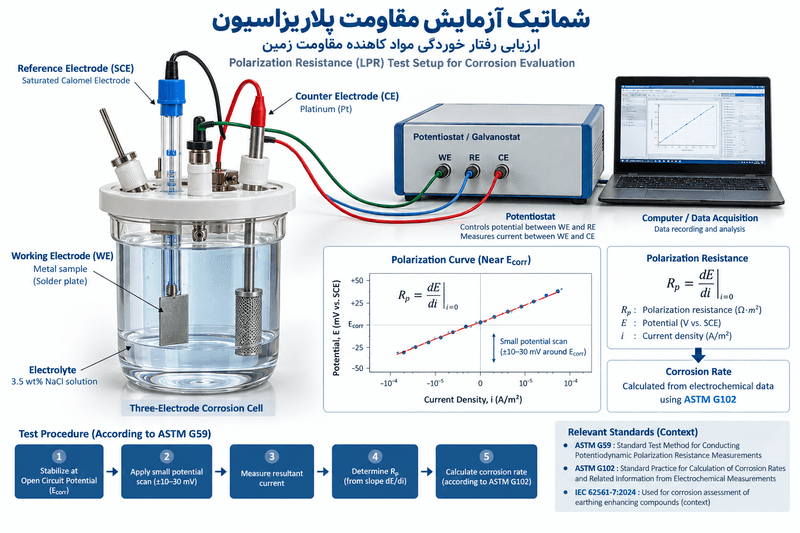
- Corrosiveness: the material sits against the electrode for years and must not attack it (ground improvement materials and earthing system corrosion).
- Non-leaching and non-polluting: the IEC 62561-7 leaching test measures heavy metals, and the material’s sulphur content must be below 2 per cent.
Carbon-Based Materials
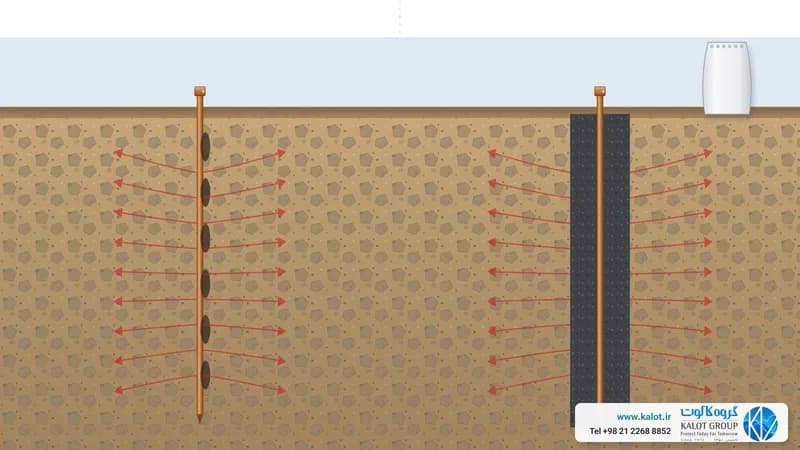
These materials are made from conductive carbon (graphite or carbon powder) and are usually mixed with cement and water into a slurry that surrounds the electrode as one solid mass. BS 7430:2026 regards conductive slurries of graphite or carbon powder as suitable backfill for horizontal and vertical electrodes, because they are physically stable and make even contact with the soil. As their conductivity does not depend on moisture, they are the best choice for dry soils and high-altitude areas (carbon-based ground improvement materials).
Bentonite
Bentonite is a clay that holds moisture well. BS 7430:2026 considers it suitable for soils whose moisture varies with the seasons, provided it is fully hydrated during installation. The drawback is that its resistance climbs quickly when moisture is short, and as it dries it shrinks and pulls away from the electrode. Commercial bentonite may also contain salt (Is bentonite a standard material?).
Salts and Chemical Compounds
According to IEEE Std 142, common salt, magnesium sulphate, copper sulphate and calcium chloride can cut soil resistivity by 15 to 90 per cent, depending on the soil. But the effect does not last, it has to be renewed periodically, and it undermines the electrode’s corrosion protection. That is why salt is only a temporary fix that calls for a regular maintenance plan (Are salt and charcoal standard materials?).
Charcoal, Coke and Ash
Coke and pulverised fuel ash (PFA) are conductive, but BS 7430:2026 lists them among the materials that must not be placed around an electrode, because they contain corrosive matter and sharply shorten the life of copper and galvanised electrodes. Charcoal is usually laid together with salt and shares the same problems (Are salt and charcoal standard materials?).
Which Ground Improvement Material Should You Choose?
- Dry, rocky or high-resistivity soil and high-altitude areas: a carbon-based material.
- Moist soil, high-rainfall area, small project: bentonite also works, provided it is properly hydrated during installation.
- Corrosive environment or critical project (power plant, refinery, data centre): a tested carbon-based material with a corrosion report.
- Urgent, temporary need: salt only, with a maintenance plan; never for a permanent system.
A fuller guide to choosing by soil type is in Which materials suit which soils?. We make the GIM family of ground improvement materials to IEC 62561-7: GIM for highly corrosive soils and environments, GIM LIGHT for normal conditions, and ECO GIM. To estimate how much material you need, use the GIM calculator or send our specialists your soil type and target resistance.