
Move your pointer over the image to zoom in
Complete Product Overview
Disconnect link
Last updated:
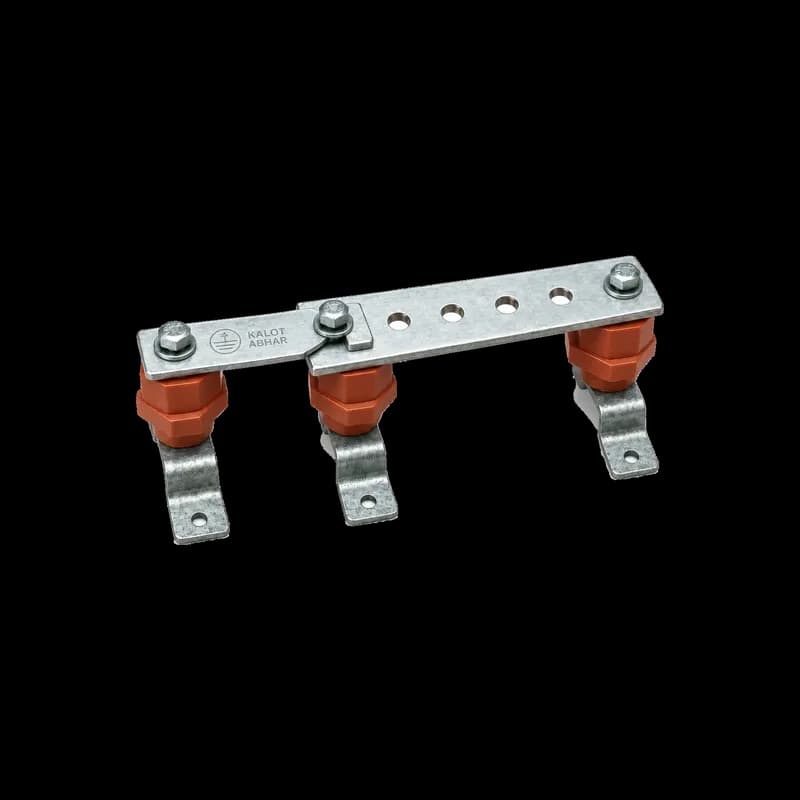
The KALOT disconnect link has one input and one output and is installed between the earthing system and the load. Opening it separates the earthing system from the load for inspection and resistance measurement, and closing the link again after measuring restores the connection. The link bar is copper and sits on two reinforced polyester insulators and a stainless steel base.
We offer two models: DL 100 with a 125 x 50 x 5 mm bar and SDL 101 with a 125 x 30 x 3 mm bar. Both sit on two reinforced polyester insulators and a stainless steel base. One end of the link bar pivots around a bolt and the other end is slotted. Loosen the bolt and the link swings aside, opening the circuit. After measuring, it swings back and the bolt is tightened again. The connection bolt is M10 or M12.
One input and one output
The disconnect link is installed between the electrode conductor and the earth bar or equipment, so an inspector can isolate the earthing system for measurement.
- One input and one output
- Isolates the earthing system for measurement
- Copper bar on two insulators
- Stainless steel base
Isolating the electrode for measurement
Loosen the bolt and the link bar swings aside, separating the earth electrode from the installation. After measuring, the link is closed again.
Common point for earth conductors
The earth conductor, protective conductors and bonding conductors are each fixed to the bar's holes with their own cable lug.
Copper or tinned copper
Bare copper for dry environments and the inside of panels. The tinned version helps reduce oxidation and discolouration of the copper surface in damper or more corrosive environments.
2 standard codes
Codes DL 100 and SDL 101. Other dimensions are made to order.
Made by KALOT Group
Designed and made to KALOT drawings and technical catalogue. The datasheet for each model is in the documents section.
Technical Product Information
Click to view enlarged
Feature | Value |
|---|---|
Type | Disconnect link on insulators |
Bar | Copper; tinned copper to order |
Base | Stainless steel |
Insulator | Two, reinforced polyester |
Cable lug connection bolt | M10 or M12, to order |
Codes | DL 100 and SDL 101 |
Codes and dimensions
Code | L (mm) | W (mm) | H (mm) |
|---|---|---|---|
DL 100 | 125 | 50 | 5 |
SDL 101 | 125 | 30 | 3 |
Dimensions are in millimetres. Our products are continually improved and some dimensions may be updated, so please confirm final dimensions with our specialists before you buy.
Click to view enlarged
Dimensional drawing of the disconnect link, based on KALOT drawings and catalogue. The dimensions of each code are in the table below.
Code | L (mm) | W (mm) | H (mm) |
|---|---|---|---|
DL 100 | 125 | 50 | 5 |
SDL 101 | 125 | 30 | 3 |
Download: Datasheet (PDF) · Drawing PDF · Drawing SVG · Colour drawing PDF
Click to view enlarged
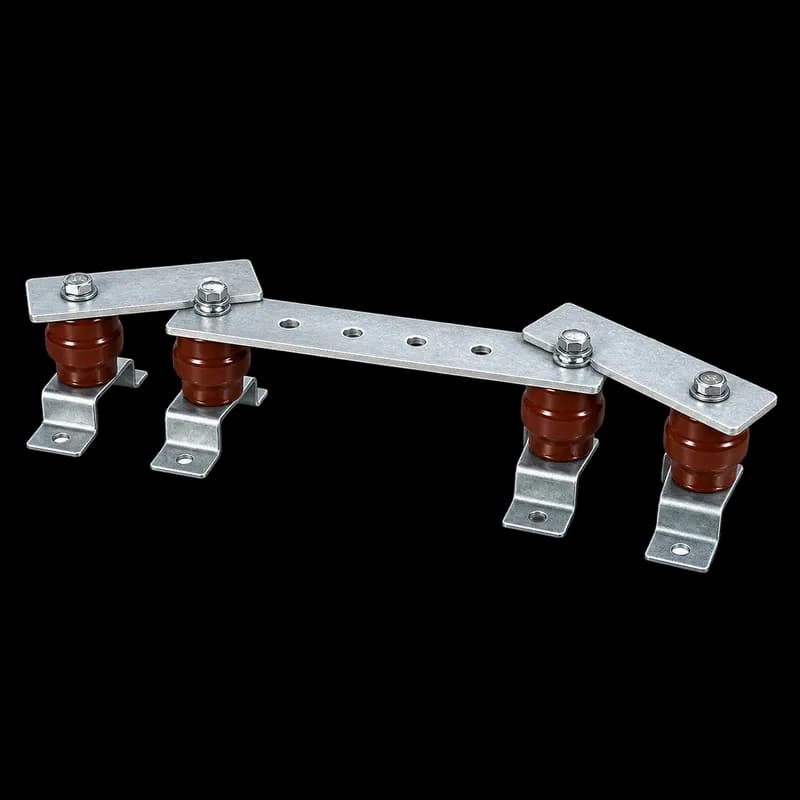
The earth bar in the earthing system
An earth bar is the common point where the earth conductor (from the electrode or earthing network), protective conductors and bonding conductors meet. Each conductor is fixed with a cable lug of matching size and a bolt and nut to one of the bar's holes, so the number of holes, and with it the earth bar length, depends on the number of inputs and outputs.
In the code table, L is the length, W the width and H the thickness of the link bar. Install the link where inspectors can reach it and where it opens only with a tool. We supply the link bar in two types, bare copper and tinned copper. The tinned version helps reduce oxidation and discolouration of the copper surface in damper or more corrosive environments.
Installation
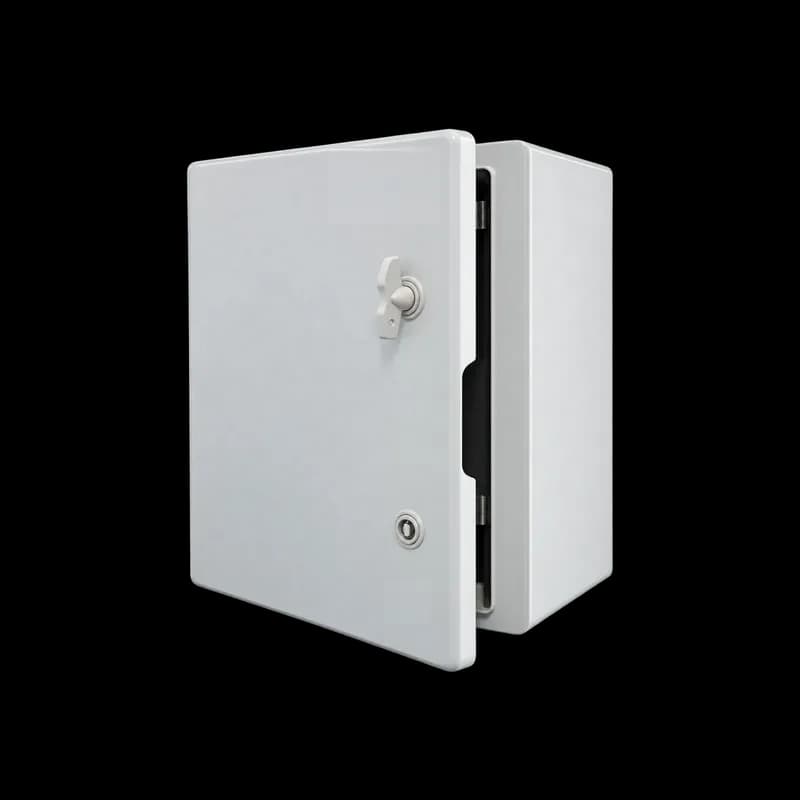
Install the earth bar on a flat, solid surface, in a dry place accessible for inspection. For wall mounting, the KALOT catalogue recommends 1½ inch No. 12 countersunk wood screws with No. 12 wall plugs. Fix each conductor to the bar with a cable lug of matching size and tighten the bolts evenly. In open or busy locations, place the earth bar inside a protective enclosure.
Measuring earth resistance with a disconnect link
1) Coordinate with the operator before measuring. The work must be done by a competent person, following local safety regulations.
2) Loosen the link bolt and swing the link aside to separate the electrode from the installation.
3) Measure the earth resistance with an earth resistance tester.
4) Close the link, tighten the bolts evenly and record the measured value with the date.
The link belongs between the electrode conductor and the earth bar or equipment, in an accessible place where it opens only with a tool (IEC 60364-5-54).
Enquiries
When you enquire, tell us the number of inputs and outputs, the number of disconnect links, the cross-section of the conductors and the installation location, and our specialists will recommend the right code. Other dimensions and hole counts are also made to order.
IEC 60364-5-54 provides for a means of disconnecting the earth conductor from the main earthing terminal: a device in an accessible place that opens only with a tool and is used for measuring earth resistance. A disconnect link does exactly this. In lightning protection systems, IEC 62305-3 provides test joints for measuring earth resistance.
Three-dimensional view of an earth bar installation in a building
Documents & Downloads
Catalogues & datasheets
Drawings & schematics
Similar & Complementary Products
Frequently Asked Questions
What is the difference between a disconnect link and an earth bar with a link?
A disconnect link has just one input and one output. An earth bar with a link has the link plus several holes for connecting loads.
What is an earth bar used for?
An earth bar is the common connection point for the earth conductor, protective conductors and bonding conductors, and it shares one earthing system output among several loads.
What is a disconnect link for?
To separate the earthing system from the loads during inspection and earth resistance measurement, without opening the connection of each individual load.
How do I choose the right code?
The number of inputs and outputs sets the number of holes you need, and the number of earthing systems to be measured separately sets the number of links.
Bare or tinned copper: which should I choose?
Bare copper is sufficient for dry environments and the inside of panels and electrical rooms. In damper or more corrosive environments, the tinned version helps reduce oxidation and discolouration of the copper surface.
Have a Technical Question?
KALOT Group's technical experts are ready to answer your questions about lightning rods and earthing systems.