
Knowledge Centre
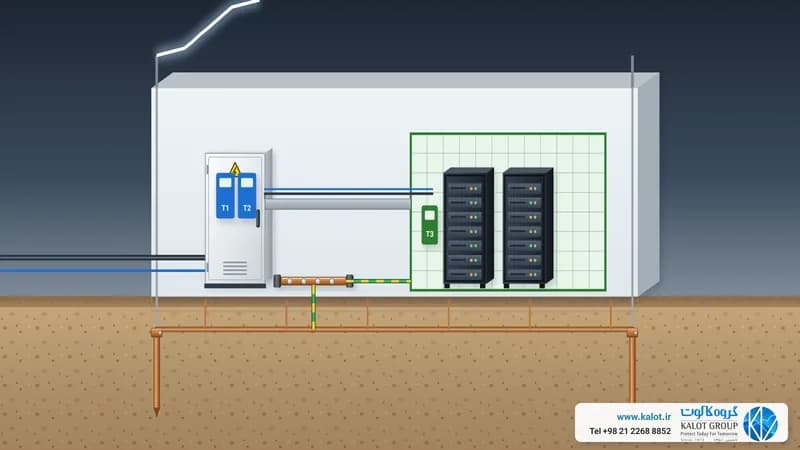
The Role of Earthing, Bonding and EMC in Protecting Sensitive Equipment from Lightning and Surges
Servers, PLCs and medical equipment can be damaged by lightning that never even strikes the building. In this guide we explain why an SPD alone is not enough, and how the four IEC 62305-4 measures, namely the earthing system, the bonding network, shielding and cable routing, and coordinated SPDs, work together to protect sensitive equipment.
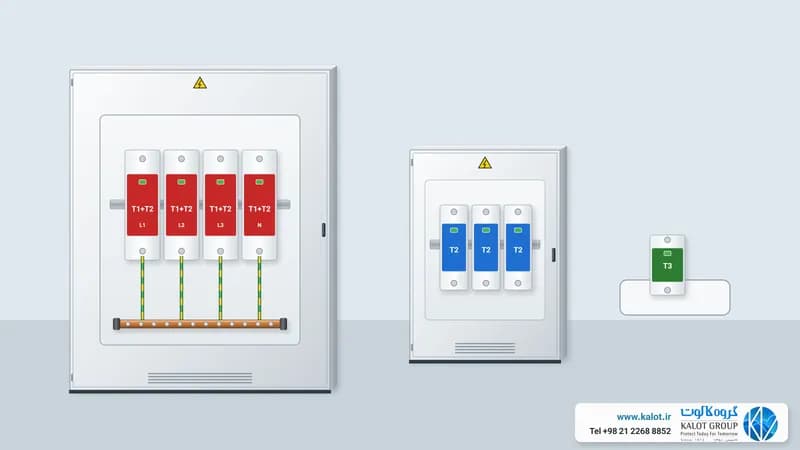
Types of SPD and their role in reducing lightning voltage | Staged protection to IEC
A Type 1 SPD in the incoming panel withstands direct lightning current, Type 2 in distribution panels handles induced overvoltage, and Type 3 close to sensitive equipment is the last step. We use figures to explain test waveforms, installation position, coordination, combined SPDs and SPD layouts in TN and TT systems.
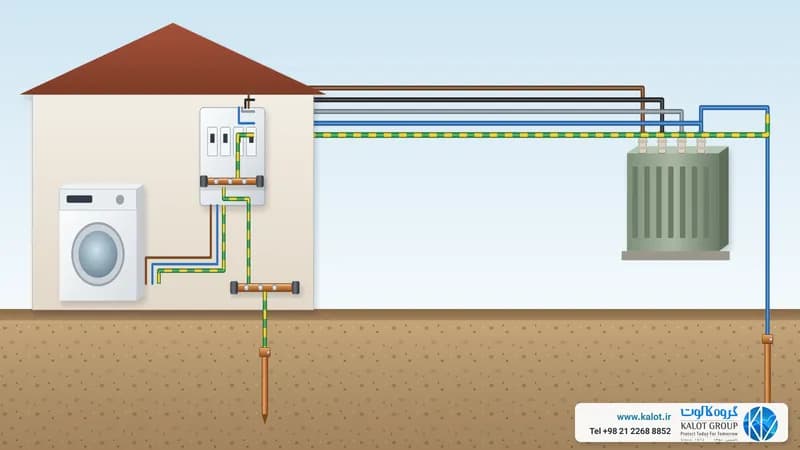
What Is Protective Earthing vs. Electrical (Functional) Earthing?
Protective earth (PE) reduces the risk of electric shock and creates a safe path for fault current; electrical earth ties a transformer's neutral point to earth; and functional earth (FE) helps equipment work correctly and keeps noise under control. In this article we look at the differences, the applications and the design principles, with figures and examples.
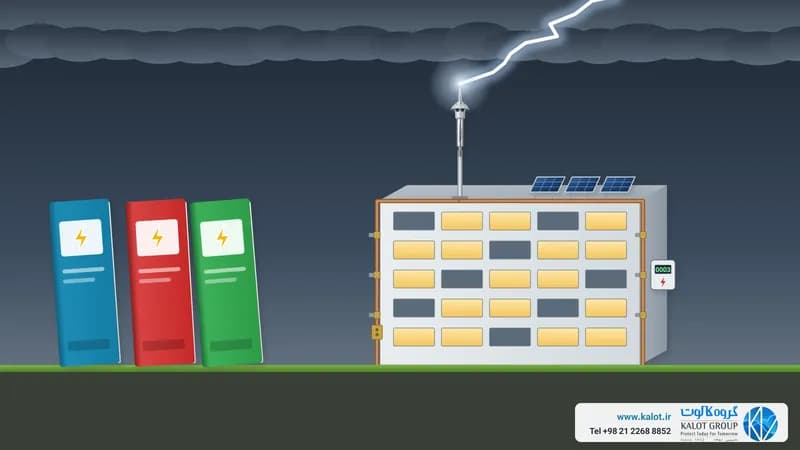
Lightning protection standards: an overview and classification of the references
There is no single standard for lightning protection: each one answers a different question. In this guide we sort the references into five groups, give the valid edition of each in 2026, and use three images to show which standard applies to which part of the system and which project.
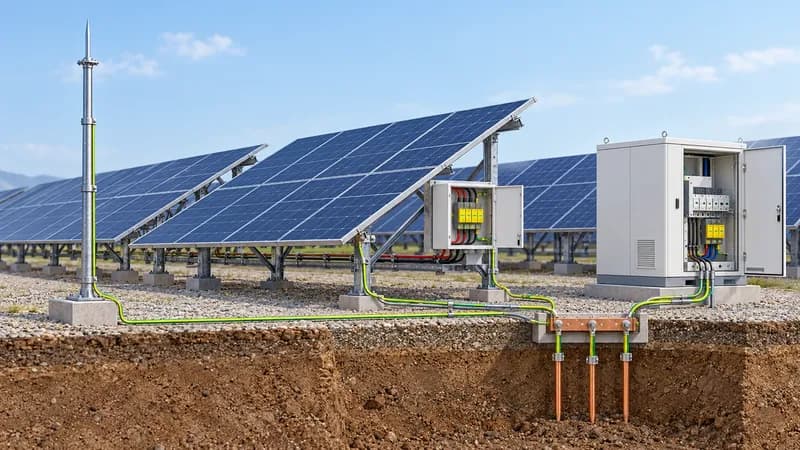
How Is Lightning and Surge Protection Designed for a Ground-Mounted Solar Plant?
A guide to lightning and surge protection for ground-mounted solar plants, focused on earthing, ESE, bonding and SPDs, with KALOT's project experience across about 140 projects in Iran.
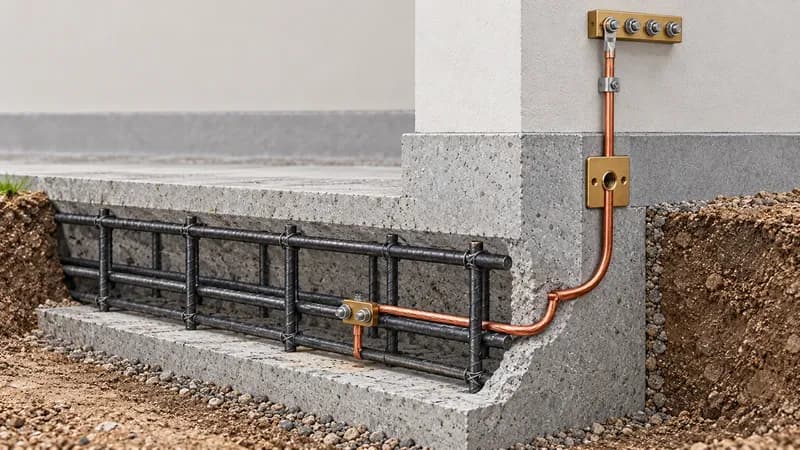
What Is a Foundation Earth? Installation and Bonding Drawing to DIN 18014 and BS 7430
A foundation earth is an earth electrode placed inside the building's foundation concrete during construction. In this guide we explain in plain language the components, the foundation earth bonding drawing, the connection to reinforcing bars, conductor materials and sizes, the earth ring for watertight or insulated foundations and testing before the pour, in line with National Standard 23064, DIN 18014 and BS 7430.
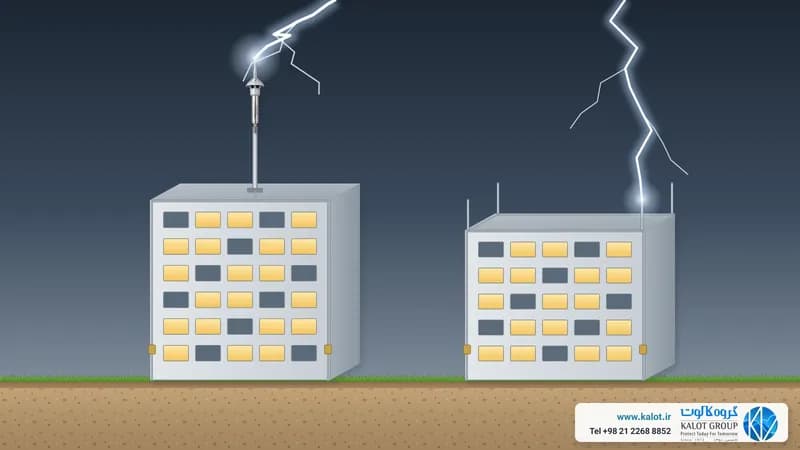
Choosing the best air terminal: what is the difference between ESE and passive lightning protection?
Conventional air terminals (passive or Franklin) and ESE air terminals (active) both capture the lightning strike point, but they are designed to two different standards. In this guide we explain in plain language how they work, their protection zones, the components they need and five steps to choosing the right one.
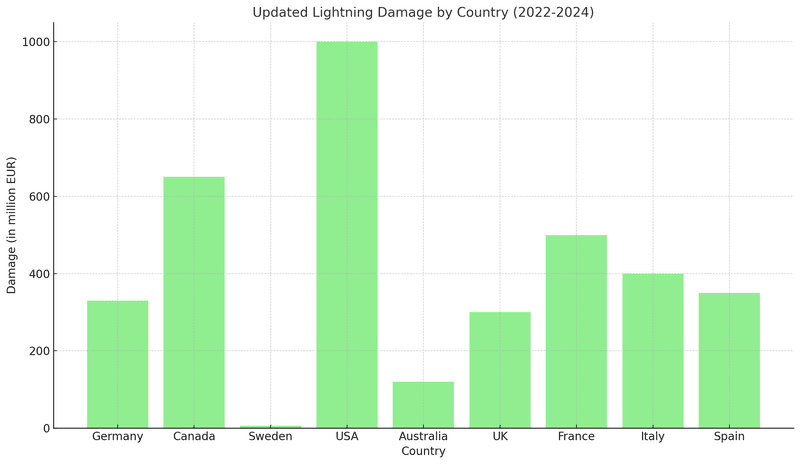
How much damage does lightning cause?
The eight main forms of lightning damage, from structural destruction and fire to equipment failure, step voltage and forest fires, with official damage statistics from around the world and ways to reduce them.
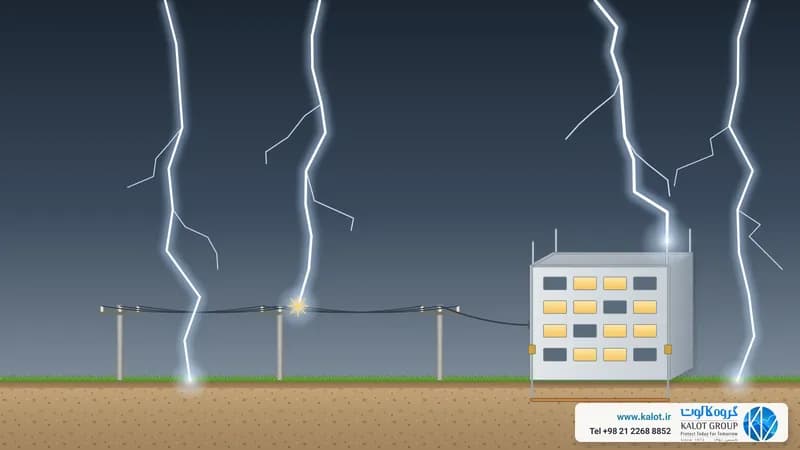
Types of Lightning Effects: Direct and Indirect Strikes and How to Protect Against Them
Lightning does not cause damage only through a direct hit: the magnetic field and earth potential rise from a nearby strike also damage electrical and electronic equipment. In this guide we explain in simple language the four sources of lightning damage under IEC 62305, its direct and indirect effects, and how to protect against them with air terminals, earthing, bonding and SPDs.
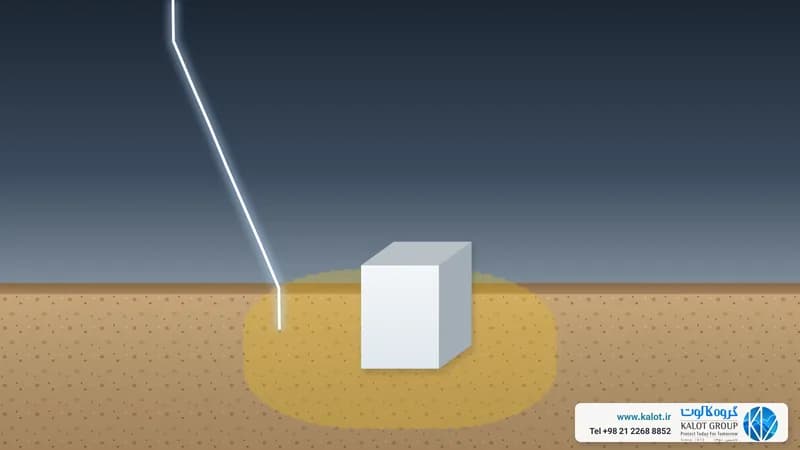
Lightning Frequency in Iran and Worldwide: Statistics, Flash Density and Analysis
Lightning occurrence can differ by tens of times from one place to another. We explain the thunderstorm day figures for stations in Iran, the most lightning-prone places in the world, and how these numbers feed into lightning protection design, with a simple calculation.
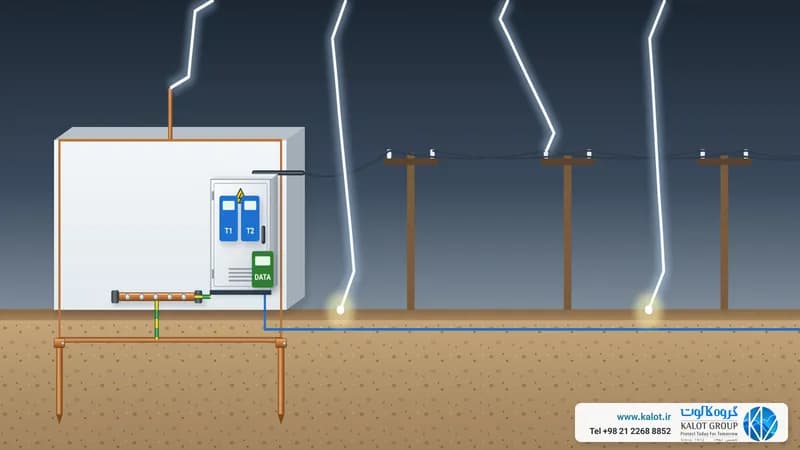
What is secondary lightning protection? SPDs and protecting equipment from surges
An air terminal protects the building from fire and destruction, but servers, cameras, inverters and electrical panels are damaged by lightning overvoltage. Secondary protection means bonding and surge protective devices (SPDs). In this guide we use figures to explain the four ways lightning causes damage, where SPDs are installed, and how to choose and install them.
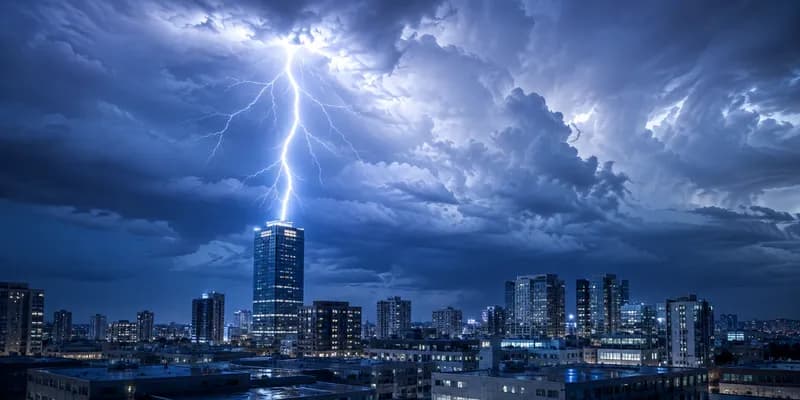
Lightning
How lightning forms, the types it takes, how often it strikes each year, the ways it damages buildings and equipment, and how to protect against it.