In a fraction of a second, lightning carries a current in the order of tens of kiloamperes into the ground. That brief moment is enough to damage a structure, start a fire, burn out electronic equipment or put people and livestock at risk. The key point is that lightning damage is not confined to the strike point: much of it happens in places the lightning never touched.
In this article we first look at the eight main forms of lightning damage one by one, then present real damage figures from different countries, and finish with ways to reduce these losses.
Types of lightning damage
Lightning damage falls into two broad groups: direct effects, caused by the strike itself hitting a structure or the ground, and indirect effects, caused by the lightning current and electromagnetic field at a greater distance. The eight cases below are the most important practical forms of these two groups.
1. Structural damage: a direct strike on a building
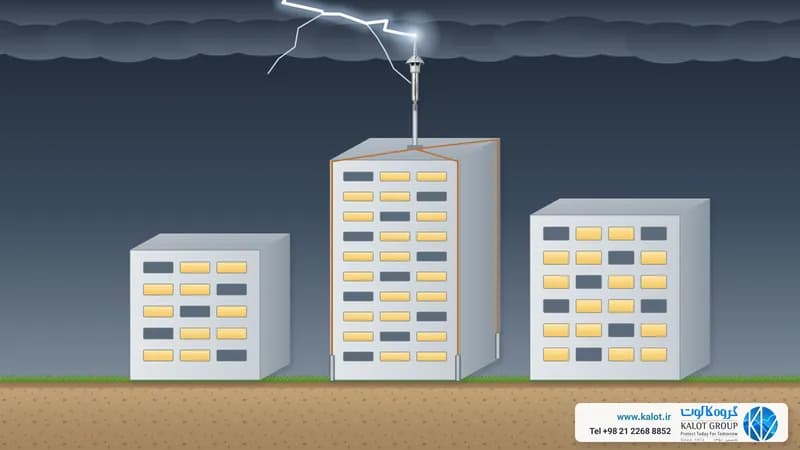
When lightning strikes a building directly, its energy turns into heat and mechanical force at the strike point. The result can be part of the façade or parapet being torn away, cracked and spalled concrete, damaged roof covering and local destruction of structural elements. The highest and most protruding points of a building are the most likely to be struck, which is why the air terminals of a protection system are installed on these very points, so that the current path is set before it reaches the structure.
2. Fire and ignition
The extremely high temperature of the lightning channel and the resulting spark can ignite flammable materials near the strike point. In warehouses, industrial sheds and facilities that store combustible materials, this local ignition can grow into a major fire. There is another, less visible hazard: sparking caused by the potential difference between adjacent metal parts, which may occur far from the strike point and right where materials are stored. Correct bonding of metal parts eliminates this spark.
3. Failure of power and control systems
Lightning overvoltage enters a facility through power and signal lines and damages switchboards, drives, PLCs, SCADA systems, servers and control room equipment. The more precise and sensitive the equipment, the more vulnerable it is to overvoltage. The real loss is usually greater than the price of the burnt-out part: stopped production lines, lost data and recovery time make up the main cost. This part of the installation is protected in stages with surge protective devices (SPDs).
4. Disruption of telecommunications and navigation systems
Telecommunications antennas, radar and airport navigation equipment such as ILS and DME are usually installed on masts at high, open points, which are the most exposed locations possible. Lightning can destroy this equipment directly, or put receivers and transmitters out of action through induction in antenna cables and data lines. At an airport, a data centre or a telecommunications network, the main consequence is loss of service, not merely the failure of one device.
5. Electromagnetic effects (LEMP) and induced voltage
This is the part that is usually overlooked. Lightning current creates a strong electromagnetic field, and without the lightning ever striking the building, this field induces voltage in the loops formed by the cabling inside it. That is why equipment with no direct connection to the strike point also burns out. LEMP cannot be countered with an air terminal alone: it takes correct cable routing, equipotential bonding and staged surge protection.
6. The danger of lightning to people outdoors
Sports grounds, open areas and construction sites are the most dangerous places during a thunderstorm. The risk is not only a direct strike: a side flash from a tall object nearby, and current passing across the ground surface around the strike point, can also be fatal. Outdoors, no protection system replaces clearing the area in good time. Structural protection makes the building safe, not the open space around it.
7. Step voltage: why livestock are more vulnerable
When lightning strikes the ground, the current spreads radially through the soil and creates a potential difference between two points on the surface. The greater the distance between the two points where a body touches the ground, the higher the voltage applied. That is why livestock are more vulnerable than people: the distance between the front and hind legs of a cow or sheep is far greater than the distance between a person's two feet, so they experience a higher step voltage. On pastures and livestock farms, animal losses from lightning usually occur this way, not through a direct strike.
8. Forest fires and environmental damage
Lightning is one of the natural causes of fires in forests and rangelands. A strike on a tree can split the trunk and ignite the dry vegetation around it. In hot, dry and windy conditions, this first spark can grow into a major fire. Unlike the previous seven cases, this damage cannot be prevented with protective equipment, and what matters here is monitoring and rapid response.
Lightning damage facts and figures
The figures below come from official reports and international sources and show the real scale of the issue.
Loss of life. According to the World Health Organization (WHO), about 24,000 people worldwide die from lightning strikes every year and more than 240,000 are injured.
Germany. Lightning damage reached a high figure in 2023, with insurers paying more than 330 million euros on 220,000 claims, about 80 million euros more than the year before. Most of this increase related to advanced electronic equipment inside buildings.
Canada. Lightning-related costs are estimated at between 600 million and 1 billion Canadian dollars a year, mainly from damage to forests and power networks.
United States. According to reports from Weather.gov, lightning damage is estimated at between 600 million and 1 billion dollars a year, most of it in the forestry and power sectors. Lightning detection systems such as NLDN are widely used to manage this threat.
These figures share one point: as electronic equipment takes a larger part in buildings and infrastructure, the weight of the damage has shifted from physical destruction towards equipment failure and loss of service.
How can this damage be reduced?
None of the eight cases above is covered by a single piece of equipment. Effective protection is a chain, and if one link is missing, the others lose their effect too:
- Capturing and conducting the current: an air rod or air terminal or an ESE air terminal sets the strike point, and the down conductor carries the current to earth.
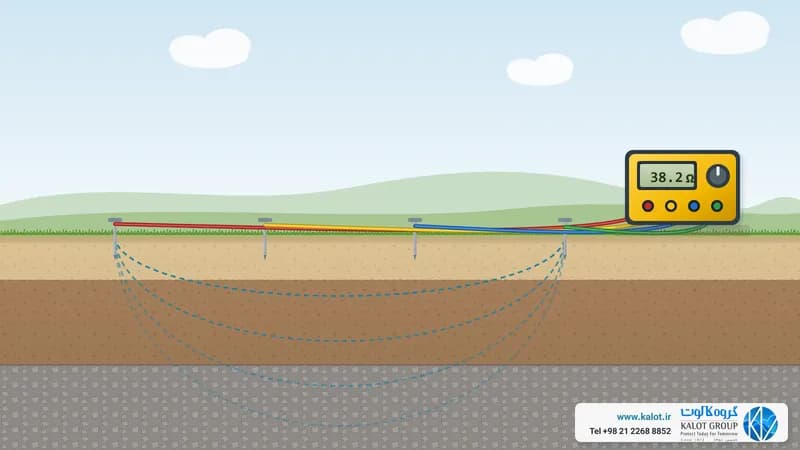
- Discharge to earth: an earthing system with a suitable resistance spreads the current into the soil.
- Equipotential bonding: connecting metal parts to each other eliminates potential differences and dangerous sparks.
- Overvoltage protection: SPDs, in several stages, contain the surge that enters through power and data lines.
The first three links protect the structure against direct effects, and the fourth is what protects electronic equipment against indirect effects and LEMP. The details of designing and installing this chain are in our lightning protection and earthing and bonding sections.
Conclusion
Lightning is a highly destructive phenomenon that brings human, financial and technical losses. As electronic equipment spreads into every field and becomes more sensitive to overvoltage (and more central to everyday work), protecting it and reducing lightning risks matter more than ever.
To understand the phenomenon itself better, see how lightning forms and the ways lightning causes its effects.