
Conventional air rods
The conventional air rod, also known as the Franklin air rod, the passive air terminal or the rod-type air terminal, is the most widely used air terminal in lightning protection systems: a metal air rod with a conical tip that, with no electronic parts at all, intercepts the lightning and carries it through the conductors to the earthing system.
Installing an all-copper conventional air rod on a building
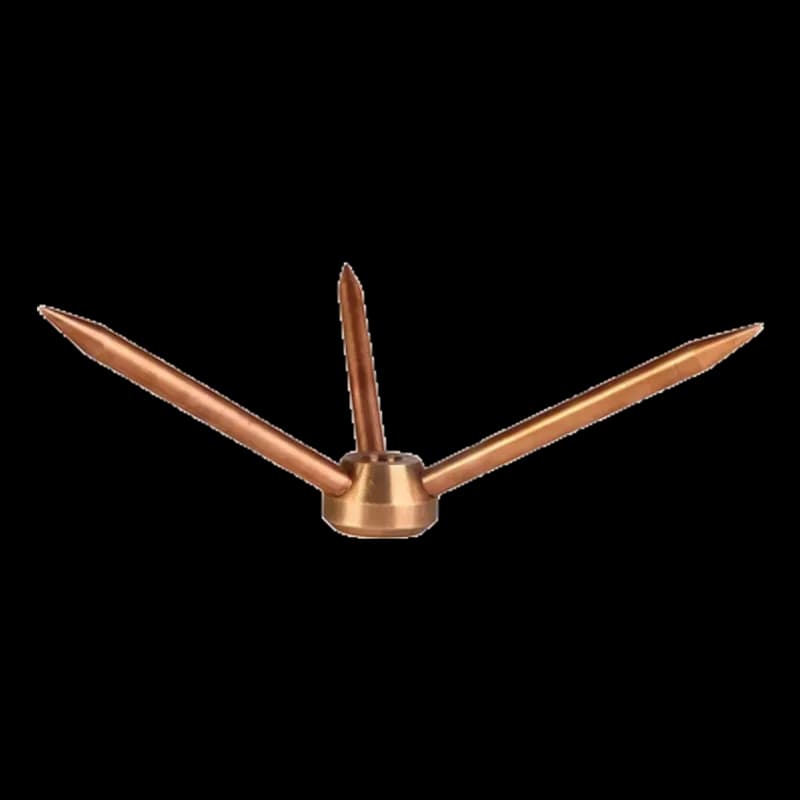
Conventional air rods are installed at the highest points of a structure to provide the point of strike and carry the current through the down conductor to the earthing system. The models in this category are grouped by material: solid copper, nickel-chrome plated copper and stainless steel. The three-pronged tip for conventional air rods is also offered here as a separate part.
The number, height and layout of air rods are set by the design method and the protection level of the system, and cannot be chosen from the specifications of the air rod itself. Match the air rod material to the down conductor and clamps, and choose a base that suits the mounting surface (flat surface, roof ridge or wall) from the air rod bases category.
KALOT conventional air rod models
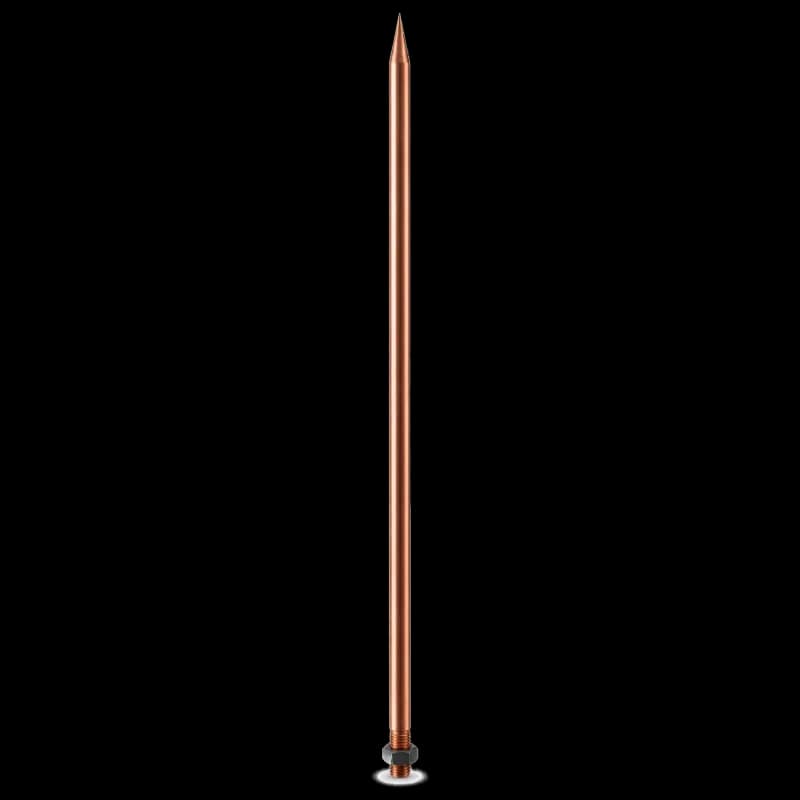
- Conventional air rod in solid copper (ATC): high conductivity, compatible with copper and brass conductors and fittings.
- Conventional air rod in nickel-chrome plated copper (ATN): copper core with a bright metallic finish that does not tarnish.
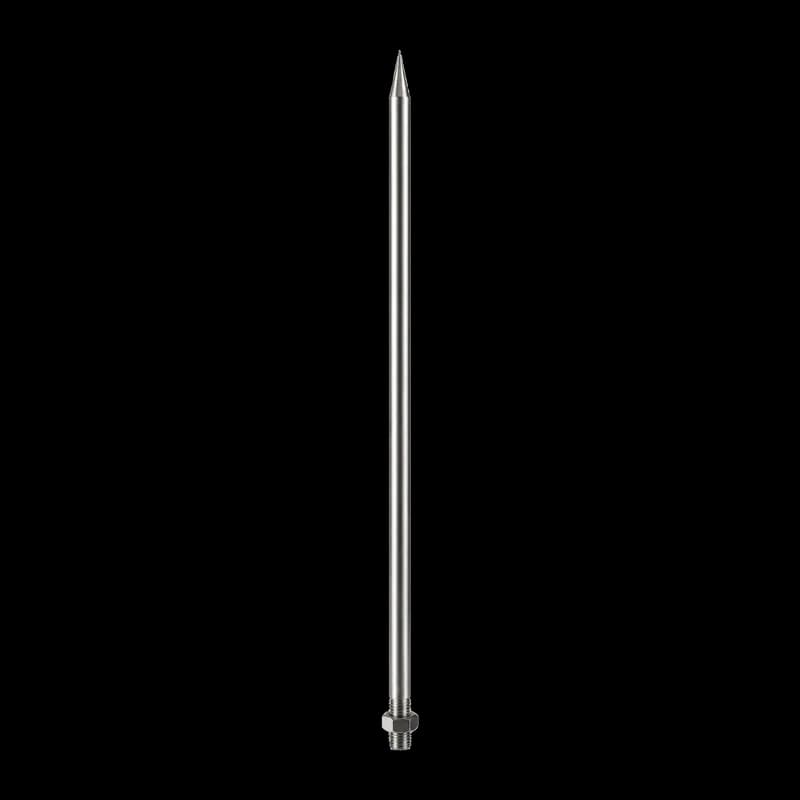
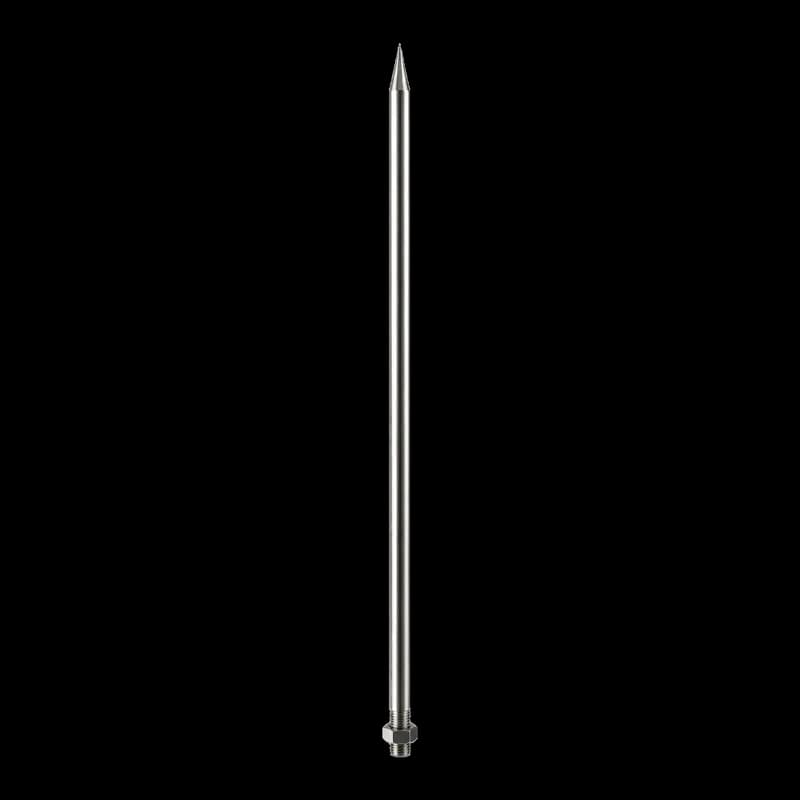
- Conventional air rod in stainless steel (ATS): corrosion-resistant steel for industrial and coastal environments.
- Three-pronged tip for conventional air rods (MP 016 / MP 020): a multi-point tip for pointed copper air rods.
How is a conventional air rod system designed?
Under IEC 62305-3, the position of air terminals is set by one of three methods: the rolling sphere method, the protection angle method or the mesh method. The higher the protection class (Class I is the strictest), the smaller the sphere and the finer the mesh, and the closer together the air rods must stand. The height and spacing of air rods come from this design, not from a choice in a catalogue.
Lightning protection system (LPS) class | Rolling sphere radius | Mesh size |
|---|---|---|
I | 20 m | 5 × 5 m |
II | 30 m | 10 × 10 m |
III | 45 m | 15 × 15 m |
IV | 60 m | 20 × 20 m |
Taller air rods take a greater wind load. For example, the American standard NFPA 780 requires an air terminal taller than 610 mm to be braced at a height of at least half its length. Choose the base and bracing method to suit the air rod length and the wind conditions at the site.
Which material should you choose?
Air rod material | Main feature | Best suited to | Selection note |
|---|---|---|---|
Solid copper | Very high electrical conductivity | Most projects, with copper and brass conductors and fittings | The surface gradually darkens in open air |
Nickel-chrome plated copper | Copper core with a protective layer and a bright metallic finish | Façades and roofs in view | Avoid scratching the plating during installation |
Stainless steel | Corrosion resistance and mechanical strength | Industrial, coastal and corrosive environments | Match the material to the conductors and fittings in the system |
In all cases, direct contact between copper or brass and aluminium or galvanised steel, especially where moisture is present, can accelerate galvanic corrosion. Material compatibility should be decided by the system designer.
Conventional air rod or ESE air terminal?
The conventional or rod-type (Franklin) air rod is designed to IEC 62305-3 using the methods above, while ESE air terminals are designed and installed to the French standard NF C 17-102. The choice between the two depends on the type of structure, the protection level and the designer's judgement. To explore the electronic family, see our ESE air terminals.
All our conventional air rods are made in 16 mm and 20 mm diameters and 500 to 2000 mm lengths with a lock nut, and we make other diameters and lengths to order. To choose a model, request a price or get advice on designing your lightning protection system, contact the KALOT specialists.