
ESE air terminal with dual triggeringFranklin France ESE Air Terminals
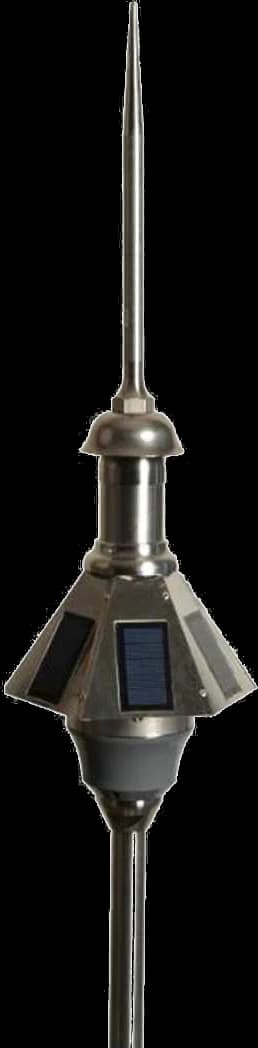
Franklin France ACTIVE 2D ESE air terminal
Early streamer emission (ESE) air terminal
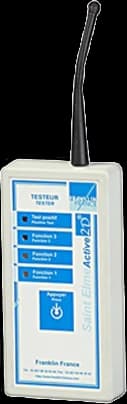
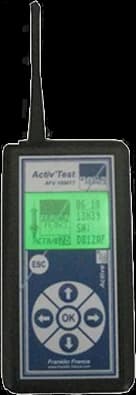
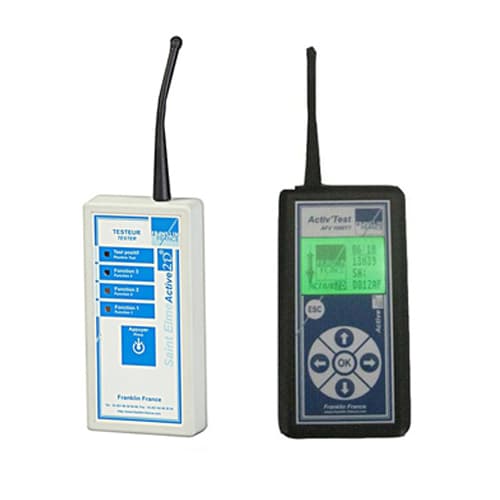
The Franklin France ACTIVE 2D is an ESE, or active, air terminal with a dual triggering system. Its main energy source is the ambient electrostatic field as a storm cloud approaches. Alongside this, a power capacitor acts as a backup, charged by solar cells on the body, so that the energy needed to continue the upward leader is available at the right moment. The device's performance can be checked on site, from a distance of up to 100 metres, using the remote tester.
 Early Streamer Emission

Two units, one goal: a sustained upward leader
ACTIVE 2D by Franklin France is an ESE air terminal that does more than start the upward leader: its second unit also supplies the energy the same leader needs to keep propagating.
Dual triggering
Impulse Device to start the upward leader, Power Device to support its propagation
Independent energy source
The ambient electric field and photovoltaic cells; no mains connection
Tested from the ground
Performance checked with a dedicated tester, without dismounting the device
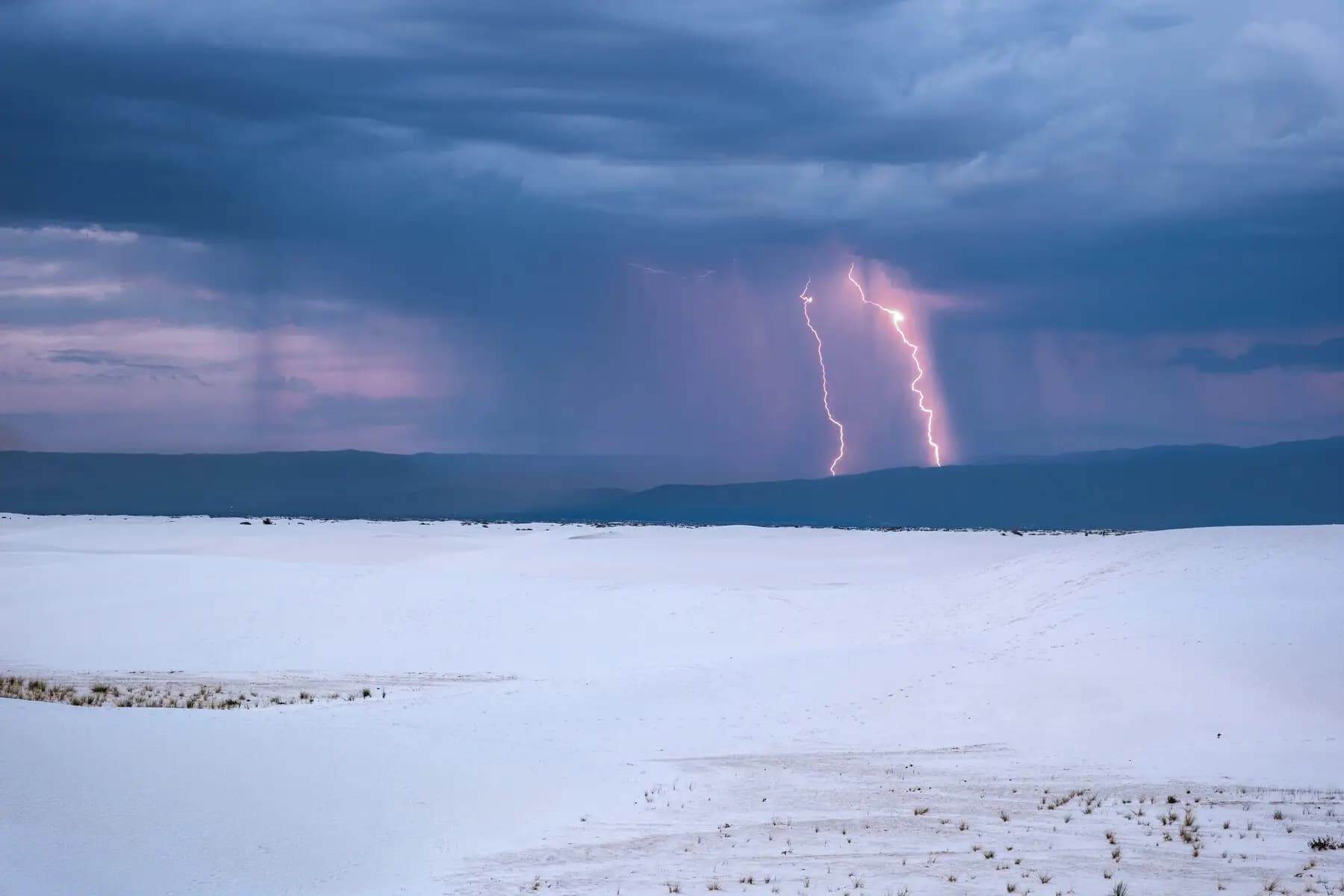
How it works: ACTIVE 2D
ACTIVE 2D has two complementary units: the Impulse Device starts the upward leader, and the Power Device provides the energy that same leader needs to keep developing.
Impulse Device: starting the upward leader
As a storm cloud approaches, this unit stores the electrostatic energy present in the atmosphere. An integrated ambient electric field sensor detects the right moment and the polarity of the air terminal head reverses almost instantly. The result is a sudden boost of the electric field at the receiving tip and the start of the upward discharge.
Power Device: sustaining leader propagation
This unit collects energy from the photovoltaic cells and stores it in the power capacitors, so the air terminal is always pre-charged with substantial energy. As the lightning approaches the protected zone, the measured current rises sharply. Once it passes a set threshold, the capacitors discharge and release the energy needed for the upward leader to keep developing.
- What ΔT means: the triggering time advance compared with a conventional air rod (passive air terminal), measured in the laboratory to the standard protocol. For ACTIVE 2D it is 30 or 60 µs depending on the model. Besides ΔT, the protection radius also depends on height h and the protection level.
Recorded tests and assessments
The recorded tests of ACTIVE 2D and the reference for each; the reports are available in the documents section of this page.
Alternative test method
Wired tester with telescopic test handle, up to a height of 8 mESE performance test
Successfully completedBazet high-voltage laboratory, France; 2005 and 2013 reports
Impulse current test
Successfully completedNF C 17-102:2011 Annex C, clause C.3.4; CITEL report G100K-12-064-R (2012)
Environmental conditions test
Successfully completedSICAME LABEP, France (2012)
Specifications, tests and protection radius
Product standard
- Brand / manufacturer
- Franklin France
- Air terminal type
- ESE air terminal (Early Streamer Emission)
- Operating system
- Dual triggeringImpulse Device and Power Device
- Energy sources
- Ambient electrostatic energy (Impulse Device); photovoltaic cells with storage in power capacitors (Power Device)
- Mains power requirement
- Not requiredenergy comes from the ambient electrostatic field and a backup capacitor charged by solar cells
- Advance time ΔT
- 30 µs (ACTIVE 2D 30) or 60 µs (ACTIVE 2D 60)
- Protection radius
- Per NF C 17-102:2011; depends on the model, height h and protection level; see the protection radius table
- Impulse current withstand (10/350 µs)
- 100 kA
- Body material
- 304L stainless steel
- Overall height
- 1000 mm
- Weight
- 6.1 kg
- Mounting stem
- Ø33.7 mm, supplied with the product
- Down conductor connection
- Conductor connection clamp, supplied with the product
- Performance check
- With a dedicated tester, from a distance and without taking the ESE air terminal down; the tester is not included with the base model
- Remote tester range
- Up to 100 m in open space with no obstacles
- Items checked with the remote tester
- Capacitor voltage, battery voltage, electrical continuity and communication
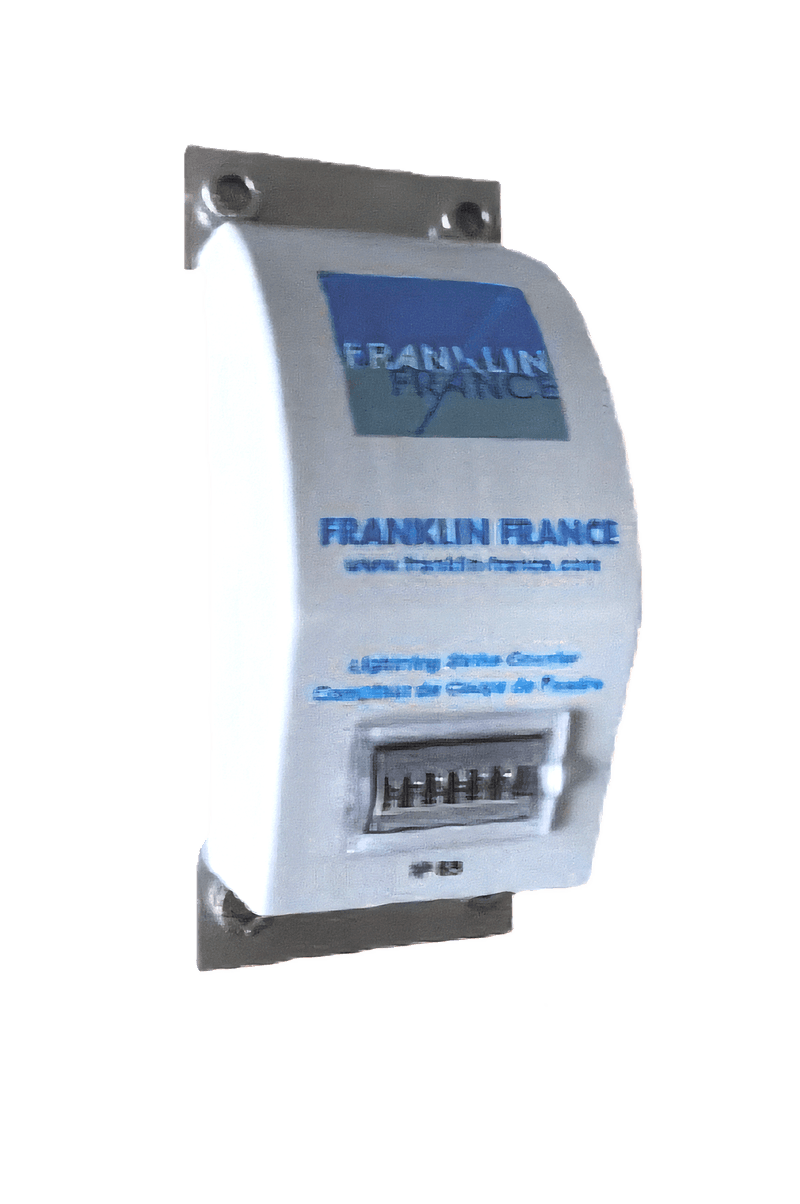
- Lightning strike counter
- Accessory, offered in a separate kit from the base model
- Testing several units (Multitester)
- Accessorywith the Multitester pack, which includes LMS MULTI 2D software and the Activ’Control communication box, you can communicate with several units and test them all
- Packaging dimensions
- 320 × 320 × 500 mm
- Weight with packaging
- 6.90 kg
Product test status
- Alternative test methodWired tester with telescopic test handle, up to a height of 8 m
Product standard
- Product standard (ESE air terminal)
- NF C 17-102:2011, Annex C
Product test status
- ESE performance testSuccessfully completedBazet high-voltage laboratory, France; 2005 and 2013 reports
- Impulse current testSuccessfully completedNF C 17-102:2011 Annex C, clause C.3.4; CITEL report G100K-12-064-R (2012)
- Environmental conditions testSuccessfully completedSICAME LABEP, France (2012)
Manufacturer certificates
- Qualifoudre · INERIS 051168352016
- quality management system · ISO 9001:2015; AFNOR 2022:102639.9
Choosing a model does not replace system design
A larger ΔT is not automatically the better engineering choice for every project. The model must suit the risk level, the size and height of the structure, the points exposed to strikes, the down conductor routes and the layout of the earthing system.
ACTIVE 2D models
ACTIVE 2D 30
ΔT = 30 µs
Protection radius at a height of 5 m, protection levels I to IV
48–71 m
ACTIVE 2D 60
ΔT = 60 µs
Protection radius at a height of 5 m, protection levels I to IV
79–107 m
- Assess the risk and set the protection level
- Model the protected volume on the real geometry of the structure
- Design the down conductors, bonding and earthing system
- Check the separation distance and internal protection requirements

Catalogues and documents
Catalogues & datasheets
- ACTIVE 2D brochure (English)Language: English (opens in a new tab)
- ACTIVE 2D 30 µs datasheet (English)Language: English · Version: FT129EN.QLF.00 (opens in a new tab)
- ACTIVE 2D 60 µs datasheet (English)Language: English · Version: FT129EN.QLF.00 (opens in a new tab)
- Franklin France general catalogue of lightning and overvoltage protection products 2026Version: CP001FR.QLF.07 (opens in a new tab)
Certificates & test reports
- ESE performance test report: Bazet high-voltage laboratory, 2005English · 2005
- ESE performance test report: Bazet high-voltage laboratory, 2013English · 2013
- Impulse current test report: CITEL, 2012English · 2012
- Environmental conditions test report: SICAME LABEP, 2012Multilingual · 2012
Frequently Asked Questions
How does ACTIVE 2D work?
ACTIVE 2D has two units. The Impulse Device monitors the ambient electric field and starts the upward leader at the right moment, and the Power Device releases the energy stored in the power capacitors so that the same leader keeps developing.
Can ACTIVE 2D be tested without removing it from its position?
Yes. According to Franklin France's official documentation, the test is carried out in place using a dedicated tester from a distance of 100 metres, with no need to take the ESE air terminal down. The tester is not included with the base model and is ordered separately.
What is the range of the ACTIVE 2D remote tester?
The manufacturer states an operating range of up to 100 metres in open space for the remote tester. Obstacles and environmental conditions can affect the wireless link.
Does ACTIVE 2D have the same protection radius for every project?
No. The protection radius depends on the exact model, the ΔT value, the installation height, the protection level or class and the geometry of the project. It must be determined from the datasheet of the chosen model and engineering calculations.
What information should be checked when choosing ACTIVE 2D?
At the design and purchase stage, check the exact model, product code, ΔT value, installation height, required protection level, the down conductor and earthing system requirements, and access to test equipment.
Have a Technical Question?
KALOT Group's technical experts are ready to answer your questions about lightning rods and earthing systems.