
Move your pointer over the image to zoom in
Complete Product Overview
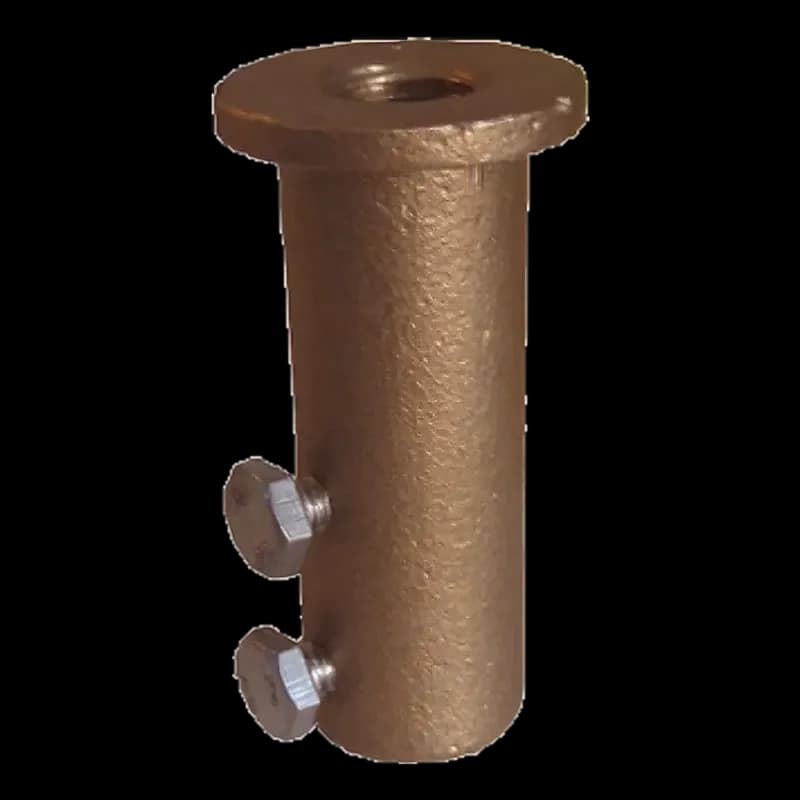
Brass coupling for connecting tape to air rod
Last updated:
Our brass coupling for connecting tape to air rod joins a tape conductor to the foot of a conventional air rod. The air rod screws into the threaded socket on top of the coupling, and the tape is clamped on the body with two side bolts. We use this coupling with the wall support for air rods installed on the facade. It comes in two threads, M16 and M20.
Brass coupling for connecting tape to air rod
Our brass coupling for connecting tape to air rod joins a tape conductor to the foot of a conventional air rod. The air rod screws into the threaded socket on top of the coupling, and the tape is clamped on the body with two side bolts. We use this coupling with the wall support for air rods installed on the facade. It comes in two threads, M16 and M20.
- Connects the tape conductor to the air rod
- Used with the wall support
- M16 and M20 threads
- Brass body
Direct tape connection
The down conductor tape is clamped on the coupling with two side bolts.
At the foot of the air rod
The conventional air rod screws into the threaded socket on top of the coupling.
Used with the wall support
The coupling sits in the eye of the lower support.
Cast brass
Brass body that resists atmospheric corrosion.
Technical Product Information
Click to view enlarged
Feature | Value |
|---|---|
Product type | Coupling for connecting a tape conductor to an air rod |
Application | Wall-mounted conventional air rods, used with the wall support |
Connectable conductor | Tape |
Air rod connection thread | M16 or M20 |
Dimensions | L = 71 and D = 35 mm |
Material | Cast brass |
Codes | ARTC 16 and ARTC 20 |
Dimensions and codes
Code | Thread | L (mm) | D (mm) |
|---|---|---|---|
ARTC 16 | M16 | 71 | 35 |
ARTC 20 | M20 | 71 | 35 |
Our products are continually improved and some dimensions may be updated; please confirm the final dimensions with our specialists before you buy.
Click to view enlarged
Download the drawing: PDF · SVG (vector)
Click to view enlarged
Application
When an air rod is installed on a wall instead of the roof, its foot sits in the lower wall support and this coupling connects the tape down conductor to the conventional air rod.
Installation steps
- Fix the wall supports on one vertical line on the facade.
- Place the coupling in the eye of the lower support.
- Pass the air rod through the eye of the upper support and screw it into the coupling socket.
- Lay the down conductor tape on the coupling body and tighten the two side bolts.
Inspection and maintenance
During periodic inspections of the lightning protection system, check that the screws and locknut are tight, the air rod is vertical and the conductor connection is sound, and retighten where needed.
The standards below are the reference for designing and selecting lightning protection system components, and they show where this part sits in the system.
System design: IEC 62305-3
Design, installation and inspection of a structure's lightning protection system, including the position and height of air rods, the installation of roof conductors and down conductors, and how they connect to each other.
Connection components: IEC 62561-1
Requirements and tests for the metal connection components of a lightning protection system. Parts that join air rods and conductors fall into this group.
Air rods and conductors: IEC 62561-2
Material, dimension and test requirements for air rods, conductors and earth electrodes.
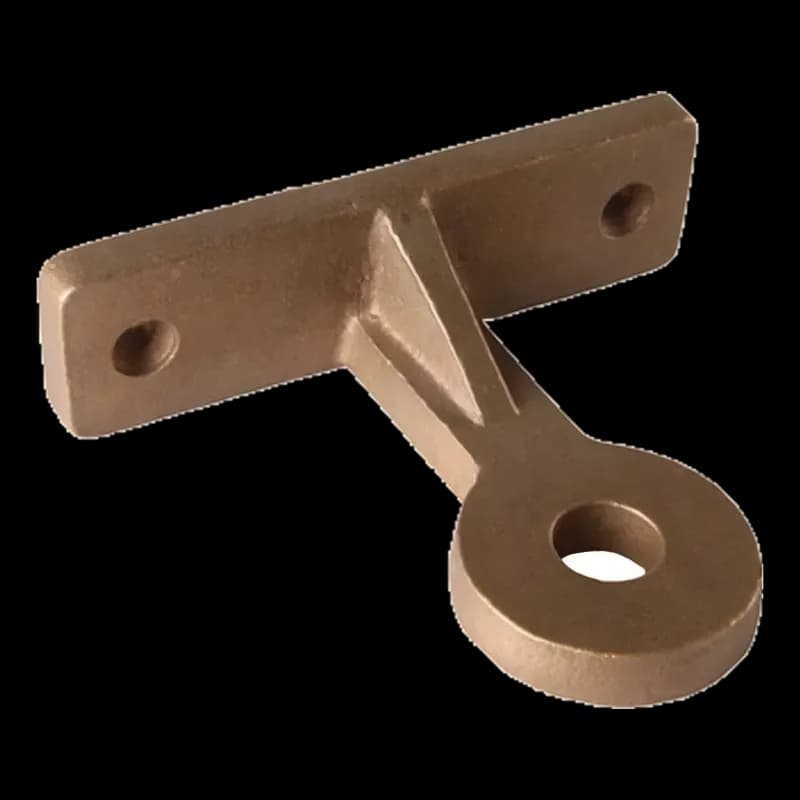
Brass wall support with tape coupling
Similar & Complementary Products
Frequently Asked Questions
What is this coupling for?
To connect a tape down conductor to the foot of an air rod installed on a wall.
Which part is it used with?
With the brass wall support. The coupling sits in the eye of the lower support.
What should I use for a round conductor?
What size is the coupling thread?
ARTC 16 has an M16 thread and ARTC 20 an M20 thread.
Have a Technical Question?
KALOT Group's technical experts are ready to answer your questions about lightning rods and earthing systems.