
Move your pointer over the image to zoom in
Complete Product Overview
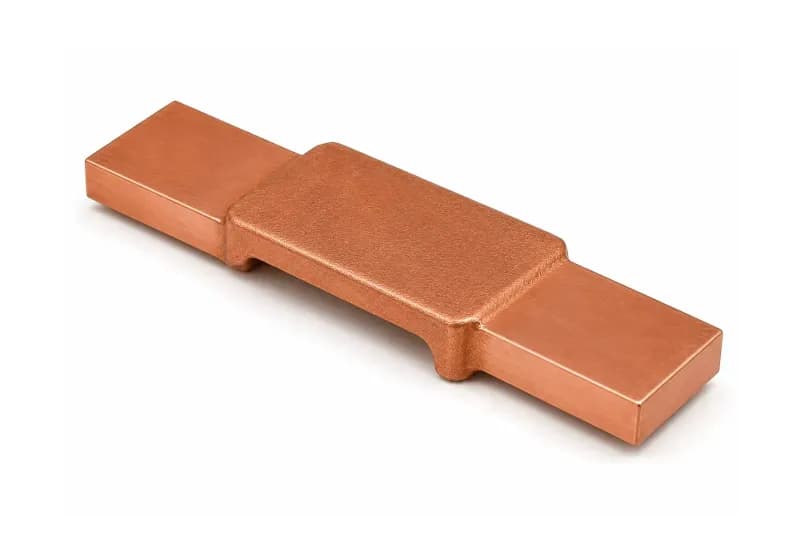
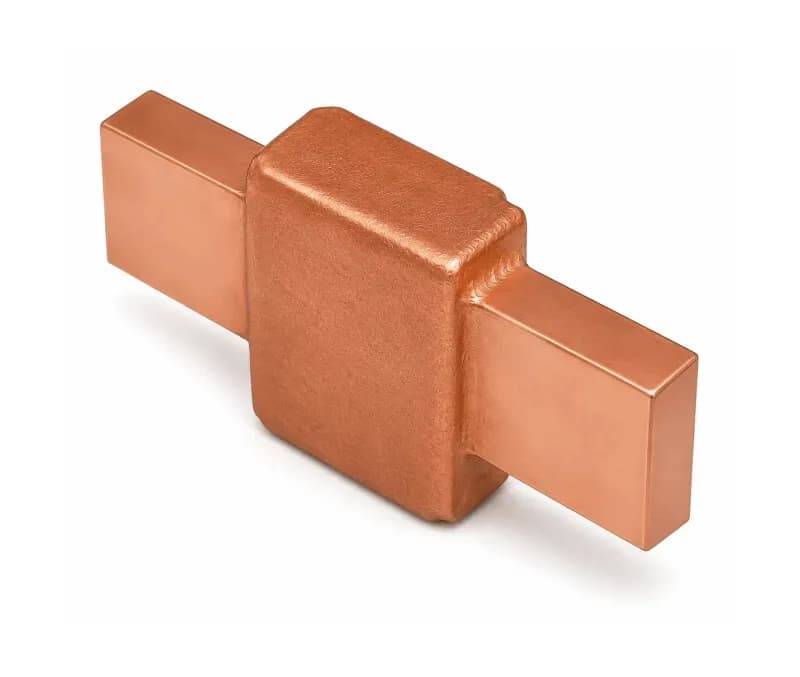
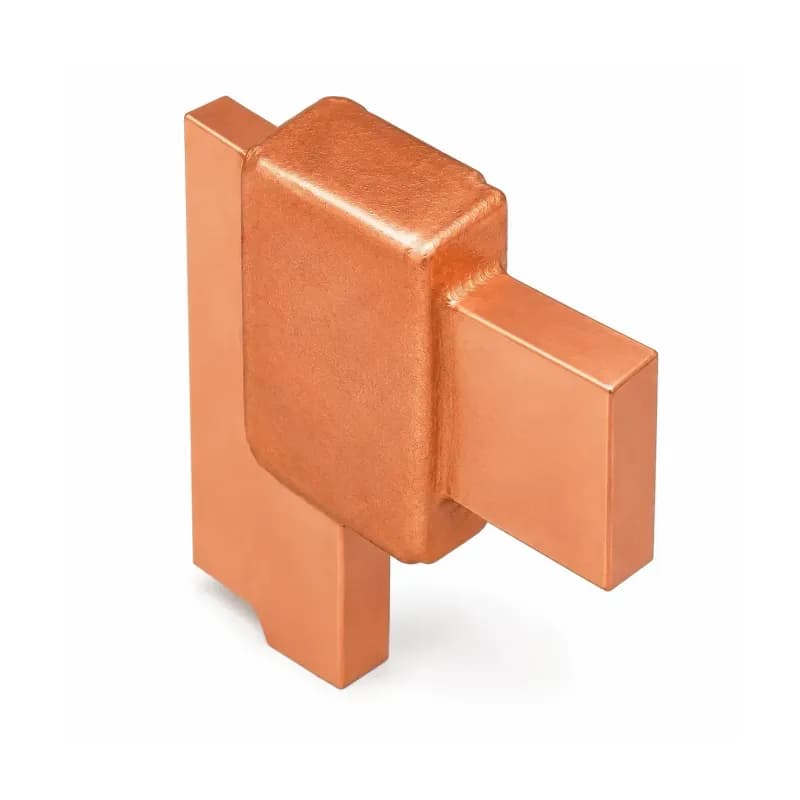
TT3 exothermic weld: edge T joint of copper tape
Last updated:
The TT3 exothermic weld makes an edge T joint of copper tape in earthing, bonding and lightning protection networks. We manufacture its graphite mould under our KALweld® brand and supply it complete with weld powder and handle. Once welded, the joint becomes one piece with the conductors, with no nuts and bolts to loosen over time. KALweld® welds have been tested to IEEE 837 and UL 467 at the Power and Water University of Technology (Shahid Abbaspour) and successfully passed the freeze, thermal cycling and short-circuit tests.
The TT3 mould is made for 20×3 to 30×5 mm tape. The mould and powder code for each size is in the "Mould and powder selection" table, and the HC 01 handle suits all its sizes.
Technical Product Information
Click to view enlarged
Mould body material: graphite; mould lid material: stainless steel; suitable handle: HC 01.
TT3 mould and powder selection table
Main tape (mm) | Branch tape (mm) | Weld powder | Mould code |
|---|---|---|---|
20×3 | 20×3 | KWD 115 | TT3-203 |
20×5 | 20×5 | KWD 150 | TT3-205 |
25×3 | 25×3 | KWD 150 | TT3-253 |
25×5 | 25×5 | KWD 200 | TT3-255 |
30×5 | 30×5 | KWD 250 | TT3-305 |
In this table, the main tape and the branch tape are the same size, and the mould code shows that shared size. To join two tapes of different sizes, send the sizes of both tapes to our specialists.
Need another size, or do your conductors not match this table? Send the conductor details or the joint drawing to our specialists and they will recommend the right mould.
Click to view enlarged
Preparing the conductors for tape-to-tape exothermic welding
Cut the tape ends square, flatten them and brighten them with a wire brush so the edges sit side by side in the mould with no gap.
Steps
- Check the mould and powder against the table above; the mould code and powder size are also marked on the mould lid.
- Before the first weld, warm a cold mould with a gentle flame to drive off moisture.
- Clean the conductors to bright metal with a wire brush and dry them with a torch.
- Fit the handle on the mould, place the conductors without force in the centre of the weld chamber and lock the mould.
- Place the steel disc at the bottom of the reaction chamber with the concave side up, and gently pour the weld powder over it.
- Sprinkle starter powder over the weld powder and on the edge of the mould, close the lid and light it from the side with a flint igniter, then step away at once.
- Wait at least one minute, open the mould and inspect the weld.
- Clean the slag out of the mould with a soft bristle brush and a scraper; never clean the mould with a wire brush.
See photos of every step, safety notes and the troubleshooting table in the complete illustrated exothermic welding guide, or download the 6-page KALweld® exothermic welding instructions (PDF).
Click to view enlarged
Applications
- Joining and extending copper tapes in earth rings and earth grids
- Building tape T joints and cross joints in bonding networks and roof conductors
- Permanent tape joints underground and inside concrete
What does a sound weld look like?
A sound weld fills the mould chamber completely and fully covers the conductors, its slag comes away easily, and after cleaning it has a golden to copper colour. A deep cavity, unmelted conductor under the slag or an incomplete weld means the joint must be welded again.
Test results for KALweld® welds to IEEE 837 and UL 467
KALweld® four-way and T welds on 120 mm² copper conductor were tested at the Power and Water University of Technology (Shahid Abbaspour) (Ministry of Energy) to the IEEE 837 and UL 467 standards, and every test result was "Approved":
Test | Test conditions | Cross weld result (report 95/4221) | Tee weld result (report 95/4220) |
|---|---|---|---|
Freeze-thaw cycle | 10 cycles: more than 2 hours below -10 degrees in water and more than 2 hours above +20 degrees | No cracks or fractures; resistance 176 to 179 µΩ/m (pass) | No cracks or fractures; resistance 179 to 184 µΩ/m (pass) |
Thermal cycle (resistance change) | 25 cycles at a current above 1100 amperes; reference conductor up to 350 degrees | Greatest change in weld resistance 2.8% (pass) | Greatest change in weld resistance 3.0% (pass) |
Weld temperature in the thermal cycle | Thermometer on each weld and on the reference conductor (350 degrees) | 286 to 306 degrees; cooler than the conductor (pass) | 287 to 309 degrees; cooler than the conductor (pass) |
Short circuit (up to melting point) | Circuit of 120 square millimetre copper conductor, 20 kA current | A current of 12 kA was withstood for 8 seconds with no fault; then at 20 kA the copper conductors melted and the welds stayed sound (pass). | At a current of 20 kA the copper conductors melted and the welds stayed sound (pass). |
Full text: report 95/4221, four-way weld, report 95/4220, T weld.
Safety
- Wear heat-resistant gloves, safety glasses and long-sleeved clothing, and move the hot mould only by its handle.
- The mould and conductor must be dry; contact between molten metal and moisture causes spatter.
- After ignition, step back, do not breathe the fumes, and keep combustible materials away from the work area.
- Keep powder and starter in a dry place in undamaged packaging.
Conductors for this joint: copper tape.
KALweld® exothermic welding: copper tape to copper tape
Documents & Downloads
Catalogues & datasheets
Certificates & test reports
- Laboratory test report for KALweld® four-way conductor-to-conductor exothermic weld | Power and Water University of TechnologyPersian · 2017-03-14
- Laboratory test report for the KALweld® conductor-to-conductor T exothermic weld | Power and Water University of TechnologyPersian
Installation & application guides
Frequently Asked Questions
What is the TT3 mould code for the smallest size?
For size 20 x 3 / 20 x 3, use mould TT3-203 with KWD 115 powder. The other sizes are in the table on this page.
How many welds can each mould make?
Our moulds are made of high-grade graphite and, used correctly and according to the instructions, last for 50 to 60 welds. Cleaning with a wire brush, knocks, moisture and opening too early all shorten mould life.
After ignition, when should the mould be opened?
Wait at least one minute for the molten metal to solidify, then open the mould carefully.
Which weld powder is right?
The powder size for each conductor size is shown in the table on this page and on the mould lid. Do not substitute powder of another size or another mould.
Have a Technical Question?
KALOT Group's technical experts are ready to answer your questions about lightning rods and earthing systems.