Standards & Technical Guides
In engineering, a solution is reliable when it does not rest on experience or site habit alone, but can be designed, measured, tested and assessed against clear criteria. Standards provide a common language, so that the designer, installer, supervisor, client and operator share the same understanding of the level of safety, the quality of equipment and the correct method of installation.
In lightning protection, earthing, bonding and overvoltage protection, the various decisions depend on one another. Risk assessment, choice of protection level, placement of components, specifications of conductors and connections, control of touch and step voltages, SPD selection, and measurement, inspection and maintenance methods must all follow the relevant standard, the real conditions of the project and recognised technical requirements.
Using a standard correctly goes beyond quoting its number on a drawing or in a technical specification. Its scope, valid edition, definitions, design assumptions and test requirements must be properly understood, along with the difference between a requirement, a recommendation and an installation guide. Lightning protection standards, earthing and bonding standards and surge protection equipment standards also need to be reviewed together with the environmental conditions, national regulations and specific needs of each project.
In this section, drawing on more than fifty years of engineering and project experience, we at KALOT introduce and review the relevant standards, instructions and technical guides in clear, practical language, so that engineers, clients and operators can understand the requirements better, prepare more accurate technical documents and make safer, more defensible decisions.
Articles in this section
Lightning protection standards: an overview and classification of the references
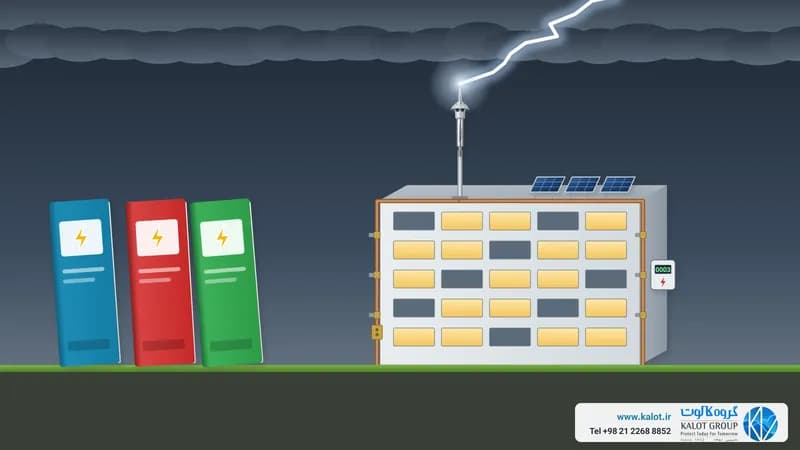
There is no single standard for lightning protection: each one answers a different question. In this guide we sort the references into five groups, give the valid edition of each in 2026, and use three images to show which standard applies to which part of the system and which project.
August 31, 2025Read more